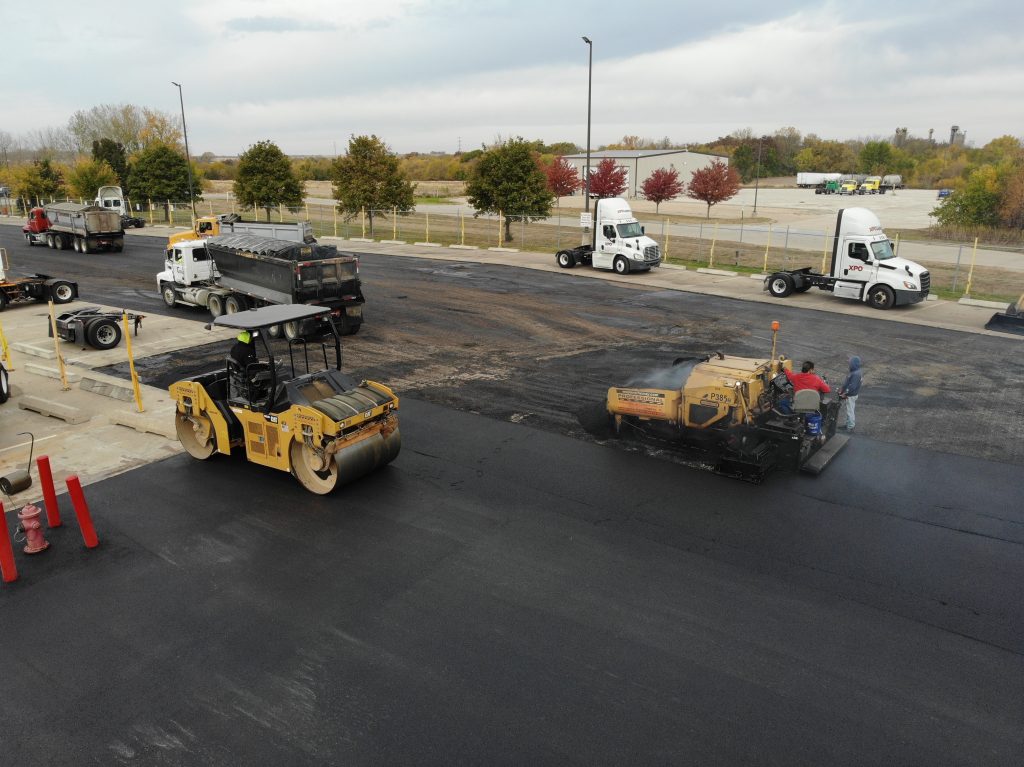
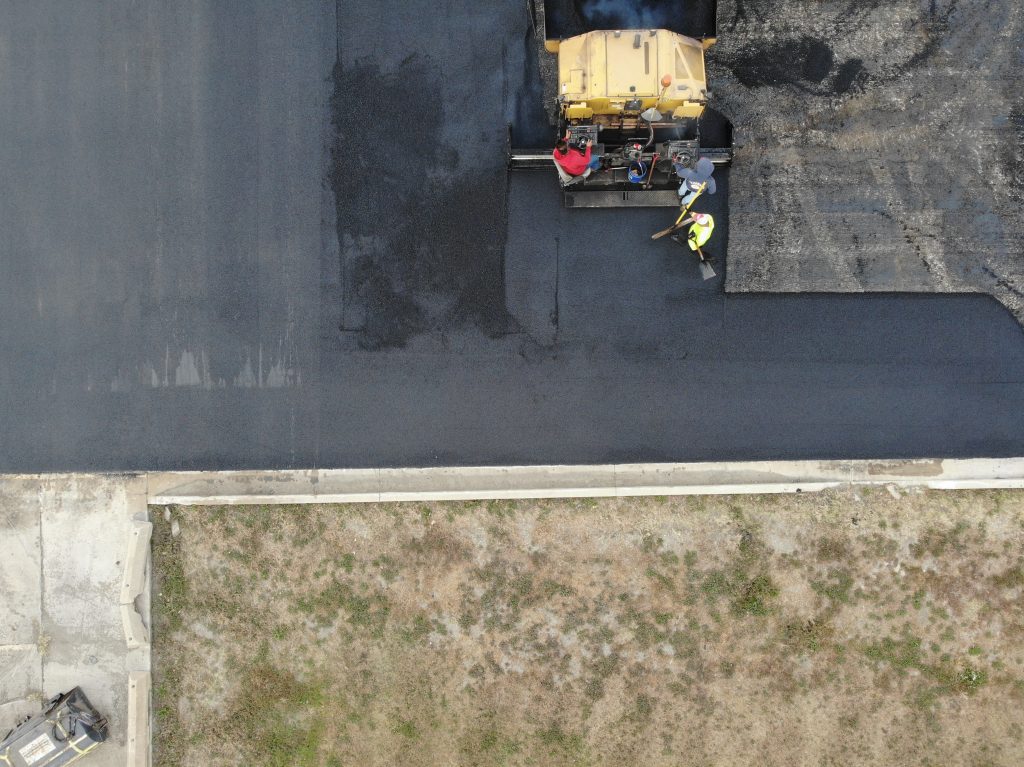
The Pittsburgh area averages 155 days of measurable precipitation annually. The gated apartment entrance is the most vulnerable spot on the property to water ingress. The vehicle detection loops in the asphalt, the concrete operator pad, the buried power conduit, and the drain/low spot at the threshold are all potential points of ingress. The FHWA Traffic Detector Handbook notes that in agency studies of loop failures. The two most common causes were loop sealant that had lost its adhesion and poor installation. Wire breakage due to asphalt deterioration is also cited as a common problem. In simple terms, a pothole by your gate can damage your gate and do more than just make the ride rough.
We’re The Pavement Group, and we do all our paving and pavement repair work for property managers from our office in Wexford, PA. In this guide, we walk you through how to map a gate zone, why we repair the loops first, how to triage each type of damage, how to schedule the work so you don’t lock residents out, and what the Western PA weather does to a gate entrance.
Map the Gate Zone Before You Repair Anything
A gate entrance packs six different systems into a few hundred sq ft. Walk it with your gate vendor and tick each one off on a site plan.
| Component | What lives there | Damage you see | Who we coordinate with |
| Detection loops | Wire in a sawn slot, sealed at the surface | Rectangular cracks, lifted sealant, a gate that hesitates or ignores cars | Gate vendor |
| Stop point at the call box or reader | The pavement where residents and visitors pause | Depressions, loose stone, or a pothole | Property manager |
| Operator pad and post footings | Concrete under the gate mechanism | A gap or crack where asphalt meets the concrete | Gate vendor |
| Buried conduit trench | Power and data lines to the operator | A straight dip or crack running from the operator | Electrician and gate vendor |
| Gate swing or track path | The arc or line where the gate travels | Scrape marks where the arm or leaf touches the asphalt | Gate vendor |
| Threshold drain or low spot | Where the entry meets the street or sidewalk | Standing water, ice patches, a soft edge | Civil contractor or us |
The Loop-First Rule
We repair around the loops first, as the loop determines whether your gate opens.
- Sealant fails first. The City of Albany, Oregon, reported pavement flexing and shoving, which popped the epoxy sealant out of the loop slots, requiring the crews to reseal them.
- The slot is small. One loop manufacturer’s guide gives a slot specification of about 2 inches deep and 0.25 inches wide, filled with 3/4 to 1 inch of sealant over backer rod. A crack across that slot is not cosmetic.
- Moisture kills wire. The FHWA has noted that high failure rates associated with moisture or wire breaks have led newer installations to encase and seal the wire before the slot is sealed.
Here is the sequence we follow on every gate job:
- Your gate vendor marks and tests every loop before our crew arrives.
- We never saw-cut, milled, or cored across a marked loop unless the vendor was actually on site.
- A mill that gets to the 2″ slot depth will break the wire, so the vendor re-installs the loop after we put the new surface in.
- The vendor will test every loop before we reopen the lane.
Triage Table: What You See and What We Do
| What you see | Likely cause | Urgency | What we do |
| Gate sticks, reverses, or ignores cars | Cracked or lifted loop slot, or a broken wire | Same day | The vendor tests the loop, and we repair the pavement around it |
| A rectangular crack pattern on the pavement | Lifting loop sealant | Within weeks | The vendor reseals the slot, and we seal the surrounding cracks |
| A pothole or broken edge at the stop point | A failed surface layer | Within days | We cut out the damage and patch it with hot mix |
| A straight dip or crack running from the operator | Settled trench backfill | Within weeks | We recompact the base and patch with hot mix |
| A gap where asphalt meets the operator pad or curb | The two materials move differently, and the old sealant lost its grip | Within weeks | We rout the gap and seal it with hot-applied rubberized sealant |
| Standing water at the threshold after rain | A low spot or a blocked drain | Within weeks | We clear or repair the drain and level the surface with a new course |
| Scrape marks where the gate touches the pavement | Settled or raised asphalt | Within weeks | We mill and level the area to restore clearance |
We treat any crack that gets to about 1/8″ as a repair candidate, as water will find a gap that size.
How We Schedule Gate Repairs Without Locking Residents Out
- We notify residents, the delivery services, and emergency contacts at least 5 business days in advance and state which lane is closing and when.
- Your gate vendor will set the gate to the mode you have selected for working hours (i.e., open or manual).
- We split the entrance when your gate has separate entry and exit lanes (so one lane remains usable).
- Our team finishes the asphalt work, and the vendor then reinstalls and retests the loops.
- We restripe the stop bars and arrows, take down the signs, and the vendor then returns the gate to automatic mode.
We work very closely with property management at every stage of the process, using the same approach described in our peeling asphalt guide.
Address Asphalt Damage Around Apartment Parking Lot Gates
Repeated vehicle traffic, frequent braking, and turning movements can cause asphalt damage around apartment parking lot gates. Cracks, potholes, and pavement deterioration in these areas can create safety concerns, disrupt vehicle access, and lead to more extensive repairs if left unaddressed. At The Pavement Group, we provide professional asphalt repair, paving, and maintenance services to help property managers maintain safe, durable, and functional parking areas. Contact our team today to discuss your apartment property’s pavement needs.
Contact UsFrequently Asked Questions
Why Does Asphalt Wear Out Faster in High-Traffic Areas of Apartment Parking Lots?
Every tire pass flexes the surface a tiny bit. With thousands of passes per week, that flexing becomes fatigue cracks along the wheel paths. Braking, accelerating, and tight steering at entrances and stop signs add lateral force that pushes the surface mix out of place and creates ruts and ripples. Summer heat softens the binder, so vehicles idling in those areas leave a deeper mark, and oil, gas, and antifreeze drips can dissolve the binder even faster. Once a crack opens, water gets to the base, and the freeze/thaw cycles of Western PA turn that water into potholes, which then spread. We map the most heavily used lanes on every site assessment. We also recommend a stronger mix or a deeper mill and patch in those areas. Our crew save the sealcoating and crack sealing for the quieter stalls.
How Can Property Managers Address Pavement Damage in Apartment Parking Lot Loading Zones?
Ruts and shoving are a surface mill-and-patch job, whereas alligator cracking and potholes are signs of a failed base that needs full-depth repair. Fix the drainage before the repair, as standing water will soften the base and destroy any new pavement within a season. We do catch basin repair and drainage work for that reason. In areas where trucks stop and turn sharply, we’ll often install a reinforced concrete pad or a heavier asphalt mix, as both resist rutting and shoving better than a standard stall mix. We keep trucks off the new concrete until it has cured (this can take anywhere from several days to a week, depending on the mix and the weather). We do the work in stages so residents, movers, and vendors still have access. After that, you protect the repair by sealing new cracks each year and adding clear no-parking striping and signage.
What Is the Best Time of Year to Repair Asphalt Around Apartment Gates in Pittsburgh?
Spring and fall are the best times for crack sealing. Alaska DOT guidance recommends cleaning and sealing in moderately cool weather and cautions that moisture will prevent the sealant from bonding. An Arizona pavement preservation guide also specifies a temperature, stating that the pavement should be at 40°F and rising before the sealant is applied. Hot-mix patches require an open asphalt plant. A A Westmoreland County public works official confirmed that the plants don’t reopen until early spring, so winter repairs are all cold patch. That’s why November is the ideal month to inspect and photograph gate damage. We schedule the permanent repairs for the first dry, above-freezing weeks once the plants do reopen. If a loop fails or a gate stops opening in winter, we’ll make a temporary cold-patch repair to keep the entrance working, then replace it with hot mix in the spring.
How Long Does Crack Sealant Last Near an Apartment Parking Lot Gate?
A crack that’s been cleanly routed, cleaned, and sealed with quality hot-applied sealant can last well beyond 7 years (according to the industry guide on resealing). Routing is important, as it creates a clean reservoir with fresh bonding walls, which is why we route rather than just fill. Sealant has a size limitation: the guide states that hot-applied sealant is only suitable for cracks less than 1.5 inches wide, and wider cracks require a patch. Gate zones will obviously reduce the life of the seal, as the pavement is in a state of movement, so we inspect the gate-area seals every spring and reseal any that have lifted. We log the repair dates so you can plan the next service before the crack reopens.
How Often Should Property Managers Inspect Pavement Around Apartment Gates?
We recommend a quick walk every month and a detailed inspection twice a year, once in late fall before freeze-thaw season and once in spring after it ends. During the monthly walk, check whether the gate opens and closes without hesitation, look for fresh cracks over loop lines, and photograph any pothole or standing water. After a heavy rain, return to the threshold and note where water lingers, because ponding marks spots where the base softens. In the spring inspection, measure crack widths with a ruler, mark anything that has reached about 1/8 inch, and flag raveling or steps for repair. Keep dated photos in one folder, because they let us compare changes over time and help you justify repair budgets to owners.
About the Author
The Pavement Group specializes in asphalt engineering, pavement maintenance solutions, and data-driven asset management for commercial, retail, and multi-family residential properties. Utilizing advanced structural pavement evaluations and capital planning transparency, The Pavement Group works directly with property managers to extend pavement lifecycles, eliminate liability risks, and optimize long-term infrastructure investments.