Approximately 94% of the paved roads in the US use asphalt (according to the National Asphalt Pavement Association). That very same material is in the worst state in one particular area on an apartment property (the turn area). Every resident who drives through the end of a drive aisle is effectively abrading the asphalt, as the vehicle doesn’t actually move much. The combination of that abrasion, heat, braking, and delivery trucks all work to strip the binder, break the aggregate, and allow water ingress. We do a lot of work on these areas for apartment communities across the country, from Phoenix to Minneapolis. We’re going to show you exactly how we go about diagnosing and repairing them.
Quick Overview
- Turning areas fail first, as the tyres will twist in place and apply a shear force, which straight-line driving will never do.
- Surface scuffing is purely cosmetic, but raveling, alligator cracking, and depressions are indicative of damage that has reached the base.
- Mill-and-patch addresses turning-area failures; full-depth repair solves base failures.
- The correct mix, tack coat, and compaction matter more than patch thickness alone.
- Smart striping and drainage corrections ensure the same corner doesn’t fail again.
Why Turning Areas Fail Before the Rest of the Lot
A straight drive aisle spreads the vehicle’s weight along the pavement in a rolling motion. A turning area does the exact opposite. When a driver turns whilst stationary or creeping, the tire pivots on the asphalt and pulls the top layer of the pavement sideways. Engineers call this shear, and it breaks the bond between the binder and the stone long before fatigue cracking occurs elsewhere. That’s the phenomenon our crews see most often at the ends of dead-end aisles, around garage entrances, at the approaches to trash enclosures, and, of course, at tight corners where trucks and delivery vans have to swing wide.
Heat makes it worse. The Asphalt Institute points out that scuffing becomes more apparent in hot weather and that lower-profile tires with higher inflation pressures place more stress on the surface. Property managers in Phoenix, Dallas, and Atlanta face this issue every summer. Warm asphalt softens and becomes more prone to tearing under the weight of a turning tire. In Chicago, Denver, and Minneapolis, the same damaged areas collect meltwater in the summer, which freezes and expands in the spring, turning a surface problem into a structural one.
We also want to make it clear that not every mark is a problem. The Minnesota Asphalt Pavement Association points out that scuffs and tire marks generally present an aesthetic issue rather than a performance issue. We go into that in some detail in our article on tire marks and wear so we’re not going to dwell on that here. We’re focusing on the repairs you’ll need once the damage has gone beyond the surface.
Inspecting the Damage Before Choosing a Repair
We do a walk-through of every turning area repair. We recommend property managers do the same before getting any bids. Inspecta inspects the pavement in dry daylight and then again after it rains, as water reveals depressions that dry pavement hides. Press on the soft spots with a screwdriver or probe, paint the area of failure, and then extend that paint mark at least one foot beyond the visible edge of the damage. Cracks and loose stone will often continue underneath what appears to be sound pavement. A repair that stops precisely at the edge of the damage will almost invariably fail within a season.
We sort the damage into three groups. Surface raveling is loose aggregate and has a sandy feel. Alligator cracking is a network of interconnected cracks that tells you the layer underneath has lost support. Rutting or shoving is the presence of ridges, pushed asphalt, or a bowl-shaped dip where the wheels pivot, resulting from the mix moving under load or the base settling. Each group requires a different repair, and the table below matches them.
Repair Methods Matched to Damage Severity
The table below shows how we match the repair to what we find in the turning area. The lightest repair that fully addresses the problem protects your budget, while a repair that is too light will only pay for the same work twice.
| Damage We Find | Typical Cause | Repair We Use | Typical Depth |
| Raveling with loose stone, pavement still firm | Binder oxidation and tire scrub | Surface cleaning, tack coat, and thin overlay or sealcoat | 1 to 1.5 inches |
| Cracks wider than 1/4 inch, no base movement | Thermal cycling and shear stress | Route and seal, or hot-applied crack filler | Cracks only |
| Alligator cracking and shallow depressions | Weak asphalt layer, water in the base | Mill and patch with new surface course | 2 to 3 inches |
| Deep ruts, pumping fines, or soft subgrade | Failed base or poor drainage | Full-depth removal, base repair, and new asphalt | 6 to 10 inches |
| Shoving at the tightest turn radius | Unstable mix under heat and slow loads | Mill out and replace with a stiffer mix | 2 to 3 inches |
How We Complete a Mill and Patch Repair
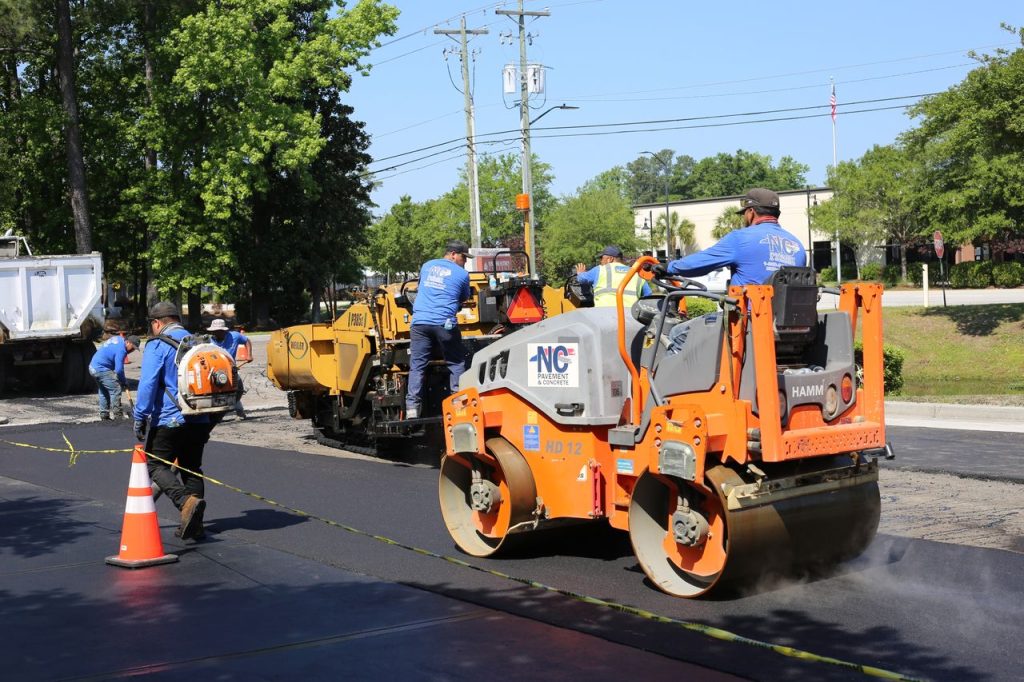
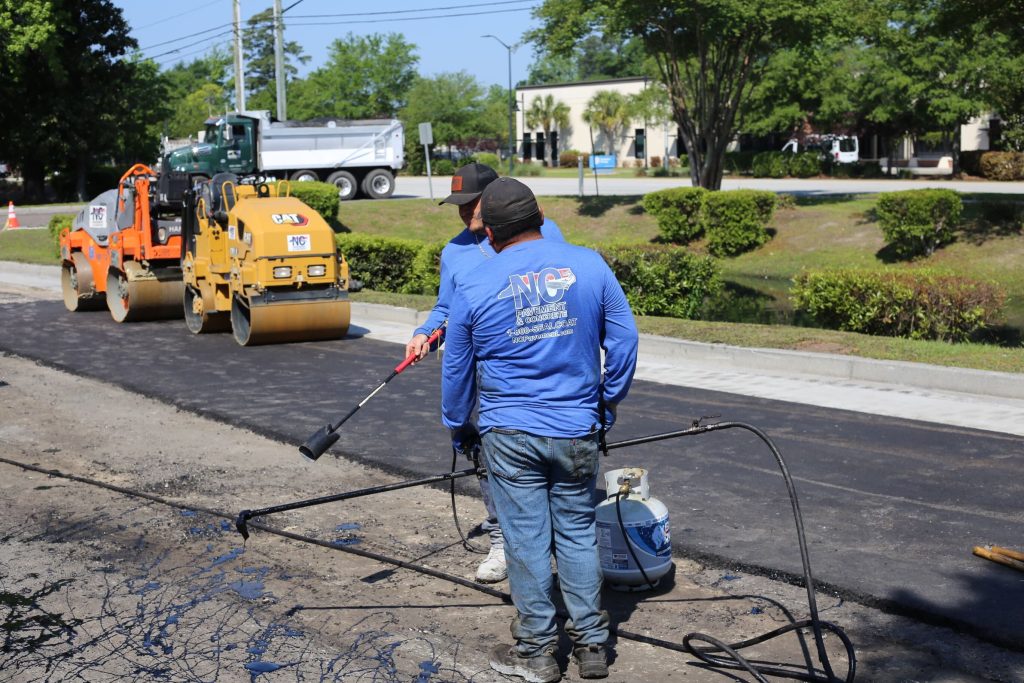
Mill and patch handle most of the turning-area work we do. We go through it in stages. First, we saw-cut the marked area in straight lines with square corners. A clean vertical edge gives the new asphalt something to bite into. We then mill or remove the damaged layer to the required depth and sweep the surface until there’s no dust. We then apply a tack coat (a very thin layer of asphalt emulsion) so the new layer bonds to the old pavement rather than just sliding on top of it. The most common reason we still see a patch peel in a turning area is omitting the tack coat.
We then place the hot mix asphalt in lifts to match the thickness of each layer and roll each lift down before the mix has a chance to cool. Compaction quality ultimately determines how long the patch will last. Poor compaction holds air and water and will therefore ravel very quickly. We’re aiming for a density of 92 to 96% of the mix’s maximum theoretical density (the standard figure you’d expect for a well-compacted hot mix). We then seal the joint around the patch to prevent water getting in down the seam. If the failure has reached the base, we remove the weak stone or soil, replace it with compacted aggregate, and then re-lay the asphalt layers on top of that stable base.
Choosing the Right Asphalt Mix for Tight Turns
The mix we choose is as important as the repair method. In areas with frequent turning, you need a surface course with fairly hard, angular stone and a binder that won’t soften. A standard mix will tend to shove and scuff under the slow, twisting loads. In hot markets (Phoenix, Las Vegas, Houston), we’ll typically specify a stiffer, higher-temperature binder grade so the patch will hold up in the triple digits. In freeze/thaw markets (Minneapolis, Chicago, Denver), we look for a binder that stays flexible in winter so it doesn’t crack at the joints. A smaller nominal aggregate size also gives you a tighter texture, which resists tearing under the tire.
The FHD supports this preventative approach via its Pavement Preservation Guide, which advocates for timely, targeted treatments rather than waiting until the pavement has completely failed. We take the same approach with apartment communities. A good quality patch in the right mix will keep a turning area performing for years. The wrong mix and you’re back to scheduling that same patch again.
Preventing the Damage From Returning
Repair deals with today’s problem, and prevention protects your investment. We start with the layout. If all residents make the same tight turn, the same tires scrub the same few feet of asphalt. We recommend restriping or adding some form of turning guidance to spread traffic over a wider area. We also look at drainage, since a turning area that holds water will deteriorate again no matter how well we patch it. If a catch basin has settled or the grade is sending runoff across the turn, we’ll correct the slope or adjust the basin frame as part of the repair.
We also advise you to watch for contaminants that can soften the asphalt. Oil and fuel drips will break down the binder. A leaking vehicle left sitting at the end of an aisle can turn a perfectly good patch into a soft spot. Regular sweeping, prompt treatment of any stains, and regular inspection after each major season change are all recommended. For more on how wear manifests across the rest of the property, see our guide on the causes of surface wear, which details what to look for and how quickly each sign will progress.
Work With a Nationwide Paving Contractor
Turning area repair is all about precision. A square cut, a good, clean tack coat, the right mix, and proper compaction will help the patch last one winter or ten. Choosing the right paving contractor is just as critical as the repair method itself. Look for a contractor with extensive experience in similar apartment or commercial projects. Always ask for references from recent jobs. Make sure they carry proper insurance and licensing, and confirm that their crews are trained and familiar with local regulations. Request a clear, itemized scope of work before you agree to any job. Check for membership in industry associations that set quality standards.
The Pavement Group works with apartment communities and property management companies throughout the US. We will customize the repair to the local climate, the local traffic, and your budget. Get in touch to arrange an inspection of your turning areas. We’ll provide a full scope of work, a full price, and a repair plan that works for your property.
Repair Asphalt Damage in High-Traffic Turning Areas
Damaged asphalt in apartment parking lot turning areas can worsen under repeated vehicle traffic. The Pavement Group provides professional asphalt repair and pavement maintenance solutions to help property managers maintain safer, more durable parking areas. Contact our team to discuss your property’s pavement repair needs.
Contact UsFrequently Asked Questions
How long should a repaired turning area last?
A properly constructed patch in a turning area will generally last for many years. The actual life of the patch will, of course, vary depending on the traffic it sees and the reason for the original failure. If you just patch the surface and the base is sound, the patch will typically last as long as the surrounding pavement. If you’re dealing with a base failure and you rebuild the section from the base up, you can actually get the patch to outlast the original pavement. Heavy truck turning, standing water, and chronic oil leaks will all reduce the life of the patch. We always tell the property manager to plan for regular inspection even after a patch has been successfully completed.
Can we repair only part of a turning area, or do we need to replace the whole thing?
Yes, we can often repair just the failed bit, which saves money. We mark the damage, extend the limits beyond what we can see, and then patch that area with square-cut patches that tie into the sound pavement. The choice changes when you’ve got failures across most of the turning zone. Multiple small patches create multiple seams and more places for water to get in. In that situation, we recommend replacing the whole turning area in one go so you get a uniform surface that performs as a single unit. We always provide a scope and a price for both options so you can compare the cost against the expected life.
How should we notify residents and manage parking during the repair?
We recommend giving written notice at least a few days before work begins, with the precise dates, times, and areas residents will need to vacate. Temporary no-parking signs and notices on the windscreen of the vehicles will go a long way toward avoiding towing disputes or delays on the day of the repair. Wherever possible, we will phase the work so residents still have access to at least part of the lot, particularly around the building entrances and accessible spaces. Our crews will stay in close contact with your on-site team so you’re fully aware of the schedule, any weather-related changes, and when you can expect the area to be back.
Will the repair affect striping, accessible spaces, or slopes?
A repair can affect all three (the surface, the cross slope, and the longitudinal slope). We plan for all of them before the first cut. If the patch will touch an accessible parking space, an access aisle, or a route to a building, we will check the slope and surface condition to ensure the finished work doesn’t create a new trip hazard or an uneven transition. We will also restripe the repaired area once the asphalt is ready, which will give residents a clear direction through the turn and help spread traffic across a greater portion of the pavement. Property managers who want to verify their obligations should check current federal accessibility guidance and local code. We will coordinate our layout with that information so the repair doesn’t put the property out of compliance.
What factors drive the cost of a turning area repair?
Four factors drive most of the price: the size of the damaged area, the depth of the repair, the condition of the base, and site access. A shallow surface patch costs far less than a full-depth repair that requires removing soft subgrade and installing new aggregate. Local material prices, mix selection, and trucking distance also affect the total, which is why bids in Phoenix, Atlanta, and Minneapolis can differ for the same scope. We provide itemized estimates so you can see how each factor affects the total, and we explain which items give the longest life for your dollar.
Should we consider concrete instead of asphalt for a severely damaged turning area?
Concrete will stand up to the shear and heat that destroy asphalt in tight turns. There is a case to be made for a few specific areas (dumpster pads, heavy truck turn zones, etc.). It’s more expensive to lay, takes longer to cure, and requires properly cut control joints to prevent random cracking. For most apartment turning areas, we find that a good-quality asphalt repair with the right mix provides the best compromise in cost, speed, and appearance. We look at your traffic, your budget, and your timescale and then recommend the material that gives your community the best value.
About the Author
The Pavement Group specializes in asphalt engineering, pavement maintenance solutions, and data-driven asset management for commercial, retail, and multi-family residential properties. Utilizing advanced structural pavement evaluations and capital planning transparency, The Pavement Group works directly with property managers to extend pavement lifecycles, eliminate liability risks, and optimize long-term infrastructure investments.