A cracked, potholed parking lot loses tenants before they ever reach the leasing office. A prospective tenant forms an opinion about a property in the first 30 seconds, and for most commercial properties, those 30 seconds happen in the parking lot. Owners spend heavily on lobby finishes and unit upgrades, then treat pavement as a maintenance afterthought. That math doesn’t hold up. A new asphalt parking lot changes how a property gets perceived, how fast it leases, and what rent it can command.
In this article:
- A damaged parking lot signals deferred maintenance, and tenants read that signal as a preview of how the whole building is managed.
- New asphalt shifts a property’s perceived class, which directly affects the rent a landlord can ask.
- Repaving costs less over a lease term than the vacancy and rent-discount costs of a neglected lot.
- ADA compliance and liability exposure live in the parking lot as much as anywhere else on the property.
- A repave, seal coat, or patch job isn’t interchangeable. The right call depends on the pavement’s actual condition.
First Impressions Start in the Parking Lot, Not the Lobby
Commercial tenants, whether they’re leasing retail space, medical office suites, or an industrial flex unit, drive onto the property before they walk into it. The parking lot is the first surface they touch, and it sets an expectation for everything that follows. A smooth, clearly striped lot with crisp curb lines reads as well-run. A lot full of alligator cracking, standing water, and faded lines reads as neglected, and tenants generalize that impression to the rest of the building.
This isn’t a soft, subjective point. Leasing agents already work around it. Many walk prospective tenants through a side entrance or delay a site tour until after a repave because they know the pavement condition will color the rest of the visit. That’s a workaround, not a fix. The fix is to stop treating the parking lot as a line item buried in the maintenance budget and start treating it as part of the property’s marketing package.
What Does a Damaged Lot Signal to Prospective Tenants?
Tenants read pavement condition the way they read a used car’s dashboard: as evidence of how well the whole machine has been cared for. Specific signals compound quickly:
- Cracking and potholes suggest the owner delays repairs until they become emergencies.
- Faded striping suggests the property hasn’t been touched in years, even if the building itself is well maintained.
- Standing water and poor drainage suggest the owner is ignoring structural issues, which raises questions about roof and HVAC maintenance as well.
- Overgrown edges and cracked curbs suggest deferred landscaping and exterior upkeep across the board.
None of these signals is really about asphalt. They’re about management quality, and tenants use the parking lot as a proxy because it’s the one part of the property they can inspect without an appointment.
How New Asphalt Parking Lots Change a Property’s Perceived Class
Commercial real estate informally sorts properties into Class A, B, and C tiers, and pavement condition is one of the fastest, cheapest ways to move a property up a tier in a tenant’s mind, even before any other capital improvement. This is why new asphalt parking lots attract more tenants.
Class A vs. Class B vs. Class C Pavement Expectations
- Class A tenants expect uniform, recently sealed or repaved asphalt, sharp striping, marked ADA stalls, and defined fire lanes. Anything less undercuts the rent premium they’re being asked to pay.
- Class B tenants tolerate some wear but still expect the lot to look actively maintained: no major cracking, clear lines, functional drainage.
- Class C tenants are more price-sensitive and will accept visible wear, but even here, a lot of visible wear (potholes and safety hazards) becomes a lease objection, not just an aesthetic one.
A new asphalt lot doesn’t just look better. It moves the property’s baseline tenant expectations, which is exactly what supports a higher asking rent.
Does Parking Lot Condition Affect Leasing Speed and Asking Rent?
Yes, and the mechanism is straightforward. Leasing speed depends on how many prospective tenants convert a drive-by or a listing click into a scheduled tour and how many of those tours convert into a signed lease. A poor parking lot suppresses both numbers: some prospects never call after driving past, and some who tour the interior still walk away because the exterior planted doubt.
Asking rent works the same way. Commercial rent isn’t set in a vacuum. It’s benchmarked against comparable properties, and a property that visibly outperforms its comps in pavement condition, striping clarity, and lot layout has a stronger case for sitting at the top of its rent band rather than the middle or bottom.
The ROI Math: Repaving Cost vs. Rent Premium and Vacancy Cost
Owners often defer repaving because the upfront cost looks large next to a maintenance budget line. When measured against lease terms rather than a single fiscal year, the math usually flips. Check this table to see the advantage of new asphalt parking lots.
| Factor | Neglected Lot | New Asphalt Lot |
|---|---|---|
| Upfront cost | Low (patch as needed) | Higher one-time cost |
| Typical lifespan before major work | Ongoing patch cycles every 1–2 years | 15–20 years with proper seal coating |
| Effect on vacancy time | Longer time-to-lease, more tenant objections | Shorter time-to-lease, fewer objections |
| Effect on asking rent | Rent held at or below market comps | Supports rent at or above market comps |
| Liability exposure | Higher (trip hazards, drainage claims) | Lower (compliant, well-maintained surface) |
| Tenant renewal likelihood | Lower, especially for Class A/B tenants | Higher, tied to overall property perception |
Patch-and-repeat maintenance can cost more over a 10-year window than a properly scoped repave once vacancy time and rent suppression are factored in alongside direct maintenance spend.
New Asphalt Parking Lots: Safety, ADA Compliance, and Liability
Pavement condition isn’t only a leasing issue. It’s a compliance and liability issue that shows up in lease negotiations and insurance conversations. The new asphalt parking lots comply with the following:
- ADA compliance: Faded or missing accessible stall markings, damaged curb ramps, and non-compliant slopes create legal exposure and are an immediate red flag for any tenant with public-facing operations, like medical, retail, or restaurant users.
- Trip-and-fall liability: Cracked or uneven pavement is one of the most common sources of slip-and-fall claims on commercial property. A new, properly graded lot directly reduces that exposure.
- Drainage and structural integrity: Standing water accelerates pavement failure and can indicate base or grading problems that become more expensive to fix the longer they’re ignored.
A tenant’s leasing attorney or broker will flag these issues during due diligence on any serious deal. Fixing them before a listing goes live removes objections before they’re raised.
Signs Your Parking Lot Is Costing You Tenants
Run through this list before your next round of tours:
- Visible alligator cracking or potholes in more than a few spots
- Faded or missing striping, including ADA-designated stalls
- Standing water after rain
- Weeds growing through cracks or along curb lines
- Patch-on-patch repairs that create an uneven, checkerboard surface
- Complaints from current tenants about pavement condition or safety
If three or more of these apply, the lot is very likely already suppressing your leasing performance, whether or not anyone has said so directly.
Repave, Seal Coat, or Patch? Choosing the Right Scope for New Asphalt Parking Lots
Not every lot needs a full repave, and recommending one when a seal coat would do wastes budget the owner could put toward other lease-driving improvements. Consider these when deciding on new asphalt parking lots.
- Patch and crack-fill work for isolated damage on a structurally sound lot. It’s a stopgap, not a long-term fix.
- Seal coating protects and refreshes a lot that’s structurally intact but showing surface wear and fading. It’s typically done every 2–3 years and extends the asphalt’s lifespan at a fraction of the cost of repaving.
- Full repave is the right call when cracking is widespread, the base has failed, or drainage problems point to structural issues beneath the surface, not just on top of it.
A qualified paving contractor should assess the base condition, not just the surface, before recommending a scope. The wrong scope either wastes money on a lot that needs more or spends more than necessary on a lot that needs less.
The Bottom Line
A parking lot is one of the few property features every prospective tenant experiences before deciding whether to walk inside. Treating it as a leasing asset rather than a deferred maintenance task is one of the highest-leverage, lowest-complexity moves a commercial property owner can make to attract and retain higher-quality tenants.
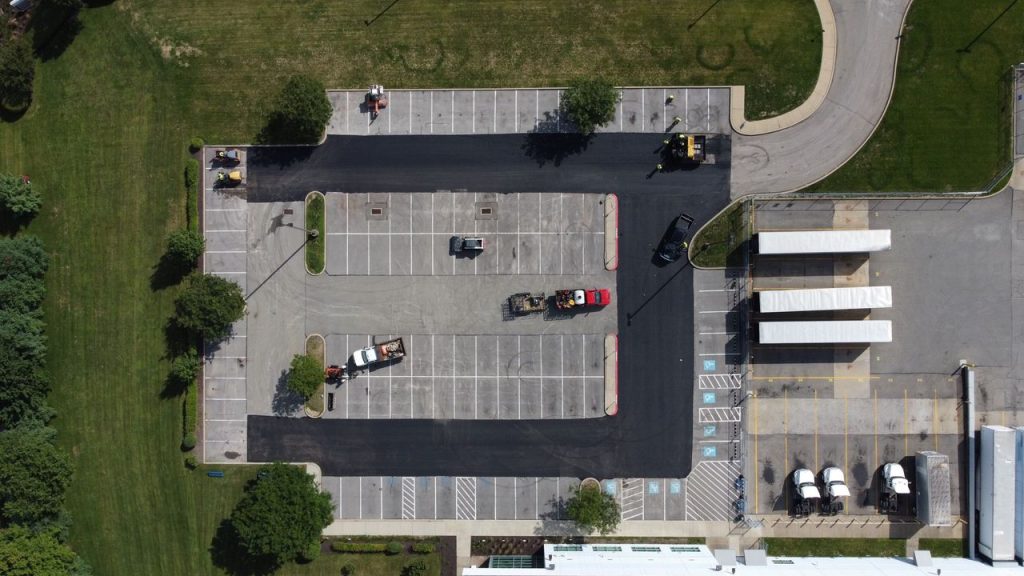
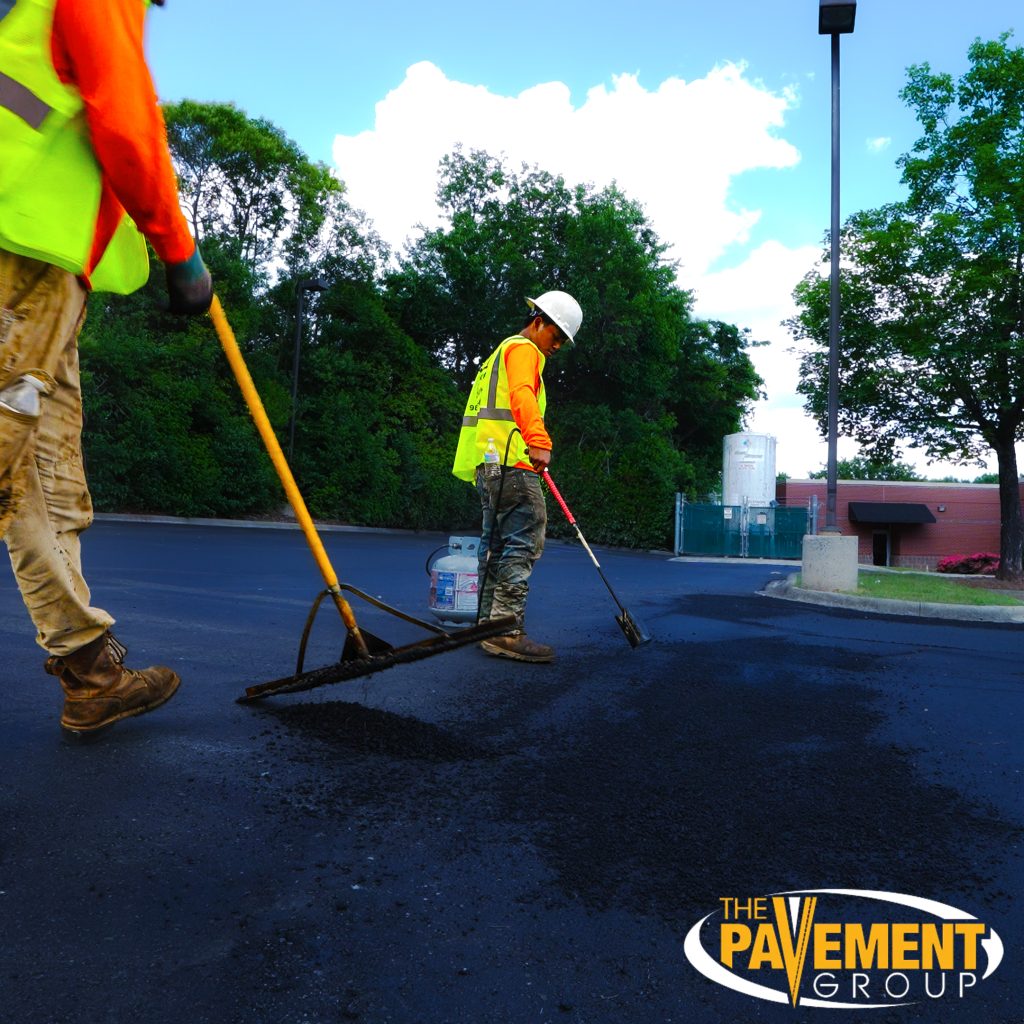
A pristine, jet-black asphalt parking lot with razor-sharp striping is the ultimate first impression for premium prospects. Secure higher rental rates and attract top-tier residents with a fresh surface upgrade. Speak with our team to plan your paving project.
Frequently Asked Questions
How much does a new asphalt parking lot cost?
Cost varies widely by lot size, base condition, and region, typically ranging from a few dollars to well over ten dollars per square foot for a full repave. Get a site-specific quote, since base repair, drainage work, and striping all shift the total.
Does repaving a parking lot increase property value?
Yes. A new lot improves curb appeal, supports a higher asking rent, and removes a common objection during due diligence, all of which strengthen the valuation, especially for income properties valued on the rent roll and occupancy.
How long does a new asphalt parking lot installation take?
Most commercial repaving takes 2 to 14 days, depending on lot size, whether the base needs rework, and weather conditions. Phased repaving can keep part of the lot open during business hours to limit tenant disruption.
What’s the difference between seal coating and repaving for new asphalt parking lots?
Seal coating refreshes and protects a structurally sound lot’s surface and is done every 2–3 years. Repaving replaces the asphalt entirely and is needed when cracking is widespread or the base has failed. Seal coating is maintenance; repaving is a structural fix.
How often should a commercial parking lot be repaved?
With proper seal coating and patch maintenance, a well-installed asphalt lot can last 15–20 years before it needs a full repave. Climate, traffic volume, and base quality all affect that timeline.
Can a bad parking lot really affect tenant leasing decisions?
Yes. Prospective tenants form an impression of a property before entering the building, and a damaged lot signals deferred maintenance across the board. That perception affects tour conversion, negotiating leverage, and asking rent, not just aesthetics.
See also: Parking Lot Safety Improvements Every Apartment Complex Should Consider, Best Parking Lot Upgrades for Older Apartment Communities
About the Author
The Pavement Group specializes in asphalt engineering, pavement maintenance solutions, and data-driven asset management for commercial, retail, and multi-family residential properties. Utilizing advanced structural pavement evaluations and capital planning transparency, The Pavement Group works directly with property managers to extend pavement lifecycles, eliminate liability risks, and optimize long-term infrastructure investments.