A resident trips on a cracked curb stop in a dark parking lot and breaks a wrist. The claim lands on the property manager’s desk within a week. Most apartment parking lot injuries and collisions trace back to a handful of fixable problems: bad lighting, faded striping, and pavement nobody has inspected in years. Parking lot safety is vital in keeping every apartment complex safer than ever. This guide ranks the improvements that matter most, their costs, and which liability each one closes off.
TL;DR
- Poor lighting and faded striping cause the majority of preventable parking lot incidents at multifamily properties.
- Speed bumps, wheel stops, and clear signage cut collision risk without a full repave.
- ADA-compliant striping and curb ramps aren’t optional; they’re a legal requirement for most properties.
- A basic quarterly inspection catches most hazards before they turn into claims.
- Costs range from a few hundred dollars for striping touch-ups to a full repave running into the tens of thousands.
Why Parking Lot Safety Matters for Apartment Communities
Parking lot safety is the first and last thing every resident and visitor sees. A cracked, dim, poorly marked lot signals deferred maintenance before anyone sets foot in a unit. It also creates real legal exposure: slip-and-fall claims, vehicle collisions, and even crime incidents tied to poor visibility can all trace back to the lot itself.
Recent data show that roughly 30 percent of premises liability claims at multifamily properties originate in or around parking areas, according to a 2025 report by the National Apartment Association. This high share underscores the need for proactive parking lot safety upgrades.
Property managers who treat the lot as a safety system, not just pavement, reduce claims and retain renters longer. For the fastest risk reduction per dollar, prioritize the following: first, improving lighting and repainting striping, which prevent most injuries and nighttime incidents for a manageable cost; next, addressing trip hazards like cracks and potholes, since these can lead directly to liability claims; then, adding targeted speed bumps and clear signage to lower collision risk without a major investment. Wheel stops, bollards, and security cameras offer meaningful improvements but typically provide the greatest ROI when used to address specific, recurring problems. This ranking helps managers act efficiently, fixing what matters most in the order that delivers the highest value.
Improve Lighting to Deter Crime and Prevent Falls
Dark corners and dead light poles are the single biggest driver of nighttime incidents in apartment lots, from trips over curb stops to break-ins targeting parked cars. Failing to implement them can cause parking lot safety issues.
Where lighting gaps cause the most incidents
Walk the lot after dark and note every spot where one light doesn’t overlap with the next. Corners, dumpster enclosures, and the far ends of long rows are the usual trouble spots.
LED retrofits vs. full pole replacement
An LED retrofit swaps the fixture on an existing pole and costs far less than replacing the pole itself. Most properties only need full replacement where poles are structurally damaged or spacing is wrong for the lot’s size.
As lighting consultant Megan Alvarez, LC (Lighting Certified), explains, “Many property managers underestimate how much even minor lighting upgrades can prevent both accidents and crime. Uniform, well-placed LED lighting doesn’t just help residents feel safer; it gives staff a clear visual record on security cameras and cuts serious incidents by making hazards visible before they cause trouble.
Repaint Striping, Stall Lines, and Directional Signage
Faded stall lines cause confused, angry drivers to double-park, block fire lanes, and clip mirrors backing out. Restriping is one of the cheapest fixes on this list and one of the most visible to residents.
Repaint every 1–2 years depending on climate and traffic volume. Include directional arrows, fire lane markings, visitor stalls, and ADA striping in the same pass so nothing gets missed.
Slow Traffic with Speed Bumps and Speed Tables
Apartment lots pack in many turns, blind corners, and pedestrians into a small footprint. Speed bumps and speed tables force drivers to slow down at the exact points where cars and people cross paths.
Place them at drive-lane intersections, near dumpster corrals, and by mail kiosks and playgrounds, not evenly spaced along a straight row. A speed bump in the wrong spot gets ignored; one at a blind corner gets respected.
Repair Potholes and Cracks Before They Become Liability Claims
A pothole doesn’t just damage tires. It’s a documented hazard the moment a resident reports it, and an unaddressed report is exactly what a plaintiff’s attorney looks for after a fall or a wheel injury. All of them are causing a decline in parking lot safety.
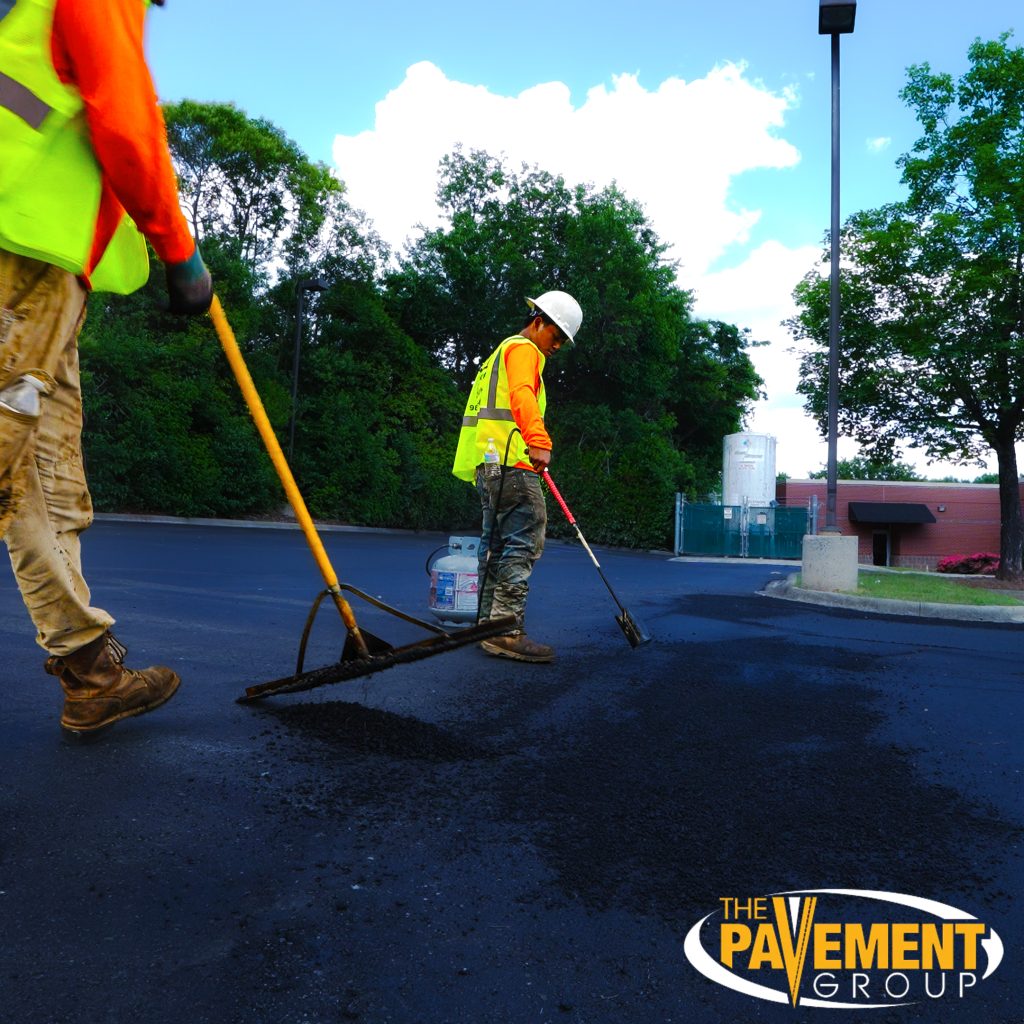
Crack sealing early keeps water out of the base layer and prevents small cracks from becoming potholes. Once potholes form, patch them fast and log the repair date. That log becomes the property’s defense if a claim comes in later.
Add Security Cameras and Access Control Points
Cameras don’t capture every incident, but they change behavior, speed up investigations, and provide property managers with hard evidence when a claim or crime report comes in.
Cover entry and exit points, the areas around any perimeter gates, and the darkest corners identified during the lighting walk.
Create Clear, ADA-Compliant Pedestrian Walkways
Residents cut across drive lanes when there’s no obvious walkway from the parking rows to the building entrance. That’s where cars and pedestrians collide.
Paint clear crosswalks at every building entrance and connect them to a continuous, unobstructed path. Curb ramps at every crosswalk aren’t optional. ADA requirements set minimum standards for accessible routes, and most inspectors check striping and ramp compliance together.
Install Wheel Stops and Bollards Where They’re Needed Most
Wheel stops keep cars from rolling into sidewalks, dumpsters, or building walls. Bollards protect anything a car backing up could hit hard: gas meters, electrical panels, building corners, and playground fencing.
Skip wheel stops in ADA-accessible stalls unless they’re positioned correctly. A wheel stop in the wrong spot in an accessible space can itself violate ADA clearance requirements.
Schedule Regular Inspections Instead of Waiting for Complaints
Most parking lot hazards are discovered by residents, not by staff. That’s backward. A documented quarterly walk-through, checking lighting, striping visibility, pavement condition, and signage, catches problems before anyone gets hurt or files a claim.
Keep a written log with dates, photos, and repair timelines. That log is the property’s best protection if an incident does happen.
Where to Start
Not every property needs every fix at once. Start with the walk-through: note every dark corner, faded line, and cracked slab. Rank the list above by what’s cheapest to fix and what carries the most liability, and work down from there.
Parking lot safety isn’t a one-time project. It’s a maintenance rhythm that protects residents and protects the property’s bottom line at the same time.
From strategic speed bump installation and bright pedestrian crosswalks to fixing trip hazards, proactive safety upgrades protect your residents and shield your business from costly liability claims. Speak with our team to secure your property.
Frequently Asked Questions
How often should an apartment complex parking lot be inspected?
Walk the lot at least quarterly to check lighting, striping, pavement condition, and signage. Increase frequency after major storms or freeze-thaw cycles, since both accelerate cracking and pothole formation. Assign the walk-through to a specific staff member and keep it on the same schedule as other routine property inspections, not something that only happens when a resident complains. A documented inspection log protects the property if a claim comes in later.
What lighting level is recommended for apartment parking lots?
Even coverage across the entire lot, with no dead zones at the corners or between the poles, matters more than raw brightness from any single fixture. Pay particular attention to the areas identified during a nighttime walk-through, since a single dark gap between two working lights can still create a hazard. Consistency across the lot, not peak brightness in a few spots, is what actually reduces incidents.
Are property owners liable for parking lot accidents?
Often, yes, if the property owner knew about a hazard and didn’t fix it in a reasonable time. Courts generally look at whether the condition was foreseeable and whether management had a reasonable opportunity to address it before the incident. Documented inspections and repair logs are a property’s strongest defense, since they show a pattern of active maintenance rather than neglect. This isn’t legal advice; consult a licensed attorney for the specific liability exposure of a property.
How much does it cost to restripe an apartment parking lot?
Cost typically scales with total square footage, the number of stalls, and the amount of additional striping (ADA markings, fire lanes, directional arrows) the job requires. Restriping is one of the lowest-cost, highest-visibility fixes on this list, and it’s often the first improvement residents actually notice. Most properties should plan to repaint every 1–2 years, depending on climate and traffic volume.
Do apartment parking lots need to be ADA-compliant?
Yes. Most multifamily properties must meet ADA requirements for accessible stalls, striping, and curb ramps, and the specific counts and dimensions depend on the total number of stalls. Non-compliance can trigger both accessibility complaints and general liability exposure if it contributes to an injury. Inspectors typically check striping and curb ramp compliance together, so it’s worth addressing both in a single maintenance pass. A property manager unsure of current requirements should confirm specifics with a licensed contractor or accessibility consultant before any restriping project.
What’s the difference between a speed bump and a speed table?
A speed bump is short and steep, forcing a hard, immediate slowdown as a car crosses it. A speed table is longer and flatter on top, so it slows traffic more gradually while still being effective at the low speeds typical of apartment complex lots. Speed tables tend to be more comfortable for delivery vehicles and cause less suspension wear over time. Either option works, but placement at actual conflict points, such as blind corners or pedestrian crossings, matters more than the type chosen.
How long does asphalt sealcoating last?
Lifespan depends heavily on local climate, traffic volume, and how well the surface was prepped before the sealcoat was applied. Sealcoating protects the surface between full repaves by keeping water and UV exposure from breaking down the asphalt binder. It should be treated as part of a regular maintenance schedule, not a one-time fix, and paired with crack sealing for the best results.
Can security cameras lower a property’s insurance premium?
Some insurers offer premium credits for documented security measures, including camera coverage at entry points and high-risk areas of the lot. The discount, where available, typically depends on the specific carrier, the property’s claims history, and how the security system is documented in the policy application. Property managers should check directly with their carrier rather than assuming a discount applies automatically.
See also: Best Parking Lot Upgrades for Older Apartment Communities, Why Preventive Pavement Maintenance Saves Apartment Owners Thousands (2026 Guide)
About the Author
The Pavement Group specializes in asphalt engineering, pavement maintenance solutions, and data-driven asset management for commercial, retail, and multi-family residential properties. Utilizing advanced structural pavement evaluations and capital planning transparency, The Pavement Group works directly with property managers to extend pavement lifecycles, eliminate liability risks, and optimize long-term infrastructure investments.