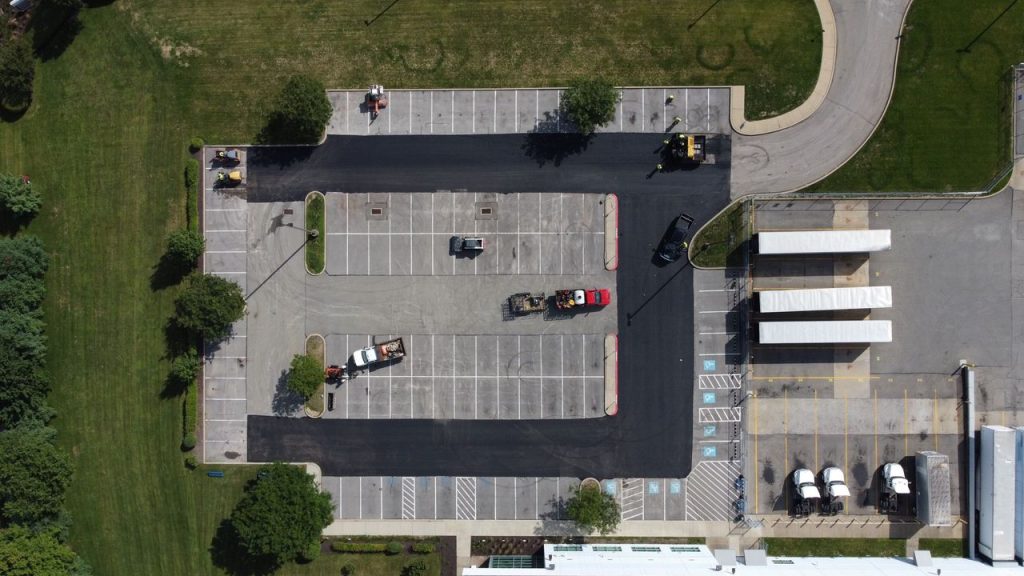
You don’t need to tear out a 20-year-old parking lot. It needs the right upgrades in the right order. Owners of older apartment communities often assume a worn lot means a full reconstruction, and that assumption alone can cost them $100,000 more than necessary. The truth is that most aging lots can be restored to a near-new standard of function, safety, and curb appeal through a targeted sequence of upgrades, provided the base is still sound. This guide walks through which upgrades matter most, in what order, and how to determine whether your lot qualifies for restoration rather than replacement.
TL;DR
- Most lots over 15 years old need a base integrity check before any cosmetic upgrade is worth doing.
- The highest-impact upgrades, in order of typical ROI: drainage correction, base repair/patching, an asphalt overlay or infrared repair, restriping (including ADA compliance), and LED lighting.
- ADA compliance upgrades are not optional—noncompliant striping and access routes are among the most common fair housing complaint triggers at older communities.
- A mill-and-overlay costs roughly half of full-depth reconstruction but only works if the base hasn’t already failed.
- Bundling upgrades into a single mobilization (rather than doing them piecemeal over several years) meaningfully lowers the total cost.
Step One: Find Out What You’re Actually Working With
Before choosing parking lot upgrades for older apartment communities, get a pavement condition assessment. This is the difference between spending $40,000 to restore a lot and spending $180,000 to rebuild one you didn’t need to rebuild.
A proper assessment checks:
- Base integrity — core samples or ground-penetrating radar to confirm the sub-base hasn’t failed
- Drainage flow — where water pools, how fast it clears, and whether catch basins are still functioning
- Surface distress mapping — cracking type and severity, rutting, alligatoring
- ADA compliance gaps — slope, striping, and accessible route condition against current code
Skipping this step is the single most common reason older-community upgrade projects go over budget: owners choose the upgrade before knowing whether the base can support it.
Upgrade 1: Fix Drainage Before Anything Else
Standing water is the number one cause of accelerated pavement failure, and it’s also the cheapest problem to fix relative to the damage it prevents. Regarding low spots, clearing or replacing clogged catch basins and correcting the slope at building entries and dumpster pads should happen before any resurfacing work—otherwise, the new surface fails in the same spots within a few years.
For older communities, drainage problems often result from decades of small asphalt patches added on top of one another, each slightly altering the original grade. A drainage-first approach corrects the accumulated distortion rather than paving over it again.
Upgrade 2: Base Repair — Patch, Don’t Guess
Once you correct the drainage, address any areas where core sampling revealed base failure. Two approaches dominate parking lot upgrades in older apartment communities:
- Full-depth patching: remove the failed section down to subgrade and rebuild it; the right call for isolated alligatoring or potholes with soft subgrade underneath.
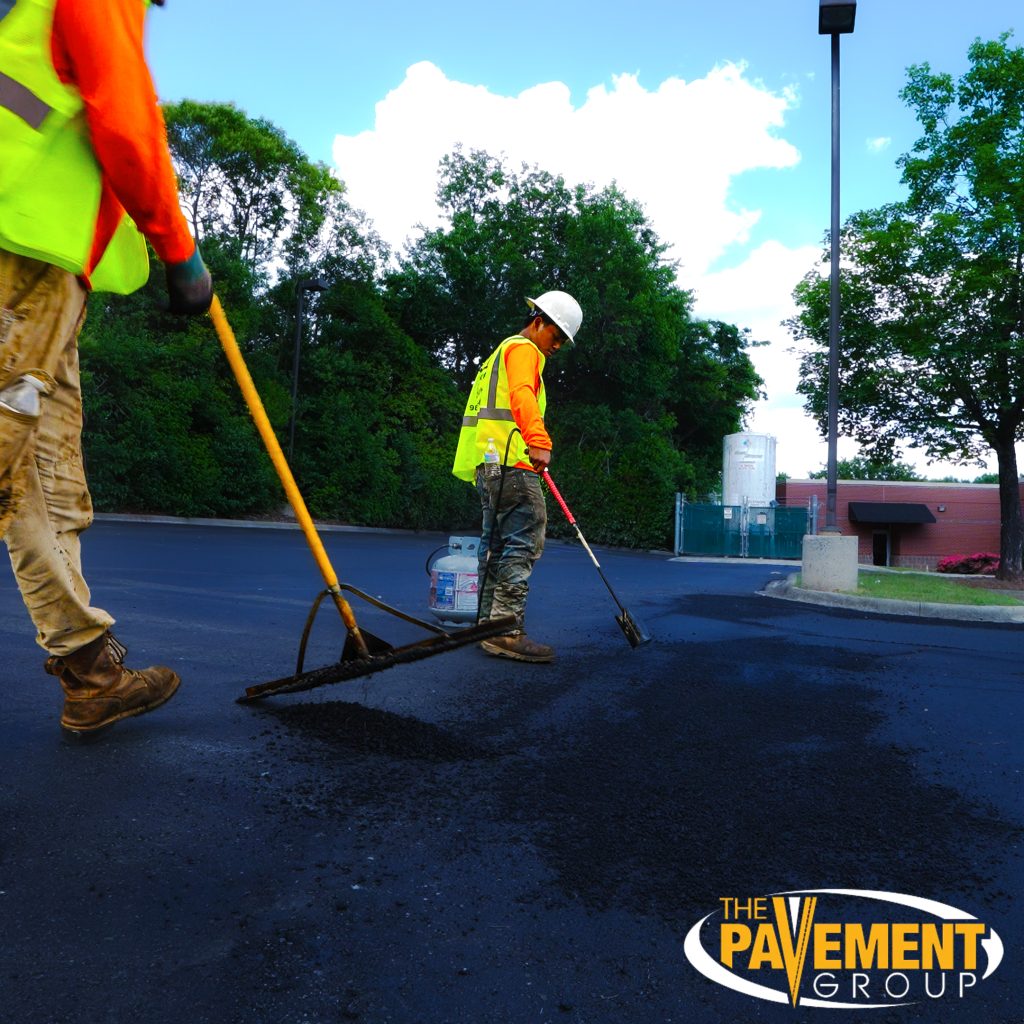
- Infrared patching: heats and re-compacts the existing asphalt in place without a cold-seam patch, a strong option for surface-level distress where the base itself is still sound, and it blends better than a cut-and-patch repair.
Skipping targeted base repair and going straight to an overlay is the most common reason overlay projects fail early. The overlay simply telegraphs the failure underneath within a season or two.
Upgrade 3: Overlay vs. Mill-and-Overlay vs. Full Reconstruction
| Option | Best For | Typical Cost (100-space lot) | Lifespan Added |
|---|---|---|---|
| Asphalt overlay (no milling) | Sound base, moderate surface wear | $35,000–$55,000 | 8–10 years |
| Mill-and-overlay | Sound base, curb/drain conflicts from raised grade | $50,000–$75,000 | 10–15 years |
| Full-depth reconstruction | Failed base, extensive alligatoring | $150,000–$250,000+ | 20+ years |
For most older communities that have kept up with at least basic patching, a mill-and-overlay is the sweet spot: it resets the surface, corrects drainage conflicts caused by years of overlay-on-overlay buildup, and costs roughly a third as much as full reconstruction.
Upgrade 4: Restriping and ADA Compliance
Restriping costs less than the upgrades above; also, skipping it will most likely lead to legal or compliance violations. Faded striping at an older community frequently predates current ADA slope and accessible route requirements, meaning a simple repaint isn’t enough. The accessible spaces and routes themselves may need to be relocated or regraded to meet current codes for parking lot upgrades in older apartment communities.
Priorities for older lots specifically:
- Confirm accessible space count matches current unit count requirements (this changes as buildings are renovated or units are added)
- Verify accessible route slope (max 1:12 running slope, 1:48 cross slope); many older lots were built before this was consistently enforced
- Refresh fire lane markings and van-accessible signage, which fade faster than parking stripes and are commonly cited in property inspections
Upgrade 5: Lighting
Lighting is often bundled with pavement work because trenching for electrical conduit is far cheaper when the surface is already being cut or resurfaced. Replacing older metal-halide or high-pressure sodium fixtures with LED fixtures not only cuts energy costs but also directly affects residents’ perception of safety. This is essential for apartment parking lot upgrades in in older apartment communities. Poorly lit lots are consistently flagged in resident satisfaction surveys and are a factor in premises liability claims.
Sequencing Upgrades to Avoid Wasted Money
The single biggest mistake older communities make is sequencing upgrades in the wrong order. Restriping a lot that’s about to be resurfaced, or resurfacing before drainage is corrected. The order that avoids wasted spend:
- Condition assessment
- Drainage correction
- Base repair (full-depth or infrared)
- Overlay or mill-and-overlay
- Restriping and ADA compliance
- Lighting (bundled with any trenching from steps 2–4)
Bundling as many of these as possible into a single mobilization, one contractor, one traffic control plan, and one resident notice typically costs less than spreading them across separate projects over several years, since mobilization and traffic control are fixed costs paid every time a crew comes on-site.
When Restoration Isn’t Enough
Not every older lot qualifies for restoration. If a condition assessment shows widespread alligatoring across more than roughly a third of the lot, or core samples show subgrade saturation, an overlay is a short-term patch that will fail within a year or two. In that scenario, the honest recommendation is full reconstruction; spending on an overlay first would be money spent twice.
The Bottom Line
The lots that end up costing owners the most are the ones where upgrades were chosen without a condition assessment, done in the wrong order, or delayed until drainage damage had already spread beyond the original problem area. A base-first, sequenced approach routinely saves older communities the difference between a $60,000 restoration and a $200,000 rebuild.
From strategic overlays and drainage corrections to clean line restriping, targeted structural upgrades boost curb appeal and protect your property value. Speak with our team to prioritize your asset improvements.
Frequently Asked Questions
How do I know if my older parking lot needs an overlay or full reconstruction?
A pavement condition assessment with core sampling is the only reliable way to know. If the base and subgrade are still sound, an overlay or mill-and-overlay works. If more than about a third of the lot shows alligator cracking or the subgrade is saturated, reconstruction is usually the only lasting fix.
Is restriping required to meet current ADA standards, or can I just repaint the existing layout?
Older layouts often predate current ADA slope and space-count requirements, so a straight repaint isn’t always compliant. An ADA review should confirm accessible space count, route slope, and signage before restriping begins.
What’s the cheapest way to extend the life of an older apartment parking lot?
Correcting drainage issues first is the highest ROI, lowest-cost upgrade available. It prevents the same failure from recurring during any subsequent resurfacing work.
Should lighting upgrades be done separately from pavement work?
No — bundling lighting with any pavement project that requires trenching or resurfacing significantly reduces cost, since electrical conduit work is far cheaper when the surface is already open.
How much does a mill-and-overlay cost compared to full reconstruction?
A mill-and-overlay for a typical 100-space lot runs roughly $50,000–$75,000, compared to $150,000–$250,000+ for full-depth reconstruction, but only works if the base hasn’t already failed.
How often should older apartment communities get a pavement condition assessment?
Every 3–5 years for lots under 20 years old and every 1–2 years for lots older than that, since the failure curve accelerates significantly once pavement passes the midpoint of its structural life.
See also: Why Preventive Pavement Maintenance Saves Apartment Owners Thousands (2026 Guide), Budgeting for Apartment Parking Lot Repairs: A Property Manager’s Guide
About the Author
The Pavement Group specializes in asphalt engineering, pavement maintenance solutions, and data-driven asset management for commercial, retail, and multi-family residential properties. Utilizing advanced structural pavement evaluations and capital planning transparency, The Pavement Group works directly with property managers to extend pavement lifecycles, eliminate liability risks, and optimize long-term infrastructure investments.