A parking lot repair doesn’t fail all at once. It progresses from hairline cracks to potholes to base failure in stages, and each stage you skip costs more than the last. Most communities budget for parking lot repairs the way they budget for a broken water heater: reactively, after a resident complains or a tenant’s car gets damaged. That approach turns a sealcoating cost-per-square-foot preventive job into a reconstruction cost-per-square-foot capital project a few years later. This guide breaks down what to actually budget, when, and how to size a reserve fund to a real lot’s condition rather than a guess.
TL;DR
- Parking lot repair costs fall into four tiers: crack sealing/patching, sealcoating, mill-and-overlay, and full reconstruction, and each tier belongs at a different point in your capital calendar.
- Deferred maintenance doesn’t just add cost; it changes the repair tier you need, which is the expensive part.
- A pavement condition assessment, not a visual guess, should set your budget line, not just your calendar.
- Reserve fund contributions should scale to lot age and square footage, not a flat annual number.
- Phasing repairs by section keeps the property leasable during work, rather than closing the whole lot.
Why Apartment Parking Lots Need a Dedicated Budget Line
Parking lots are among the largest single capital assets on a multifamily property and among the easiest to underfund because the damage is gradual and visually easy to ignore until it isn’t. Unlike a roof or HVAC system, most operators don’t have a standard replacement-cycle assumption for pavement built into their capital plan.
A parking lot budgeted as “repairs as needed” tends to skip the cheap tier entirely (crack sealing, sealcoating) and land straight in the expensive tier (mill-and-overlay, reconstruction) once potholes and liability complaints force the issue.
How Much Should You Budget for Parking Lot Repairs Each Year?
There’s no single flat number that fits every property, because it depends on lot age, traffic volume, climate, and drainage, but the right way to size the number is by tier, not by guesswork:
- Routine maintenance (crack sealing, patching): small annual line, planned every 1–2 years on most lots.
- Sealcoating: planned roughly every 2–3 years depending on traffic and climate, larger than routine maintenance but far smaller than resurfacing.
- Mill-and-overlay: a multi-year capital item, typically once every 12–20 years depending on base condition.
- Full reconstruction: the largest tier, reserved for lots with failed base material, typically once every 20–30 years if maintenance tiers are kept up.
The 4 Repair Tiers and What Each One Actually Costs
When managing apartment parking lot repair, understanding the 4 repair tiers helps you choose the right solution for your property’s condition and budget. Knowing exactly what each tier covers and how much each one costs ensures you avoid unnecessary expenses while keeping your parking area safe and functional.
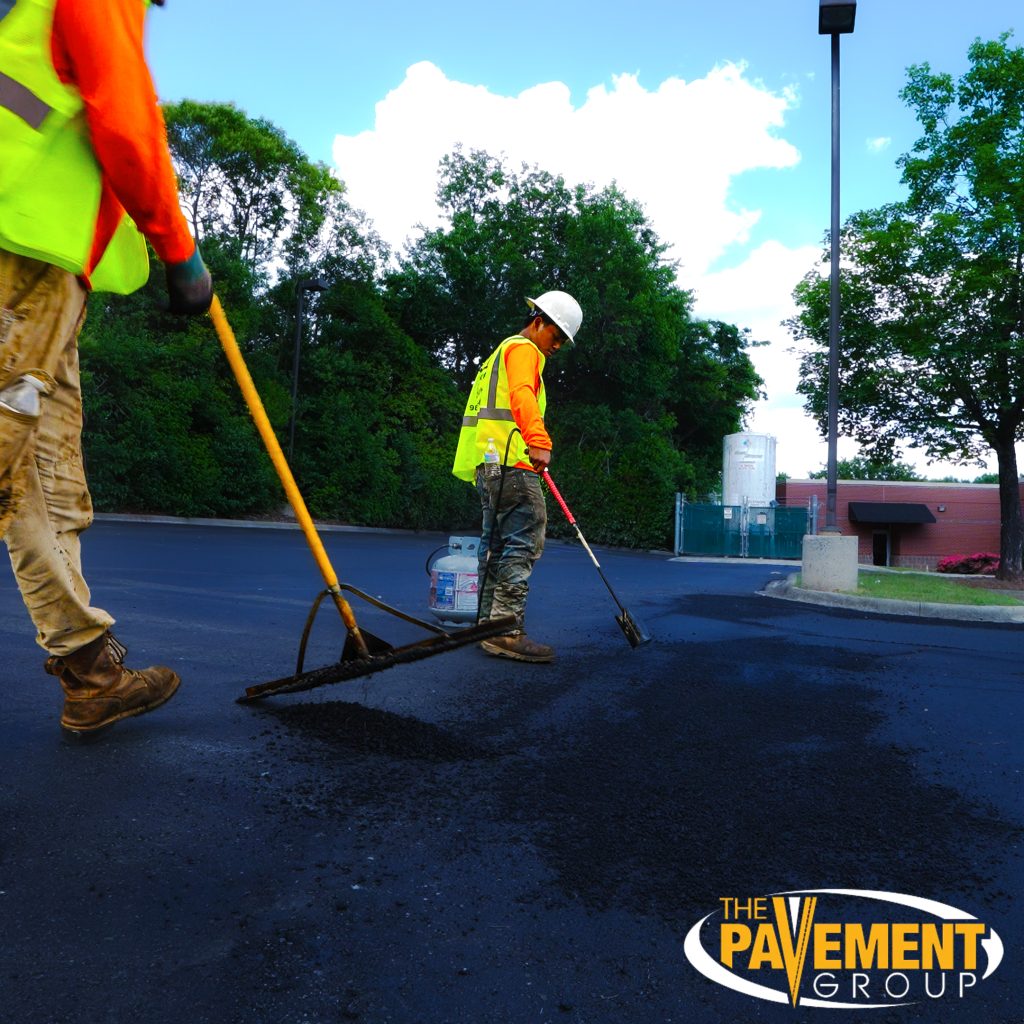
Crack sealing and pothole patching
The lowest-cost, highest-frequency tier. It stops water intrusion at cracks before it undermines the base layer beneath the asphalt. This is the tier most often skipped, and skipping it usually pushes many people into the next, far more expensive tier early.
Sealcoating
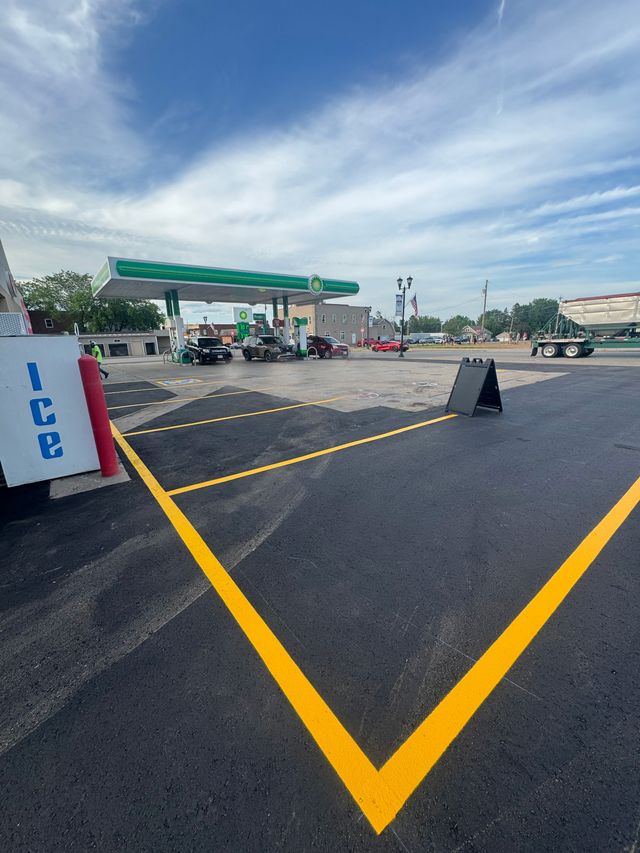
A protective layer applied over existing asphalt that blocks UV and chemical damage (oil, gas, deicing salt) and restores a uniform, dark surface. Sealcoating extends the life of otherwise sound pavement; it does not fix structural damage or repair a base that has already failed.
Mill and overlay
Removing the top layer of worn asphalt and replacing it with a new layer, without touching the base. This tier addresses surface-level fatigue (rutting, extensive cracking, and drainage issues) while the underlying base remains structurally sound.
Full reconstruction
Removing pavement down to the base, repairing or replacing the base material, and repaving from the ground up. This tier is required when the base has failed, typically visible as widespread alligator cracking, potholes that keep returning after patching, or standing water that doesn’t drain. It’s the most expensive tier and the one where deferred maintenance drives lots toward the fastest.
How to Read a Pavement Condition Assessment Before You Budget
A pavement condition assessment (often scored on a Pavement Condition Index, or PCI, scale) gives you an objective number instead of a property manager’s visual guess. A professional assessment should tell you the following:
- Current PCI score and what tier of repair that score maps to
- Which sections of the lot are failing versus which are still sound (most lots don’t need the same treatment everywhere)
- Drainage issues that will undermine any repair if left unaddressed
- A realistic timeline before the lot moves to the next, more expensive tier
Budget from the assessment, not from the calendar. A lot that looks fine at year 8 and a lot that looks fine at year 15 are not on the same repair schedule.
Reserve Fund Planning: How Much to Set Aside Per Unit or Per Square Foot
Reserve fund contributions for pavement should scale with two variables: total lot square footage and the lot’s current age/condition relative to the expected tier timing. A 10-year-old lot on a well-drained base needs a smaller annual reserve line than a 10-year-old lot with known drainage problems, even if both are the same size.
A workable starting framework: size the reserve contribution to fund the next tier your PCI assessment predicts for apartment parking lot repair, divided across the years until that tier is due, then adjust annually as the assessment is updated. This turns pavement from a surprise capital expense into a planned line item.
Repair Cost Comparison Table: Tier vs. Lifespan Added vs. Disruption Level
| Repair tier | Lifespan added | Tenant disruption | Best-use scenario |
| Crack sealing / patching | Short-term | Minimal | Routine upkeep on a sound lot |
| Sealcoating | Medium | Low (can phase by section) | Sound base, surface wear/UV damage |
| Mill and overlay | Long | Moderate (phase by section, plan around move-outs) | Surface fatigue, base still sound |
| Full reconstruction | Longest | High (may require temporary parking plan) | Failed base, recurring potholes, standing water |
How Deferred Maintenance Multiplies Your Eventual Repair Cost
Skipping crack sealing lets water reach the base. Skipping sealcoating lets UV and chemical exposure accelerate surface fatigue. Both failure paths end the same way: an area that could have stayed in the lower-cost tiers for another decade instead needs far more extensive apartment parking lot repair, such as mill-and-overlay or reconstruction years ahead of schedule.
Phasing Repairs Around Tenants: Minimizing Disruption During Work
- Section the lot and repair it in phases rather than closing the entire property’s parking at once.
- Schedule the highest-disruption tier (reconstruction) around lease turnover periods when occupancy dips, if your market has one.
- Communicate a written parking plan to residents at least before work begins, including temporary parking locations.
- Coordinate with your contractor on curing time before reopening sections; reopening too early undoes the repair.
A Parking Lot Repair Decision Framework by Lot Age and Condition
The framework maps lot age and PCI score to the recommended tier, so a property manager can find their situation and go straight to the budget line that applies to apartment parking lot repair, instead of reading the full cost breakdown every time.
Getting Competitive, Accurate Bids: What to Put in Your RFP
- The most recent pavement condition assessment, not just square footage
- Any known drainage issues or utility work under the lot
- Your preferred phasing/tenant-disruption constraints
- Whether you want tier-by-tier pricing (so you can compare a mill-and-overlay bid against a reconstruction bid apples-to-apples)
- Warranty terms for each tier of work
Getting bids without a condition assessment attached is the most common reason budgets and actual invoices don’t match for apartment parking lot repair.
Ready to map out your apartment community’s reserve study or parking lot maintenance budget? Speak with our team to get accurate repair estimates and protect your CapEx.
Frequently Asked Questions
How much should a property manager budget for parking lot repairs?
The right budget for apartment parking lot repair depends on the lot’s size, age, and condition, not ona flat number. Size the annual reserve contribution to the repair tier your pavement condition assessment predicts next, divided across the years until it’s due, and adjust the figure each time the assessment is updated.
How often does an apartment parking lot need to be resealed?
Most lots need sealcoating roughly every 2 to 3 years, depending on traffic volume, climate, and sun exposure. A pavement condition assessment gives a more accurate timeline than a fixed calendar rule.
What’s the difference between sealcoating and mill and overlay?
Sealcoating protects an already-sound surface from UV and chemical damage. Milling and overlaying removes and replaces the worn top layer of asphalt when the underlying base is structurally sound but the surface has fatigued. They address different problems and aren’t interchangeable.
How do you know if a parking lot needs full reconstruction instead of resurfacing?
Full reconstruction is needed when the base material has failed, which usually shows up as widespread alligator cracking, potholes that return quickly after patching, or standing water that won’t drain. If the base is sound, mill-and-overlay is usually sufficient and less expensive.
What should go into a parking lot repair RFP?
Include the most recent pavement condition assessment, known drainage or utility issues, your phasing and tenant-disruption preferences, a request for tier-by-tier pricing, and warranty terms. Bids without a condition assessment attached are the most common reason estimates and final invoices don’t match.
Does deferring parking lot maintenance actually end up costing more later?
Yes. Deferring crack sealing lets water reach the base, and deferring sealcoating accelerates surface fatigue from UV and chemical exposure. Both failure paths push a lot of costs into a more expensive repair tier years earlier than a well-maintained lot would need to.
Can a parking lot be repaired in phases to avoid closing all tenant parking at once?
Yes. Sectioning the lot and repairing it in phases lets most of the property stay open during work. Higher-disruption tiers like reconstruction are easier to schedule around lease turnover periods when occupancy naturally dips.
See also: How Apartment Parking Lots Impact Resident First Impressions, Drainage Problems in Apartment Parking Lots: Causes, Risks, and Solutions
About the Author
The Pavement Group specializes in asphalt engineering, pavement maintenance solutions, and data-driven asset management for commercial, retail, and multi-family residential properties. Utilizing advanced structural pavement evaluations and capital planning transparency, The Pavement Group works directly with property managers to extend pavement lifecycles, eliminate liability risks, and optimize long-term infrastructure investments.