According to the revised ADA guidelines on ramp levels, an edge equal to or less than 1/4 inch can remain vertical. One between 1/4 and 1/2 inch must be beveled at a slope no steeper than 1:2. Any edge exceeding 1/2 inch must have a ramp. Since a coin is about 1/16 inch thick, a lip that doesn’t meet these requirements is only a few coins high when stacked. We see lips like this at almost every apartment complex we visit, at driveway aprons, dumpster pads, sidewalk crossings, and gutter pans. We repair these for property managers nationwide, and this guide explains exactly how we diagnose and fix each one.
Overview
- Every uneven transition can be traced to settlement, heave, or wear, and the cause determines the necessary repair.
- First, measure the lip height, since that measurement determines the repair method.
- A clean repair requires milling, a vertical edge, a tack coat, and a sealed joint.
- The taper length matters because a short wedge will wear down under the tires within a season.
- Climate affects how quickly a transition fails, so different regions require different watch lists.
Three Causes Behind Every Lip
Asphalt and concrete are two distinct materials: concrete remains rigid and stays in place, whereas asphalt flexes, compacts, and moves with temperature changes. A patent application relating to pavement structures states that where asphalt meets rigid structures, temperature-induced expansion and contraction cause break-up, cracking, and separation along the contact line.
We divide the various kinds of lips into three categories. A settlement lip occurs when the asphalt side sinks because the base beneath it has compacted or washed away. A heavey lip results when frost or swelling soil pushes the concrete upwards. A worn lip happens when traffic rubs and pushes the asphalt edge down until it drops below the slab. Settlement is the most common type we encounter, and it usually begins when water gets into the joint.
Measure Before We Cut
We never begin any repair without first taking measurements. The team places a straightedge across the joint, uses a gauge to measure the gap, and then checks three positions along the transition. We also note whether the asphalt is low or the concrete is high. The table illustrates how the measurements influence our decision.
| Measured lip | Standard that applies | Our approach |
| 1/4 inch or less | May stay vertical | Seal the joint and monitor; repair if the edge is breaking |
| Over 1/4 inch up to 1/2 inch | Bevel no steeper than 1:2 | Mill and place a tapered hot mix wedge |
| Over 1/2 inch | Ramp required on an accessible route | Rebuild the asphalt to meet the slab, or correct the concrete level |
We take these figures as the basic requirement. Since we are contractors and not lawyers, we advise that you check your accessibility obligations with your legal advisor and with your local building department. Legal review matters because failing to comply with local codes or ADA standards can expose property managers to liability, fines, or lawsuits if someone is injured. Checking location-specific requirements helps you stay compliant and protects your property from legal risk.
Preparing the Joint the Right Way
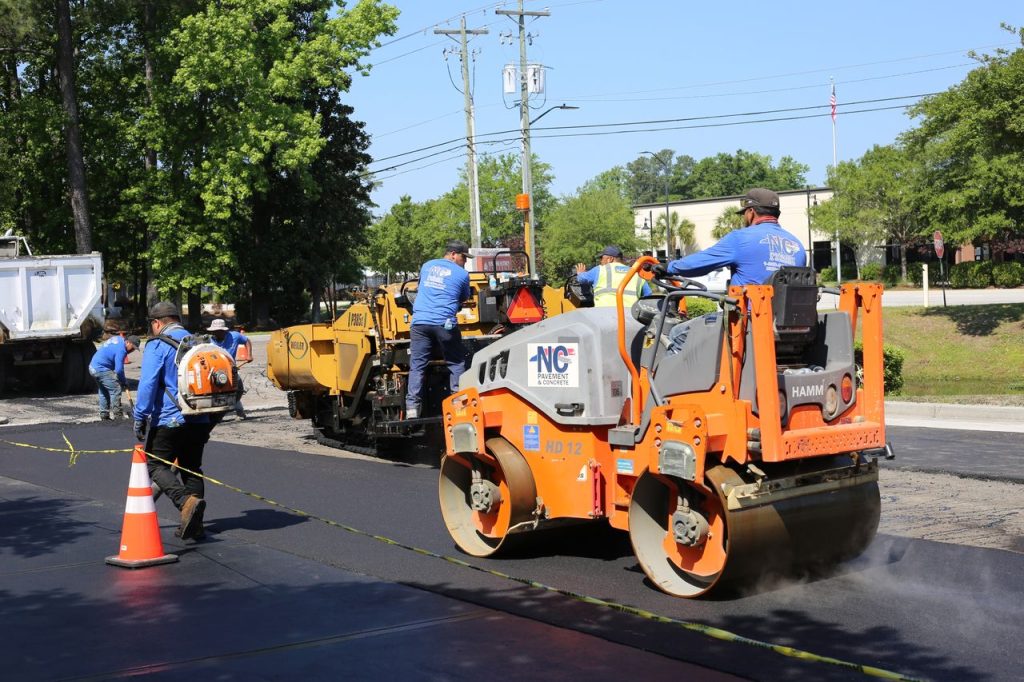
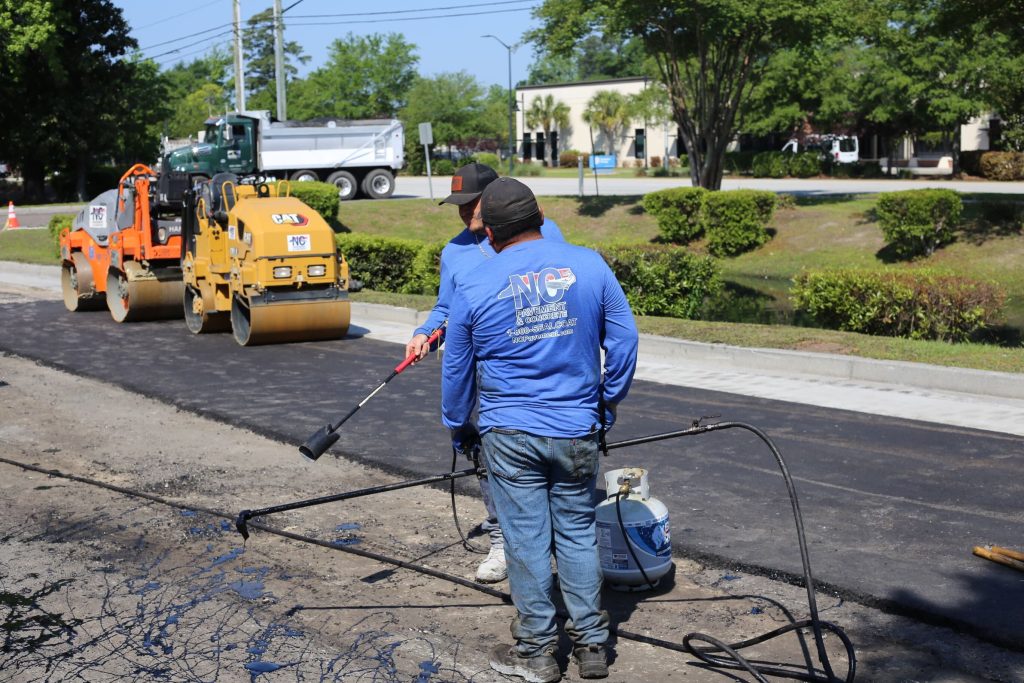
Most repair failures happen at the joint. When new asphalt bonds to a dusty, crumbling edge, it eventually comes loose, showing that proper preparation determines how long the repair will last. The Iowa Department of Transportation provides a useful example. Its Iowa DOT joint repair specification requires milling the unstable asphalt down to the concrete base. Cleaning the opening, blowing the area out twice, and tacking the vertical sides before filling.
With apartment lots, we apply the same method. We cut or mill the damaged asphalt down to a solid surface and leave a clean vertical face. We then sweep and blow out the joint before applying a tack coat to the vertical edge and any concrete surface the new mix contacts. The Alabama Department of Transportation mandates that a tack coat should be used on all contact surfaces of curbs and gutters and also requires the use of joint sealant for HMA in the areas where the pavement meets another structure. A city specification from Oregon goes beyond this, and its specifications for surface preparation require that the exposed joint be sealed with hot asphalt or emulsion and sand as soon as the transition is completed.
Choosing the Right Taper
The limits on the slope were provided for pedestrians but did not protect the pavement from tires. A wedge that tapers over a few inches leaves a thin, feathered edge, and tires quickly break it off. At points where vehicles cross the transition, the tapering is much longer than the minimum, and the material is compacted in lifts so the thin end remains dense. Where pedestrians cross, we keep the slope at or below the required limit and check it with a level before the crew sleaves.
We also deal with the cause before carrying out the tapering. Since a settlement lip requires base repair beneath the asphalt, we remove the soft material, refill with compacted aggregate, and then lay down the asphalt. If we skip that step, the new asphalt sinks again within a year, and the owner pays twice.
Where Transitions Fail in Apartment Communities
Every place fails in its own way; the table below shows the ones we observe most frequently and how we react to them.
| Location | Typical cause | Our repair |
| Driveway entry apron | Base settlement under heavy turning traffic | Mill, rebuild base, repave to meet the apron |
| Dumpster pad edge | Heavy truck loads rut the asphalt beside a rigid pad | Full-depth patch with a thicker asphalt section |
| Sidewalk crossing a drive aisle | Shoving from braking and turning vehicles | Mill and replace the shoved layer |
| Concrete gutter pan or drain | Asphalt settles and holds water | Rebuild the slope and seal the joint |
| Accessible ramp at a stall | Edge crumbles and creates a new lip | Rebuild to the required slope |
Pedestrian injuries mean these areas deserve attention. Those engineers who research hazards for pedestrians in parking lots identify sudden vertical changes and damaged asphalt as typical causes of falls. When a property records such defects and fixes them, it safeguards residents while reducing its own risk.
Other pavement problems often cause or worsen these lips. Oil that drips alongside a concrete pad causes the asphalt edge to soften, and our guide on oil and fluid leaks explains how this damage occurs. Likewise, carport footings create a hard edge in the asphalt, and our article on asphalt damage around carports explains how those transitions fail.
Fix the Edge Before Someone Trips on It
A small lip doesn’t tend to get smaller on its own; in fact, each winter and each time a heavy truck passes over it makes it taller, and every resident who walks on it increases the risk. Since the Pavement Group serves apartment complexes across the country, we customize each repair based on the measured height, the cause, and your local climate. If you contact us, we’ll visit your property, measure all transitions, and give you a clear, prioritized repair plan.
Frequently Asked Questions
Can we grind the concrete side of the transition instead of repairing the asphalt?
Certainly, grinding is a viable solution when the concrete slab is high and in good condition. The grinder removes the elevated edge and creates a smooth slope, and the work is usually completed quickly with minimal disruption. However, this method does not work if the asphalt side has sunk, since grinding the slab would only conceal a pavement problem that continues to worsen. We also don’t grind thin slabs or those with exposed steel, as that would further weaken the edge. First, our team measures both sides and only proceeds with grinding if the concrete is actually the cause of the height difference.
Should we lift a sunken concrete slab instead of rebuilding the asphalt?
It makes sense to lift the slab when the concrete has settled, and the slab itself is still in good condition. To raise the slab, contractors inject a substance beneath it, bringing the surface back to level without replacing the slab. We still investigate why the slab sank, since if the water source remains, the original base will fail again. However, if it is the asphalt that has sunk, raising the slab will make the problem worse by lifting the rigid part even higher. For each location, we compare the two options and recommend the one that deals with the cause at the lowest long-term cost.
How do snowplows affect asphalt-to-concrete transitions, and how can we protect them?
If a plow blade hits a raised edge, it can tear out pieces of asphalt or chip the concrete corner in one go, and this damage is common in northern areas like Minneapolis, Pittsburgh, and Denver. To avoid this, place stakes or use reflective markers to mark the transitions before the first snowfall so operators know where to lift or reduce the blade speed. Also, repair the lips before winter arrives, since a smooth edge means the blade has nothing to catch on. Ask your snow removal contractor to fit skid shoes to the blade, as this will keep it a small distance above the surface and reduce scraping.
How soon can residents walk or drive over a repaired transition?
Foot traffic can generally resume shortly after the hot mix cools, but vehicle traffic requires more care. Cooling time depends on temperature, patch thickness, and weather; a thick patch on a hot day retains heat longer. We put up barriers, display notices, and provide your office with a written reopening time for each repair. If you drive around too early, you will leave tire marks, distort the taper, and possibly crack the new joint seal. If you need quick access, we can do the work in phases so one entrance stays open while we repair another.
What records should we keep after we complete the repair?
Keep a simple file for each transition, including before-and-after photos, the measured height, the date, and the work performed. Add the contractor’s name and any product details, such as the type of joint sealant, so your team knows what to look for later. A file like this helps your maintenance staff track which locations need rechecks, and it shows that your community responded to a known hazard. It also gives your insurer or attorney clear information if a resident files a claim. We provide a written summary with every project, and we recommend rechecking each repaired transition after the first winter and the first summer.
About the Author
The Pavement Group specializes in asphalt engineering, pavement maintenance solutions, and data-driven asset management for commercial, retail, and multi-family residential properties. Utilizing advanced structural pavement evaluations and capital planning transparency, The Pavement Group works directly with property managers to extend pavement lifecycles, eliminate liability risks, and optimize long-term infrastructure investments.
For commercial concrete surfaces and pedestrian routes, explore our concrete pavement and sidewalk repair.