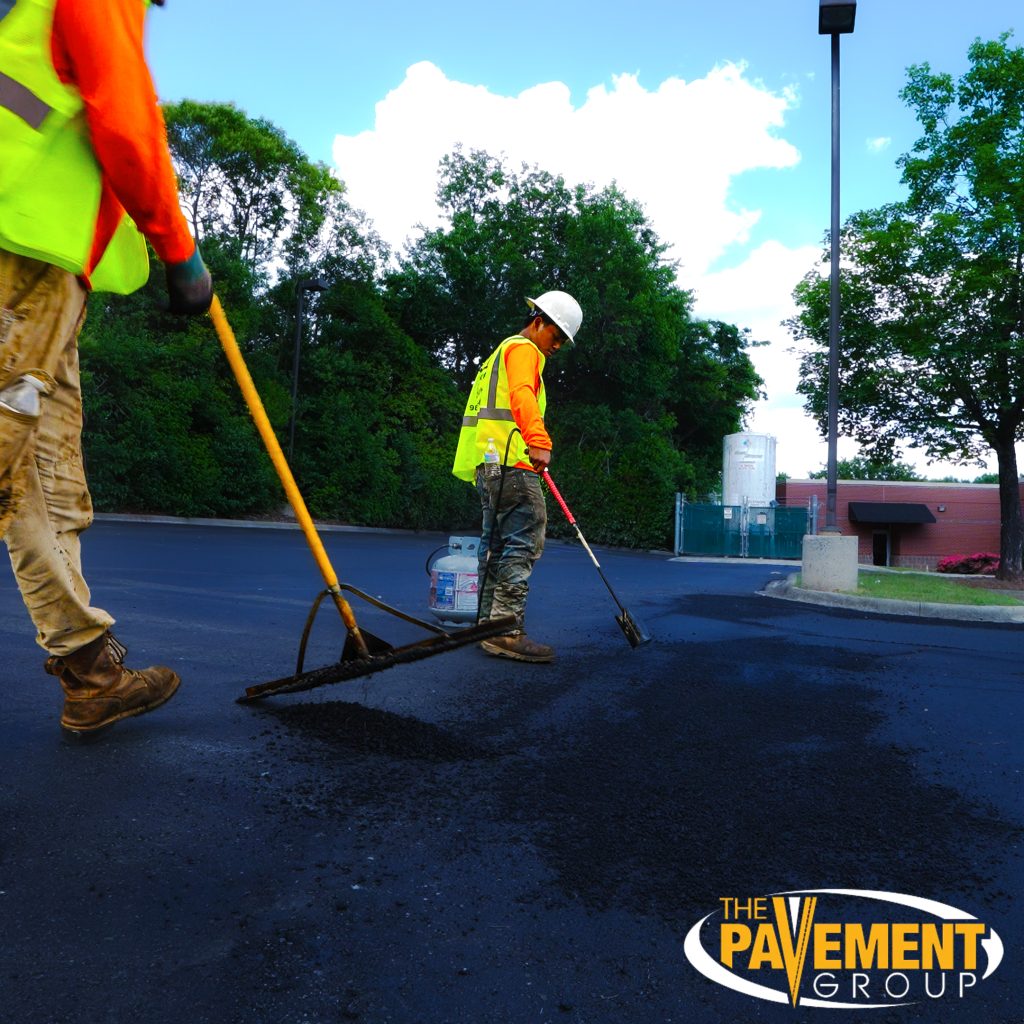
The Federal Highway Administration issues technical guidance that separates pothole repairs into distinct categories. Some, such as throw-and-roll, serve only for the short term and last a few weeks. Others provide comprehensive repair meant to last for years. Many repairs fail because workers choose a temporary method when the situation calls for a permanent one. Property managers often do not understand this difference when approving work. As a result, many apartment communities pay repeatedly to fix the same spot.
We are the Pavement Group. When a pothole keeps coming back, the patch itself almost never causes the real problem. The issue lies in what crews did or did not do before they applied that patch. The following explains the main reasons why most repairs fail, including a particular pattern occurring in multifamily properties, which most guides fail to mention.
A Patch Isn’t Automatically a Permanent Fix
Not every pothole repair delivers the same service life. When you treat a temporary fix as though it were permanent, you create one of the most common and most preventable reasons a pothole returns.
- Throw-and-roll or cold-patch work goes quickly and costs very little. It serves well as an immediate safety step. Yet it typically holds up for only weeks or a few months, not for years.
- A semi-permanent patch follows better preparation and compaction than a standard cold patch. It lasts longer as a result. Yet it does not always serve as the final repair when the pavement structure itself has failed.
- When you carry out a full permanent repair, you remove all damaged material down to the base layer. Then you rebuild that section properly from the ground up. This method creates a repair built to last.
Five Reasons a “Repaired” Pothole Comes Back
- Crews either skipped preparation entirely or rushed through it carelessly. They failed to cut clean edges, did not clear away loose debris, and applied no tack coat. Without that vital step, fresh material never bonds properly to the old pavement around it. That is why the patch always breaks loose first along its edges.
- You may choose the wrong material for the conditions. When you treat a cold patch as though it were permanent, or select a mix that cannot support the site’s actual traffic loads, you use a product never meant to hold up over the long term.
- No one ever investigated where the water came from. Crews filled the hole but ignored the source that kept feeding water into it every time rain fell. That same damaging flow returned beneath the new patch and started the whole process all over again.
- You did not account for the loads the area carries. When you place a standard-depth patch where moving trucks or waste collectors pass often, that repair faces far heavier stress than an identical patch would in an ordinary busy lane.
- The real problem lies beneath the surface. When you have prepared properly, chosen the right material, and worked in suitable conditions, yet the same spot still fails. The issue almost never comes from the patch itself. Something deeper down causes the trouble.
Common Repair Mistakes at a Glance
| Repair Mistake | What It Looks Like | Why It Fails | Better Approach |
| Skipped edge prep | Patch edges crumbling first, hole reopening at the perimeter | New material never bonded to the old pavement | Square-cut edges and a tack coat before filling |
| Cold patch used as permanent fix | Looks fine for weeks, then sinks or crumbles | Cold mix isn’t engineered for long-term structural load | Reserve cold patch for temporary or emergency use only |
| Drainage left untouched | The same spot fails again after the next heavy rain | The water source was never resolved, only the hole | Grade or reroute drainage before or during the patch |
| Heavy-load area, standard patch | Patch depresses or cracks faster than the rest of the lot | Patch depth wasn’t matched to the traffic it receives | Increase patch depth/spec for known heavy-traffic zones |
| Patch-on-patch layering | Uneven surface, outlines of several old patches visible | Each layer bonds poorly to the one below it | Remove failed material fully before repatching |
The Multifamily-Specific Pattern: “Patch on Patch”
This situation applies especially to apartment complexes, and few published articles mention it. We call it patch-on-patch. Here is how it works: one contractor fixes a pothole. Within a year or two it returns. Then a different firm or maintenance worker repairs it again. The hole reappears once more. Each time workers simply spread a thin fresh layer over the old repair instead of removing failed material and starting over properly.
Since maintenance personnel and external contractors frequently change at most multifamily properties, no one necessarily has the necessary history to observe this pattern developing. The outcome is that a section of the pavement becomes structurally weaker with each “repair” rather than stronger, even though the property has now paid for that particular area three or four times.
When a Recurring Pothole Signals Something Bigger
When you handle preparation, material selection, and weather conditions correctly, yet the pothole keeps returning in the exact same spot, the issue no longer lies with the patchwork itself. It almost always signals that the supporting base beneath has failed.
We explain how to spot this specifically in our guide on identifying a failing base.
The Bottom Line
A pothole that keeps reappearing isn’t bad luck. It’s almost always the result of a specific, identifiable fault in the preparation, the material used, the drainage system, the loading plan, or what’s happening below the surface. The first time you fix it correctly, problems will cost less than hiring three different contractors to repair the same spot three years later. If you deal with a pothole that keeps returning on your property, we will gladly inspect it. We will tell you honestly which of these root causes applies.
Stop Recurring Potholes with Permanent Structural Asphalt Repairs
When potholes repeatedly reappear in the exact same spots, it’s a clear sign that previous repairs only treated surface symptoms rather than the root cause. Quick surface patches fail when underlying water traps, unsealed perimeter joints, or degraded sub-bases continue to erode the foundation beneath heavy multi-family traffic.
The Pavement Group delivers saw-cut, full-depth asphalt patching and drainage corrections engineered to eliminate recurring potholes permanently and restore structural integrity to your lot.
- Root-Cause Diagnostics: Identifying hidden sub-grade moisture intrusion, improper slope drainage, and poor compaction that cause repeat failures.
- Full-Depth Patching Execution: Clean vertical saw-cutting, sub-base re-compaction, and hot-mix asphalt installation to ensure seamless bonding and long-term durability.
Frequently Asked Questions
How long should a properly carried-out pothole repair require attention again?
A well-carried-out, permanent pothole repair, when done with hot-mix asphalt and the right installation method, should usually last as long as the adjacent road surface—often several years or even a decade or so—and not require further attention within a few months. If a properly installed repair fails within its first year, something clearly went wrong. You should look for the cause in the material chosen, the quality of preparation work, or an undetected weakness in the base layer below. This points to a specific issue rather than ordinary wear and tear. Property managers should treat a patch that fails within its first year as an exception that deserves investigation, not as typical of a professionally repaired section of pavement.
Does the weather or the temperature at the time of the repair affect how long the patch continues to function?
Certainly, significantly. For hot-mix asphalt patches to compact properly and bond with the surrounding asphalt, both the ambient air and the existing pavement surface need to be reasonably warm. The Asphalt Institute points out that installing outside the recommended temperature range can compromise density and long-term durability. A patch laid during a cold snap or just before a freeze may look satisfactory on the surface for a few weeks before failing early. It never properly compacted or bonded from the start. This ranks among the most common and most preventable reasons a so‑called professional repair fails early. Workers chose the correct material, but they applied it at the wrong time.
Should property managers use their in-house maintenance team for patching, or should they always hire a professional paving contractor?
For small areas with very light traffic, a trained maintenance team using cold-patch material can provide a sufficient short-term solution. Keep in mind that cold patch serves mainly as a temporary solution, not a permanent repair. It typically holds up for weeks or a few months rather than years. In busy areas such as drive aisles or near dumpster enclosures, or anywhere the pavement keeps failing, you save money over time by hiring a qualified contractor for a proper full‑depth hot‑mix repair. The upfront cost runs higher than buying cold patch, but the long-term result costs less.
Does a newly repaired parking lot usually need a few touch‑up patches within its first year?
Minor touch-up work is not uncommon in the first year after a major repair or resurfacing, especially around the edges of a new patch or where the surrounding pavement is still settling into the repair. This situation is usually distinct from a complete reopening of a pothole in the same spot, which would indicate a flaw in the original repair rather than normal settling. Property managers should require contractors to clearly distinguish minor cosmetic adjustments, often performed as a courtesy, from genuine defects that require full re‑repair.
Can the kind of traffic seen with moving trucks really cause a professionally installed patch to break down more quickly than normal wear?
Indeed. Pavement suited for standard passenger vehicles fails rapidly under repeated heavy use from moving trucks, waste collection vehicles, and delivery vans. These sources deliver concentrated point loads well above the design strength of standard repairs. This pattern appears frequently in apartment communities. Heavy vehicles consistently use the same curb lane or zone. Over time those loads subject that specific area to stress far higher than the rest of the pavement experiences. Asking to put in place an area known for heavy traffic, it’s worthwhile asking the contractor whether the repair specification takes into account that kind of stress, since a standard patch depth intended for passenger vehicles may not be adequate there.
How long should a warranty period be when a paving contractor does pothole patching?
Reputable paving contractors usually provide some form of warranty when carrying out patch repairs. However, the duration varies widely by contractor and repair type, ranging from one season to a year or longer for hot-mix full-depth patches. It makes sense to ask for such a warranty in writing before the work starts and to get clear information about what it actually includes—for instance, whether it will cover the patch reopening at the same location but does not include damage caused by a drainage problem that the property owner has not dealt with. If a contractor won’t put any warranty terms in writing, even if they are very basic, it’s worth reconsidering before signing a contract for a more extensive repair project.
How can property managers hold a contractor accountable if the same pothole reopens shortly after being “fixed”?
The first step is documentation — photos of the original damage, the repair, and the failure, along with dates, give a property manager a clear record to reference if a conversation with the contractor becomes necessary. Next, review the original contract or invoice for warranty language, since a contractor who offered a workmanship guarantee is generally obligated to address a failure within that window at no additional cost. If a contractor is unresponsive or unwilling to honor reasonable warranty terms, appropriate next steps include checking their standing with the state contractor licensing board or leaving a documented review. However, most reputable contractors will address a legitimate early failure without needing to escalate that far.
Does patching a pothole in freezing temperatures cause it to fail faster?
Yes — patching a pothole in freezing temperatures is one of the more common causes of early repair failure, since hot-mix asphalt cools and loses workability extremely quickly once it contacts cold pavement, often before it can be properly compacted. Moisture trapped in or around the pothole can also freeze during the repair process, preventing proper bonding between the new patch material and the surrounding pavement even if the patch looks acceptable on the surface. That is why many contractors either delay non-emergency patch work during hard freezes or use a cold-weather mix formulated to compact at lower temperatures, rather than a standard mix that’s more likely to fail early in freezing conditions.
See also: Why Are Potholes Forming in My Apartment Parking Lot?, How Can Property Managers Prevent Potholes in Apartment Parking Lots?
About the Author
The Pavement Group specializes in asphalt engineering, pavement maintenance solutions, and data-driven asset management for commercial, retail, and multi-family residential properties. Utilizing advanced structural pavement evaluations and capital planning transparency, The Pavement Group works directly with property managers to extend pavement lifecycles, eliminate liability risks, and optimize long-term infrastructure investments.