Article Overview
- Routing and sealing perform very differently on good, fair, and poor pavement.
- Crack width and movement are what determine what treatment is appropriate.
- A routed reservoir holds the sealant far better than a surface pour.
- Pavement temperature and moisture will determine whether or not the sealant bonds.
- Regional climate will be the deciding factor as to when the work is best done.
- Crack repairs have to be done prior to sealcoating, not after.
NCAT and MnROAD field studies (summarized in an NCAT and MnROAD research brochure) report that routing and sealing last 7.7 years or more on good pavement, 4.6 years on fair pavement, and only 1.1 years on poor pavement. That speaks volumes to every apartment owner. The same service can deliver completely different results depending on when you get it done.
To help you assess your lot, here are a few signs to look for. Good pavement will have a mostly smooth surface with only minor hairline cracks and no soft spots, potholes, or visible deformation. Fair pavement may show moderate cracking, shallow surface wear, and the occasional patch or small rut but is generally solid underfoot and free of extensive damaged areas. Poor pavement is easy to identify by widespread alligator cracking, potholes, deep ruts, loose gravel, or large broken sections, often with soft or sunken areas under weight. A basic walk-around with these signs in mind can give you a sense of your starting point before calling in a contractor.
In our work with apartment communities throughout the country we see owners waiting until the cracks are really bad and then paying for a treatment that won’t last. We’ll explain below how crack routing and sealing work, which cracks are suitable, and how you can time the work so that your budget lasts.
Crack Type Decides the Treatment
Not all cracks need routing, and not all cracks need sealant. We begin the assessment by categorizing the cracks, as the nature of the crack determines the correct treatment. A working crack opens and closes with the temperature and will therefore require a flexible sealant in a shaped reservoir. A non-working crack doesn’t move and will generally be filled with a simple filler. Interconnected cracking, which forms a block or alligator pattern, is a clear indication of base failure, and no amount of sealant will fix that.
The table below shows how we match up the common crack conditions to a treatment. The ranges are, of course, in line with normal practice, and we check each lot during the on-site inspection.
| Crack Condition | Typical Width | Recommended Treatment | Reason |
| Hairline, stable | Under 1/8 inch | Crack filler or sealcoat | The crack barely moves, so a basic fill blocks water |
| Working longitudinal or transverse crack | 1/8 to 1 inch | Route and seal | A flexible sealant in a reservoir moves with the pavement |
| Wide crack with broken edges | Over 1 inch | Route to sound pavement or patch | Weak edges cannot anchor sealant |
| Alligator or block cracking | Interconnected pattern | Remove and patch the section | The base has failed and needs structural repair |
Apartment lots will often have a mixture of all four. The drive lane right at the entrance will probably have alligator cracking from truck traffic. The back parking rows will probably have only hairline cracks. We write a separate treatment plan for each zone rather than applying one treatment to the whole lot. That approach will save you money in the long run.
Routing Creates the Reservoir That Holds the Sealant
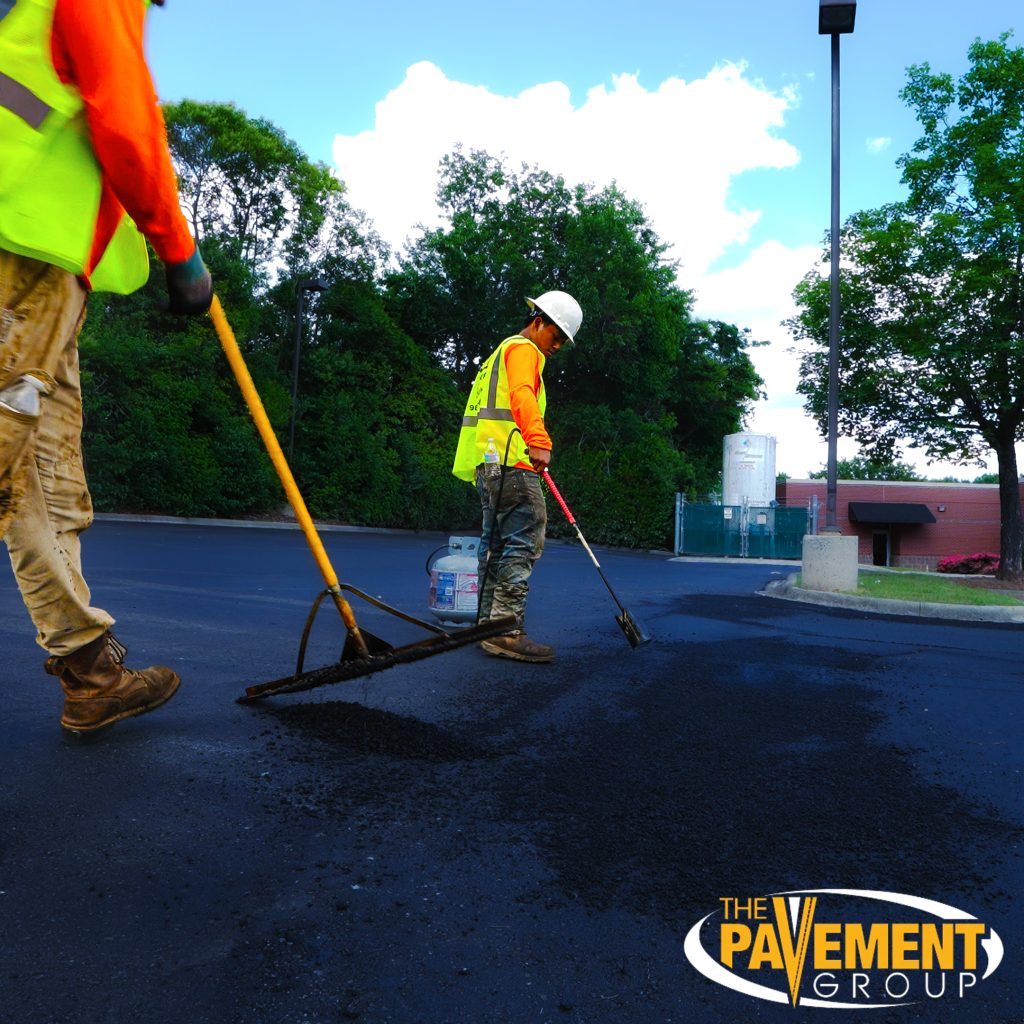
Routing involves cutting a clean channel down the crack with a router. This removes loose material, oxidized asphalt, and crumbling edges and gives the sealant a shaped cavity to sit in. The FHWA crack seal checklist requires the reservoir to be centrally positioned over the crack, cleaned with compressed air, and the surrounding pavement in sound condition. The sealant manufacturers stipulate that the reservoir width should not exceed 1 1/2″ for standard crack sealing, and we adhere to that limit very closely.
Surface pours skip this step, and they fail for a very obvious reason. The sealant is simply poured over an unrouted crack, bonds very weakly to the dirty edges, and then peels off under traffic and temperature variations. Routing creates a reservoir that increases the contact area between the sealant and the clean asphalt walls, so the bond lasts much longer. The Crafco brochure claims routing will more than double the sealant’s service life, and our field experience confirms it. We always recommend routing for active cracks in apartment lots, especially in drive lanes and turning areas.
Temperature and Moisture Control the Bond
Sealant requires clean, dry, and warm pavement to bond. The FHWA checklist calls for a pavement temperature of approximately 40°F or higher for routing and sealing. We stop work when rain is forecast. The manufacturer’s instructions (including the Crafco parking lot sealant instructions) also require cleaning the crack faces and applying the product at the correct temperature. We follow all those requirements on every job, as a rushed application in damp conditions can fail in the first season.
Moisture can lurk in cracks long after the rain has stopped. A crack that looks dry on the surface can still hold water below, which will break the bond between the sealant and the asphalt. We use compressed air and, if necessary, a hot air lance to dry out the reservoir before we pour. That extra step takes a few minutes per crack and adds years to the seal’s life.
Match the Schedule to Your Region
Climate dictates the ideal window for crack work, so we tailor our schedules to the local conditions. The table below shows how we plan by region.
| Region | Best Window for Routing and Sealing | Local Challenge |
| Sun Belt (Phoenix, Dallas, Las Vegas) | Late fall through early spring | Summer heat softens sealant and invites tracking |
| Upper Midwest and Northeast (Minneapolis, Chicago, Boston) | Late spring through early fall | Freeze-thaw cycles open cracks wide in winter |
| Gulf and Southeast (Houston, Tampa, Atlanta) | Dry stretches between storm seasons | Humidity and rain delay drying |
| Mountain West (Denver, Salt Lake City) | Late spring and early fall | Large daily temperature swings stress sealant |
Cold climate owners get the biggest benefit from sealing in early fall. Sealing cracks before the first freeze keeps water out of the base during the worst winter months, so you have less damage to repair in the spring. Warm-climate owners should avoid sealing at midday in summer, as hot pavement makes the sealant sticky and slow to set.
Complete Crack Work Before Sealcoating
Sequence is just as important as method. We always crack the route and seal it before applying the sealcoat. The sealcoat covers the finished repairs and creates a unified appearance. If you apply the sealcoat first, it traps the moisture in the crack and prevents the repair material from bonding. The other way round also protects your striping budget. Fresh crack sealant underneath the new stripes will prevent the stripes from going all wonky.
Sealant also needs room to settle. We level the overbanded sealant so it doesn’t form a ridge that the residents can feel or that the snowplow blades will catch. In cold climates, a tall ridge can actually peel off under a plow, and we trim the application to avoid that.
Recognize What Sealing Cannot Fix
Crack sealing protects pavement, which is still carrying load. It doesn’t rebuild a failed base, and it doesn’t stop cracks originating from adjacent structures. Cracks radiating out from pole bases are a classic sign of movement around the foundation, and our guide on light pole damage explains why those cracks keep coming back. Broken edges and shifted stalls adjacent to parking blocks tell the same story, and our post on concrete wheel stops explains when it’s better to replace than repair.
If your lot shows widespread alligator cracking, deep rutting, or soft spots, we recommend patching or reconstruction before sealing. Sealing over a failing section wastes money and gives residents the false impression you’ve done anything at all. A proper assessment will prevent you from paying twice for the same problem.
Build a Crack Plan That Protects Your Budget
Crack routing and sealing offers the best return on investment if you do it early, use the right method, and do it at the right time. The Pavement Group inspects apartment communities across the country, maps every crack by type, and recommends the right treatment for each area. Get in touch to arrange an inspection, and we’ll show you exactly where your money should go.
Protect Your Apartment Parking Lot With Professional Crack Sealing
Small pavement cracks can allow water to penetrate the asphalt, weaken underlying layers, and lead to costly repairs. At The Pavement Group, we help apartment owners and property managers evaluate pavement cracks and determine whether crack routing and sealing are appropriate for their parking lots. Our professional pavement maintenance solutions help extend asphalt life, reduce further deterioration, and protect your property’s long-term investment.
Contact UsFrequently Asked Questions
How much does crack routing and sealing cost for an apartment parking lot?
Pricing varies by region, crack length, crack width, and sealant grade, so there’s no one number that works for all properties. You’ll often see routed and sealed cracks priced per linear foot, with filler-only work costing considerably less than routing with a premium sealant. A large community with hundreds of linear feet of cracking might end up spending a few grand, while a small lot with a few cracks may cost much less. We’ll measure the cracking during the inspection, categorize it by treatment, and provide a written estimate so you can compare. Always request several quotes for the same scope of work, as that’s the only way to get a fair comparison.
How soon can residents drive and park on freshly sealed cracks?
Most hot-applied sealants cool and set fairly quickly (minutes to an hour, depending on the product and the weather). In hot weather we can find soft sealant getting marked up by footfall and car tires, so we’ll apply a blotting agent (sand or detackifier) as appropriate. We work in sections so there’s always access to part of the lot for residents while we finish the remainder. We place the cones and signage the day prior, and we work in close coordination with your management team. We’d advise residents to avoid parking directly on the sealed lines until the crew gives the all-clear.
How should we notify residents before crack sealing begins?
Residents will appreciate a straightforward notice that includes the date, the affected areas, and the time they have to move their vehicles. We recommend putting up signs at least 48 hours in advance, sending an email or text via your resident portal, and placing a flyer on each door. The notice should state the duration of the work and where the residents can park during that time. We can supply a sketch of the work zones so your office team can answer any questions that come their way. Good communication avoids towing disputes, minimizes complaints, and keeps the project on track.
What questions should we ask a contractor before approving a crack sealing bid?
Ask which cracks they plan to route and which they plan to fill or patch; a bid that treats all cracks the same is likely taking a shortcut. Ask for the sealant brand and specification, the reservoir size they use, and the minimum pavement temperature they’ll accept. Find out whether the price includes cleaning and drying the cracks and whether they offer a written warranty. Check that they have liability insurance and will provide a certificate before work begins. A contractor who can answer these questions is generally one who will do the work to the required standard.
Does The Pavement Group handle crack routing and sealing for properties across the country?
Yes, we work on apartment communities, HOAs, and commercial properties across the country, and we tailor our approach to the climate and pavement conditions in each region. Much of the pavement in Phoenix will require different timing and materials than pavement in Minneapolis, and we adjust our approach accordingly. We can also help owners of multiple properties to establish a consistent crack maintenance program for each location. Just send us your property address and a few photos of the cracking, and we’ll tell you what your pavement needs and what a good crack repair program would look like.
About the Author
The Pavement Group specializes in asphalt engineering, pavement maintenance solutions, and data-driven asset management for commercial, retail, and multi-family residential properties. Utilizing advanced structural pavement evaluations and capital planning transparency, The Pavement Group works directly with property managers to extend pavement lifecycles, eliminate liability risks, and optimize long-term infrastructure investments.