Article Overview
- Landscaping crews bring in the equipment, which often ends up weighing down the asphalt it’s parked on.
- A baseline survey prior to the work commencing protects both the property and the budget.
- Marked staging zones keep the heavy loads off the weakest bit of the pavement.
- Tree, trench, and irrigation work all pose a threat to the pavement from below.
- Fluids, soils, and amendments will stain and soften the asphalt if the crews are not careful with them.
- A written pavement protection plan is a lot cheaper than the repairs it prevents.
Someone damages an underground utility line every 6 minutes in the US because a crew digs without first calling 811. Landscaping is one of the most common causes of such strikes. The strikes make the news, but the surface damage is far more hazardous. Many apartment lots have only 2 to 3 inches of asphalt, and a single skid steer, dump truck, or stump grinder can scuff or crush that surface in just a few hours. That’s the pattern we see again and again in our work with property managers across the country. The landscaping budget gets approved, the paving budget is left completely untouched, and the pavement ends up paying the price. Below, we’ll explain how you can change that outcome with a plan your crew can easily follow.
Start With a Baseline Survey Before the Crew Arrives
Every protection plan starts with a record of the existing pavement condition. Walk the site with your landscaper and photograph every crack, patch, pothole, faded stripe, and damaged curb in the work area. Take wide shots and close-ups. Date each file and store them in a shared folder. That way, you can separate old damage from new damage and avoid disputes down the line.
The survey also tells you where the pavement is weakest. Alligator cracking, soft spots, and edge breakups are all areas that simply can’t take the weight of plant and machinery, so we flag those as no-drive zones. We paint them or put up cones and share the map with every crew member. A 20-minute survey gives you a good reference point and tells the landscaper exactly where the plant can and can’t go.
Match the Equipment to the Pavement
Landscaping equipment varies enormously in terms of weight and in how it moves over the ground. Tracked machines will scuff and twist the ground as they turn, whereas the wheeled trucks will concentrate the load onto very small patches of tire. The table below shows the equipment we see most frequently and the protection step we would recommend for each.
| Equipment | Approximate Weight | Main Pavement Risk | Protection Step |
| Skid steer | 7,000 to 9,000 lbs | Tire scuffing, edge crushing during sharp turns | Limit turns on asphalt, load and unload on plywood or rubber mats |
| Mini excavator | 8,000 to 12,000 lbs | Track gouging, concentrated load on asphalt edges | Move it on a flatbed, work from turf or mats |
| Stump grinder | 3,000 to 6,000 lbs | Rutting, oil leaks | Stage on turf, place drip pans under the engine |
| Loaded dump truck | 30,000+ lbs | Rutting in thin sections, edge breakage | Assign a single route over the strongest pavement |
| Chipper truck or bucket truck | 20,000 to 30,000+ lbs | Outrigger punctures, rutting | Place outrigger pads under every foot |
Heat changes the game. In the Sun Belt, surface temperatures can easily exceed 140°F, which softens the asphalt. A machine that leaves no mark in April can be leaving deep tracks in July. We recommend that property managers in Phoenix, Dallas, and similar markets schedule equipment moves for early in the morning, when the pavement is firmer. Plywood and rubber mats spread the load over a wider area and are very inexpensive compared to a patch or an overlay.
Mark Staging Zones and Haul Routes in Advance
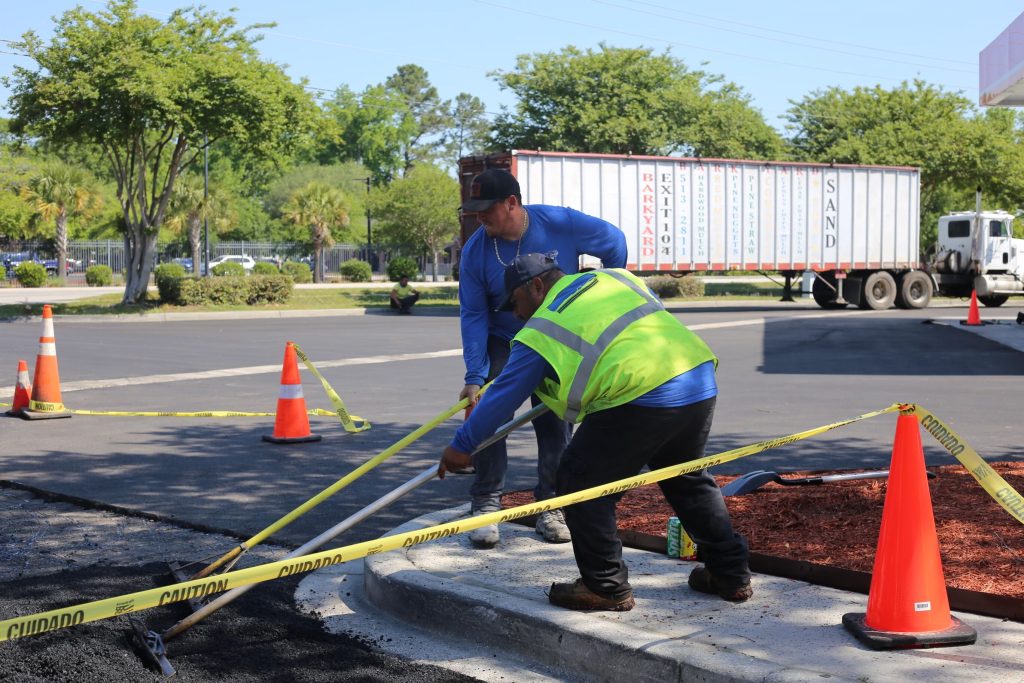
Crews do the most pavement damage when they have no instructions on where to park. A staging plan deals with that. We pick one or two areas of the best, healthiest asphalt (the stuff furthest from the drains), mark them off with cones and signs, and draw a single haul route from the street to the work area so trucks don’t stop all over the place.
Staging areas also need rules. We tell crews to keep their fuel cans, fertilizer bags, and mulch piles on plywood or heavy plastic rather than sitting on the asphalt. Piles of wet mulch and soil will leach tannins and moisture into the asphalt, and if you leave a stockpile there for weeks, you’ll end up with stains and soft spots. A good rule is simple: anything on the lot for more than a day should be on a barrier.
To make things simple, we share this staging area checklist with crews before work begins:
Place all equipment, fuel, and materials (including mulch, soil, and fertilizer) on plywood, heavy plastic, or mats—not directly on the pavement.
- Refuel machines only on top of spill mats or plywood sheets.
- Stockpiles must never stay on the bare lot for more than a day without a barrier underneath.
- Sweep up any materials that spill onto the pavement, especially after application.
- Do not wash dirt, fertilizer, or other spills into drains or onto the pavement.
- Keep staging areas away from drains, soft spots, and the edges of the pavement.
You can print or email this list directly to your landscaper’s foreman so everyone is clear on expectations.
Protect the Pavement From Below During Tree and Trench Work
Landscaping invariably disturbs what’s beneath the pavement, and that’s where some of the most costly damage occurs. Tree roots grow wherever there is oxygen and moisture, and the UF horticulture program notes that roots often grow directly under pavement when the soil below becomes too compacted to support them. When a crew comes in to prune or remove a tree adjacent to the lot, the remaining roots can shift, rot, or lift the asphalt as they move. We always recommend that property managers consult a certified arborist prior to any root cutting at the pavement edge.
Prevention is far more important than repair. The Virginia Cooperative Extension recommends root barriers designed to divert lateral roots downward, and we do the same when we’re re-establishing lot edges. The USDA Forest Service has also looked at the scale of the problem in terms of damage to tree root infrastructure. If the plan involves new irrigation lines, we’ll always make sure crews call 811 before digging and advise them on how to cut and restore any asphalt edge the trench will cross. A clean saw cut and a properly compacted base will ensure the trench doesn’t become a settling crack within a year.
Control Fluids, Soil, and Amendments
Asphalt is a petroleum-based material, so petroleum products will dissolve it. A hydraulic hose leak on a mini excavator or a fuel spill at a refuel stop will soften the surface and leave a permanent soft patch. We ask crews to keep spill kits on site, park machines on drip pans, and refuel only on plywood or turf. If a spill does occur, the crew will immediately absorb it with granular absorbent rather than hose it into the drain.
Landscaping products in themselves create a whole host of problems. Lime, fertilizer, and herbicide granules will scatter onto the pavement during application, and wet fertilizer will stain both the pavement and the sealcoat. The crews should sweep and blow the granules back onto the lawn rather than wash them into the lot. Sprinkler testing after planting also needs to be checked, as a misaimed head will create a continuous source of water against the edge of the pavement. We go into that in detail in our guide on irrigation overspray and its impact on apartment parking lots.
Time the Work Around Your Climate
Seasonal timing is key to figuring out which risks matter most. We help property managers across the country plan around local conditions so their landscaping schedule never works against the pavement.
| Region | Best Landscaping Window | Seasonal Pavement Risk |
| Sun Belt (Phoenix, Las Vegas, Dallas) | Early morning, October through March | Soft asphalt and tire scuffing in summer |
| Northeast and Midwest (Boston, Chicago, Minneapolis) | Late spring through early fall | Frost-weakened pavement edges in early spring |
| Gulf and Southeast (Houston, Tampa, Atlanta) | Dry periods between storm cycles | Saturated bases and mud tracking after heavy rain |
| Pacific Northwest (Seattle, Portland) | Summer dry season | Wet subgrades that rut under heavy equipment |
Spring brings the highest risk in cold climates. Frost leaves the base soft for weeks, and a loaded truck on a thawing lot leaves ruts that last until the next repaving. We tell managers in freeze-thaw regions to hold heavy mulch deliveries until the pavement dries and firms up.
Inspect the Lot Before the Crew Leaves
Final inspection closes the loop. We walk the lot with the landscaping contractor at the end of the project, compare the site against the baseline photos, and record any new cracks, gouges, stains, or settling. Catching damage the day the crew leaves protects your claim and speeds up repairs. Our guide on concrete pads for high-stress apartment areas can also help if your lot needs a permanent staging or loading surface for recurring work. If your project involves site lighting, our post on light pole damage explains how pole bases create their own failure points in the asphalt.
Protect Your Pavement Before the Landscaping Starts
A good landscaping project should enhance your property, not damage its most expensive surface. That’s where The Pavement Group comes in. We help property managers across the country put pavement protection plans in place, document the pavement’s current condition, and repair any damage that still occurs. Get in touch before you start your next project, and we’ll help you protect your budget and your residents’ first impression.
Protect Your Apartment Pavement During Landscaping Projects
Heavy landscaping equipment, improper material storage, and poor drainage can leave lasting damage on apartment parking lots and access roads. At The Pavement Group, we help property managers address existing pavement damage and plan proactive maintenance to protect their asphalt and concrete surfaces. Whether you need targeted repairs or long-term pavement solutions, we’re here to help keep your property in excellent condition.
Contact UsFrequently Asked Questions
Who pays when a landscaping crew damages the parking lot?
The answer depends on your contract, your insurance, and the proof you have. Most property managers will hold the landscaper responsible for any damage the crew does, but you need the terms in writing and documentation to back it up. We recommend having a certificate of insurance in place before work begins to confirm the policy covers property damage and including a clause in your contract that makes the contractor responsible for the cost of repairs. The best evidence is photos taken before and after the work is completed, and a written repair estimate from a paving contractor will tell you the exact cost of the damage. Talk to your solicitor or your insurance company about the exact wording you need in your contract.
How long should landscaping crews wait after we pave or sealcoat the lot?
Fresh pavement takes time to cure before it can take the weight of machinery. Sealcoat in particular requires a minimum of 24 to 48 hours before foot or vehicle traffic is allowed and will require considerably longer in cool or damp weather. New hot mix asphalt continues to cure for months, so we advise keeping heavy equipment off for at least several weeks and ideally doing your landscaping before paving. If possible, do your landscaping first, and the paving/sealcoating second, as the new surface will then mask any minor scuffs the crew may have left. We can review your calendar and suggest a sequence that works for both projects.
What repair options exist if the crew already damaged the pavement?
The right repair depends on the type and severity of the damage. Surface scuffing and light staining can generally be dealt with by cleaning and sealcoating. Cracks will require routing and sealing to keep the water out of the base. Gouges, ruts, and broken edges will require saw cutting and patching, and more severe failures will require removing and replacing the base. A small patch might be a few hundred dollars; a large section rebuild can run into several thousand, and the price will vary by location and area size. We will inspect the site, explain the options in plain English, and provide a written estimate so you can compare repair versus replacement.
Can landscaping crews block accessible parking or fire lanes during staging?
They shouldn’t block either, and the property manager will need to plan the staging area around those protected spaces. Accessible stalls, access aisles, and routes to building entrances must remain open and unobstructed, and fire lanes must remain clear for emergency vehicles. Parking equipment or stockpiling of materials in these areas is a safety hazard and can be a compliance issue. We recommend marking the staging areas on a site map, sharing it with the crew, and checking with your local code and/or fire marshal before work begins. A clear plan is the only way to keep residents safe and keep your property out of trouble with local authorities.
Does The Pavement Group inspect properties before large landscaping projects?
Yes, we serve property managers, apartment communities, and HOAs nationwide, and a pre-project inspection is one of the most useful services we offer. Our team walks the lot, documents the current pavement condition, identifies weak sections, and recommends haul routes and staging areas that suit your pavement. We also advise on protection materials, repair timing, and any pavement work you should complete before the landscapers arrive. The inspection gives your team a written reference for the whole project and gives you a firm starting point if damage occurs. Contact us with your property location and project dates, and we will explain how we can support your plan.
About the Author
The Pavement Group specializes in asphalt engineering, pavement maintenance solutions, and data-driven asset management for commercial, retail, and multi-family residential properties. Utilizing advanced structural pavement evaluations and capital planning transparency, The Pavement Group works directly with property managers to extend pavement lifecycles, eliminate liability risks, and optimize long-term infrastructure investments.