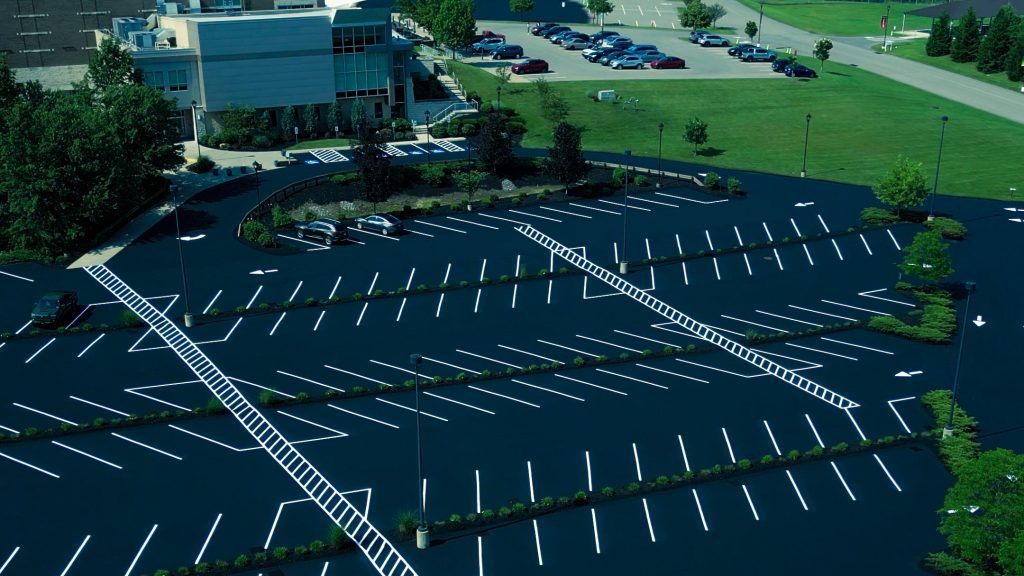
The asphalt around rigid structures tends to settle, crack, crumble, and develop potholes, a problem made worse by wet-freeze climates, according to a report by the Minnesota Local Road Research Board on pavement around utility covers. A concrete base for a light pole acts like a utility cover because it’s a rigid block placed in flexible pavement. We repair apartment car parks across the country and see this type of damage in almost every community we visit.
If you manage an apartment property, you can prevent or repair most asphalt damage around light poles with effective solutions. These include cutting out the damaged ring and properly compacting new asphalt, sealing the joint between asphalt and concrete, addressing trench settlement along the run of poles, and ensuring water drains away from bases and debris is cleared regularly. Simple practices like regular inspections and using protective features around poles also help extend the lifespan of repairs.
This article outlines precisely why the problem occurs and what prevents it.
Overview
- The concrete pole base and flexible asphalt move at different speeds, creating a gap at the point of contact.
- Rollers cannot compact the asphalt firmly against a pole base, leaving a weak ring of pavement.
- The trenches that supply each pole settle, causing the surface to drop along the row of poles.
- At the base, water and debris gather and soak through the base course underneath.
- The vehicle knocks against the pavement and makes sharp turns, scraping, shoving, and cracking it near the pole.
- Removing the damaged ring, then repairing it by compaction and sealing, addresses the root cause.
The 18 Inch Halo Around Every Pole
In our experience, most damage to light poles starts within about 18 inches of the base; this area is called the halo. A fine crack appears in a circle or arc around the concrete, and the asphalt just outside the crack usually looks normal. After one or two seasons, the ring expands, the surface sags, and loose stones gather at the edge.
The halo matters because it shows us where to look and what to cut away. If a repair addresses only the visible crack, weak asphalt will still remain. We follow the entire ring and remove all the material that has lost its bond.
Rigid Concrete Meets Flexible Asphalt
Concrete does not move much as temperatures change, whereas asphalt expands when it gets hot and shrinks when it gets cold. This difference causes the first crack. As explained in a patent application relating to pavement collars, when a rigid structure meets asphalt, the pavement’s expansion and contraction can cause break-up, cracking, and separation at the point of contact.
The effect appears differently across the country. In Minneapolis and Pittsburgh, winter shrinkage pulls the asphalt away from the base, and the new gap fills with meltwater. In Phoenix, summer heat softens the asphalt, and tires push it against the concrete until it bulges and develops ripples. Atlanta and Charlotte have both types of movement occur in the same year, so the crack opens and closes repeatedly until the edge breaks down.
The Compaction Shadow Behind the Base
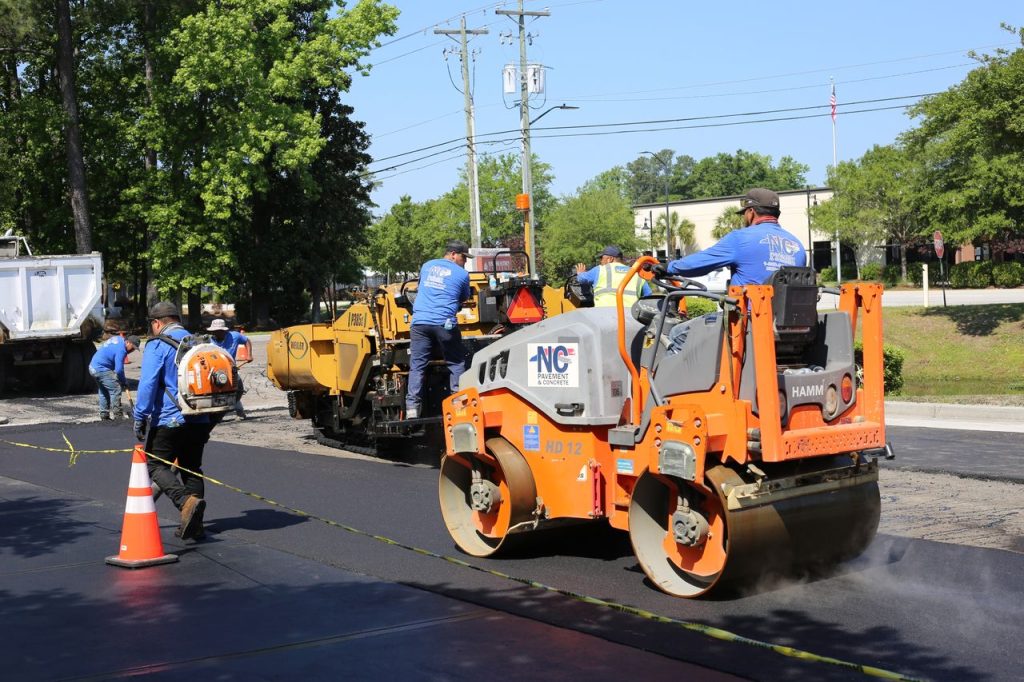
A paving roller can’t press directly against the asphalt at a pole base because the base blocks the drum, forcing the crew to use a hand tamper or a small plate compactor to finish that section. These tools never reach the same level of density as that obtained by a roller on open pavement. A patent on joint sealing lists inadequate compaction at the edges as the second main cause of premature asphalt deterioration, and the area next to a pole base is similar to an edge that rollers can’t reach.
Low-density asphalt contains more air voids. Water enters these voids; the binder oxidizes faster, and the stones loosen due to tire traffic. This is the reason why we usually see raveling right at the concrete edge while the pavement two feet away remains sound.
Trench and Conduit Settlement Along the Pole Run
Since every light pole requires power, electricians dig a trench from pole to pole and lay conduit in it. After that, crews fill in the trench and pave over it, and if they don’t compact the backfill in lifts, it will consolidate over time. As a result, the surface sinks in a straight line right down to the base of the pole. Property managers usually blame the pole, but the trench caused the sag.
To prevent this issue during installation, follow best practices for trench backfilling. Place and compact each layer in thin lifts, using the right compaction equipment to achieve the required density before adding the next layer. Property managers should specify these requirements in project documents and confirm that contractors are compacting as they go, not all at once at the surface. Taking these measures during installation helps protect the pavement from future settlement and reduces the risk of costly repairs.
We are looking for a straight dip or a longitudinal crack that links two or more poles. When we spot this, we know a repair confined to a single base will not work because the trench continues to settle. Therefore, we suggest carrying out the repair along the failed portion of the run.
Water and Debris at the Base
Water causes most of the secondary damage. Studies into water damage to asphalt indicate that pavement characteristics that prevent water from draining away from the surface—such as a buildup of debris along the edge of the pavement—can weaken the layers below and reduce the lifespan of the pavement. A pole base creates that kind of obstruction: leaves, mulch, waste material, and sediment gather against it, and water stays in the space between the concrete and the asphalt.
The kind of water that gets trapped causes different kinds of damage in different areas. In Denver, it freezes and thereby widens the crack each winter. In Houston and Orlando, however, continuous downpours drive water through the gap and blow fines out of the base course, leaving a void beneath the surface; when the base can no longer support the asphalt, it sags, and a pothole develops quickly.
Vehicle Strikes and Tight Turns
Drivers hit pole bases more often than owners expect, especially in narrow aisles and at the ends of stall rows. A collision can crack the concrete, shift the base slightly, and split the asphalt it contacts. When drivers make tight turns around a pole, they rub the surface and push the pole sideways, which in turn pushes the asphalt away from the concrete.
In a block of flats, poor lighting worsens the problem because occupants come in after dark and misjudge the corner. A noticeable scratch along the base or a streak of paint is a good indicator; it shows the pavement damage is due to mechanical forces in addition to heat and moisture.
Causes at a Glance
The table lists the principal causes and the areas where each of them has the greatest impact.
| Cause | How it damages asphalt | What we see | Regions where it hits hardest |
| Thermal mismatch | Concrete holds still while asphalt moves | Circular crack at the base | Minneapolis, Denver, Pittsburgh, Phoenix |
| Compaction shadow | Hand tamping leaves low density | Raveling and loose stone at the edge | Nationwide |
| Trench settlement | Poor backfill consolidates | Linear dip between poles | Atlanta, Charlotte, Houston |
| Water and debris | Ponding softens the base course | Sunken ring, pumping fines | Houston, Orlando, Minneapolis |
| Vehicle impact | Strikes and tight turns shove the surface | Scrapes, shoving, fresh cracks | Any lot with narrow aisles |
Reading the Damage Pattern
Each pattern indicates a separate repair; the table shows the likely cause and the recommended remedy based on what the owner observes.
| Pattern | Likely source | Our repair |
| Hairline arc around the base, surface firm | Thermal movement | Rout and seal the perimeter joint |
| Raveled ring, stone loose at the concrete | Poor compaction | Cut out the ring, rebuild with compacted hot mix |
| Sunken ring with standing water | Base course washout | Remove the asphalt, restore the base, repave |
| Straight dip running between poles | Trench settlement | Cut along the trench, recompact, repave the strip |
| Shoved, rippled asphalt near the base | Heat plus turning traffic | Mill and replace the shoved layer |
Not every crack indicates a serious issue. To tell whether the damage is only surface-level or structural, visit our article “How can apartment owners tell if asphalt damage is surface-level or structural? ” (see the link in the resources section or visit our blog). This guide will help you make an informed decision before you pay any money. The same problems can occur with carport columns, and our article on asphalt damage near carports covers those.
Repairing the Ring the Right Way
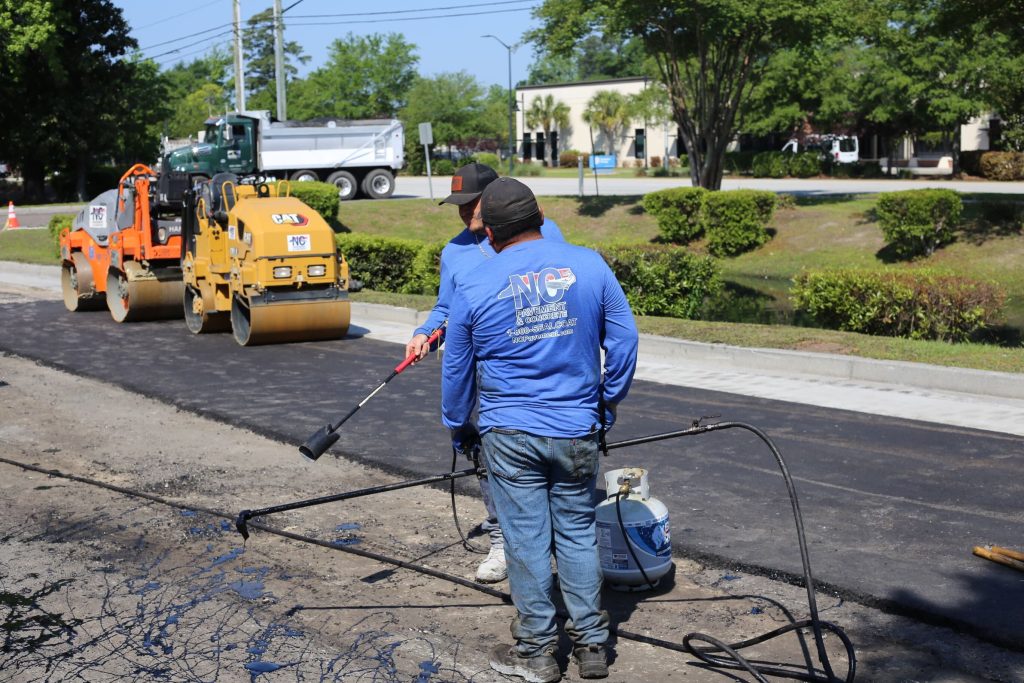
Filling the crack alone usually doesn’t last long when a pole is involved. To do this, we cut out the damaged ring using a saw, take out the loose material, and examine the base; if the base has softened, we replace it with compacted aggregate before fitting in the new asphalt, after which we compact the hot mix in lifts and seal the joint where the asphalt meets the concrete.
This sequence addresses all the causes listed in the table: new compaction removes the weak shoulder, the sealed joint keeps water out, and the repaired trench stops the sag. We also clear debris from the base and examine the surrounding slope to ensure water drains away from the pole, not toward it.
Stop Paying for the Same Repair Twice
The pole base will always stay fixed relative to the asphalt, so the joint between the two must be maintained for the entire life of the pavement. Those who fill the crack and then move on often have to repair it again within a year or two. We serve apartment complexes nationwide and customize each repair to the pole arrangement, local climate, and your maintenance schedule. Contact The Pavement Group, and we’ll visit your property, map all damaged halos, and provide a clear repair plan.
Frequently Asked Questions
Should we use cold patch around a pole base as a temporary fix?
Cold patch can be used as a temporary emergency remedy, but it doesn’t perform well when applied around a rigid pole base. Because the material is softer than hot mix, tires and plow blades soon pull it out of the ring, and the gap reopens. Water then reaches the base course again, and the original problem returns, but this time with a bigger hole. We use cold patch only to eliminate an immediate trip hazard and arrange a proper hot-mix repair as soon as the weather and our budget permit. If you choose to use it, check the patch after each major storm and refill it before it falls apart.
Do we need to contact an electrician or a utility locate service before we cut asphalt near a light pole?
Always check what is underneath before cutting, since each light pole is connected to buried electrical conduit. Throughout the United States, you can call 811 before any excavation, and this service alerts utility owners so they can mark their lines. However, private lines on an apartment property, such as the lighting circuit that supplies each pole, generally aren’t part of that marking scheme, which is why we also ask your maintenance team to provide as-built drawings or arrange for a private locator. When a repair involves the pole run, we work with your electrician so no one cuts a live conductor and no pole is left without power longer than necessary. Omitting this step puts the crews at risk and turns a simple repair into an expensive emergency.
How often should we inspect the pavement around light poles?
We suggest that you go along and carry out at least two inspections each year, one following the coldest period of winter and the other after the hottest part of summer, since the joint where the concrete meets the asphalt is under the greatest stress during these two seasons and is therefore likely to develop new cracks shortly afterward. Also check after any major storm, flood, or when a vehicle strikes near a pole, as these events can rapidly change the surface. During each inspection, take photographs of every base from two angles, record the date, and note the width of any gap you can measure with a ruler. With a simple record like this, your team can tell whether a hairline crack remains stable or continues to grow, and you will have the evidence needed to plan repairs before the damage worsens.
How can we protect pole bases from vehicle strikes?
Protection starts with visibility and maintaining distance. Some communities paint the lower part of the base a bright color or add reflective strips so drivers can see it in their headlights. In other cases, steel bollards or concrete-filled guard posts are fitted on the side of the pole facing traffic, absorbing an impact that would otherwise crack the base. It also helps to move the stall line or widen the aisle when residents keep hitting the same pole. Overall, these measures cost far less than fixing a cracked base, replacing a damaged pole, and rebuilding the asphalt around both the pole and the base.
Should a light pole base sit above the pavement or flush with it?
Most parking lot bases are raised a few inches on purpose, and the designers chose to do that. When a vehicle hits the raised part, it absorbs the impact and prevents water and rubbish from flowing directly into the pole connection. The disadvantage is that a raised base creates a noticeable obstruction, so it needs good lighting and clear contrast so people can see it. Although a base flush with the surface reduces the risk of tripping, it exposes the pole to direct contact with vehicles and allows water to collect around the bolts. We follow the design specified for the project and never lower an existing base without first obtaining engineering advice, and we always shape the surrounding asphalt so water drains away from the concrete.
About the Author
The Pavement Group specializes in asphalt engineering, pavement maintenance solutions, and data-driven asset management for commercial, retail, and multi-family residential properties. Utilizing advanced structural pavement evaluations and capital planning transparency, The Pavement Group works directly with property managers to extend pavement lifecycles, eliminate liability risks, and optimize long-term infrastructure investments.
To discuss pavement condition and repair options, explore our commercial asphalt repair services.