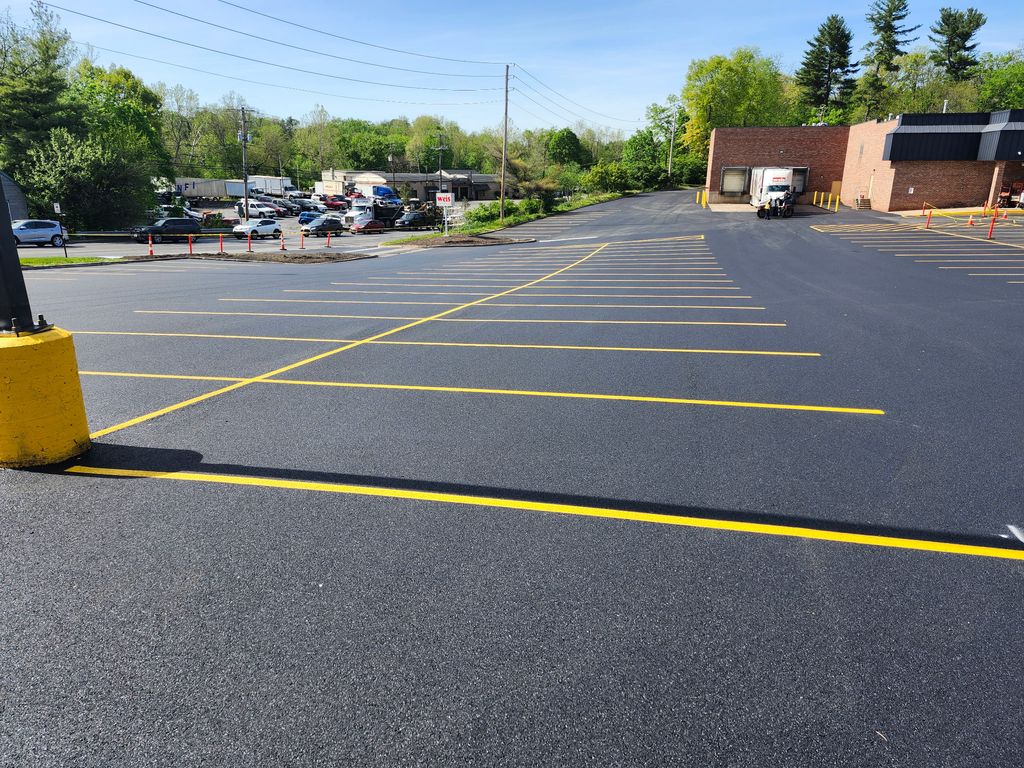
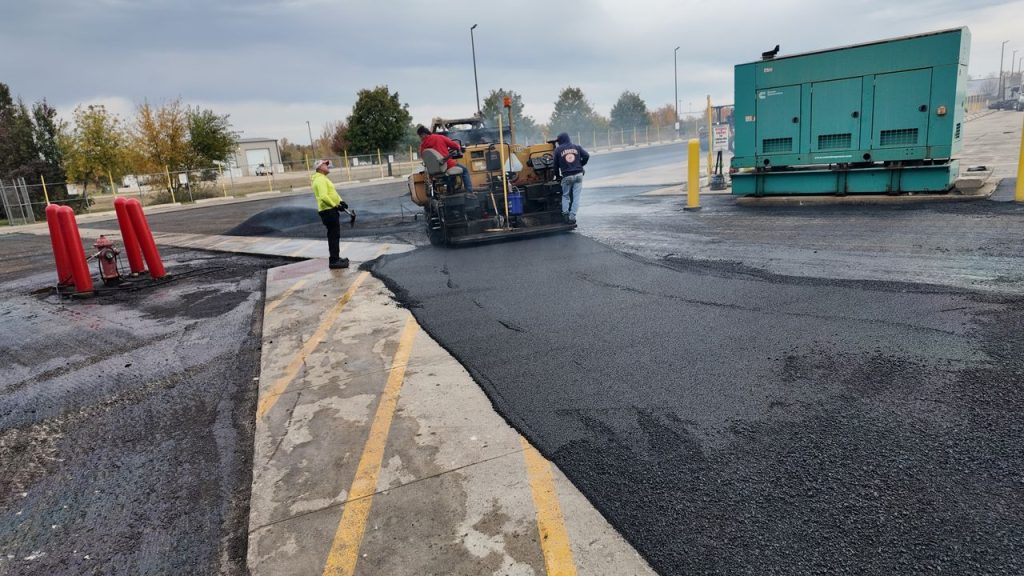
An apartment parking lot can deteriorate long before property managers see obvious potholes. The Federal Highway Administration (FHWA) explains that pavement preservation works best when treatments are applied while pavement remains in relatively good condition, before serious deterioration develops.
That principle matters especially for multifamily properties. An apartment complex operates every day, meaning asphalt is exposed to repeated vehicle loads, turning movements, delivery trucks, weather, drainage problems, and constant traffic from residents.
The best maintenance schedule isn’t a fixed calendar of paving services. It is a condition-based program that combines routine inspections with strategically timed crack sealing, asphalt repairs, sealcoating, pavement marking, drainage work, and eventual resurfacing.
The Best Apartment Asphalt Maintenance Schedule at a Glance
A practical multifamily pavement program can follow this framework:
| Maintenance Activity | Recommended Starting Point | What Property Managers Should Watch |
| Routine visual inspection | Quarterly | Cracks, potholes, settlement, drainage, fading |
| Professional pavement assessment | Annually | Overall condition and emerging structural problems |
| Crack sealing/filling | As cracks develop, commonly every 1–2 years | Working cracks, longitudinal cracks, water infiltration |
| Asphalt repairs | As needed | Potholes, failed patches, depressions, raveling |
| Sealcoating | Generally every 2–4 years, based on condition | Oxidation, fading, surface wear |
| Pavement markings | Inspect annually; refresh when visibility declines | ADA markings, parking stalls, fire lanes, directional arrows |
| Drainage inspection | At least annually and after major storms | Standing water, blocked inlets, settlement |
| Major resurfacing | Condition-dependent | Widespread deterioration or structural failure |
Treat these intervals as planning benchmarks, not automatic service dates. FHWA research emphasizes that pavement treatment selection and timing should consider pavement condition, traffic, climate, moisture, and other site factors.
Why Apartment Complexes Need a Different Maintenance Strategy
A multifamily parking lot is more complicated than a typical private driveway.
Residents enter and leave at different times. Visitors may use unfamiliar parking areas. Moving trucks, garbage trucks, delivery vehicles, landscaping equipment, and emergency vehicles can place heavier loads on specific sections of the pavement.
That creates uneven deterioration.
For example, the asphalt near a dumpster enclosure may deteriorate faster than parking spaces used primarily by passenger vehicles. Entrance and exit lanes may also experience more turning stress than the middle of a parking field.
A good maintenance schedule should therefore divide the property into pavement zones instead of treating every square foot equally.
High-Priority Zones
Property managers should pay particular attention to:
- Main entrances and exit lanes
- Drive aisles with frequent turning
- Dumpster and loading areas
- Fire lanes
- Areas beneath or around drainage structures
- Accessible parking spaces and access aisles
- Visitor parking near leasing offices
- Areas where delivery vehicles frequently stop
- Transitions between asphalt and concrete
- Low areas where water tends to collect
This zone-based approach gives managers a more useful maintenance budget because it lets them direct money to areas under the greatest stress.
A Year-Round Asphalt Maintenance Schedule
January–March: Review Winter Damage and Drainage
For apartment communities exposed to freezing temperatures, the beginning of the year is an excellent time to identify winter-related damage.
Look for:
- New potholes
- Enlarged cracks
- Failed patches
- Heaved or settled areas
- Damaged pavement around drainage structures
- Standing water
- Edge deterioration
The goal is not simply to create a repair list. It is to determine which problems are cosmetic, which require preventive maintenance, and which indicate deeper structural failure.
April–June: Perform the Main Pavement Assessment
Spring is an effective period for a comprehensive pavement review.
A professional assessment should document:
- Crack locations and severity
- Pothole quantity and dimensions
- Surface oxidation
- Raveling
- Rutting or depressions
- Drainage performance
- Failed previous repairs
- Pavement markings
- ADA parking conditions
- Areas requiring further investigation
The assessment can then be converted into a prioritized work plan.
FHWA describes pavement preservation as a proactive strategy intended to address pavement while it is still in good condition, rather than waiting until significant distress requires more expensive rehabilitation.
June–September: Complete Preventive Maintenance
Once the pavement has been evaluated, summer can be an appropriate window for planned preservation work where weather conditions permit.
Depending on the property’s condition, this may include:
- Crack sealing
- Crack filling
- Asphalt patching
- Sealcoating
- Localized pavement repairs
- Drainage corrections
- Pavement marking refreshes
The important distinction is that these services should not automatically be performed simply because a certain number of months have passed.
Condition should determine the treatment.
A relatively healthy parking lot may need preservation. A pavement section with extensive alligator cracking and base failure may require rehabilitation instead.
October–December: Document and Budget
The final quarter is an opportunity to turn maintenance observations into the next year’s budget.
Property managers should document:
- Work completed
- Remaining pavement deficiencies
- Areas requiring monitoring
- Estimated future repairs
- Sealcoating history
- Crack-sealing history
- Striping history
- Drainage concerns
- Recommended capital projects
This creates a pavement history rather than forcing the next property manager to start from scratch.
The 3-Tier System That Makes the Schedule More Practical
Instead of maintaining one enormous list of every pavement issue, apartment property managers can categorize problems into three levels.
Tier 1: Monitor
These are minor conditions that do not currently justify major work.
Examples include:
- Early surface oxidation
- Very minor cracking
- Slight fading
- Small isolated imperfections
The important part is documentation. A small crack that is photographed and tracked can be managed differently from a crack that nobody notices until it becomes a network of interconnected failures.
Tier 2: Preserve or Repair
This category includes conditions to address before they spread.
Examples include:
- Active cracks
- Isolated potholes
- Failed patches
- Localized raveling
- Early depressions
- Deteriorated pavement edges
Crack sealing is particularly important because it can reduce water intrusion into the pavement structure. FHWA identifies crack sealing as a preventive maintenance treatment, and its pavement research notes that water infiltration is a key concern in crack treatment.
Tier 3: Rehabilitate
Some pavement problems are beyond routine maintenance.
Examples may include:
- Extensive alligator cracking
- Significant rutting
- Repeated patch failures
- Large areas of settlement
- Widespread structural deterioration
Applying sealcoat to structurally failed asphalt does not solve the underlying problem. At this stage, a pavement professional may recommend localized reconstruction, milling and overlay, or another rehabilitation strategy based on the property’s condition.
Why Drainage Should Be Part of the Asphalt Schedule
One of the most overlooked parts of apartment pavement maintenance is water management. A property may repeatedly repair the same pothole without addressing why water keeps reaching that location.
That is why annual pavement assessments should include drainage observations.
Check:
- Catch basins
- Inlets
- Drainage channels
- Low points
- Curb lines
- Pavement slopes
- Areas around downspouts
- Locations where water remains after rainfall
If the same pavement area repeatedly fails, the question should not simply be, “How do we patch it?”
It should be, “Why does this area keep failing?”
That shift from repair to diagnosis can make an apartment complex’s maintenance program substantially more effective.
Build the Schedule Around the Property, Not Just the Asphalt
A technically sound pavement schedule can still fail if it ignores apartment operations.
A parking lot cannot simply be closed like an empty commercial site.
Maintenance planning should account for:
- Resident parking demand
- Leasing office activity
- Guest parking
- Trash collection
- Package deliveries
- School schedules
- Community events
- Emergency access
- ADA parking
- Contractor access
The climate, traffic patterns, seasonal conditions, and resident-use patterns can all influence the appropriate maintenance approach.
Pair Pavement Maintenance With Line Striping
Maintenance should not stop at the asphalt surface. Parking stalls, ADA markings, fire lanes, directional arrows, curb markings, and other pavement markings help organize how residents and visitors use the property.
A practical strategy is to evaluate pavement markings during every annual pavement inspection and coordinate striping with larger pavement maintenance projects when possible. That can reduce repeated mobilization and help the property maintain a consistent appearance.
The Best Schedule Is a Living Document
The biggest mistake property managers can make is creating a five-year pavement calendar and never updating it.
An apartment complex changes.
Traffic patterns change. Drainage changes. Utility work occurs. New construction can affect pavement. Resident parking habits change. Previous repairs can succeed or fail.
Update the maintenance schedule after major work, annual inspections, significant weather events, and changes in pavement condition.
A useful pavement record should include:
| Record | Why It Matters |
| Installation date | Establishes pavement age |
| Asphalt repair history | Identifies recurring problem areas |
| Crack-sealing dates | Helps track preservation cycles |
| Sealcoating dates | Prevents missed maintenance |
| Pavement photos | Provides visual condition history |
| Drainage observations | Identifies water-related problems |
| Striping dates | Supports appearance and safety planning |
| Major project recommendations | Helps forecast capital needs |
The Pavement Group’s own multifamily maintenance guidance similarly emphasizes creating a long-term, year-by-year pavement plan rather than treating replacement as a single future expense.
Final Takeaway
The best asphalt maintenance schedule for an apartment complex is proactive, condition-based, and integrated with property operations.
Rather than waiting for residents to report potholes, property managers should conduct recurring inspections, address cracks before water infiltration becomes a larger problem, repair localized failures promptly, monitor drainage, refresh markings, and schedule preservation treatments based on pavement condition.
The goal isn’t to do the most maintenance.
The goal is to perform the right maintenance at the right stage of pavement deterioration.
That approach can help multifamily owners and property managers turn pavement maintenance from an unpredictable repair expense into a manageable long-term asset strategy.
Protect Your Property with a Proactive Asphalt Maintenance Plan
Without a strategic maintenance schedule, multi-family parking lots quickly deteriorate under the weight of constant tenant traffic, weather cycles, and vehicle fluid leaks. Relying on reactive, emergency repairs is significantly more expensive and disruptive to your residents than implementing a routine pavement management plan.
The Pavement Group partners with property managers to design customized, multi-year asphalt maintenance schedules that extend pavement lifespan, enhance curb appeal, and drastically reduce long-term capital expenditures.
- Predictable Capital Budgeting: Eliminate surprise paving costs by transitioning to a planned, cost-effective cycle for sealcoating, crack routing, and striping.
- Maximized Pavement Lifespan: Routine preventative care stops minor surface flaws from turning into expensive structural failures or complete lot replacements.
Frequently Asked Questions
Can an apartment complex use the same asphalt maintenance schedule for every parking area?
Not necessarily. Different areas of the same property can experience dramatically different traffic loads, drainage conditions, and pavement stresses. Main entrances, dumpster pads, delivery areas, and heavily used drive aisles may require closer monitoring than lightly used parking spaces. A zone-based inspection approach lets property managers prioritize maintenance based on actual pavement performance.
Should property managers keep asphalt maintenance records after completing a project?
Yes, maintaining detailed records can make future pavement decisions much easier. Records should include project dates, treatment types, repair locations, photographs, contractor information, and observations about pavement condition. Over time, this information creates a property-specific maintenance history that can help distinguish recurring problems from normal pavement aging.
How should apartment managers prioritize asphalt problems when the maintenance budget is limited?
Start with conditions that can threaten pavement integrity, drainage performance, accessibility, or safe vehicle movement. Water-related problems, active cracking, potholes, significant settlement, and failed pavement areas generally deserve closer attention than purely cosmetic defects. A professional pavement assessment can help rank work by urgency rather than simply repairing whatever problem residents notice first.
What should property managers ask an asphalt contractor before approving a maintenance program?
Property managers should ask how the contractor determines treatment timing, what pavement conditions it identified, what preparation is included, and how it will document completed work. They should also ask how the contractor plans to maintain resident access, emergency routes, and accessible parking during the project. Clear answers help ensure that the proposal addresses the property’s actual pavement needs rather than simply selling a predetermined service.
How can apartment communities reduce disruption during pavement maintenance?
Phasing the work by parking area or building can keep portions of the property operational while maintenance is underway. Property managers should coordinate resident notices, temporary parking, trash collection, deliveries, emergency access, and accessible parking before work begins. A detailed traffic-control and communication plan can make a pavement project much easier for residents and on-site staff to navigate.
See also: How Preventive Asphalt Maintenance Reduces Long-Term Repair Costs, How Long Does an Asphalt Parking Lot Last at an Apartment Complex?
About the Author
The Pavement Group specializes in asphalt engineering, pavement maintenance solutions, and data-driven asset management for commercial, retail, and multi-family residential properties. Utilizing advanced structural pavement evaluations and capital planning transparency, The Pavement Group works directly with property managers to extend pavement lifecycles, eliminate liability risks, and optimize long-term infrastructure investments.