Ohio researchers surveyed 67 local government transportation and public works agencies across the state and found that nearly all of them were struggling with shaded pavement, with most reporting their pavement service life was reduced by at least three years in shaded areas. We see the same thing on apartment properties across the country, from the wetter parts of the Pacific Northwest to the freeze-thaw areas around Pittsburgh, Boston, and Minneapolis. Property managers will tell you that the sun is the enemy of asphalt. In the shaded stalls and drive lanes the real enemy is water that just won’t leave.
Overview
- Shade slows drying, so moisture stays in the asphalt much longer after rain, irrigation, and snowmelt.
- Prolonged moisture strips the asphalt binder from the stone, and the damage starts below the surface.
- Building shadows, tree canopies, and parked cars stack up in apartment lots.
- A simple dry-time walk will show you exactly which zones on your property are at risk.
- Early crack sealing, drainage correction, and canopy management all cost far less than rebuilding failed stalls.
Shade Changes How Water Behaves on Your Lot
Sunlight does a very quiet job on every parking lot; it just dries the tarmac. A sunny stall can be completely bone dry an hour after a storm. A stall in a fairly sheltered position, say against a three-story building or under a big old oak, can stay quite damp for the majority of the day and, in some cases, can stay damp for much longer in the cooler seasons. The Ohio study notes that shade reduces the rate of surface drying after rain or snow and that this prolonged moisture leads to premature stripping of the asphalt.
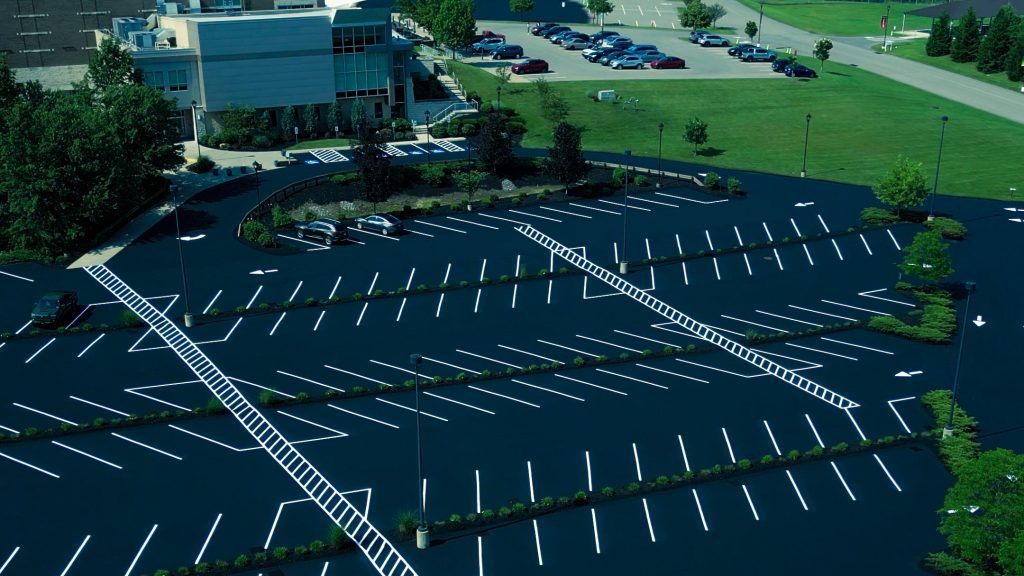
Apartment communities make it even worse than public roads, as they create shade in layers. A building casts one shadow, the tree line casts another, and every parked car casts a third. Cars will be parked in spots, some blocking, which will then block the sun from drying the surface, trapping underneath them and trapping oil drips, leaf litter, and moisture in that one spot.
What Moisture Does Beneath the Surface
Asphalt is stone bound together with a sticky binder. Water on the surface seeps down through the hairline cracks and the tiny air voids. Once it gets in, it breaks the bond between the binder and the stone (that’s what we call stripping in the engineering world). Louisiana transportation researchers have reported that water ingress into asphalt pavements leads to stripping, potholes, and freeze-thaw damage.
The frustrating bit for the property managers is the timing. The moisture damage will often only show up at the surface after the layers underneath have already gone. A shaded stall can look perfectly all right in the spring and be alligator cracking by the next winter. When we do a core or a probe on these failures, we regularly find the material underneath is all loose and washed out, having been there for months, and the surface is looking perfectly fine.
Cold climates add a second punishment in the form of water in a crack freezing, expanding, and widening the crack. The shaded pavement stays wet going into a freeze. It takes more freeze/thaw cycles per winter than the sunny side of the same lot.
Shade Damage and Sun Damage Compared
Sun and shade don’t damage asphalt in the same way. We use the comparison below to explain to owners why a lot can show two very different failure patterns at the same time.
| Condition | Main Damage Driver | First Warning Sign | What We Check First |
| Full sun, good drainage | Oxidation and surface drying | Gray, brittle, faded surface | Surface texture and crack width |
| Building shadow, north-facing walls | Slow drying, trapped moisture | Dark damp patches hours after rain | Dry time and edge cracking |
| Tree canopy, leaf and sap fall | Moisture plus organic debris | Green algae film, clogged drains | Drain inlets and surface growth |
| Carport or covered stalls | Constant shade, fluid drips | Soft spots, raveling aggregate | Stall centers and joint cracks |
| Sun and shade boundary | Uneven drying and expansion | Cracks along the shade line | Transverse cracking pattern |
The final row is worth a look at. You see that line of cracking precisely where the sun stops and the shadow starts. The sunny side dries out and becomes quite stiff. The shaded side remains damp and soft, and the pavement flexes quite a bit at that interface.
The Dry-Time Walk We Use on Every Shaded Lot
Most inspections focus on the appearance of the pavement. In the shaded areas, we’re concerned with how long it takes to dry. After a rain, we’ll walk the property at various intervals and record when each zone dries. Any zone that stays dark an hour or two after the rest of the lot has dried will be placed on a watch list, as it has the greatest exposure to moisture.
This is something that property managers can actually use. Instead of receiving just a note that the ‘north side looks a bit worn,’ you will get a map of dry times, cracks, and drains showing you precisely where your money will deliver the most benefit. This targeted approach means you can focus your maintenance budget on the highest-risk areas, preventing costly failures before they start and avoiding unnecessary repairs in lower-risk zones. It also makes it easier to secure capital from owners. You can clearly demonstrate the financial risks and justify investment before a more expensive repair is needed. This level of insight not only stretches maintenance dollars but also supports predictable budget planning and helps demonstrate ROI to ownership and stakeholders.
Prevention Steps That Protect Shaded Stalls
Treatment starts with removing the water source. Clogged catch basins, flat spots, and downspouts discharging onto the pavement all keep the shaded areas wet. Fixing the drainage is often far more worthwhile than any surface treatment.
Canopy management is next. Ohio’s report has tree trimming and high walling as the most common countermeasures, followed by crack sealing, durapatching, and rejuvenator applications. Raising the crown of the tree allows light and air to reach the pavement without removing the tree. When tree trimming isn’t an option, we focus on early crack sealing and surface treatments to keep water out.
For more on the mechanics, the UC Pavement Research Center explains that the best way to minimize moisture damage in asphalt is through better materials and better drainage design.
When Damage Has Already Started
Some of the stalls are clearly in the maintenance/repair zone. Alligator cracking, potholes, and soft spots indicate that water has already penetrated the surface. The turning areas adjacent to the building corners are the worst affected. The tight vehicle movements in those areas create additional shear stress on pavement that’s already been weakened. Our guide on repairing turning-area damage covers the methods we use when a patch is no longer going to work.
We recommend acting before the next wet season. A cut-out and patch in one stall is a tiny fraction of the cost of the mill-and-pave job you end up with when ten stalls fail. If you’d like a second look at your options, we’ve got a full breakdown of apartment lot repair options that shows how we match each repair to the extent of the damage.
Protect Your Residents and Your Budget
Shaded asphalt doesn’t fail dramatically. It fails quietly, one damp season at a time, until residents trip over broken edges and complain about puddles in their stalls. You can break that cycle with a proper inspection, some targeted drainage work, and early crack sealing in the areas that stay wet the longest.
The Pavement Group manages apartment communities, HOAs, and commercial properties across the country. Our team treats shaded lots as a separate risk category. Get in touch for a site review, and we’ll show you exactly which stalls and drive lanes need attention first and which can wait.
Protect Shaded Parking Areas From Premature Asphalt Deterioration
Shaded apartment parking areas may seem protected from direct sunlight, but limited sunlight can contribute to moisture retention, slower pavement drying, and conditions that accelerate asphalt deterioration. When cracks, standing water, and surface damage go unaddressed, they can lead to more costly repairs. The Pavement Group provides professional asphalt maintenance, repair, and paving solutions to help apartment communities maintain safer, more durable parking areas. Contact our team today to schedule a pavement assessment and find the right solution for your property’s asphalt maintenance needs.
Contact Us TodayFrequently Asked Questions
Do tree roots cause the cracking in shaded apartment lots?
Roots can be a problem, but they’re generally secondary to moisture. They grow toward water, so they tend to congregate around damp edges, planter islands, and drain lines. As they thicken, they will lift the pavement edge, create new cracks, and push the curbs out of line. We always recommend having a certified arborist inspect any large tree before root pruning, as cutting the wrong root could destabilize the tree and create a liability. If we find roots lifting a slab, we will repair the pavement and either install a root barrier or modify the planting area so the repair lasts.
Can algae and moss on asphalt be pressure washed away?
We can clean the algae, but high pressure will damage the asphalt by blasting the binder away and leaving the stone loose. We use a low-pressure application with an approved cleaning solution, then rinse and allow the surface to dry completely prior to any sealing or striping. Algae growth often signals poor drainage or a canopy blocking light, so cleaning only treats the symptom. Without a drainage or trimming solution in place, the growth will invariably come back within a season or two. It’s also a slip hazard on the pavement, so we treat any visible growth as both a pavement and a safety issue.
How does shade affect sealcoating and striping schedules?
Shade extends the curing time of windows, so we allow shaded areas more time than sunny areas. Sealcoat requires a dry surface, suitable temperatures, and sufficient cure time before traffic is allowed back on, and a damp stall can fail on all three counts. Fresh striping paint sticks very poorly to a damp or algae-coated surface, which leads to early fading and peeling. We follow the manufacturer’s temperature and dry-time guidelines, check shaded areas with a moisture meter, and sometimes phase the work so residents can park in finished areas while the slower-curing areas cure. That may add a day or two in some instances, but it prevents premature failures that would otherwise waste the whole investment.
How often should a shaded apartment lot be inspected?
We recommend a full inspection at least twice a year (once after the wettest season and once before the first freeze or the heaviest rain period in your area). Shaded lots should get a quick check after any major storm, as it’s when new cracks and ponding are most likely to appear. Each inspection should record crack width, drainage, edge condition, and any new organic growth, with photos taken from the same locations each time. That way, you can track changes over time and show an owner or investor how rapidly a zone is changing. Properties in freeze/thaw areas (e.g., New England, the Upper Midwest) will benefit most from the pre-winter inspection, as it gives you the opportunity to seal the cracks prior to water being able to freeze.
Does The Pavement Group handle shaded lot problems outside the Pittsburgh area?
Yes, we do serve apartment communities and property management groups throughout the country. The national structure means a portfolio manager can work with one partner on properties in very different climates, from damp coastal areas to the cold of the far north. We adapt the plan to local conditions, of course, taking into account rainfall, freeze/thaw cycles, and the types of trees in the area. A single site visit will give you a prioritized scope so you know what you need to do this year and what you can put off until the next budget.
About the Author
The Pavement Group specializes in asphalt engineering, pavement maintenance solutions, and data-driven asset management for commercial, retail, and multi-family residential properties. Utilizing advanced structural pavement evaluations and capital planning transparency, The Pavement Group works directly with property managers to extend pavement lifecycles, eliminate liability risks, and optimize long-term infrastructure investments.