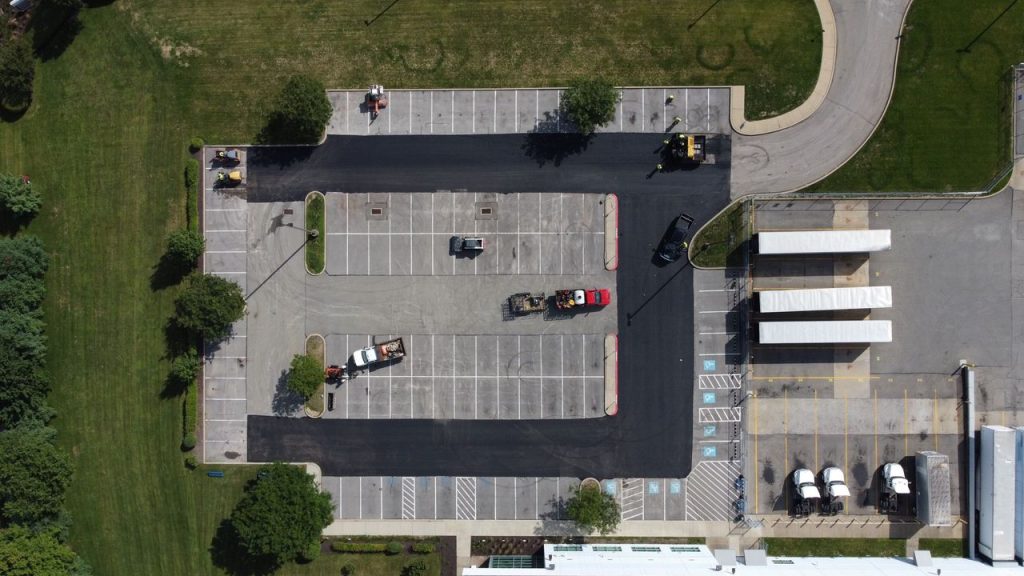
Across the properties we maintain, we typically find at least four distinct categories of non-standard parking marked on a single lot: reserved or assigned spaces, visitor spaces, accessible spaces, and fire lanes. The National Fire Protection Association strictly defines fire lane standards by code rather than leaving them to a property’s preference. Other areas involve more judgment calls that property managers often make with little guidance. We believe we should apply clear, deliberate standards to all four categories rather than relying on whatever markings were originally applied.
If you’re not sure where to start, we recommend reviewing your current parking space markings and signage for each category. Check your local codes for fire lanes, accessible spaces, and any signage or ratio requirements that might apply. This initial review establishes a baseline for any changes needed to bring your property up to a consistent, enforceable, and code‑compliant standard.
Quick answers:
- Reserved and visitor spaces don’t have a single universal standard. They benefit from consistent, deliberate marking conventions just as much as compliance-driven categories do.
- We recommend stenciling unit numbers rather than resident names on reserved spaces. Names change every time a lease turns over, and numbers don’t.
- According to the National Fire Protection Association, fire lanes must remain clear and clearly marked at all times, typically with red curb paint or striping and dedicated signage. This is the one category where local fire code, not property preference, sets the standard.
- According to the U.S. Access Board’s 2010 ADA Standards for Accessible Design, accessible spaces follow federally defined requirements for markings, dimensions, and signage that don’t flex based on a property’s layout preferences.
- We see the most layout conflicts exactly where these categories intersect,, such as a fire lane next to visitor parking or a reserved space beside an accessible stall. Getting these overlaps right requires careful planning rather than simply filling any remaining space.
Reserved and Assigned Parking: What We Recommend for Numbering and Signage
We consistently recommend stenciling a unit number rather than a resident’s name on a reserved space. Names change every time a lease turns over. A name-based system needs repainting constantly. A unit number stays accurate for as long as the building does. To truly enforce a space against unauthorized parking, you must post a sign stating the space is reserved and outlining the towing policy. Painted markings alone are generally not enough to support enforcement in most jurisdictions.
As an example, a clear, enforceable reserved parking sign might read: “Reserved Parking – Unit 204 Only. The property will tow unauthorized vehicles at the owner’s expense. For towing information, call [towing company number].” Providing this level of detail helps ensure residents and visitors understand parking restrictions and consequences. We’ll flag this directly if a property has painted reserved spaces without any accompanying signage. That gap is an easy one to fix.
Visitor Spaces: How Many You Actually Need and How We Mark Them
There’s no single universal ratio for how many visitor spaces a property needs. This depends on unit count, local zoning requirements, and how much visitor traffic a property actually sees. We consistently recommend clear, distinct markings such as a stenciled “VISITOR” label that follows a different convention than standard resident stalls. This removes any ambiguity about which spaces are intended for guests. The most common problem we see isn’t the marking itself. It’s residents treating visitor spaces as unofficial overflow parking. It is more of an enforcement and communication issue than a striping one.
For practical enforcement, we recommend several approaches. Carry out regular monitoring and periodic walkthroughs. Clearly share parking policies with all residents. Provide written reminders whenever visitor spaces are misused. Some properties find it effective to include visitor parking policies in resident handbooks or newsletters and to post reminders in common areas. If violations continue, a warning system followed by towing for repeated misuse can help reinforce expectations. Clear signage and straightforward communication go a long way toward keeping visitor spaces available for their intended use.
Fire Lanes: The One Category Where the Rules Aren’t Up for Interpretation
Unlike reserved or visitor spaces, fire lanes follow requirements set by local fire code, not property preference. The National Fire Protection Association requires fire lanes to stay open for emergency vehicle access at all times. These areas are usually marked with red curb paint or striping plus official “Fire Lane, No Parking” signage that complies with local code. We treat this category with a different level of precision than the others, confirming minimum width and signage requirements against your specific local fire code rather than assuming a general standard applies everywhere.
Accessible Spaces: Markings That Don’t Flex to Fit a Layout
Accessible spaces follow federally defined standards, which sets them apart from the other categories on this list. According to the U.S. Access Board’s 2010 ADA Standards for Accessible Design, the required blue marking, the accessible symbol, van-accessible signage where applicable, and specific stall dimensions are all defined by federal standards rather than left to a property’s design preferences. We check this against your property’s current total space count during every striping project, since the required number of accessible spaces scales as a property’s total count changes over time.
To determine how many accessible spaces your property needs, the 2010 ADA Standards provide a simple chart based on your total parking count. For example, a lot with 1 to 25 spaces must have at least 1 accessible stall; up to 50 spaces requires 2; up to 100 spaces requires 4; and the numbers continue to scale up for larger lots. Additionally, at least 1 in every 6 accessible spaces (or fraction thereof) must be van-accessible. As your total number of parking spaces changes, it’s important to recalculate based on these requirements to ensure ongoing compliance.
How These Categories Interact: Avoiding Conflicts at Property Edges
The places where these categories meet are where we see the most layout problems. We never place reserved spaces where they would block fire lane clearance, even if the area appears to be convenient open space. Similarly, positioning a visitor space immediately beside an accessible stall without sufficient clearance can create the very access barrier that accessible parking is designed to prevent. We map the entire lot while considering all four categories together, instead of assigning each one only to whatever space remains after the others are laid out.
When a layout conflict does come up, we recommend a step-by-step approach to resolve it: First, consult all relevant local codes and federal standards to identify non-negotiable requirements, such as fire lane clearance and accessible stall dimensions. Next, prioritize safety and code compliance above preferences for convenience or aesthetics. Then, involve key stakeholders like property management, maintenance staff, and—where appropriate—resident representatives to review proposed solutions and share any practical considerations or concerns. Finally, document the chosen resolution and communicate any changes in parking assignments or usage to residents before implementing them. This process helps ensure that any layout changes are both effective and well-understood by everyone affected.
Parking Space Types at a Glance
| Space Type | Typical Marking Color | Signage Typically Needed | Who Typically Enforces | Common Mistake We See |
|---|---|---|---|---|
| Reserved / Assigned | White or yellow, stenciled unit number | Posted sign stating the towing policy | Property management, towing company | Stenciling a resident’s name instead of a unit number |
| Visitor | White or yellow, stenciled “VISITOR” | Sign clarifying time limits, if applicable | Property management | Not enough visitor spaces, or long-term use by residents |
| Accessible | Blue, with the international accessibility symbol | Required accessible signage, including van-accessible where applicable | ADA compliance review, property management | Faded markings or an outdated space count |
| Fire Lane | Red curb paint or striping | “Fire Lane, No Parking” signage per local code | Local fire marshal | Reserved or visitor spaces encroaching on required clearance |
Not sure whether your property’s current mix of reserved, visitor, accessible, and fire lane markings actually holds up against current standards? We’ll map the whole lot and show you exactly where the categories line up and where they don’t.
Optimize Space, Safety, and Compliance Across Your Property
Mismanaged parking leads to constant resident friction, unauthorized parking in reserved slots, and costly emergency access violations. Strategic layout design—featuring clearly designated visitor spaces, custom stenciled reserved stalls, and highly visible red fire lanes—keeps traffic flowing smoothly while protecting your facility from code infractions.
The Pavement Group delivers precision striping and custom stenciling services designed to maximize stall count, enforce property rules, and ensure total fire code compliance.
- Custom Stenciling & Layouts: High-visibility markings for reserved spots, EV charging bays, tenant spaces, and guest parking zones.
- Fire Lane Precision: Vibrant, compliant curb painting and stenciling that guarantee unobstructed emergency vehicle access.
Frequently Asked Questions
Do reserved parking signs need to include specific legal language to be enforceable?
Requirements differ across states and municipalities, so no single universal wording applies everywhere. However, most jurisdictions require posted signs to clearly state that a space is reserved and outline towing or enforcement rules for the policy to be enforceable. The National Conference of State Legislatures notes that parking and towing regulations are typically set at the state and local levels rather than the federal level. This is exactly why verifying your specific local requirements is critical, rather than assuming a generic sign template will hold up if a dispute arises.
How many visitor parking spaces should an apartment community have?
There’s no single figure that applies to every property, since this depends on your unit count, local zoning requirements, and how much guest traffic your specific community actually sees. Local zoning codes sometimes set a minimum requirement tied to unit count, so checking your municipality’s specific ordinance is a more reliable starting point than a general rule of thumb. If residents are regularly complaining about a lack of visitor parking, that’s a practical signal worth weighing alongside whatever the zoning minimum happens to be.
Can a property reassign or renumber reserved spaces without notifying residents in advance?
This is more of a lease and communication question than a striping one, but from a practical standpoint, giving residents advance notice before a reserved space assignment changes avoids confusion and complaints on the day the new markings go in. We recommend aligning the timing of any renumbering project with your resident notification process, so physical changes on the ground match what residents have already been informed to expect. Confirming lease language around assigned parking with your own legal counsel is worth doing before a large-scale renumbering project, separate from the striping work itself.
What happens if a fire lane needs to run through an area we’d prefer to use for visitor parking?
Fire lane clearance takes priority, since this is a code requirement rather than a preference, and we won’t recommend a layout that compromises it for the sake of adding visitor spaces. In these cases, we will work with you to locate visitor parking elsewhere on the property or review whether overall space allocation across categories needs adjustment. However, we will never compromise the required clearance for fire lanes.
Do accessible spaces count toward or against the total number of reserved and visitor spaces required?
Accessible spaces typically count toward your total parking number for zoning purposes, but exact rules vary by local ordinance. You should confirm these details directly with your municipality rather than relying on a universal assumption. Local zoning specifics are the accessible space requirements themselves; the U.S. Access Board’s ADA standards don’t get reduced or reallocated just because a property also wants to maximize reserved or visitor spaces elsewhere.
Can we charge residents extra for a reserved parking space?
This is a leasing and business policy matter, not a striping or code issue. While the practice is common at many properties, you should review all specific terms with your leasing documents and legal counsel rather than relying only on general industry practice. Once you establish your pricing or assignment policy, we will ensure all markings and signage clearly and consistently reflect it.
How often should we repaint fire lane markings compared to standard stall lines?
Fire lane markings tend to warrant a shorter inspection cycle than standard stall lines, given what’s at stake if they become hard to identify, even though the paint itself may wear at a similar physical rate. We recommend checking fire lane visibility on a more frequent basis, specifically, separate from a property’s general striping refresh schedule, since a faded fire lane marking carries real compliance and emergency access consequences that a faded standard stall line simply doesn’t.
What should we do if we find cars regularly parked in our fire lane despite clear markings?
If the markings and signage are already clear and compliant, this becomes primarily an enforcement issue rather than a striping problem, and it’s worth involving your local fire marshal’s office, which typically has authority to cite or have vehicles towed from a properly marked fire lane. Before assuming enforcement is the only issue, though, it’s worth double-checking that the markings are still clearly visible and that signage hasn’t gone missing or faded, since we occasionally find that what looks like a behavior problem is actually a visibility problem underneath it.
See also: Why Fresh Parking Lot Striping Improves Apartment Community Safety, How Preventive Asphalt Maintenance Reduces Long-Term Repair Costs
About the Author
The Pavement Group specializes in asphalt engineering, pavement maintenance solutions, and data-driven asset management for commercial, retail, and multi-family residential properties. Utilizing advanced structural pavement evaluations and capital planning transparency, The Pavement Group works directly with property managers to extend pavement lifecycles, eliminate liability risks, and optimize long-term infrastructure investments.