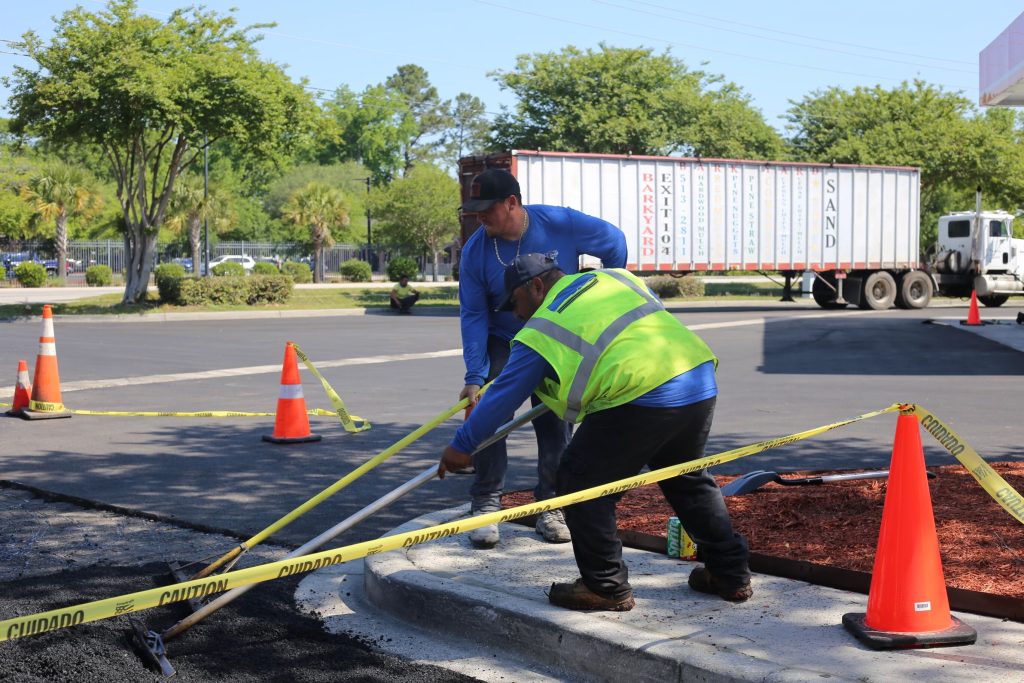
When most people think of hospital quality, they think about doctors, nurses, or cutting-edge equipment. Rarely do they consider that the pavement outside the hospital—its parking lots, driveways, and access roads—can influence patient safety, operational efficiency, and even public perception. Yet studies in healthcare facility management show that poorly maintained pavement can create hidden risks: emergency vehicles delayed by potholes, mobility-impaired patients navigating uneven walkways, and even subtle psychological effects that make patients question the hospital’s attention to detail.
At The Pavement Group, we see hospitals struggle with unique pavement challenges every day.
Hospitals face unique pavement challenges:
- High daily traffic from ambulances, patients, and staff vehicles
- ADA compliance for mobility-impaired patients
- Exposure to seasonal storms and standing water
- Heavy equipment and deliveries
- Emergency vehicle access requirements
Ignoring these elements can result in injuries, legal exposure, and a negative perception of the facility. Conversely, well-planned and maintained pavement improves patient experience, operational efficiency, and reputation.
How Pavement Quality Affects Safety
1. Trip and Fall Prevention
Studies show that slips and falls in healthcare facilities are among the top causes of non-medical injuries. Pavement irregularities—cracks, potholes, uneven sidewalks—pose risks, particularly for:
- Elderly patients or those with mobility limitations
- Wheelchair or stretcher transport
- Parents with children
- Visitors unfamiliar with the campus layout
The Pavement Group addresses these risks through precise repairs, resurfacing, and ADA-compliant ramps, ensuring smooth, hazard-free access for all patients.
2. Vehicle and Emergency Access
Smooth, well-marked pavement ensures ambulances, fire trucks, and delivery vehicles navigate efficiently. Poor pavement conditions can:
- Delay emergency response by seconds or minutes
- Damage ambulance or hospital equipment
- Create bottlenecks during peak hours
Even minor pavement disruptions can compromise critical timelines, potentially impacting patient outcomes.
3. Drainage and Flooding Considerations
Hospitals must manage stormwater to prevent standing water, ice formation, and erosion, all of which damage pavement and increase hazards. Key considerations include:
- Proper slope design to direct runoff
- Permeable vs. impermeable surfaces for water management
- Drain placement near high-traffic zones
- Reducing hydroplaning risk for vehicles and slipping risk for pedestrians
The Pavement Group integrates drainage solutions into paving projects to reduce maintenance costs and maintain safe conditions year-round.
Pavement and ADA Compliance
The Americans with Disabilities Act (ADA) establishes specific standards for hospital pavement:
- Smooth, slip-resistant surfaces for wheelchairs and walkers
- Correct ramp slopes (1:12 maximum gradient)
- Proper curb cuts and detectable warnings
- Clearly marked accessible parking spaces with appropriate spacing
Non-compliance can result in fines, legal exposure, and reputational damage. Hospitals with compliant, smooth, and clearly marked pavements create a safer, more inclusive environment.
Patient Perception and Institutional Reputation
Surprisingly, pavement quality directly influences patient perception of care quality. Healthcare marketing studies have found:
- Patients notice parking lot conditions even subconsciously
- Well-maintained lots correlate with higher satisfaction scores
- Poor pavement creates the impression of neglect or underfunding
- Smooth, clearly marked, and clean pavements communicate professionalism
Hospitals investing in quality paving signal attention to detail, safety, and patient comfort before the first interaction with medical staff.
Long-Term Financial Impact
Investing in pavement maintenance is more cost-effective than neglect. Poor pavement increases:
- Repair costs due to potholes and asphalt failure
- Liability claims from slip-and-fall accidents
- Staff inefficiency during emergency response
- Energy consumption due to inefficient traffic flow
Routine inspections, sealcoating, and resurfacing by The Pavement Group prolong pavement life and reduce overall operating costs.
Best Practices for Hospital Pavement Management
To maximize safety, efficiency, and patient satisfaction:
- Conduct annual pavement assessments for cracks, slopes, and drainage issues
- Repair minor cracks before they become potholes
- Ensure ADA-compliant pathways and markings
- Integrate stormwater management to prevent standing water
- Schedule maintenance during low-traffic hours to minimize disruption
With a systematic approach, hospitals maintain a safer, more professional environment while protecting budgets.
Services The Pavement Group Provides
The Pavement Group specializes in hospital and healthcare facility paving. Key services include:
- Asphalt and concrete paving for high-traffic hospital areas
- Resurfacing and crack repair
- ADA compliance upgrades, including ramps and parking
- Sealcoating and line striping for clarity and safety
- Drainage solutions to prevent flooding and ice formation
We combine engineering expertise, local environmental knowledge, and hospital-specific requirements to deliver durable, safe, and aesthetically professional pavement.
Upgrade Your Hospital Pavement Today!
At The Pavement Group, we specialize in hospital-specific paving solutions that meet ADA standards, improve durability, and enhance aesthetics. From resurfacing and sealcoating to line striping and drainage solutions, we handle every detail.
Call The Pavement Group today to schedule a consultation and make your hospital safer, more efficient, and welcoming for every visitor.
Frequently Asked Questions
1. How does poor pavement directly affect patient safety?
Cracks, potholes, and uneven surfaces create real trip hazards for patients and visitors. Wheelchairs and stretchers are harder to maneuver. Even small gaps can cause falls or injuries. Injuries outside the hospital can give rise to liability claims. Keeping surfaces smooth prevents accidents and makes everyone feel safer from the moment they arrive.
2. Can pavement quality influence patient perception of a hospital?
Absolutely. People notice rough spots or faded lines before seeing a doctor. Well-maintained pavement communicates professionalism and care. Conversely, damaged areas can suggest neglect. First impressions are subtle but powerful, shaping trust in the hospital’s overall quality. Smooth, clean lots help patients feel confident in the care they will receive.
3. How does ADA compliance relate to pavement quality?
ADA compliance ensures patients with disabilities move safely. Uneven surfaces or poor ramps create obstacles. Handicapped spaces, curb cuts, and smooth walkways matter as much as signage. Non-compliance can lead to legal issues and upset visitors. Proper pavement supports accessibility while enhancing patient comfort and confidence.
4. How does pavement impact emergency vehicle access?
Emergency vehicles need smooth, unobstructed paths. Potholes or ruts slow ambulances and pose a risk to equipment. Even minor delays affect response times. Clear, durable surfaces allow staff to operate efficiently during high-pressure situations. Properly designed access lanes save critical seconds when every moment counts.
5. Can pavement issues increase hospital costs?
Yes, small cracks turn into expensive repairs if left unattended. Liability claims from slips or vehicle damage add costs. Frequent emergency fixes disrupt operations. Routine maintenance, such as sealing or patching, is far cheaper. Proactive care extends pavement life and protects hospital budgets.
6. How does drainage affect hospital pavement?
Standing water erodes asphalt and concrete quickly. It creates slippery spots for pedestrians and vehicles. Ice can form in winter, increasing hazards. Proper slopes and drains prevent pooling and reduce the need for repairs. Managing water protects both safety and long-term pavement durability.
7. Why is regular maintenance important for hospital pavement?
Regular inspections catch cracks, potholes, and drainage issues early. Small problems are easier and cheaper to fix. Consistent maintenance keeps walkways safe and accessible. It also preserves patient confidence in the facility. Well-maintained pavement reduces risk and prevents costly surprises.
8. How does pavement condition affect traffic flow?
Uneven or damaged lots slow cars, delivery trucks, and ambulances. Confusing or faded markings create delays and stress. Smooth, well-marked surfaces improve circulation and reduce bottlenecks. Efficient traffic flow keeps patients and staff moving safely. Hospitals benefit from fewer traffic conflicts and quicker access.
9. Can aesthetics influence hospital reputation?
Yes, appearance matters more than people realize. Cracked asphalt or debris makes the hospital feel neglected. Clean, smooth, and clearly marked lots reflect professionalism. Pavement quality can directly affect patient satisfaction scores. First impressions extend beyond the building itself, influencing reviews and referrals.
10. How do professional paving services improve hospital safety?
Professional paving ensures surfaces are smooth, ADA-compliant, and durable. Experts also handle drainage, markings, and emergency access. This reduces fall hazards and vehicle damage. Contractors prevent small problems from becoming costly issues. Hospitals gain safer, more reliable facilities that enhance the patient experience and improve staff efficiency.