When we talk about emergency pavement repairs in healthcare, we’re not talking about cosmetic cracks in a shopping center parking lot. We’re talking about access routes for trauma teams, safe walkways for patients, and load-bearing surfaces that support ambulances and supply trucks around the clock. At The Pavement Group, we’ve worked in active medical environments. We understand that nothing stops. Not surgeries, admissions, and most definitely not the emergencies. So repairs have to be done without disrupting the facility’s mission.
If you’re a facility manager facing sudden pavement damage, here’s exactly what you should do next.
1. Evaluate Whether It’s Surface-Level or Structural
The Pavement Group Service: Structural Pavement Inspection
Not every crack requires a full replacement. But not every pothole is harmless either. If water has been getting underneath, you may be dealing with subgrade erosion—and that’s a different repair entirely.
A proper evaluation looks beneath the surface. Is this an isolated failure? Or is the base compromised? Answering that question early prevents repeat emergencies. We’ve seen quick patches fail within months because the deeper issue wasn’t addressed.
2. Keep Emergency Routes Fully Operational
The Pavement Group Service: Phased Repair Coordination
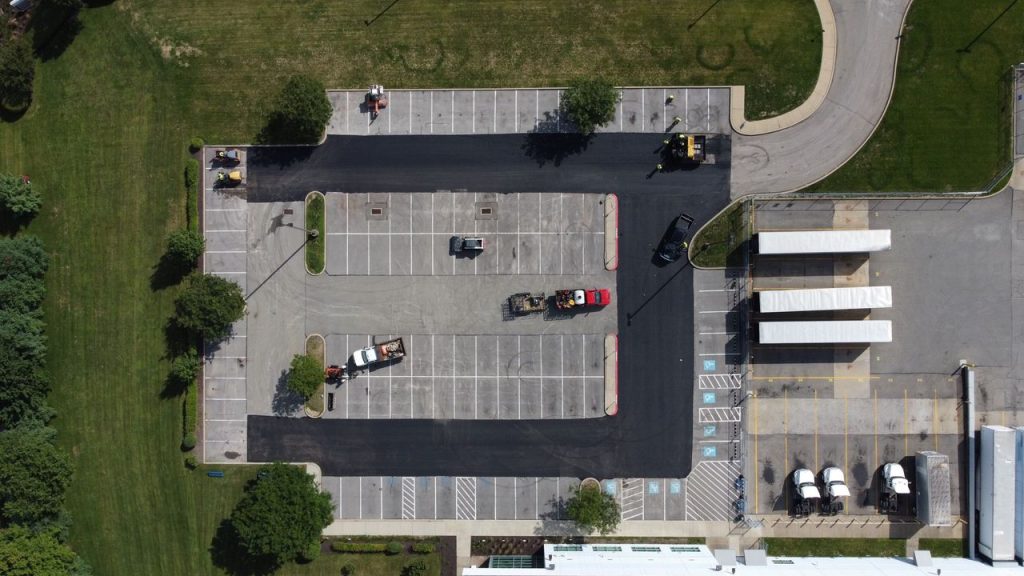
Emergency pavement repairs in healthcare settings require precision planning. Work must be staged so ambulances and fire lanes remain accessible.
That may mean:
- Repairing half a drive lane at a time
- Scheduling heavy work overnight
- Creating temporary access paths
- Coordinating with hospital operations
Our team often works in phases, section by section, so the facility never loses full access. It takes coordination, but it protects continuity of care.
3. Address Drainage Problems Before They Get Worse
The Pavement Group Service: Drainage Correction & Water Mitigation
If you see recurring pavement failures in the same area, drainage may be the issue. Standing water weakens asphalt. It seeps into cracks. It softens the base layer underneath. In healthcare campuses, sloped surfaces and catch basins must function properly. If they don’t, pavement deteriorates faster than expected.
Emergency repairs should include evaluating drainage patterns. Otherwise, you’re repairing symptoms instead of the source. We often recommend correcting slope issues or improving runoff channels during the repair process. It adds longevity and reduces future disruption.
4. Ensure ADA Compliance During Repairs
The Pavement Group Service: ADA-Compliant Surface Restoration
Hospitals must meet accessibility standards at all times. That means sidewalk transitions, ramps, and crosswalk areas must remain smooth and properly graded. During emergency pavement repairs, it’s easy to focus only on speed. But compliance cannot be overlooked.
When we restore pavement near entrances or pedestrian routes, we carefully verify slopes and transitions.
5. Use Materials That Balance Speed and Strength
The Pavement Group Service: High-Performance Asphalt & Concrete Repairs
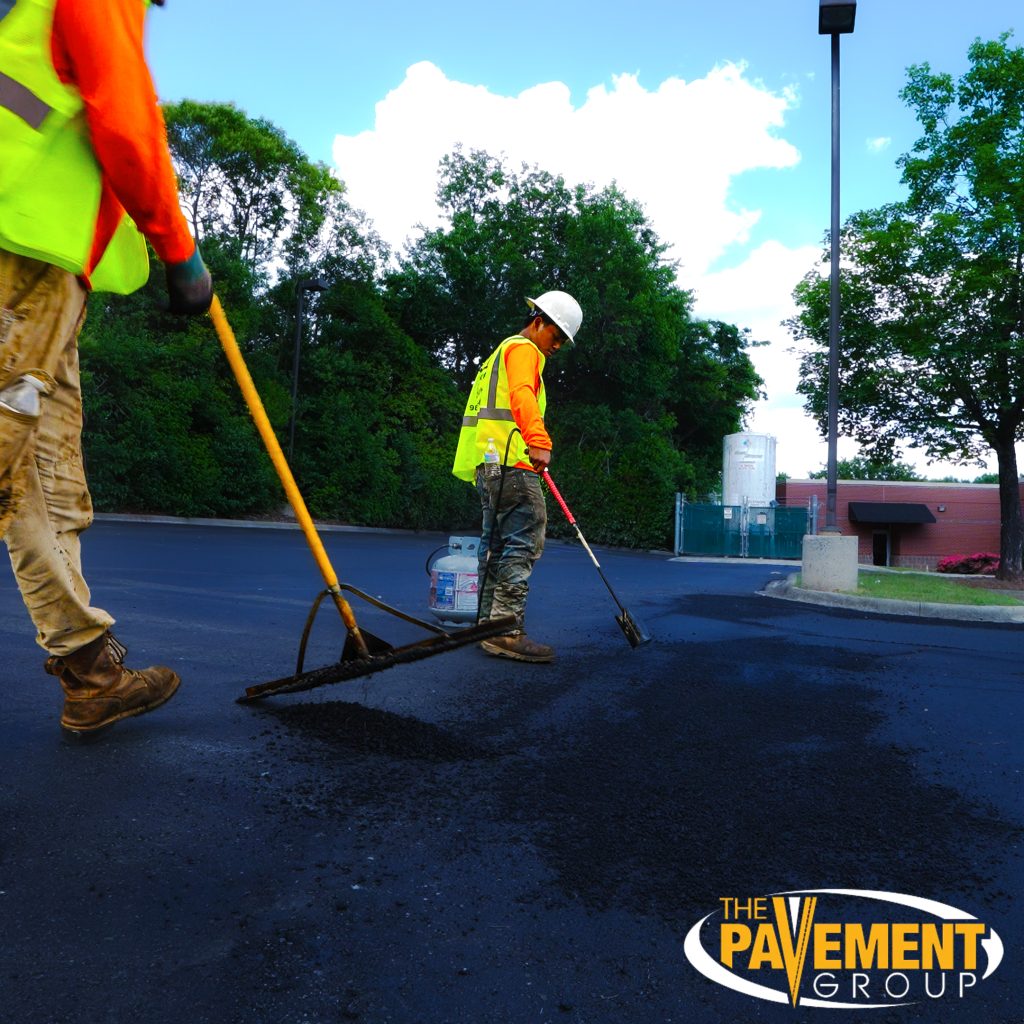
Some emergency repairs require rapid-set materials so areas can reopen quickly. Others demand full-depth replacement to handle heavy loads over the long term.
Choosing the wrong material leads to repeated repairs. Choosing the right one extends performance and reduces long-term costs.
6. Communicate Clearly With Staff and Visitors
The Pavement Group Service: On-Site Coordination & Traffic Management
Repairs can create confusion if they aren’t clearly communicated.
We recommend:
- Temporary wayfinding signs
- Clearly marked pedestrian detours
- Coordination with security teams
- Informing department heads in advance
An organized repair process reduces frustration and maintains a professional appearance during construction.
7. Document Repairs for Liability and Records
The Pavement Group Service: Detailed Repair Documentation
After emergency pavement repairs, keep detailed records. Include photos before and after. Record materials used. Note repair methods and timelines.
This protects the facility in case of future claims or inspections. It also helps track pavement performance over time.
8. Develop a Preventive Maintenance Strategy
The Pavement Group Service: Preventive Maintenance Programs
Emergency repairs are often the result of delayed maintenance. Preventive services such as crack sealing, sealcoating, and routine inspections significantly extend pavement life.
A structured maintenance plan reduces surprise failures and protects operational stability.
Final Thoughts
Emergency pavement repairs in healthcare settings demand more than equipment and labor. They require awareness of operational sensitivity. The Pavement Group works as a coordinated team because healthcare environments demand coordination. We plan carefully, execute efficiently, and minimize disruption wherever possible.
Let’s Protect What Matters Most
If your facility needs immediate attention or if you want to prevent the next emergency, contact The Pavement Group today. Let’s keep your access points strong, safe, and ready for whatever comes next.
Frequently Asked Questions
1. What should facility managers do first during emergency pavement repairs in healthcare settings?
The very first move is to make the area safe. Block it off so no patient, visitor, or staff member accidentally walks or drives through a hazard. Then figure out how the damage affects emergency routes, especially ambulance access. Once safety is addressed, document everything and call a paving professional to assess the situation properly.
2. How do emergency pavement repairs affect hospital operations?
They can affect operations more than most people realize. If an ambulance lane or main entrance is blocked, patient flow slows down immediately. Even small detours can create confusion for visitors and delivery drivers. That is why repairs must be carefully planned so the facility continues operating without interruption.
3. How quickly should emergency pavement repairs be completed at a hospital?
In healthcare settings, repairs should begin as soon as the risk is identified. Waiting increases liability and may worsen underlying structural damage. Temporary fixes can stabilize the area within hours. Permanent repairs should follow quickly, depending on the weather and material curing time.
4. What causes sudden pavement failure in healthcare facilities?
Most sudden failures are not actually sudden. Years of heavy ambulance traffic and delivery trucks slowly weaken the surface. Water intrusion beneath the asphalt can quietly erode the base layer. Eventually, the pavement gives way under pressure.
5. Are emergency pavement repairs in healthcare settings required to meet ADA standards?
Yes, and this part is critical. Any repair near walkways, ramps, or entrances must meet ADA slope and surface guidelines. Patients using wheelchairs or walkers rely on smooth, stable paths. Even small height differences can create serious safety concerns.
6. What materials are best for emergency pavement repairs at hospitals?
It depends on how quickly the area needs to reopen. Rapid-set materials are often used when access must be restored quickly. However, strength cannot be sacrificed for speed. The material must withstand heavy vehicles, such as ambulances, on a daily basis.
7. How can facility managers maintain ambulance access during repairs?
The key is staging the work in phases. One lane can remain open while another is repaired. In some cases, temporary reroutes are created with clear signage. Coordination with hospital staff ensures emergency vehicles are never delayed.
8. How do drainage problems impact emergency pavement repairs?
Drainage is often the hidden issue behind repeated pavement damage. When water sits on or beneath asphalt, it weakens the structure over time. If drainage is not corrected, new pavement can fail again. Fixing the water flow is just as important as fixing the surface.
9. What documentation is needed after emergency pavement repairs in healthcare settings?
Good documentation protects the facility long-term. Take before-and-after photos and record what materials were used. Note the repair method and timeline. This information helps address liability concerns and plan for future maintenance.
10. How can hospitals prevent future emergency pavement repairs?
Prevention starts with regular inspections. Small cracks should be sealed before they expand into larger failures. Drainage systems should be checked routinely, especially after heavy storms. A consistent maintenance plan keeps surprises to a minimum.