Poor drainage is the leading cause of premature pavement failure. Apartment complexes experience this problem more than most other property types. The land they sit on takes in rainwater, rubbish trucks, move-in vans, fire engines, and hundreds of visits from residents each week. If part of the asphalt feels spongy when you step on it or gives way under a tire, the surface usually doesn’t tell the whole story. The failure has almost always begun below the surface.
We repair apartment car parks for property managers, owners, and HOAs across the country and constantly see the same patterns repeat. The following article outlines the real reasons behind soft spots, describes how we trace each one back to its origin, and explains why a simple patch generally ends up costing you more in the long term.
Overview
- A soft spot occurs when the base or subgrade beneath the asphalt loses strength.
- Water is the main cause of soft spots, and residential lots collect water from several sources.
- Weak points can occur in utility trenches, routes used by trash trucks, and storm drains.
- The position of the soft spot indicates what caused it.
- A permanent repair addresses the cause, not merely the damaged surface.
How an Apartment Lot Carries Its Load
Each parking lot has a layered structure. A thin layer of asphalt on top, a compacted aggregate base, and, beneath that, the natural soil known as the subgrade. The asphalt flexes slightly under traffic loads, and the base distributes each wheel load over a broader area of soil. This system functions only if both the base and the subgrade remain firm and dry.
A weak point develops whenever one of the lower layers lacks support. As a result, the asphalt above it bends more than it should, creating a spongy sensation, a noticeable dip, or alligator cracking. According to the Asphalt Institute, alligator cracking results from weak spots in the subgrade, insufficient pavement thickness, or excessive loading.
The apartment blocks place greater stress on the system than a retail development does. Refuse trucks stop and turn on the same patch each week, residents park every night in the same spaces, and delivery vans stall in the fire lanes. This constant and heavy loading soon reveals any weakness in the base.
Water Is the Main Culprit
Water softens the base and makes it unable to support weight. When the pavement material goes beyond its optimum moisture content, the base becomes soft and unstable. The asphalt on top settles, bends too much, or cracks. Furthermore, water can wash fine material from the base through unsealed pipes and structures, leaving a void underneath the pavement.
Apartment buildings cause water problems that a typical parking lot seldom encounters. The sources of the moisture we usually identify are:
- Downspouts that discharge at the edge of the asphalt instead of into a drain
- Irrigation heads that spray the pavement edge every morning
- Landscape islands that drain toward the base instead of away from it
- Clogged catch basins that hold water against the surrounding pavement
- Cracks and open joints that let rain seep straight down
The bad slope makes all of these problems worse. If a corner stays with water for a day after a storm, it saturates the base for a long time and weakens it, after which the next heavy truck pushes the asphalt into the gap.
Reading the Location of a Soft Spot
We never attempt to guess the cause. We look at the pattern, since the position of a soft spot quickly reduces the number of possible suspects.
| Where the soft spot appears | Most likely cause | What we check first |
| Straight strip across the lot | Utility trench with poorly compacted backfill | Utility maps, trench width, backfill material |
| Around a storm drain or catch basin | Fines washing into the structure through gaps | Inlet joints, pipe connections, voids under the frame |
| Dumpster pad approach | Repeated refuse truck loads on a thin base | Base depth, rutting, crack pattern |
| Low corner or gutter line | Ponding water saturating the base | Slope, standing water after rain, curb condition |
| Beside a building or landscape bed | Downspouts, irrigation overspray, or a leak | Outlet locations, sprinkler heads, water meter |
| Spot that grows during dry weather | Broken water or sewer line | Meter readings, camera inspection of lines |
| Edge near large trees | Root growth and uneven soil moisture | Root zone, edge cracking, soil conditions |
This table helps property managers to save money since a failure of a trench requires a different kind of repair from that needed for a drainage failure. A contractor who applies the same fix to both problems will return to the same area within a year. Simply put, trench failures usually follow buried utility lines and often result from poor backfill compaction or settling over time. Drainage failures, on the other hand, are usually found in low areas or around catch basins and result from water infiltrating and weakening the base. By identifying whether a soft spot relates to previous utility work or poor drainage, managers can choose the right solution and avoid the cost of repeated repairs.
Construction Shortcuts and Utility Work
Soft spots sometimes appear the day construction is carried out; if a contractor fails to compact properly, uses too little aggregate, or builds over unstable soil, a weak layer remains that no surface asphalt can conceal. The Asphalt Institute identifies subgrade consolidation, overloaded areas, lack of lateral support, and poor drainage as causes of base failure.
The most common problem on apartment premises comes from utility work. Under the pavement are pipes for water, sewage, gas, and electricity, and workers have to dig ditches to repair them. When the crew fills in those ditches in thick layers without compacting each layer, the soil sinks down over the following several months and pulls the asphalt down as a result. We frequently come across a perfectly straight, soft strip that corresponds to a repair carried out many years ago, with no record kept.
Soil type is also a factor; clay and organic soils retain water and change volume as they get wet or dry, which makes them unsuitable as a foundation unless a contractor stabilizes them first. Before we suggest any repair, we always determine what type of soil lies beneath the property.
Freeze-Thaw Cycles and Seasonal Weakening
Property owners in cold climates must also worry about another risk. When water gets trapped in the pavement structure and freezes, it expands the pavement and, when the ground thaws, leaves the base weakened. Studies concerning frost heave and thaw weakening indicate that the base and subgrade become almost fully saturated as the ground thaws, making the pavement most vulnerable at the beginning of spring.
The period of weakness lasts longer than most people anticipate. A study carried out in New Hampshire for the Federal Highway Administration showed that subgrade strength can take as long as five weeks to recover, particularly in wetter soils. The damage caused by a heavy trash truck travelling over a thawing car park in March is greater than the damage that would result from normal parking over an entire summer. Therefore, we advise those in cold climates to inspect their car parks every spring and arrange refuse truck routes to avoid clearly weak areas.
Our Process for Finding and Fixing the Cause
The inspection begins with a thorough walk around the entire property, preferably the morning after it has rained, since this is when moisture appears in cracks, joints, low spots, and curbs. Next, we examine the soft area, determine how far it extends, and assess the drainage, utilities, and slope. If the cause is still unclear, we suggest taking cores or performing geotechnical borings so the soil can reveal what the surface alone cannot show.
The repair comes after the diagnosis; the Asphalt Institute says that if a base failure takes place, then the crews should remove the failed asphalt and remedy the cause of the failure. We adhere to that rule on all jobs.
| Repair method | Best for | Limits |
| Crack sealing and surface patch | Dry, stable areas with surface damage only | Fails quickly over a wet or weak base |
| Full-depth removal and replacement | Localized base failure with a known cause | Requires proper excavation, compaction, and drainage correction |
| Underdrain installation | Chronic subsurface moisture | Needs a working outlet and proper slope |
| Subgrade stabilization | Large areas of weak soil | Needs geotechnical input and a larger budget |
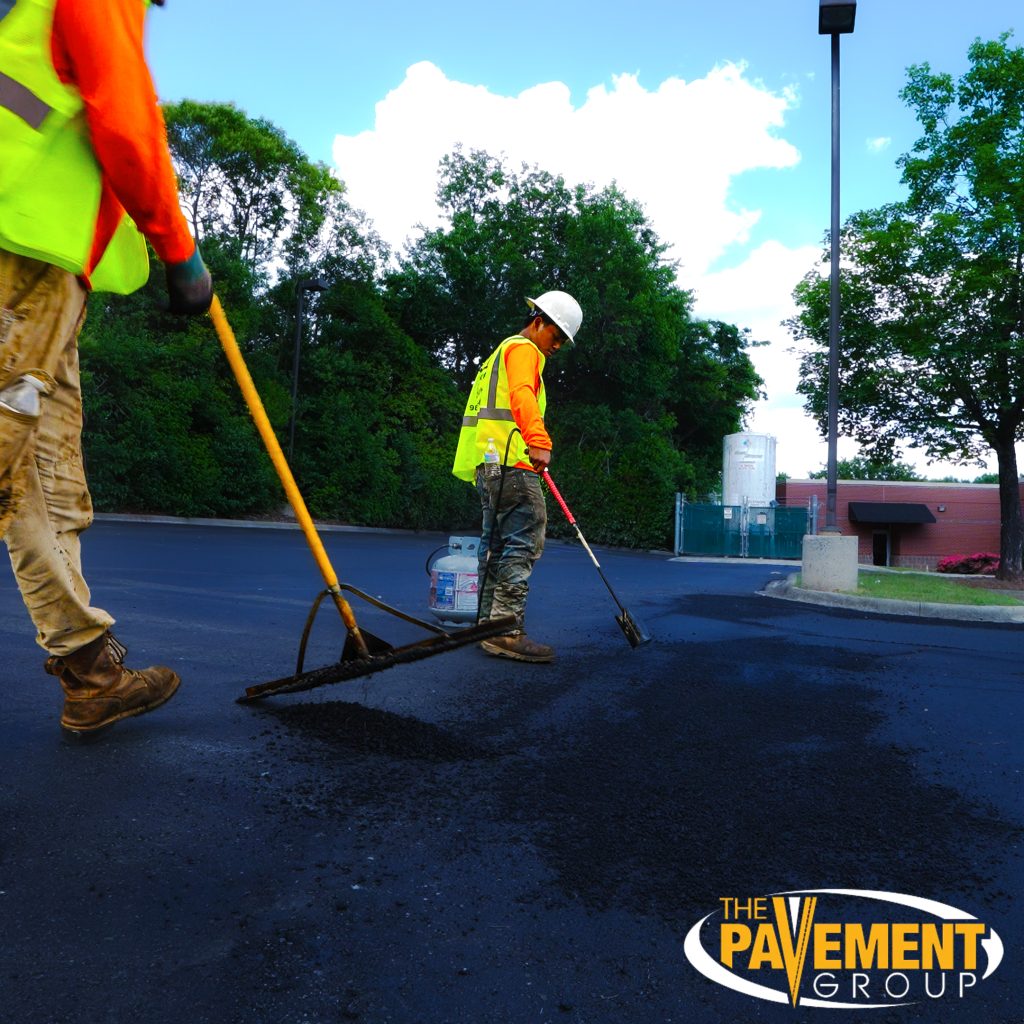
For properties with a chronic moisture problem, the best solution is to install an underdrain system that lets accumulated water escape. We combine this with grading, downspout, and irrigation adjustments so that the water no longer returns.
Why Acting Early Protects Your Property
A soft spot doesn’t remain small. Each time a car drives over it, the asphalt strains, and every rainstorm pushes more water into the cracks. A repair that costs a small sum today can become a bigger excavation by next season, and residents often notice it long before the budget does. Sinking pavements damage tires and suspensions, create trip hazards on walkways next to the car park, and signal neglect to potential renters.
When working with apartment communities, The Pavement Group follows a diagnosis-first method and supports our recommendations with a clear explanation of what went wrong and why. If you contact us for a lot evaluation, we will tell you exactly what is underneath the soft spots in your property and how to fix them permanently.
Address Soft Spots Before They Become Major Pavement Damage
Soft spots in an apartment parking lot can indicate problems beneath the asphalt, including poor drainage, weak subgrade, or moisture intrusion. If left untreated, these areas can develop into rutting, potholes, and larger pavement failures. We can inspect the affected areas and recommend the right repair approach for your property.
Contact UsFrequently Asked Questions
Can an asphalt overlay remedy a soft spot?
Not at all; an overlay places a new surface over a defective base, and the weak layer below keeps moving. The new asphalt then cracks and settles in the same pattern as the previous failure, usually within one or two seasons. As the Asphalt Institute points out, failed asphalt must be removed and the cause eliminated, which is why we remove the damaged section, rebuild the base, and then lay a new asphalt layer.
What factors determine the cost of repairing a soft spot?
The cost depends on the extent of the failed area, how deep the failure is, and the cause; a small patch that can be easily repaired is much cheaper than a long trench failure or one that requires new drainage. Ease of access is also a factor, since tight resident parking and limited staging space increase labor time. Once we diagnose the problem, we will provide a written scope so you can compare repair options without guessing.
Can residents keep using the lot while we repair the soft spot?
Yes, in nearly all cases. We carry out the work in stages so residents lose only a small number of stalls at a time, and we put up cones, barricades, and signs in each work area. Once it cools, the hot mix asphalt can take traffic again, and many of the smaller repairs are completed within one day. We also coordinate with you on the notice letters so residents know which stalls to avoid and when.
What should we do with a soft spot until the repair happens?
Stop access to the area by using cones or barricades and make sure that no vehicles, in particular those of trash trucks and moving vans, enter it. Don’t fill the soft spot with loose gravel or cold patch since these temporary remedies are likely to wash away and mask the true degree of the damage. Take a photograph of the soft spot and ask us to take a look as soon as possible. Early containment will prevent the failure from spreading and safeguard your residents while you plan the permanent repair.
Who pays when a recently paved lot develops soft spots?
That depends on the warranty and on the cause of the failure. Most paving contracts include a workmanship warranty with a defined term and exclusions, so we recommend you read yours before anyone starts digging. If a utility crew, an irrigation leak, or a drainage issue outside the paving scope caused the failure, the warranty may not apply. We document the cause with photographs, core samples, and measurements so you can make your case clearly to whoever owes the repair.
What records should property managers keep about soft spots?
Keep dated photographs, resident complaints, incident reports, and records of any utility work done on the lot. Note the location of each soft spot on a site plan, and update it after every rain event or seasonal change. These records help a contractor diagnose the cause faster, support warranty claims, and strengthen your capital reserve planning. They also show that you responded promptly if a resident ever reports damage or an injury.
See also: What Causes Asphalt to Sink Near Apartment Building Entrances?, Why Are Cracks Forming Around Apartment Parking Lot Utility Covers?
About the Author
The Pavement Group specializes in asphalt engineering, pavement maintenance solutions, and data-driven asset management for commercial, retail, and multi-family residential properties. Utilizing advanced structural pavement evaluations and capital planning transparency, The Pavement Group works directly with property managers to extend pavement lifecycles, eliminate liability risks, and optimize long-term infrastructure investments.