According to NHTSA, backover crashes, where a driver doesn’t see a person, often a small child, behind their vehicle, remain a serious cause of non-crash vehicle fatalities. Many of these happen in driveways and parking areas rather than on roads. Apartment communities carry a version of this risk that a typical commercial lot doesn’t. Kids walking to a playground, residents crossing to the mailboxes, and moving vehicles all share the same space every single day. We think about striping through that lens first, not just as a paint refresh. It changes what we actually recommend on a given property.
Quick answers:
- We evaluate how people and vehicles actually move through it, not just how faded the existing paint looks.
- Clear pedestrian delineation near playgrounds, pools, and mailboxes matters more at an apartment community than at almost any other type of property we work on.
- According to NHTSA, visibility and clear sightlines are central to preventing exactly the kind of low-speed, close-quarters incidents that happen in residential parking areas.
- We default to reflective, durable marking materials rather than treating them as an optional upgrade, because nighttime visibility is a real safety factor, not a nice-to-have.
- We will flag any safety concern we notice even if it was not the reason you called us because a striping project is a natural point to catch something before it becomes a bigger problem.
How We Evaluate a Lot for Safety, Not Just for Faded Paint
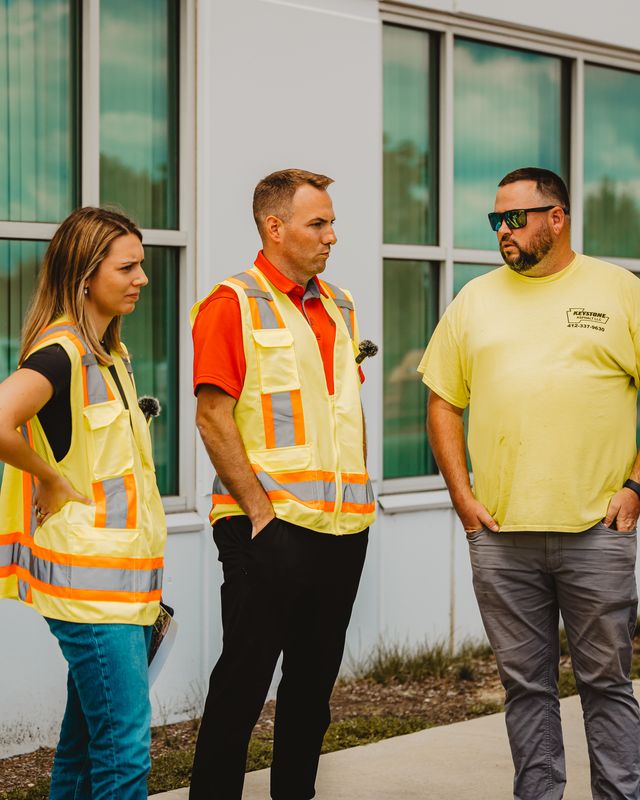
When we walk a property, we’re not just checking whether the paint has faded. We’re watching how people actually move through the space: where residents cut across a drive aisle to reach the mailboxes; where a blind corner near a dumpster pad makes a routine turn riskier than it should be; and where guests unfamiliar with the property tend to hesitate or double back. That behavioral picture tells us more about what a restriping project needs to accomplish than a simple visual check of how worn the existing lines are.
Where We Always Recommend Clear Delineation, Even If It Wasn’t There Before
Apartment communities have foot traffic patterns most commercial properties don’t: kids walking to a playground, residents crossing to a pool or mailbox kiosk, people walking dogs through areas that double as drive aisles. When we see one of these paths crossing active vehicle traffic without any marked distinction, we bring it up, even if the original scope of the visit was just a general repaint. Safe Kids Worldwide identifies clear separation between areas intended for children and vehicle movement zones as one of the most effective ways to reduce this specific risk, and we apply this same standard to all our recommendations.
Why We Use Reflective, Durable Materials as a Default
We don’t treat reflective marking material as an upsell. Nighttime visibility is a real factor in how safely a lot functions, particularly at a residential property where people are coming and going at all hours, not just during a business day. We default to materials that hold up and stay visible under headlights, and if a lower-cost option would compromise that, we’ll tell you directly rather than let price be the only thing that decides the material.
How We Handle Fire Lanes and Accessible Stalls: Getting It Right the First Time
We treat fire lane and accessible stall markings as safety work, not paperwork. According to the National Fire Protection Association, fire lanes need to stay clear and identifiable so emergency vehicles can reach a building without delay, and according to the U.S. Access Board’s 2010 ADA Standards for Accessible Design, accessible stall requirements exist so residents with mobility limitations can actually use the space safely. We double-check both against your property’s current layout and space count instead of assuming that markings from years ago still meet today’s requirements.
What We Look for During a Walk-Through That Most People Miss
We regularly check for several common issues on every visit: crosswalks near pools or playgrounds that have faded until they are no longer noticeable, speed bumps that lack visible markings or warnings, and blind corners where dumpster pads block sightlines for both drivers and pedestrians. These items do not appear on basic checklists that only measure paint condition, yet they are frequently the real cause of near-misses or resident complaints that no one links back to striping work.
The Conversation We Have With Property Managers Before We Recommend a Restripe
Before we quote a project, we walk you through what we found and why it matters, not just what it will cost. If we’re recommending a new crosswalk or additional markings that weren’t part of the original layout, we explain the specific behavior or risk we observed that led to that recommendation, so you’re deciding based on what we actually saw, not just a general sales pitch for more work.
Want us to walk your property with fresh eyes and tell you honestly what we see, safety-wise, not just where the paint has faded? We’ll show you exactly what we’d recommend and why before anything gets scheduled.
Maximize Resident Safety and Order with Fresh Line Striping
Faded lines in a busy apartment complex create traffic confusion, increase the risk of vehicle collisions, and compromise resident security. Crisp, clearly delineated parking bays, crosswalks, speed bump markings, and handicap zones establish proper driver behavior and protect pedestrians day and night.
ProLine Parking Lot Maintenance applies premium, traffic-grade paint and reflective striping solutions that keep your multi-family property safe, compliant, and well-organized.
- Pedestrian Visibility: Bright crosswalks and clearly marked walkways protect families, children, and visitors throughout the community.
- Code & Fire Compliance: Unmistakable fire lane striping and ADA layout precision reduce property owner liability and prevent parking disputes.
Frequently Asked Questions
Do you recommend restriping the whole lot at once for safety reasons, or can it be done in phases?
It depends on what we find. If safety-critical markings, like a pedestrian crossing or a fire lane, are the main concern, we’ll often recommend addressing those areas first even if the rest of the lot’s striping still has some life left. Phasing the work this way lets you address the most pressing safety items without necessarily committing to a full-property project all at once, and we’ll lay out both options clearly so you can decide what fits your timeline and budget.
How do you handle striping around playgrounds or pool areas specifically?
We look at these areas as pedestrian zones first, which usually means recommending a clearly marked crossing wherever a walking path to the playground or pool crosses active vehicle traffic, not just repainting whatever stall lines happen to be nearby. We’ll also flag if the approach to these areas has any sightline issues, like a parked car or landscaping blocking a driver’s view of the crossing, since the marking alone doesn’t solve a visibility problem underneath it.
Can new striping help reduce speeding within the property?
Striping alone won’t stop someone determined to drive too fast, but clear lane markings, well-marked speed bumps, and visible directional arrows all give drivers better information about how the space is meant to be used, which tends to naturally slow down traffic that’s really just confused about where it’s supposed to go. We’ll sometimes recommend pairing striping with additional signage if speeding has been a specific, recurring complaint, since paint by itself is rarely the complete answer to that particular problem.
Do you coordinate striping timing with when children are likely to be outside, like after school?
We can, and it’s worth mentioning if that’s a specific concern for your property. Scheduling active striping work, when equipment and wet paint are present, outside of the times when kids are most likely to be walking through the area is a reasonable precaution, and we’re happy to work around that kind of timing request when we’re planning a project.
What do you do if a property’s existing layout itself is unsafe, not just the paint?
We’ll tell you directly rather than just repainting a layout we don’t think works well. If we see a genuine layout problem, a blind corner that’s always going to be a blind corner no matter how fresh the paint is, or a traffic pattern that seems to invite conflict between vehicles and pedestrians, we’ll walk you through what a redesign would involve versus a simple repaint so you can make an informed choice rather than paying for new paint on a layout that has a deeper problem.
Will you flag a safety issue even if we didn’t ask you to look for one?
Yes. If we’re on-site for one reason and notice something else worth mentioning, a faded crosswalk, a fire lane that’s become hard to identify, or a sightline issue near a dumpster pad, we’ll bring it up. We’d rather have that conversation proactively than have you find out about it after something happens, even if it means the visit takes a little longer than originally planned.
How quickly can you respond if we notice a specific safety hazard related to faded markings?
Response time depends on how urgent the issue actually is. A fire lane that’s become difficult to identify or an accessible stall marking that’s failed entirely gets prioritized quickly, since those carry real compliance and safety weight, while a general fading issue across the lot can typically be scheduled as part of a planned visit. Give us a call and describe what you’re seeing, and we’ll tell you honestly how quickly it needs to be addressed rather than treating every request as equally urgent.
Do you provide any documentation we can share with our insurance company after a safety-focused restriping project?
We can put together documentation of what was assessed, what was found, and what work was completed, which is worth having on file regardless of whether your insurer specifically asks for it. This kind of record can be useful context if a claim or a routine policy review ever comes up later, since it shows the property took a proactive, documented approach rather than leaving safety markings to chance. Let us know if you need this in a specific format, and we’ll work with you on it.
See also: Apartment Parking Lot Striping Best Practices for Safety and Traffic Flow, 5 Preventive Maintenance Tips Every Apartment Property Manager Should Follow
About the Author
The Pavement Group specializes in asphalt engineering, pavement maintenance solutions, and data-driven asset management for commercial, retail, and multi-family residential properties. Utilizing advanced structural pavement evaluations and capital planning transparency, The Pavement Group works directly with property managers to extend pavement lifecycles, eliminate liability risks, and optimize long-term infrastructure investments.