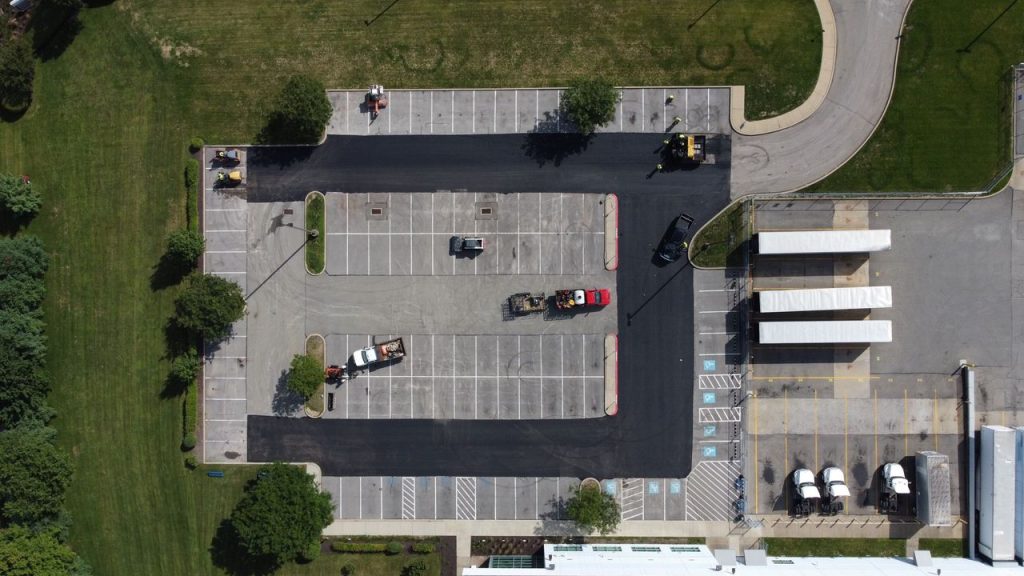
Faded striping is one of the cheapest problems in property management to fix and one of the most overlooked. A line that’s worn down to a ghost of its original paint doesn’t just look tired. It stops doing its job: guiding traffic, marking accessible spaces, and keeping cars from drifting into each other’s lanes. Most fender-benders and near-misses in apartment lots trace back to exactly this: drivers guessing where the lines used to be. In this guide, we’ll discuss the best practices for apartment parking lot striping for safety and traffic flow.
TL;DR
- Striping is a traffic-control and safety system, not a cosmetic touch-up.
- ADA-compliant accessible spaces have specific size and signage requirements, and getting them wrong is a compliance risk, not just a paint job.
- Stall dimensions and lane width directly affect how safely cars and pedestrians move through a lot.
- Paint, thermoplastic, and tape have very different lifespans and costs; the right choice depends on traffic volume and climate.
- A restriping schedule tied to visible fade, not a fixed calendar, keeps the lot both safer and cheaper to maintain in the long term.
Why Striping Is a Safety System, Not a Look
Every line in a parking lot is doing a job. Stall lines tell drivers where to park and where not to. Directional arrows and stop bars manage traffic flow at intersections inside the lot. Crosswalk markings indicate where pedestrians cross vehicle paths. When those lines fade, none of that information disappears from the lot; it just becomes inconsistent, and drivers start improvising.
Improvised parking and improvised right-of-way are where most low-speed lot accidents happen. A fender was clipped while backing out of a stall that nobody could clearly see. A pedestrian stepping into a lane that used to have a marked crosswalk. None of this requires a dramatic failure, just enough fade that the lines stop being trustworthy.
ADA-Compliant Accessible Space Requirements for Apartment Parking Lot Striping
Accessible parking spaces have specific requirements covering the number of spaces relative to total lot size, stall and access aisle dimensions, and signage. These requirements come from the ADA. They may be layered on top of state or local building codes, which may be stricter than the federal baseline.
This section is intentionally general. ADA and local accessibility codes vary by property type, jurisdiction, and lot size. Any specific space counts, dimensions, or signage requirements in the published version should be confirmed against current code and reviewed by counsel before publishing. Getting accessible striping wrong isn’t just a paint problem; it’s a compliance and liability problem.
Faded fire lanes and non-compliant ADA stalls invite heavy city fines and layout confusion. Maximize your space safely.
Standard Stall Dimensions and Layout for Traffic Flow
Stall width, stall depth, and drive aisle width all affect how easily cars can park, back out, and pass each other without conflict. Tight stalls force drivers to spend more time and make more attempts to park. They are increasing the odds of a clipped mirror or a door ding. Narrow drive aisles slow down two-way traffic and make it harder for a driver backing out to see oncoming cars.
Layout decisions made when the lot was first built don’t always match how it’s used today. A property that’s added more units, more residents, or larger vehicles since the original striping plan may be due for a layout review, not just a repaint of the existing lines.
Fire Lanes, Curb Markings, and Emergency Access
Fire lanes need to stay clear and clearly marked at all times, not just when they’re freshly painted. Faded fire lane striping and curb markings create two problems at once. Residents start parking in lanes that are supposed to stay open. Emergency responders lose time identifying the correct access route during an actual emergency.
Curb markings (no-parking zones, loading areas, and visitor parking) carry the same logic for apartment parking lot striping. They only work if they’re visible enough that residents and guests respect them without needing a sign to back them up.
Striping Materials: Paint vs. Thermoplastic vs. Tape
Material choice directly affects how long striping lasts and how much it costs to maintain over time. The table below shows the general tradeoffs for apartment parking lot striping.
| Material | Typical Lifespan | Relative Cost | Best Use Case |
|---|---|---|---|
| Traffic paint | 1–2 years | Lowest ($) | Standard stall lines, lower-traffic lots |
| Thermoplastic | 5–8 years | Moderate-high ($$$) | High-traffic lots, crosswalks, fire lanes |
| Preformed tape | 3–5 years | Moderate ($$) | Quick installs, temporary or seasonal markings |
Paint costs less upfront but needs more frequent reapplication, which adds up in labor and downtime over several years. Thermoplastic costs more to install but holds up far longer under heavy traffic, which often makes it the better long-term value for high-use areas like main drive lanes and crosswalks.
Is a confusing parking lot footprint driving up resident complaints and minor fender-benders?
Refresh Your Striping: Request a Field EvaluationCommon Apartment Parking Lot Striping Mistakes That Create Liability
A few mistakes show up again and again across apartment properties, and most of them are easy to avoid once you know to look for them.
- Striping over old, peeling paint instead of removing it first, which shortens the life of the new lines and creates a patchy, hard-to-read surface.
- Letting accessible space markings fade faster than standard stalls because they’re checked less often, leaving the property out of compliance without anyone noticing.
- Skipping directional arrows and stop bars in multi-lane lots removes the traffic-flow cues drivers rely on at blind corners.
- Restriping on a fixed calendar instead of a visibility standard, which means some lots get repainted before they need it, and others go too long after the lines are functionally gone.
EV Charging Space Striping: What’s Changing in 2026
EV charging spaces need their own striping treatment, typically a distinct color or symbol combined with standard stall markings, along with clear signage indicating that the space is reserved for charging. As more apartment communities add charging infrastructure, getting this striping wrong creates two problems: confused parking (non-EV drivers blocking chargers) and potential compliance issues if local codes specify EV space requirements.
Requirements for EV space markings vary by state and municipality and are still evolving, so confirm current local requirements before finalizing a striping plan for any new charging installation.
Building an Apartment Parking Lot Striping Maintenance Schedule
Striping performance varies with traffic volume, climate, and material, so a fixed annual calendar isn’t the most efficient approach. A more practical cadence:
- Twice a year: visual inspection of all striped areas, logged with photos, paying particular attention to accessible spaces, fire lanes, and crosswalks.
- Whenever fade reaches roughly 50% visibility, restripe the affected area rather than waiting for full disappearance.
- Every 1–2 years (paint) or 5–8 years (thermoplastic): full restripe based on material lifespan, even if visible fade hasn’t fully set in, since faded lines lose effectiveness well before they’re invisible.
This kind of schedule, tied to actual condition rather than a calendar date, keeps both the safety case and the budget case in order.
Clear Markings. Flawless Traffic Execution.
The Pavement Group applies advanced structural planning and ultra-durable paint applications to completely transform confusing multi-family parking structures into predictable, safe environments.
Plan Your Striping Project NowFrequently Asked Questions
How often should an apartment parking lot be restriped?
Most lots need restriping every 1–2 years with standard traffic paint, or every 5–8 years with thermoplastic. Climate, traffic volume, and sun exposure all affect how fast lines fade, so a visual inspection twice a year is more reliable than a fixed calendar.
How many ADA-accessible parking spaces does an apartment property need?
The required number scales with the total lot size and is set by the ADA, often layered on top of stricter state or local codes. Because requirements vary by jurisdiction and property type, confirm exact counts and dimensions with current code or a compliance consultant rather than a general estimate.
Can you stripe over old, faded paint without removing it first?
It’s possible, but not recommended for high-traffic areas. Apartment parking lot striping over old paint shortens the life of the new lines and can create a patchy, less visible surface. Removing old striping first gives the new paint or thermoplastic a cleaner surface to bond to.
What’s the best time of year to restripe a parking lot?
Striping generally needs dry conditions and temperatures within the material manufacturer’s recommended range, which usually rules out the coldest winter months in most climates. Spring and fall tend to offer the most reliable conditions in temperate regions.
Is thermoplastic worth the extra cost over paint?
For high-traffic areas like main drive lanes, crosswalks, and fire lanes, thermoplastic’s longer lifespan often makes it the better long-term value despite the higher upfront cost. For lower-traffic stall areas, standard paint may be the more cost-effective choice.
Do EV charging spaces need special striping?
Yes. EV charging spaces typically require distinct markings or a contrasting color, combined with standard stall lines, plus signage indicating the space is reserved for charging. Specific requirements vary by state and municipality and are still evolving, so check current local codes before finalizing a layout.
See also: The True Cost of Ignoring Apartment Parking Lot Cracks and Potholes | Reducing Tenant Complaints Through Better Apartment Parking Lot Maintenance
About the Author
The Pavement Group specializes in asphalt engineering, pavement maintenance solutions, and data-driven asset management for commercial, retail, and multi-family residential properties. Utilizing advanced structural pavement evaluations and capital planning transparency, The Pavement Group works directly with property managers to extend pavement lifecycles, eliminate liability risks, and optimize long-term infrastructure investments.