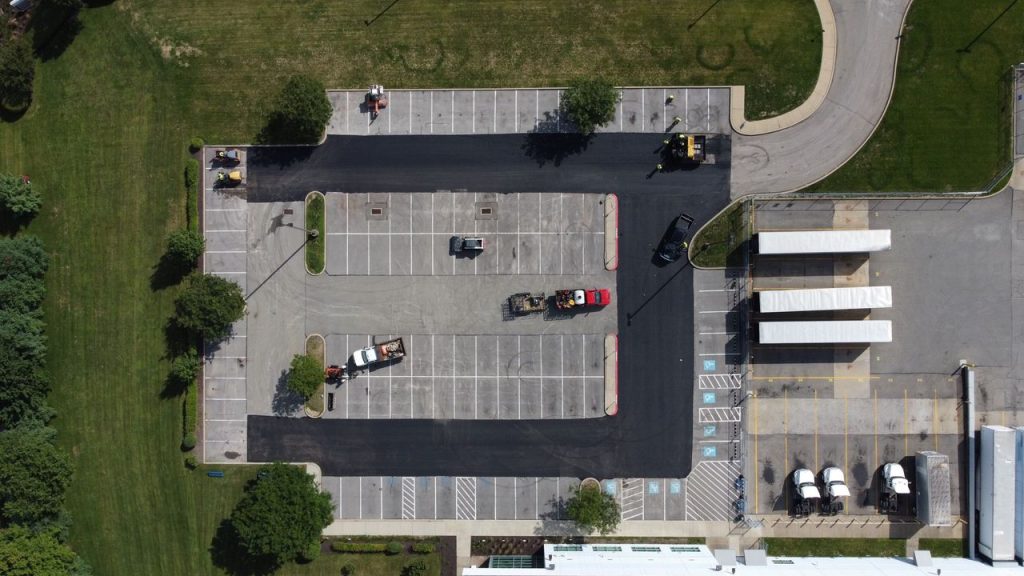
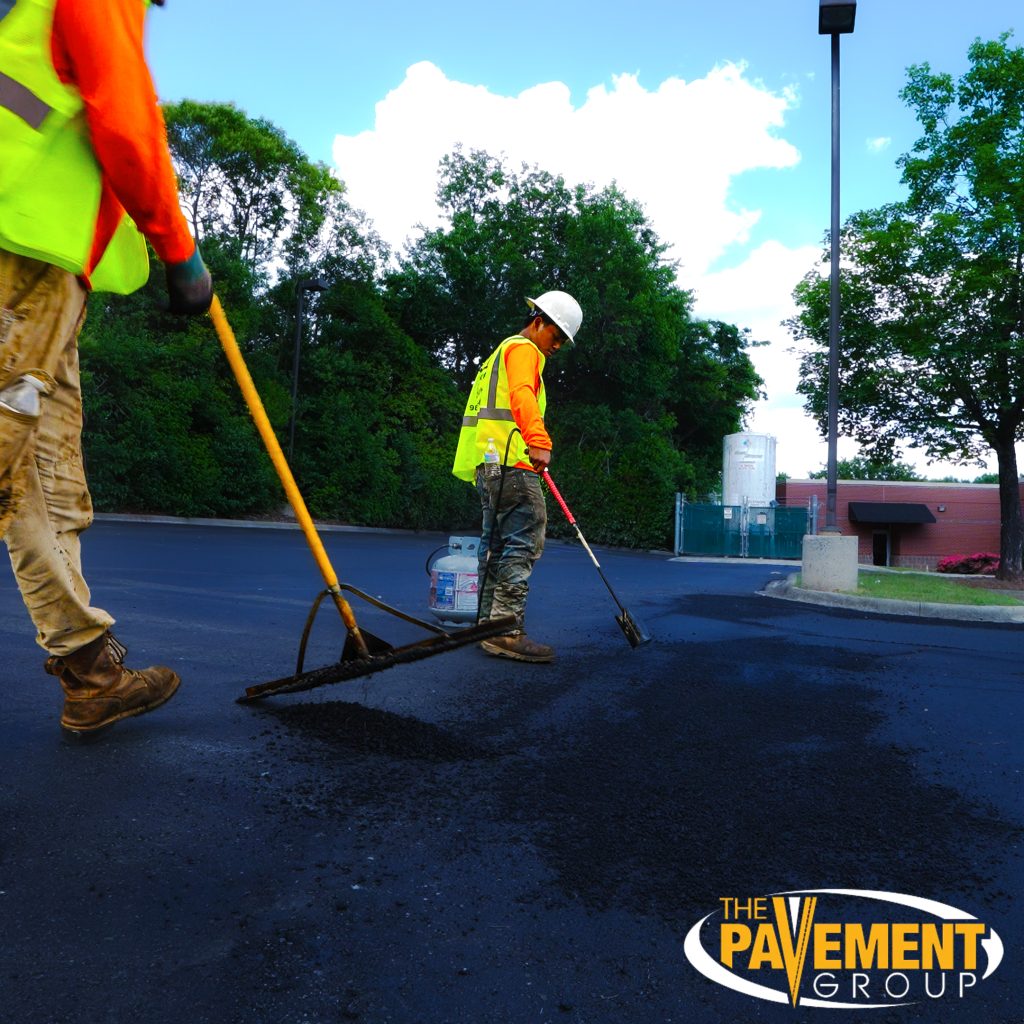
Two apartment communities poured their parking lots the same year, with the same budget, from contractors working three streets apart. One lot is still solid fifteen years later. The other needed a full mill and overlay by year eight. The difference wasn’t the crew’s skill with a paver. It was the mix that went into the truck before either crew showed up.
“Asphalt” isn’t a single material any more than “wood” is a single material for framing a house. Binder grade, aggregate size, air void content, and additive choices all vary. You also need to consider climate, traffic levels, and the wear the lot must withstand. Getting the mix right the first time is one of the most cost‑effective decisions in the entire paving budget. It is also one of the easiest to overlook without asking key questions. In this guide, we discuss the key factors that shape the right asphalt mix for apartment parking lots.
What’s Actually in an Asphalt Mix
Every asphalt mix comes down to three things: aggregate (the crushed stone and sand that makes up most of the volume), binder (the petroleum-based glue holding it together), and air voids (the small gaps between particles that let the mix flex instead of crack). Change any one of those three and the mix behaves differently under a Georgia summer, a Michigan winter, or a dumpster truck backing over the same six feet of pavement three times a week.
Most of the meaningful differences between a long‑lasting asphalt mix for apartment parking lots and a poor choice come down to how well those three variables match the site’s actual conditions. They do not come down to a regional default the contractor happens to keep in stock.
Binder Grade: Why Your Climate Should Choose It, Not Your Contractor’s Inventory
Asphalt binder is graded under a system called Superpave. It’s developed out of the Strategic Highway Research Program and now standard across the U.S. paving industry. A PG grade, written as something like PG 64-22, indicates the high and low temperatures the binder is engineered to handle without rutting in summer heat or cracking in winter cold.
A mix speced for a mild coastal climate is the wrong choice for a region with hard winter freezes, and vice versa. According to guidance published by the Asphalt Institute, using a binder grade suited to the site’s actual climate is one of the most significant factors in long-term pavement performance. More so than aggregate quality or lift thickness. A contractor who quotes one binder grade for every job regardless of region is optimizing for their own inventory, not for the lot’s fifteen-year lifespan.
Dense-Graded, Open-Graded, or Stone-Matrix: Matching Mix Type to the Job
Dense-graded asphalt is the workhorse mix most apartment lots use. A well-rounded blend of aggregate sizes that compacts tight and handles typical parking lot traffic reliably. It’s the right default for standard parking stalls and most drive aisles.
Open-graded friction course uses a more uniform aggregate size that leaves more air voids. It lets water drain through the surface instead of pooling on it. It shows up more often on highways than apartment lots. It’s worth knowing about for any site with serious standing-water problems in specific low areas.
Stone-matrix asphalt packs in more coarse aggregate for stone-on-stone contact, which resists rutting better under concentrated, repeated heavy loads. This makes it worth considering for the specific stretches of an apartment lot that take the most wear. These include dumpster pad approaches, the route trash trucks follow every week, and any area moving trucks regularly use. Even if the rest of the lot works perfectly well with a standard dense‑graded mix.
Designing for the Loads That Actually Use an Apartment Lot
An apartment parking lot doesn’t carry highway loads. It isn’t a uniform load either, and treating it like it is wastes money in both directions. The vast majority of the lot only ever sees passenger vehicle weight. It doesn’t need the same section depth or binder stiffness as an interstate.
A handful of specific areas see real repeated stress: dumpster and recycling pads, the turning path a trash truck takes every collection day, loading zones near leasing offices, and fire lanes that occasionally carry an actual fire engine. Those areas benefit from a thicker section, a stiffer mix, or both, even when the rest of the property is fine with a standard spec. Speccing the entire lot to handle trash-truck loads is expensive overkill. Speccing the entire lot for passenger cars and hoping the dumpster pad holds up anyway is how that same pad ends up rutted and cracked years before the rest of the lot.
Recycled Asphalt Pavement: Genuinely Useful, Within Limits
Recycled asphalt pavement, or RAP, reuses milled asphalt from other projects as part of the aggregate and binder in a new mix. According to the National Asphalt Pavement Association, RAP is one of the most recycled materials in the country by volume. If used at the right percentage, it performs comparably to virgin mix while cutting material cost and environmental impact.
The caveat is proportion. A mix with a reasonable RAP content, generally handled through a proper mix design rather than an arbitrary percentage, holds up fine. Push the RAP content too high without adjusting the binder and mix design to compensate. The mix can turn brittle faster than a comparable virgin mix would. This is a case where “more recycled content” isn’t automatically better. It’s worth asking a contractor exactly how they’re accounting for RAP in the mix design, not just whether they use it.
Warm-Mix vs. Hot-Mix: What Actually Changes
Crews produce and lay hot-mix asphalt at higher temperatures. This generally means the mix must stay hot enough to compact properly before it cools. Warm-mix asphalt uses additives or special processes to produce and lay the same mix at significantly lower temperatures. This extends the paving season into cooler weather and cuts the fuel needed to heat the mix.
For an apartment community, the practical difference usually shows up in scheduling flexibility rather than final pavement quality. Warm-mix asphalt can sometimes let crews finish a project during the shoulder season when hot-mix production windows are closing, without noticeably changing how the finished lot performs.
Permeable Asphalt: When Stormwater Rules Change the Whole Conversation
Some apartment communities are subject to stormwater management requirements that favor permeable pavement, an open-graded mix design that allows water to pass through the surface into a stone reservoir below rather than running off into a storm drain. The EPA has promoted permeable pavement as part of broader green infrastructure guidance for managing stormwater runoff. Particularly on sites where reducing impervious surface helps meet local drainage requirements.
Permeable asphalt isn’t a drop-in replacement for standard mix everywhere. It needs a specifically designed base section to store water, careful consideration of traffic loads since the structure behaves differently than dense-graded asphalt. It requires greater maintenance attention to keep the surface from clogging over time. It’s a strong option where drainage requirements or standing-water problems justify it, not a default upgrade for every lot.
The Mix and the Base Have to Match Each Other
None of this works in isolation. A well-chosen asphalt mix for apartment parking lots over an inadequate or poorly compacted base fails just as fast as a mediocre mix over a great base, just for a different reason. Crews must match the thickness of each asphalt layer they place to the mix design and the loads the pavement will carry. Cutting costs by skipping a proper binder course to reduce layer thickness undermines even the best surface mix placed over it.
This is why you should choose your asphalt mix while planning base preparation and drainage design. Do not make this choice separately after you have already specified everything else.
Why the Cheapest Mix Is Rarely the Cheapest Lot
An asphalt mix for apartment parking lots quoted at a lower price per ton is usually achieved by cutting binder content, using a lower PG grade than the climate calls for, or skipping the mix design work that matches RAP content to actual performance needs. Every one of those shortcuts shows up later as cracking, rutting, or a base failure that costs far more to fix than the difference in the original quote.
The apartment community that asks about binder grade, mix type, and load-specific design before signing a contract is the one that gets a lot lasting fifteen-plus years instead of needing a full redo before the mortgage on the property has even matured much.
Getting This Right Starts With the Bid, Not the Punch List
Asphalt mix for apartment parking lots shouldn’t be a line item buried in a proposal that nobody asks about. It should be a conversation: what binder grade fits this climate, does the dumpster pad need a different spec than the rest of the lot, is RAP content backed by an actual mix design, and does drainage on this specific site call for anything other than standard dense-graded asphalt? That’s the conversation The Pavement Group has with every property before a single truck shows up. The mix decided in that conversation is what determines whether the lot is a fifteen-year asset or an eight-year problem.
Using the wrong mix on your lot leads to early cracking, rutting, and wasted budget. The right blend depends entirely on your local climate and daily vehicle traffic. Reach out to our team today. We’ll evaluate your property’s needs and recommend the exact asphalt mix to ensure a smooth, long-lasting surface.
Frequently Asked Questions
What’s the difference between a binder course and a surface course?
The binder course is the structural layer beneath the surface. Typically using a coarser mix designed to carry load and provide a stable base for the finish layer above it. The surface course, sometimes called the wear course, is the top layer drivers actually see and drive on, usually a finer mix designed for smoothness and surface durability. Both layers need to be matched to each other and to the traffic the lot expects. A strong surface course over a weak binder course still fails from the base up. Most apartment parking lots use a two-layer system for exactly this reason, rather than relying on a single thick layer to do both jobs.
Does an apartment parking lot need the same asphalt mix as a highway?
No, and specifying highway-grade mix throughout an apartment lot usually wastes money without adding meaningful benefit. Highways carry sustained heavy truck traffic at high volumes, which justifies a different binder grade, thickness, and mix type than a lot that mostly sees passenger vehicles. The exception is for specific high-load areas within the lot, such as dumpster pads and delivery zones, which can reasonably borrow from heavier-duty specs even though the rest of the property doesn’t need them. Matching the mix to the actual traffic in each part of the lot, rather than applying one spec everywhere, is what keeps costs reasonable without under-building the areas that need more.
What is PG grade, and why does it matter for asphalt in different climates?
PG grade, short for performance grade, describes the temperature range an asphalt binder is engineered to handle without rutting in heat or cracking in cold. They follow the Superpave grading system used across the U.S. paving industry. A binder grade suited to a hot southern climate would likely become too brittle in a region with hard winter freezes. The reverse is true for a cold-climate grade used somewhere with intense summer heat. Matching binder grade to actual site climate is one of the most significant factors in how long a pavement lasts.
Is recycled asphalt pavement (RAP) as durable as new asphalt?
When used at an appropriate percentage, as supported by an actual mix design, RAP-inclusive asphalt performs comparably to virgin mix while reducing material costs and environmental impact. RAP is among the most recycled materials in the country by volume, reflecting decades of real-world performance data supporting its use. Problems tend to show up when RAP content gets pushed too high without adjusting the binder to compensate. This can make the resulting mix more brittle than a comparable virgin mix. The right question isn’t whether a contractor uses RAP, but how they’ve adjusted the mix design to account for it.
What’s the practical difference between warm-mix and hot-mix asphalt?
Hot-mix asphalt is produced and placed at higher temperatures, requiring the mix to stay hot enough to compact properly before it cools too far to work. Warm-mix asphalt uses additives or production methods that allow the same mix to be made and placed at meaningfully lower temperatures. This can extend the paving season and reduce the energy needed to produce it.
Does permeable asphalt make sense for an apartment parking lot, or is it mostly marketing?
Permeable asphalt is a legitimate, functional option, but it’s specifically suited to sites with real stormwater management needs. It requires a specially designed base section to store water and different maintenance attention to prevent surface clogging over time. Both of which add cost and complexity compared to standard dense-graded asphalt. For a lot without those specific pressures, standard asphalt with proper grading and drainage design usually solves the same problems.
See also: How New Asphalt Parking Lots Help Attract Higher-Quality Tenants, How to Design an Apartment Parking Lot for Better Traffic Flow and Safety
About the Author
The Pavement Group specializes in asphalt engineering, pavement maintenance solutions, and data-driven asset management for commercial, retail, and multi-family residential properties. Utilizing advanced structural pavement evaluations and capital planning transparency, The Pavement Group works directly with property managers to extend pavement lifecycles, eliminate liability risks, and optimize long-term infrastructure investments.