One slip-and-fall accident can undo years of great reviews and careful brand building. Guests remember how a place felt just as much as how it looked. And nothing kills that welcoming vibe faster than unsafe walkways, slick pool decks, or rain-soaked parking areas.
That’s why slip-resistant paving solutions for the hospitality industry have become less of a “nice upgrade” and more of a must-have. Today’s guests expect beautiful spaces that are also safe, accessible, and thoughtfully designed. The good news? You don’t have to sacrifice style to get safety anymore. Modern paving technology has completely changed the game.
Let’s break down what works, what lasts, and how hospitality businesses can create safer surfaces without losing visual appeal.
Why Slip Resistance Matters More Than Ever in Hospitality
According to recent data from the National Floor Safety Institute, slip-and-fall accidents remain one of the leading causes of injuries in commercial environments. For hospitality businesses, that translates to higher liability exposure, insurance claims, and reputational damage.
Slip-resistant paving is no longer just about compliance. It’s about protecting people, preserving brand trust, and ensuring every guest feels confident moving through your property.
Modern Slip-Resistant Paving Materials That Work
Forget the rough and unattractive surfaces of the past: Today’s slip-resistant paving materials blend cutting-edge technology with aesthetic appeal, offering a wide range of stylish and effective solutions for enhancing safety without sacrificing design.
1.Textured Concrete and Decorative Finishes
Textured concrete remains a favorite for hospitality settings. It’s durable, cost-effective, and customizable. New finishing techniques allow for elegant patterns while maintaining strong slip resistance.
2. Permeable Paving Systems
Permeable pavers allow water to drain through the surface instead of pooling on top. This reduces slip risk while supporting sustainability goals. Many hospitality brands now choose permeable options to align with eco-friendly initiatives.
3. Asphalt with High-Friction Treatments
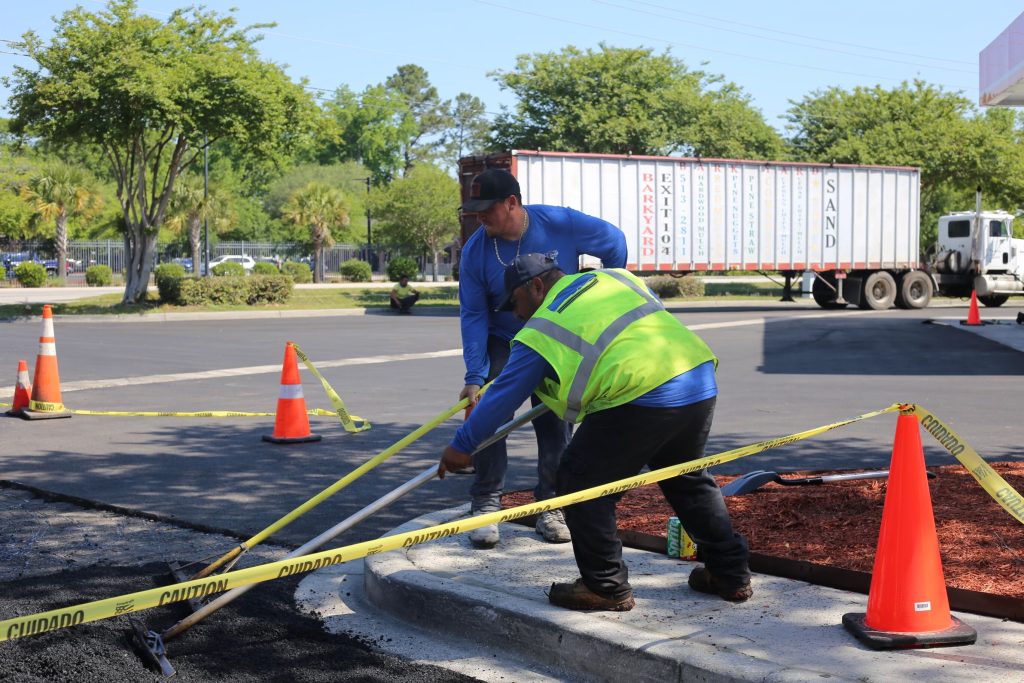
Modern asphalt isn’t what it used to be. High-friction surface treatments improve grip, reduce skidding, and extend pavement life. These treatments are especially useful in high-traffic drive lanes and service areas.
How Slip Resistance Enhances Guest Experience
Safety might not be flashy, but guests absolutely notice when they feel comfortable walking around your property. Slip-resistant paving solutions for the hospitality industry quietly improve the overall experience.
Guests move more freely. Parents feel safer letting kids explore. Staff can work efficiently without worrying about accidents. These small details add up to better reviews, repeat visits, and positive word-of-mouth.
Design Meets Durability in Modern Hospitality Paving
Modern hospitality paving seamlessly blends aesthetic appeal with long-lasting performance, creating inviting and stylish outdoor spaces that can withstand heavy foot traffic and the elements while enhancing the guest experience.
Blending Style with Function
Today’s paving solutions are designed to complement architecture and branding. From natural stone looks to custom colors and patterns, slip resistance no longer limits creativity.
Long-Term Cost Benefits
While slip-resistant materials may cost more upfront, they reduce long-term expenses. Fewer accidents mean fewer claims and less downtime for repairs. Durable surfaces also require less frequent replacement.
Maintenance Matters More Than You Thin
Even the best paving system needs proper care. Dirt, algae, grease, and moisture can reduce traction over time. Hospitality properties should schedule routine cleaning and inspections to maintain slip resistance.
The Pavement Group works with hospitality clients to design paving solutions that are not only safe but easy to maintain. That combination keeps surfaces performing well year after year.
Final Thoughts
Slip-resistant paving solutions for the hospitality industry are no longer optional upgrades. They’re a smart investment in safety, brand reputation, and guest satisfaction. With modern materials and expert installation, hospitality spaces can be both stunning and secure.
Don’t Settle for Slippery Surfaces!
If you’re planning a new project or upgrading existing surfaces, The Pavement Group brings experience, innovation, and precision to every job. Contact our team today and start building safer, more welcoming spaces that guests trust from the first step to the last.
Frequenty Asked Questions
1. What are slip-resistant paving solutions for the hospitality industry?
Slip-resistant paving solutions are surfaces designed to reduce the risk of slipping in high-traffic areas. They use textured finishes, special aggregates, or surface treatments. These solutions improve safety without sacrificing design. They are commonly used in hotels, resorts, and restaurants.
2. Why is slip-resistant paving important for hotels and resorts?
Hotels and resorts experience constant foot traffic in varied weather conditions. Wet surfaces increase the risk of guest injuries. Slip-resistant paving helps reduce accidents and liability. It also improves overall guest confidence.
3. Are slip-resistant surfaces still visually appealing?
Yes, modern materials offer both safety and style. Many finishes mimic natural stone or decorative concrete. Designers can customize colors and textures. Safety no longer limits creativity.
4. What areas need slip-resistant paving the most?
Entrances, pool decks, walkways, and parking areas are high-risk zones. These areas are often exposed to moisture. Slip-resistant materials reduce falls in these locations. Strategic placement improves overall safety.
5. How long do slip-resistant paving materials last?
Durability depends on material choice and maintenance. High-quality systems can last decades. Regular cleaning preserves traction. Proper installation extends the lifespan significantly.
6. Does slip-resistant paving require special maintenance?
Maintenance is straightforward but important. Surfaces should be cleaned to remove debris and buildup. Periodic inspections ensure traction remains effective. Preventive care keeps surfaces safe.
7. Are slip-resistant paving solutions ADA compliant?
Many modern systems are designed with ADA compliance in mind. They balance traction with smoothness for mobility devices. Compliance varies by product. Professional guidance ensures standards are met.
8. Can existing pavement be made slip-resistant?
Yes, surface treatments can improve traction on existing pavement. These treatments enhance grip without full replacement. It’s a cost-effective upgrade. Results depend on surface condition.
9. How does weather affect slip resistance?
Rain, humidity, and temperature changes impact surface traction. Slip-resistant materials are designed to perform in wet conditions. Proper drainage also plays a role. Climate-specific design improves results.
10. What factors influence the cost of slip-resistant paving?
Material type, surface area, and installation complexity affect cost. Long-term durability often offsets higher upfront investment. Maintenance requirements also factor in. Professional planning helps control expenses.