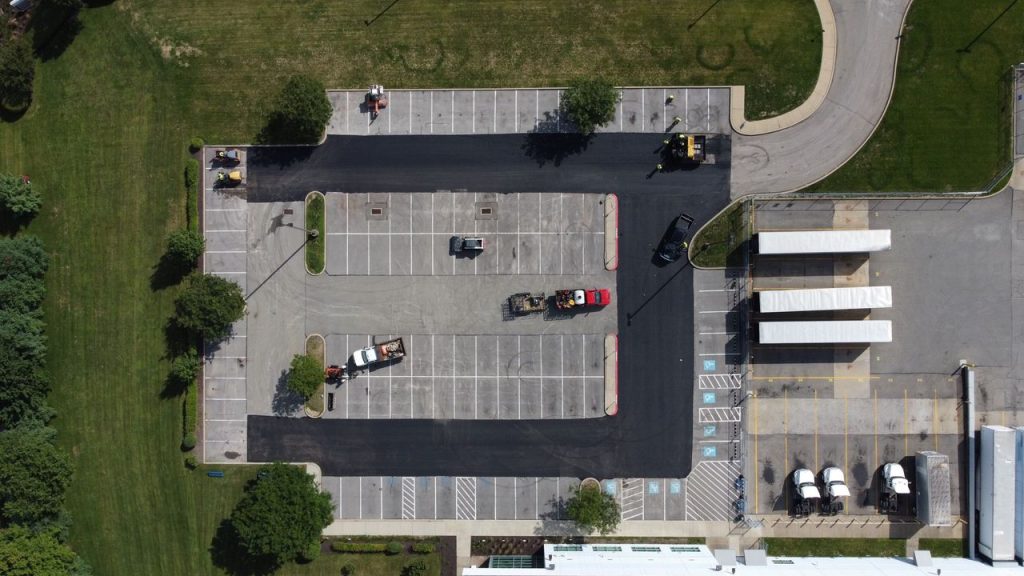
Pavement maintenance on hospital campuses is built to support care, but it quietly carries the heaviest load of all. Every day, ambulances race in under pressure, delivery trucks roll through service roads, staff park and leave on tight schedules, and patients move carefully across, needing to feel stable and secure. When pavement starts to fail, the consequences are immediate and visible. Traffic backs up, safety concerns rise, and facility teams are forced into reactive decisions they never planned for.
At The Pavement Group, our team works directly with healthcare facilities to plan, prioritize, and maintain large-scale pavement systems that respect the nonstop nature of hospital operations. Understanding how pavement functions within a hospital campus is the first step toward keeping everything else running smoothly.
Why Pavement Maintenance Is Critical for Hospital Campuses
Hospitals face unique challenges that most commercial properties never encounter. Emergency vehicles need clear, stable access routes. Patients with limited mobility rely on smooth walkways and ramps. Staff work long shifts and need predictable, safe parking areas. When pavement conditions decline, the ripple effects reach every department.
Poor pavement maintenance increases liability exposure, leads to ADA compliance issues, and disrupts traffic flow during peak hours. Proactive care reduces emergency repairs, controls long-term costs, and supports a safer environment for everyone on campus.
Common Pavement Issues Found on Hospital Campuses
Hospital campuses often span multiple buildings, parking structures, access roads, and pedestrian zones. Over time, wear patterns emerge that require targeted solutions.
Some of the most common issues include:
- Surface cracking from constant vehicle loads
- Potholes caused by water infiltration
- Faded striping that confuses traffic flow
- Drainage problems near entrances and ramps
- Uneven pavement creates trip hazards
Addressing these issues early prevents escalation and protects both patients and staff.
Planned Maintenance Versus Emergency Repairs
Why Planning Saves Money
Emergency repairs are disruptive and expensive. They often require immediate action, temporary closures, and premium labor costs. Planned maintenance, on the other hand, allows hospitals to schedule work during off-peak hours and coordinate with campus operations.
A long-term maintenance plan includes routine inspections, scheduled sealcoating, crack sealing, and phased resurfacing. This approach extends pavement life and minimizes surprises.
Coordinating With Hospital Operations
Hospital pavement work cannot interfere with emergency routes or patient access. That is why coordination is just as important as craftsmanship. Work must be phased, clearly marked, and communicated across departments.
ADA Compliance and Safety Standards
Pavement maintenance for hospital campuses must meet strict accessibility standards under the Americans with Disabilities Act. This includes compliant slopes, curb ramps, crosswalks, and surface conditions. Cracked or uneven pavement can quickly place a facility out of compliance.
Regular maintenance helps ensure that accessible parking, pathways, and entrances remain usable and safe. This is not just about regulation; it is about dignity and ease of access for patients and visitors.
Weather and Pavement Performance
Climate plays a major role in pavement deterioration. Freeze-thaw cycles, heavy rainfall, and heat all accelerate damage. Hospital campuses with poor drainage or aging surfaces often see faster breakdown.
Preventive treatments such as sealcoating and joint sealing help protect pavement from moisture intrusion. Addressing weather-related stress early prevents structural failure later.
Traffic Flow and Wayfinding on Hospital Campuses
Clear pavement markings are essential for hospital navigation. Patients and visitors are often anxious and unfamiliar with the campus layout. Faded striping or unclear directional arrows increase confusion and congestion.
Well-maintained pavement supports intuitive traffic flow, improves parking efficiency, and reduces stress for everyone entering the facility.
Long-Term Pavement Asset Management
Large hospital campuses benefit from treating pavement as an asset rather than a recurring problem. Asset management involves tracking pavement condition, planning capital expenditures, and prioritizing repairs based on risk and usage.
This approach allows facility managers to justify budgets, forecast costs, and avoid sudden infrastructure failures.
How The Pavement Group Supports Hospital Campuses
At The Pavement Group, we approach hospital pavement maintenance as a partnership, not a one-time project. Our team evaluates campus-wide conditions, develops phased maintenance plans, and executes work with minimal disruption. Services include asphalt repair, sealcoating, striping, concrete work, and long-term maintenance planning.
We understand the stakes in healthcare environments and deliver solutions that support safety, compliance, and operational continuity.
Don’t Let Pavement Problems Slow You Down.
Pavement maintenance for hospital campuses works as hard as their staff. If your facility is dealing with aging surfaces, safety concerns, or rising repair costs, it may be time for a smarter plan.
The Pavement Group helps healthcare facilities take control of their pavement through strategic maintenance and dependable execution. Contact us today to start building a safer, longer-lasting campus.
Frequently Asked Questions
1. How often should hospital campuses inspect their pavement?
At least once a year is the bare minimum. High-traffic areas, like emergency lanes, should get checked a couple of times a year. Catching problems early saves money and prevents surprises. Small cracks today can become big repairs tomorrow if you ignore them.
2. What poor pavement conditions cause the biggest safety risks?
Cracks, potholes, and uneven surfaces aren’t just ugly. They’re dangerous. Patients with mobility issues can trip, and visitors unfamiliar with the campus can stumble. Even ambulances can get slowed down on rough patches. Water or ice makes it worse. Fixing these issues keeps everyone moving safely.
3. How does pavement maintenance support ADA compliance?
Every walkway and ramp needs to be smooth and accessible. Even minor cracks or uneven surfaces can make areas noncompliant. Regular maintenance keeps paths safe for everyone. Plus, it prevents fines or emergency fixes that pop up if you ignore it.
4. Can pavement work be done without disrupting hospital operations?
Absolutely. We plan it in phases and work during off-peak hours. We set up temporary routes and signage to keep emergency lanes clear. Communication with hospital staff is key. If it’s planned right, the campus keeps running smoothly while we work.
5. What pavement treatments extend the life of hospital parking areas?
Sealcoating and crack sealing are the basics we always recommend. Sealcoating protects asphalt from water and sun damage, and crack sealing stops small problems from growing. Keeping striping sharp also helps with traffic flow and safety. Do these consistently, and you’ll push major repairs years down the road.
6. How does drainage affect hospital pavement performance?
Poor drainage is one of the biggest hidden culprits for pavement failure. Water seeps in, erodes the base, and causes cracks and potholes. Fixing slopes or installing drains early prevents more expensive, later repairs. Water management saves your pavement and your budget.
7. Why is asset management important for hospital pavement?
Think of pavement as a big investment, not just concrete you drive on. Tracking its condition helps you plan repairs, schedule resurfacing, and budget properly. It also prevents surprise failures and emergency work. A little planning upfront makes life way easier down the road.
8. What role does striping play in hospital safety?
Striping is huge. Clear lines guide staff, visitors, and emergency vehicles. If the markings fade, traffic gets confusing, congestion builds, and accidents are more likely. Keeping it painted is a simple fix that makes a big difference for safety and flow.
9. How do hospitals know when resurfacing is necessary?
You usually know it’s time when cracks are everywhere, or patching stops holding. If vehicles are slowing down, water pools, or surfaces are uneven, resurfacing is probably due. A professional inspection confirms the areas that need attention. Doing it on time prevents bigger reconstruction later.
10. How can hospitals minimize disruption during large pavement projects?
Plan it in sections and schedule work during low-traffic times. We make sure emergency lanes and critical entrances stay open. Temporary signage and clear communication with staff keep everyone on the same page. Done right, the campus stays functional while improvements happen.