Over the past few years, slip and fall claims in senior housing environments have increased nationwide. Aging pavement plays a bigger role in those incidents than many people realize. Small cracks widen. Surface oxidation weakens asphalt. Uneven areas create subtle trip hazards that go unnoticed until someone falls. That is why pavement maintenance for assisted living and senior care facilities deserves more attention than it typically receives. Proper maintenance is not just cosmetic. It is preventative. It reduces liability, supports ADA accessibility standards, and protects the long-term investment in your property.
At The Pavement Group, we work as a team to evaluate, repair, and maintain paved surfaces with safety and longevity in mind. Senior living properties require a careful approach. Let us walk through what matters most and how strategic pavement planning protects both residents and operators.
Why Pavement Conditions Matter More in Senior Care Environments
Unlike retail centers or office parks, senior living communities serve residents with mobility challenges. Many rely on walkers, wheelchairs, or assistance devices. Even a half-inch elevation change can create instability.
Additionally, emergency vehicles must have clear and stable access. Ambulances cannot navigate potholes or failing asphalt without risk. Delivery vehicles, medical transport vans, and family members all rely on properly maintained surfaces.
Neglecting pavement does not just affect curb appeal. It increases:
- Trip and fall risks
- Liability exposure
- ADA compliance concerns
- Water drainage problems
- Long-term repair costs
Preventive maintenance significantly reduces these risks.
Core Services Included in Pavement Maintenance for Assisted Living and Senior Care Facilities
1. The Pavement Group Crack Sealing Service
Cracks allow water to penetrate the asphalt base. During freeze-thaw cycles, that moisture expands and accelerates deterioration. Crack sealing blocks water intrusion before structural damage develops.
This simple service extends pavement life and prevents minor surface issues from becoming major repairs.
2. The Pavement Group Sealcoating Service
Sealcoating protects asphalt from UV rays, oxidation, and chemical spills. Senior care facilities experience steady traffic from staff, visitors, and service vehicles.
Applying a protective sealant restores surface integrity and improves traction. A properly sealed lot also enhances visibility for striping and pedestrian pathways.
3. The Pavement Group Pothole Repair Service
Potholes are more than an inconvenience. For seniors, they can be dangerous obstacles.
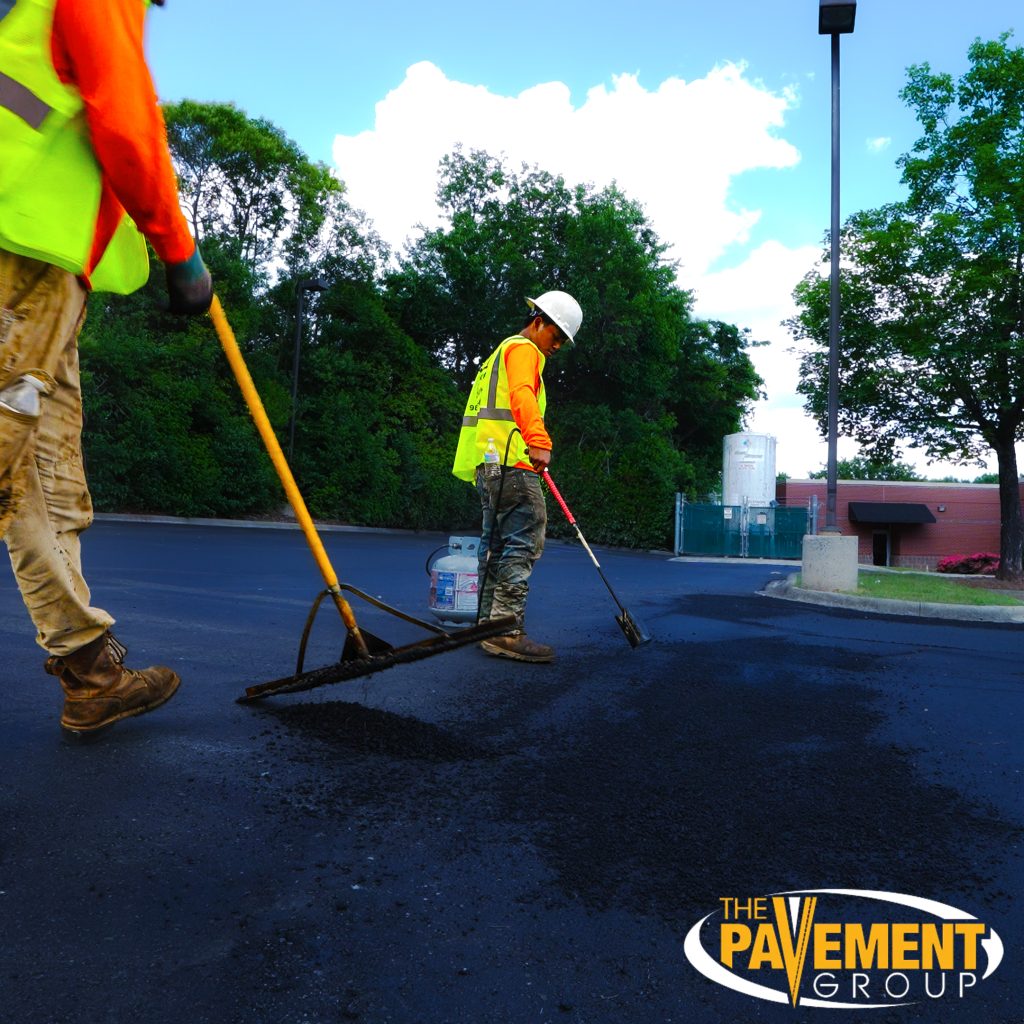
Timely patching eliminates tripping hazards and prevents water from compromising deeper layers of pavement. Addressing potholes early reduces full-depth reconstruction costs later.
4. The Pavement Group ADA-Compliant Striping and Marking Service
Clear striping ensures accessible parking spaces meet ADA guidelines. High-visibility markings guide traffic flow and protect pedestrian walkways.
In assisted living environments, striping must be precise and durable. Faded markings create confusion and potential compliance violations.
5. The Pavement Group Drainage Correction Service
Poor drainage leads to standing water. Standing water weakens pavement and increases slip risks.
Regrading or installing proper drainage solutions protects both the pavement structure and pedestrian safety.
The Hidden Cost of Delayed Maintenance
It is easy to postpone pavement work when budgets tighten. However, asphalt deterioration accelerates quickly once structural damage begins.
For example:
- Surface cracks may cost minimal amounts to seal.
- Ignored cracks turn into potholes.
- Untreated potholes compromise the subbase.
- Subbase failure requires full-depth replacement.
What starts as preventative maintenance can become a capital expense if ignored.
From a risk management perspective, proactive pavement maintenance is often far less expensive than liability claims resulting from preventable falls.
ADA Compliance and Senior Safety
Federal ADA guidelines require accessible routes free of abrupt level changes. The slope of accessible parking spaces and walkways must meet strict specifications.
Facilities must maintain:
- Smooth transitions between surfaces
- Clearly marked handicap spaces
- Stable, slip-resistant walking paths
- Proper signage and striping
Failing to maintain pavement may inadvertently create noncompliance, which can expose operators to legal and regulatory challenges.
Creating a Pavement Maintenance Plan
Every senior care facility is different. Some properties have expansive parking areas and internal roadways. Others operate within compact campuses.
A strategic maintenance plan typically includes:
- Annual inspections
- Prioritized repair scheduling
- Sealcoating cycles every two to three years
- Striping refreshes as needed
- Drainage evaluation
The Pavement Group collaborates with property managers to develop maintenance schedules that minimize disruption to residents. Timing and communication are critical in pavement maintenance for assisted living and senior care facilities.
Minimizing Disruption During Maintenance
Senior living environments require thoughtful coordination. Loud equipment, blocked entrances, or inaccessible walkways must be planned carefully.
Our team phases projects to maintain safe access points at all times. Clear signage, temporary routing, and communication with facility staff ensure smooth operations.
Pavement improvements should enhance safety, not interrupt daily life.
The Pavement Group Has the Solutions You Need!
Contact The Pavement Group today to schedule a professional assessment. Our team delivers structured maintenance solutions designed specifically for high-safety environments.
Let us help you protect your residents, your reputation, and your investment with pavement maintenance for assisted living and senior care facilities.
Frequently Asked Questions
1. How can regular pavement inspections prevent bigger problems at senior facilities?
Regular inspections catch small issues before they turn into major repairs. For example, a hairline crack may seem minor, but if water seeps in and freezes, it can expand and cause potholes. By spotting these problems early, you avoid expensive full-depth replacements later. Inspections also help prioritize repairs, so limited budgets are spent where they matter most.
2. How often should senior care facilities inspect their pavement?
Senior facilities should schedule professional inspections at least once a year, ideally twice if the area experiences heavy rainfall or freezing winters. Seasonal changes, particularly freeze-thaw cycles, accelerate wear and create hidden hazards. Even small cracks or uneven spots that seem harmless can quickly become trip risks. Regular inspections allow maintenance to be planned proactively rather than reactively.
3. What pavement issues pose the greatest risk to seniors?
The biggest risks come from uneven surfaces, potholes, and raised cracks. These are the areas where walkers, canes, and wheelchairs are most likely to catch. Poor drainage that leaves standing water is another danger because it increases slip hazards. Even faded or unclear striping can create confusion for visitors and staff.
4. How does sealcoating benefit senior care facilities?
Sealcoating isn’t just about aesthetics—it’s about protecting the asphalt from sun, moisture, and daily wear. A properly applied sealcoat keeps the surface smooth, improving traction for residents and staff. It also prolongs the life of your pavement, meaning fewer costly repairs down the road. Additionally, sealcoating makes markings and crosswalks more visible, which is critical for ADA compliance.
5. What is the role of drainage in pavement maintenance?
Drainage is critical because standing water is the enemy of asphalt. When water pools, it seeps into cracks, weakens the base, and speeds up deterioration. For seniors, puddles and slippery areas create serious safety hazards. Properly designed drainage channels water away from walkways, parking lots, and entrances, protecting both the pavement and the people using it.
6. Are ADA-compliant markings required in senior facilities?
Yes, maintaining ADA-compliant markings isn’t optional—it’s a legal requirement. Accessible parking, clear pedestrian paths, and well-defined ramps ensure residents and visitors can move safely. Faded or missing markings can lead to confusion and potential compliance violations. Updating these lines regularly ensures everyone knows where to park, walk, or access entrances safely.
7. Can pavement maintenance reduce liability risks?
Absolutely. Well-maintained pavement reduces the chance of falls, accidents, and insurance claims. Beyond preventing injuries, it also shows that the facility is taking proactive measures to ensure resident safety. Documenting regular maintenance and repairs adds another layer of protection in case an incident does occur.
8. What are the signs that pavement needs immediate repair?
Look for potholes, spreading cracks, and uneven transitions between surfaces—these are clear warning signs. Water pooling after a storm or ice forming in low spots is also a red flag. Crumbling edges or loose gravel indicate the pavement is losing structural integrity. Ignoring these issues allows them to worsen quickly, increasing repair costs and safety risks.
9. How long does pavement maintenance typically last?
The lifespan of maintenance depends on traffic, climate, and the type of work done. Sealcoating generally lasts 2-3 years before reapplication is recommended. Crack sealing can hold up for a few seasons, but extreme weather may shorten that period. Consistent maintenance dramatically extends overall pavement life and delays the need for expensive replacements.
10. How can facilities create a long-term pavement plan?
A long-term plan starts with a thorough professional evaluation of current pavement conditions. From there, repairs and maintenance can be scheduled based on urgency, traffic patterns, and budget. Preventive treatments such as sealcoating and crack sealing should be included in annual or biannual cycles. Keeping detailed records of completed work supports future planning and ensures nothing is overlooked.