Managing a commercial property means keeping every part of it safe and professional, including the pavement outside your building. Parking lots, sidewalks, drive lanes, and entry points are often the first things visitors see when they arrive. Cracks, potholes, and faded striping aren’t just unattractive, they’re liabilities. That’s why property managers and facility directors turn to commercial asphalt paving, overlay, and maintenance services to protect their pavement assets, increase safety, and extend lifespan. Let’s break down what each of these services means, why they matter, and provide an overview of commercial asphalt paving to help you make smarter, more cost-effective decisions for your property. The Pavement Group helps you with all of that.
What Is Commercial Asphalt Paving?
Commercial asphalt paving involves installing new asphalt surfaces on large-scale properties like shopping centers, industrial parks, apartment complexes, and office buildings.
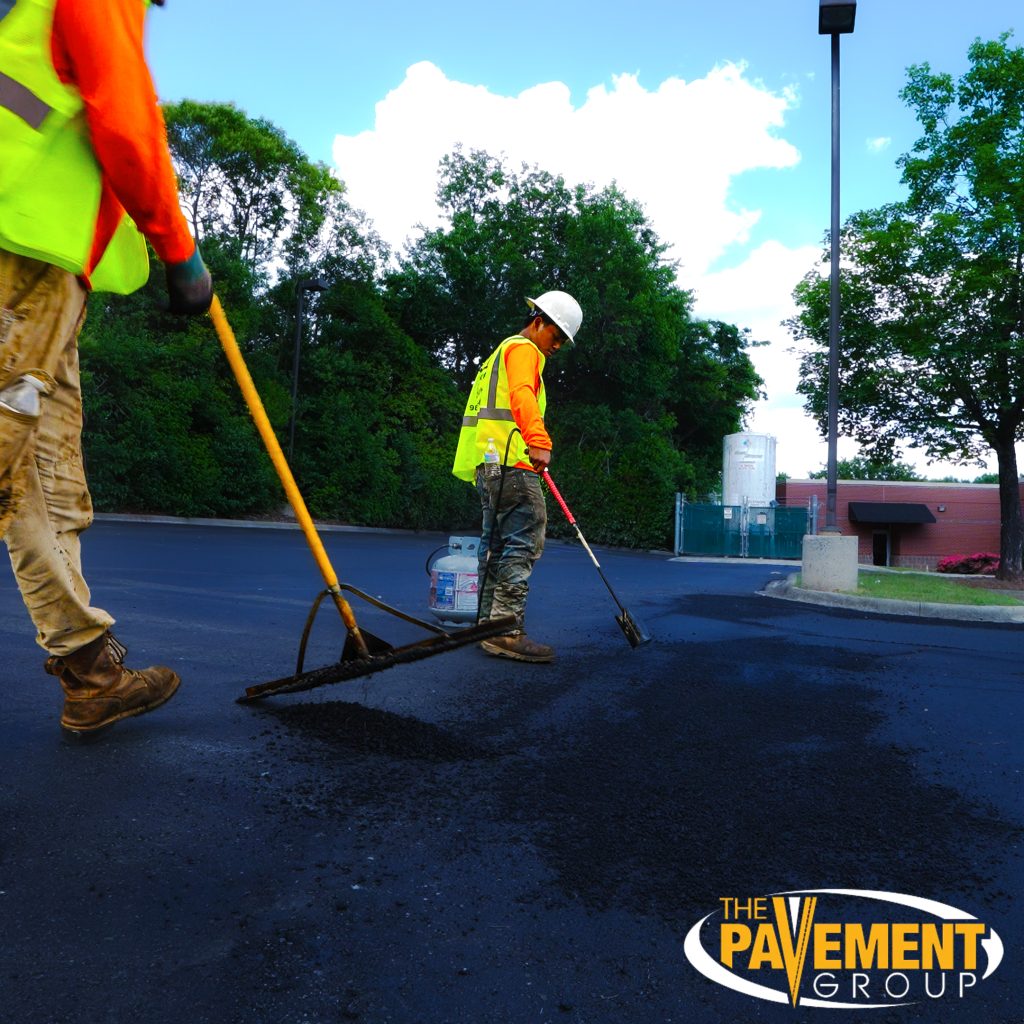
The process includes grading, compacting a base layer, applying hot mix asphalt, and rolling it for a smooth, durable finish.
Common Use Cases
- New construction projects
- Parking lot installations
- Roadways in commercial or industrial parks
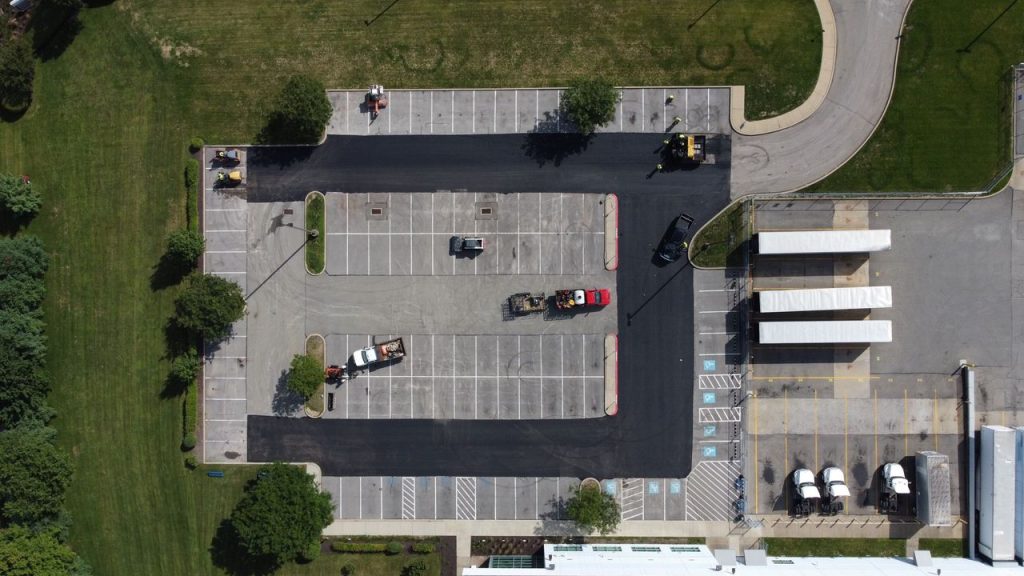
- Resurfacing old, deteriorated asphalt areas
Asphalt is popular because it’s cost-effective, fast to install, and easy to maintain.
Local Considerations
In cities like Pittsburgh, Philadelphia, and Columbus, where freeze-thaw cycles are common, the right paving techniques help prevent cracks and early failure. The Pavement Group uses materials and techniques designed to perform in local conditions year-round.
What Is an Asphalt Overlay?
An asphalt overlay is a cost-effective way to restore a pavement surface without full reconstruction. It involves applying a new layer of asphalt over an existing surface to fix wear and tear while improving appearance and strength.
When to Choose Overlay Services
- The surface has moderate cracking or fading but a stable base
- Drainage and structural conditions are still good
- You want to extend the life of your pavement without tearing it out
Overlays are ideal for properties with aging pavement that isn’t quite ready for full replacement.
Overlay Process at a Glance
- Clean and prepare the surface
- Level any uneven areas
- Apply tack coat for bonding
- Lay and compact the new asphalt layer
The Pavement Group evaluates your site with advanced data tools to ensure an overlay is the right solution.
What Is Commercial Asphalt Maintenance?
Routine asphalt maintenance is the best way to prevent costly repairs or full replacements later. Maintenance keeps your pavement safe, compliant, and attractive for customers and tenants.
Key Maintenance Services
- Crack sealing to prevent water intrusion
- Sealcoating to protect against weather and oxidation
- Pothole repair to eliminate trip hazards and vehicle damage
- Line striping for visibility and compliance with ADA standards
Each service plays a role in preserving your pavement asset over the long term.
Why Maintenance Matters
Ignoring cracks and small issues leads to larger, more expensive problems. In cities like Cleveland or Cincinnati, winter weather can turn one crack into several potholes in just one season. The Pavement Group helps clients build maintenance schedules that match their budget and usage patterns.
How The Pavement Group Simplifies Pavement Management
Pavement management doesn’t have to be overwhelming. The Pavement Group offers a unique approach that takes the guesswork out of the process. Their proprietary assessment and planning system gives clients a clear roadmap for managing parking lots, walkways, and driveways.
What Makes Them Different?
- Data-driven evaluations of your pavement’s current condition
- Prioritized repair plans with timelines and budget estimates
- Visual project tracking tools so you always know what’s next
This process ensures you make informed decisions that reduce long-term costs.
Serving Local Commercial Properties
The Pavement Group serves clients throughout Pennsylvania, Ohio, and surrounding regions. From hospitals in Pittsburgh to shopping centers in Harrisburg, they understand how to meet local building codes, weather challenges, and tenant expectations.
Columbus Facility Manager
“We thought we needed a full repave, but The Pavement Group showed us how an overlay could extend our lot’s life another seven years. They saved us thousands and made our property look brand new.”
– Daniel S., Columbus, OH
Maximize Your ROI. Proactive Pavement Management for Commercial Properties.
For years, The Pavement Group has been the trusted partner for commercial property owners in Pittsburgh, Columbus, and the surrounding region. We understand the unique challenges of maintaining safe and attractive pavement, and we have the expertise to develop effective, long-term solutions. Our team of experienced professionals conducts thorough assessments, identifying potential problems before they become costly repairs.
Protect your investment and enhance the value of your property. Contact The Pavement Group today to schedule a free consultation and learn more about our comprehensive pavement management services.
Frequently Asked Questions
1. What is commercial asphalt paving?
It is the installation of new asphalt surfaces on large properties such as office parks or retail centers. The process involves preparing the ground and laying hot asphalt mix. This creates a smooth, durable surface for vehicles and foot traffic.
2. How long does commercial asphalt paving last?
With proper maintenance, a commercial asphalt surface can last 15 to 20 years. Climate, traffic load, and drainage impact its lifespan. Regular inspections help catch issues early.
3. What is the difference between paving and overlay?
Paving involves starting fresh with a new base and asphalt surface. Overlay adds a new asphalt layer over an existing surface. Overlay is faster and more cost-effective if the base is still strong.
4. How do I know if I need an overlay or a full repave?
A professional assessment can tell if your pavement has a solid foundation. If cracks are only on the surface, an overlay may be enough. Severe base damage means you need a full replacement.
5. What is sealcoating, and why is it important?
Sealcoating is a protective layer applied to asphalt to prevent water, UV, and chemical damage. It extends the life of your pavement. It also improves appearance by restoring that dark black finish.
6. How often should asphalt be sealcoated?
Sealcoating is recommended every 2 to 4 years depending on usage and weather. Frequent traffic and harsh winters may require more frequent applications. Your pavement condition helps determine the ideal schedule.
7. What causes potholes in commercial parking lots?
Potholes form when water seeps into cracks and freezes, expanding the asphalt. Over time, this weakens the structure and causes breaks. Heavy traffic and poor drainage speed up the process.
8. Can cracked asphalt be repaired without replacing the whole lot?
Yes, crack sealing is a standard maintenance technique to extend asphalt life. It prevents water from getting in and making things worse. Regular crack repair keeps costs down over time.
9. Is line striping just cosmetic?
No, it’s critical for safety and compliance. Clear striping organizes parking, directs traffic, and ensures ADA access. Fresh lines also give a clean, professional look to your property.
10. How does The Pavement Group help reduce costs?
They use data to guide your repair and maintenance decisions. Instead of guessing, you follow a proven plan to extend pavement life. Their process helps avoid emergency fixes and lowers your total ownership cost.