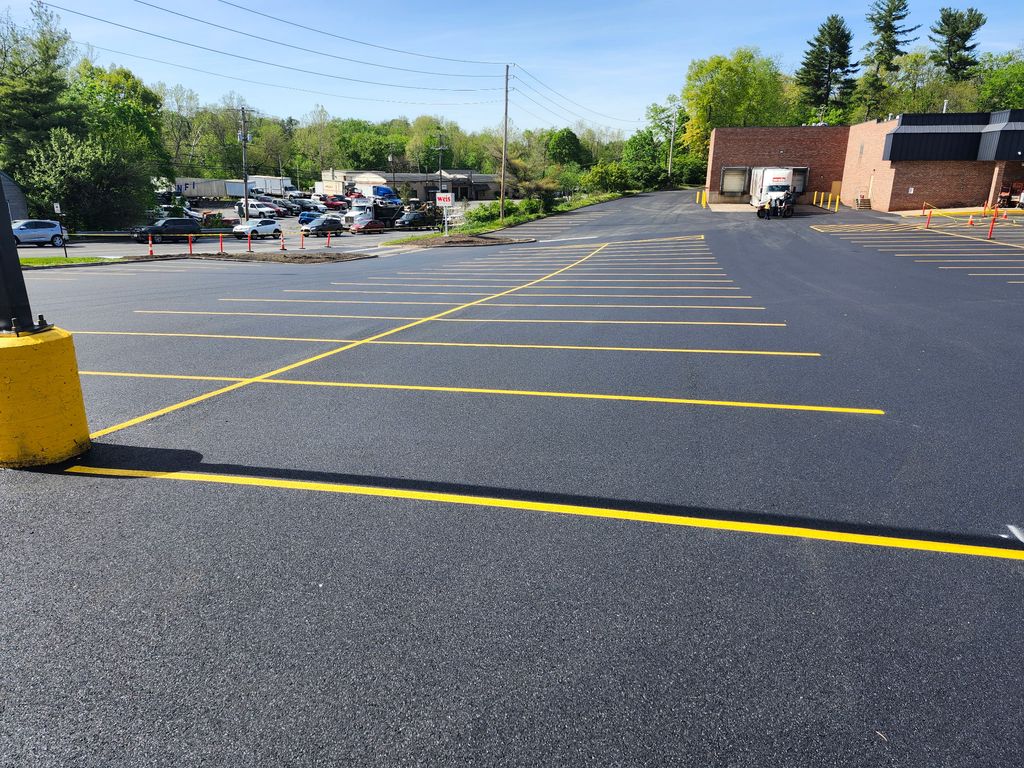
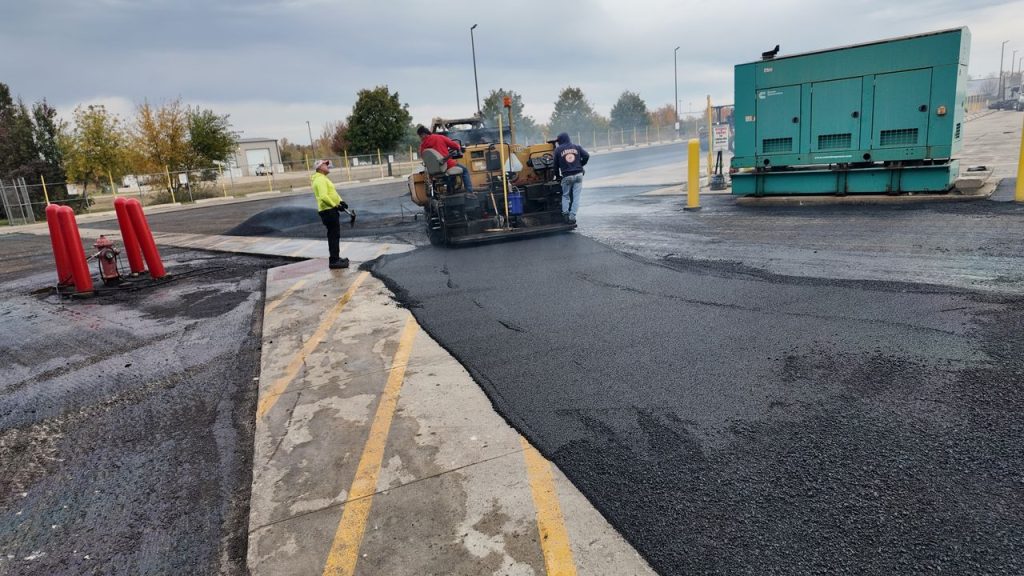
The EPA estimates that vehicles in the United States leak 720 million quarts of oil each year, a figure the Town of Waynesville in North Carolina cites. A considerable amount of this oil ends up on apartment parking lots, where the same spaces continue to drip day after day. We repair properties for managers and we see the same pattern in nearly every community we work in. Even a small number of leaking cars can damage a parking space that looks good from the driver’s point of view.
Overview
- Petroleum fluids dissolve the asphalt binder, causing the stones to loosen and creating pits.
- Assigned stalls and covered carports collect drips in the same place for months.
- The damage progresses in three stages, and repair costs increase at each stage.
- The speed at which a stain turns into a hole depends on the climate, drainage conditions, and the condition of the sealcoat.
- Early inspection and using a fuel-resistant sealcoat cost less than saw cutting and replacement.
How Petroleum Attacks the Asphalt Binder
Asphalt consists of stones mixed with a petroleum-based substance known as a binder. Because motor oil, fuel, and hydraulic fluid are also petroleum products, they act as solvents for this glue. Studies on porous asphalt show that hydrocarbon spills reduce resistance to raveling because the oil dissolves part of the bitumen. Raveling is when the surface stones come loose and roll away under the action of tires.
We explain this to property managers by using the following analogy. A fresh drip of oil doesn’t stay on asphalt as it does on a countertop. It seeps into the surface’s empty spaces, softens the binder from within, and weakens the bond at every stone it touches. When that bond breaks down, the weight of tires and foot traffic dislodges the stone, and a small hole forms.
Why Apartment Stalls Suffer More Than Other Lots
In a car park, a different vehicle is seen in each space every hour. In an apartment complex it is the other way around since the same resident parks in the same spot each night. If that resident drives an older truck with a weeping valve cover gasket, the dripping fluid pools on the same 12 inches of pavement for months. This area, known as the drip zone, typically lies beneath the front driver’s-side or passenger-side wheel well, depending on how the resident drives in.
Carports make the situation worse. Because rain washes oil away from open stalls and reduces surface oil, a roof keeps water from reaching the stalls and lets drips accumulate without being disturbed. For this reason, covered stalls in both Houston and Atlanta tend to have more severe pitting than open stalls. There is an additional risk during move-out season since tenants who change the oil in their stall before leaving leave a big spill for the next tenant.
Common Fluids and What Each One Does
Different fluids do not all damage asphalt in the same manner. The table illustrates the cases we most frequently encounter in apartment car parks and how we respond.
| Fluid | Effect on asphalt | What we see on the surface | Our typical response |
| Engine oil | Dissolves binder slowly, softens the top layer | Dark stain, then soft spots and pitting | Clean, prime, and sealcoat early; patch if pitted |
| Transmission fluid | Penetrates quickly because it runs thin | Reddish stain that spreads in a wide ring | Degrease, prime, and repair soft areas |
| Power steering and hydraulic fluid | Softens binder and loosens surface stone | Sticky patch with loose aggregate | Remove loose stone and patch |
| Gasoline and diesel fuel | Dissolves binder fastest because of strong solvent action | Bleached, crumbly area with raveling | Cut out and replace the damaged section |
| Brake fluid | Stains and can lift weak sealcoat film | Glossy, slick spot | Clean thoroughly and recoat |
| Coolant | Dissolves binder far less than petroleum products but leaves slick residue | Faint sticky film and clean-edged stain | Rinse, then recoat if the film lifts |
The Three Stages of Leak Damage
Industry contractors divide oil-related damage into three stages of deterioration, and we apply that system during our site inspections. In the first stage, there is only a stain; the surface remains hard, nothing comes loose, and the pavement still holds together. The second stage involves pitting, since the oil has started to dissolve the binder and the top layer has begun to break up. The third stage is severe damage, which necessitates removing and replacing the asphalt.
The biggest reason we advocate taking action early is the increasing cost between stages. A stained area requires both cleaning and a coat of sealer. A pitted stall must be patched. A failed stall will need saw cutting, a base inspection, and a new batch of hot mix. The table illustrates how the amount of work increases.
If your budget is limited, we recommend prioritizing repairs by addressing the most heavily damaged stalls first, as these are the most likely to worsen rapidly and create safety hazards. After the failed areas, focus on high-traffic locations and stalls residents use most often, since these have the biggest impact on overall pavement condition and resident satisfaction. Tackling the worst spots early helps prevent costly escalation and keeps your parking lot safer overall.
| Stage | Surface condition | Repair we perform |
| Stage 1: Stain | Dark mark, hard surface | Degrease, spot prime, and sealcoat |
| Stage 2: Pitting | Rough texture, loose stone, small holes | Clean, remove loose material, fill or patch, then sealcoat |
| Stage 3: Severe damage | Soft asphalt, deep holes, crumbling edges | Saw cut, remove, repair the base if needed, and install new asphalt |
How Climate Changes the Timeline
Heat increases the rate of the chemical reaction. In places like Phoenix and other hot areas, the warm road surface can speed up the solvent’s action, so a stain is more likely to turn into pitting more quickly than it would in a cooler area. The problem is different; in places such as Minneapolis or Pittsburgh, a leak-caused pit collects meltwater, which then freezes and widens the pit every winter. In southeastern Charlotte and Orlando, heavy summer storms force water into weak spots that contain oil, removing the loose stone.
Drainage also plays a role: if a stall is positioned low and close to a catch basin, runoff can carry liquids over adjacent stalls and spread the damage. In each apartment assessment, we look at the slope and drainage patterns because a leak that flows downhill can affect four stalls rather than just one. Moreover, water that carries oil becomes a pollution issue, and stormwater pollution guidance explains how automotive fluids move through parking lots and end up in storm drains.
Protecting Stalls Before and After Damage
Sealcoating is the first line of defense, and the type of sealcoat used matters. Fuel-resistant sealcoats protect the pavement from seepage caused by leaked petroleum, not just from sun and weather. An industry specialist suggests owners sealcoat the whole parking lot within 12 months of laying the pavement. We agree with this timeframe for new construction and apply the same reasoning to renovated parking lots.
The next step is an inspection, during which we visit each lot, mark every stall with active staining, and divide the stalls by stage so the board or owner can see exactly how the money is being spent. If your lot is already showing signs of stress, refer to our guide on asphalt damage around carports to tell the difference between oil damage and other causes. Stalls weakened by leaks also settle faster, so it’s important to recognize early signs of pavement settlement before the base fails.
When planning repairs or sealcoating, we recommend notifying residents well in advance to minimize confusion and complaints. Provide clear dates and times when specific stalls or sections will be unavailable, and include instructions for alternative parking arrangements if needed. Place visible notices on affected stalls and send reminders through email or resident portals. Keeping residents informed at each step helps ensure the repair process goes smoothly with as little disruption as possible.
Keep Your Residents’ Stalls Safe and Your Budget Intact
Oil damage never fixes itself, and it never stays small. We serve apartment communities nationwide and tailor every repair plan to the damage stage, local climate, and the property’s budget cycle. Contact The Pavement Group, and we will assess your parking stalls, show you exactly where the drip zones sit, and recommend the smallest repair that stops the damage.
Frequently Asked Questions
Can we charge a resident when their leaking vehicle damages a parking stall?
In many cases, the lease agreement addresses this, which is why we advise property managers to review the clauses on vehicles and parking before issuing any bill. Some leases require tenants to carry out repairs and pay for any damage to the common areas, while others make no provision for this. To provide clear evidence, we take dated photographs, note the stall number, and prepare a written description of the required repairs so your lawyer or management company can use it as proof. Because we are contractors, not lawyers, please confirm the procedure with legal advice and refer to your local landlord-tenant regulations before making any charge.
Does oil contamination affect new line striping and stall numbers?
Yes, it does. Paint cannot bond adequately to an oily surface, which is why striping applied over a contaminated stall usually results in the paint peeling, fading, or bubbling within a few months. Before we strip, we clean and prime any areas affected by oil, and we pay extra attention to the markings on ADA stalls and access aisles because they have compliance requirements. If you skip that preparation, you end up paying for the striping twice.
Should we use asphalt or concrete for stalls that leak the most?
Concrete holds up better against petroleum than asphalt because it doesn’t rely on a petroleum binder; oil will stain it but not dissolve it. Many communities use asphalt for drive aisles and prefer concrete in high-risk areas, such as near maintenance buildings or dumpsters. The compromise involves cost and the fact that oil stains are more obvious on light-coloured concrete. We help owners compare the two options by considering the number of stalls that leak, the required pavement lifespan, and the budget available for the project.
How soon can residents park on a repaired or sealcoated stall?
The repair time depends on the type of repair, the temperature, and the humidity. Hot mix patches can handle light traffic as soon as they cool, but sealcoat takes longer to dry and harden; in cool or humid weather, this may take a day or more. To allow residents to use different stalls, we carry out the work in sections and post clear notices and barricades so nobody drives over the wet areas. If parking occurs too early,, it can cause tire marks and scuffing, which is why we provide property managers with a written reopening time for each stage.
What should residents or staff do right after they spot a fresh leak?
They should cover the spill with an absorbent material such as clay cat litter, let it sit, and sweep it into a container for proper disposal. Fast action keeps oil from soaking deep into the pavement and helps prevent the stain from reaching stage two. Staff should also report the stall number so the property can ask the resident to repair the vehicle and schedule an inspection. Hosing the spill toward a storm drain is the wrong move, because it pushes oil into the drainage system and spreads the contamination.
About the Author
The Pavement Group specializes in asphalt engineering, pavement maintenance solutions, and data-driven asset management for commercial, retail, and multi-family residential properties. Utilizing advanced structural pavement evaluations and capital planning transparency, The Pavement Group works directly with property managers to extend pavement lifecycles, eliminate liability risks, and optimize long-term infrastructure investments.