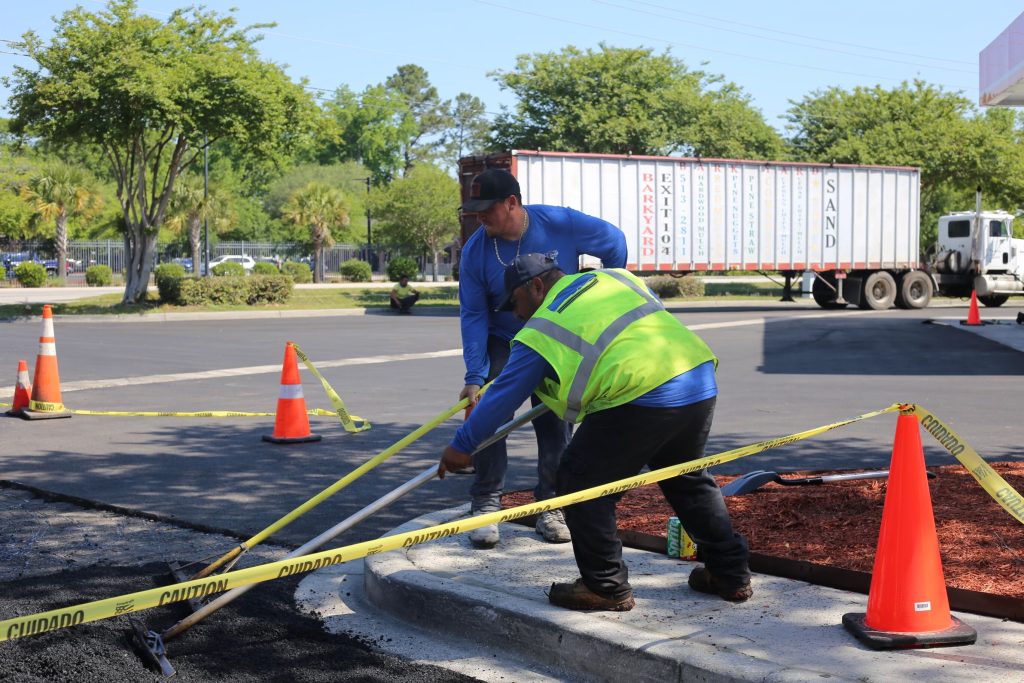
As sustainability becomes a priority for businesses, commercial property owners are asking a vital question: Is asphalt eco-friendly? The answer depends on how asphalt is sourced, applied, and maintained. In this guide, we’ll explore the environmental impact of asphalt, how commercial paving projects can reduce their footprint, and why eco-friendly asphalt solutions are gaining traction in the industrial and commercial sectors.
What Makes Asphalt Sustainable?
When managed properly, asphalt can be a highly sustainable paving solution for commercial lots, campuses, and industrial sites.
1. Asphalt is 100% Recyclable
One of asphalt’s most eco-friendly features is that it can be recycled over and over without losing its structural integrity.
- The U.S. recycles more asphalt than any other material (including paper or aluminum)
- Reclaimed asphalt pavement (RAP) can be used in new mixes, reducing the need for virgin materials
- Recycled asphalt requires less energy to produce
2. Less Energy-Intensive Than Alternatives
Compared to concrete, asphalt:
- Requires less energy to produce and install
- Cures faster, reducing site emissions and downtime
- Is often manufactured at lower temperatures with modern warm-mix technologies
Eco-Friendly Options for Commercial Asphalt Paving
Forward-thinking contractors like The Pavement Group are implementing sustainable options into commercial paving projects.
1. Warm-Mix Asphalt (WMA)
WMA is produced at lower temperatures, which:
- Reduces greenhouse gas emissions by up to 50%
- Improves working conditions for paving crews
- Enhances pavement compaction, improving longevity
2. Permeable Asphalt Pavement
Permeable asphalt allows water to filter through the surface into an aggregate base, reducing runoff.
- Reduces strain on municipal stormwater systems
- Helps recharge groundwater
- Supports LEED certification for sustainable building
3. Use of Recycled Materials
Today, contractors can incorporate:
- Recycled shingles, rubber, or glass into the mix
- RAP (reclaimed asphalt pavement)
- Reclaimed aggregates from crushed concrete
This reduces landfill waste and raw material extraction.
Reducing Environmental Impact During Installation
Sustainability doesn’t end with the materials. Commercial contractors should follow best practices during installation:
- Limit idling of heavy equipment to cut fuel usage
- Stage projects for efficient traffic flow during construction
- Use eco-safe sealcoating materials and avoid coal tar products
- Recycle removed pavement onsite when possible
Asphalt and the Urban Heat Island Effect
Traditional asphalt absorbs heat, contributing to the urban heat island effect—but innovations are reducing this impact.
- Cool mix asphalt uses reflective aggregates or coatings to bounce sunlight
- Lighter-colored sealcoats reduce surface temperature by 10°F or more
- Green infrastructure and trees planted around lots provide shade and cooling
FAQ: Common Questions About Eco-Friendly Asphalt
Is recycled asphalt as strong as new asphalt?
Yes. When processed correctly, RAP can match the strength and performance of virgin mixes.
Does permeable asphalt need more maintenance?
Permeable lots need regular vacuuming or sweeping to prevent clogging, but perform well when maintained properly.
Is asphalt better than concrete for sustainability?
In many cases, yes—especially when you factor in energy usage, recyclability, and emissions during installation.
Asphalt Can Be Part of Your Sustainability Strategy
Asphalt often gets overlooked in sustainability conversations—but it shouldn’t. When properly sourced and installed, it can be an eco-friendly, recyclable, and cost-effective solution for commercial property owners.
Whether you’re resurfacing a retail plaza, installing a new industrial yard, or managing a multi-lot facility, choosing sustainable asphalt options shows leadership, saves energy, and supports long-term durability.
Ready to integrate sustainable paving into your commercial project? Contact The Pavement Group to learn more about eco-friendly asphalt options for your property.