According to the National Asphalt Pavement Association, a properly designed asphalt overlay can extend a parking lot’s service life by 8 to 15 years, provided the underlying base is still structurally sound. That qualifier is exactly what determines whether resurfacing is actually the right call for a specific lot at a specific point in time, rather than a calendar date alone. People ask us “how often” more than almost any other question, and the honest answer depends on traffic, climate, and what is actually happening beneath the surface rather than a single number that applies to every property.
Quick answers:
- Resurfacing, adding a new layer of asphalt over an existing surface, only works if the base underneath is still structurally sound; it isn’t a fix for a lot with genuine base failure.
- Traffic volume and climate both affect the resurfacing interval significantly, which is why two lots resurfaced in the same year can need it again at very different times.
- Widespread but shallow surface cracking, without deeper structural failure, is the clearest sign a lot has entered the resurfacing window rather than needing an isolated patch or a full reconstruction.
- Milling, removing the old surface layer before resurfacing, and direct overlay, adding new asphalt without removing anything first, are two different approaches with real tradeoffs around drainage and elevation.
- Typically, resurfacing can only go through a limited number of times before the accumulated elevation change and underlying condition make full reconstruction the more sensible option.
What Resurfacing Actually Means, and What It Doesn’t Fix
Resurfacing means adding a new layer of asphalt over an existing, prepared surface, distinct from a localized patch that addresses one specific damaged section, and distinct from full reconstruction, which removes the pavement down to the subgrade and rebuilds it entirely. It’s a meaningful step up from routine maintenance, but it has a real limitation: it doesn’t fix a failed base. Adding a new surface layer over a structurally compromised foundation creates a fresh-looking lot that fails again just as quickly as the underlying damage would have caused. This is why you must confirm the foundation is truly sound before recommending resurfacing, rather than treating it as an extra step.
The Traffic and Climate Factors That Shorten or Extend the Interval
Heavy, frequent traffic, common at larger apartment communities with regular moving trucks and high daily vehicle counts, wears down a resurfaced layer faster than lighter, more occasional use would. Climate affects the interval differently depending on the specific stress involved: freeze-thaw cycles in colder regions create structural fatigue through repeated expansion and contraction, while intense sun and heat in warmer climates age the surface through UV-driven oxidation more than through structural stress. Two lots resurfaced in the same year, in different climates or with different traffic patterns, can genuinely need attention again on very different timelines.
Signs Your Lot Is Approaching Resurfacing Time
The clearest signal is widespread, but shallow, surface cracking spread across most of the lot rather than concentrated in one isolated section. This is different from the deep, structural alligator cracking that points toward base failure and a different repair category entirely. You have a lot with multiple older patches that are themselves starting to wear, plus a generally aged surface that shows no rutting or pumping to signal base failure. This makes it an ideal candidate for resurfacing instead of simple patching or full reconstruction.
Milling vs. Direct Overlay: Two Different Resurfacing Approaches
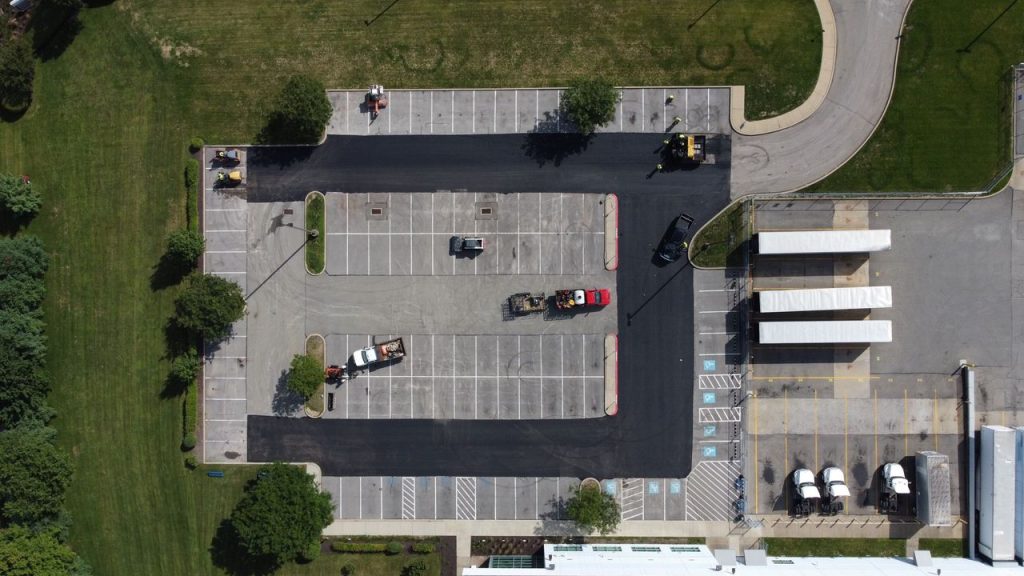
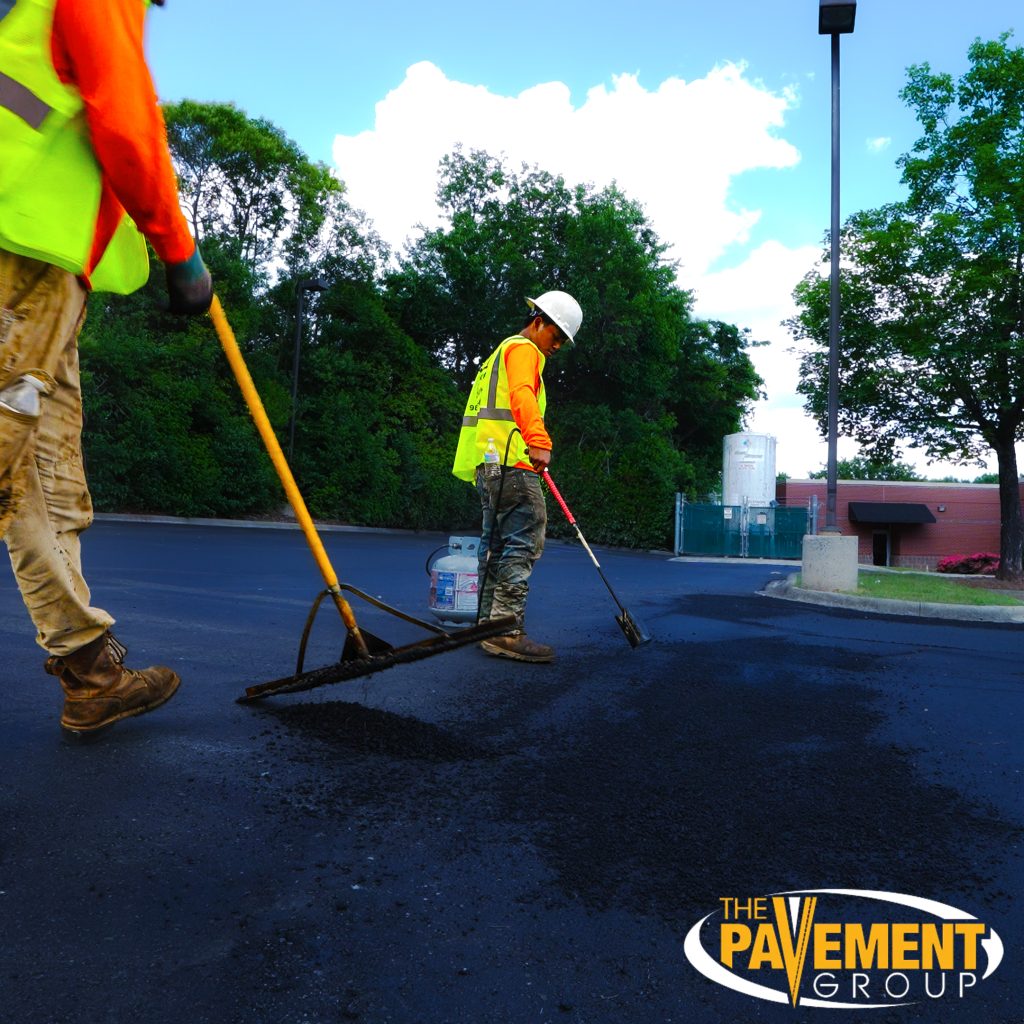
Milling removes the top layer of old asphalt before the new layer goes down, which addresses existing surface defects directly and keeps the pavement at roughly its original elevation, an important consideration for curb height and drainage at the edges of the lot. You can use a direct overlay to add new asphalt straight over the existing surface without removing anything first. This method is generally faster and less expensive, but it raises the lot’s overall elevation. You may face problems at curbs, drains, and door thresholds if you do not account for this added height during planning. Which approach makes sense depends on the specific site conditions, particularly how much elevation change the property can actually accommodate.
How Many Resurfacing Cycles a Lot Can Realistically Go Through
Each direct overlay adds height, and you can only resurface a lot this way so many times before curb clearance, drainage gradients, and door threshold issues make further resurfacing impractical. Milling before each resurfacing cycle helps manage this by removing material rather than only adding it, which extends how many cycles a lot can realistically go through, but even this approach eventually reaches diminishing returns once the base itself starts showing its age. At that point, resurfacing again would be treating a foundation problem with a surface-level solution, and reconstruction becomes the more honest recommendation.
Plan Your Apartment Parking Lot Resurfacing Strategy
Most asphalt parking lots require resurfacing every 15 to 20 years, but heavy resident traffic, harsh weather, and deferred maintenance can shorten that timeline significantly. Knowing when to transition from basic repairs to a full overlay prevents sub-base failure, saves thousands in emergency structural reconstruction, and keeps your property safe for residents.
The Pavement Group performs core testing and comprehensive pavement evaluations to determine the exact lifespan of your asphalt and engineer cost-effective resurfacing solutions.
- Accurate Pavement Life-Cycle Testing: In-depth core sampling and surface evaluations to establish whether your lot needs patching, overlaying, or full replacement.
- Capital Improvement Planning: Multi-year paving schedules designed to fit multi-family CapEx budgets while minimizing resident parking disruptions.
Frequently Asked Questions
Can you resurface a parking lot more than once, or does the practice have a set limit?
You can generally resurface a lot multiple times, but accumulated elevation changes and the underlying base’s ongoing condition set a practical limit. Milling before you add new layers, instead of simply building on top of old ones, extends the number of realistic resurfacing cycles. Even with milling, however, a truly aged base eventually reaches a point where another resurfacing cycle makes less sense than a full reconstruction.
How thick should a new asphalt overlay be for a typical apartment parking lot?
You choose overlay thickness based on traffic loads and the existing pavement’s condition, and you determine it through an assessment instead of applying a fixed standard to every lot. A section handling heavier truck traffic, like a drive aisle near a loading or moving area, may call for a thicker application than a lower-traffic peripheral parking section, which is part of why a professional assessment matters more than assuming a single thickness works for an entire property.
Does resurfacing require you to close the lot completely, or can you complete it in phases like other repairs?
In most cases, yes, you can phase resurfacing work section by section on an occupied property just as you manage other paving projects, so you keep some parking available throughout the process. The specific phasing plan depends on lot size and layout, and it’s worth discussing directly, since a resurfacing project’s scope is generally larger than a routine patch or crack-seal visit and benefits from more detailed scheduling.
Will resurfacing fix faded striping directly, or must you apply new striping separately afterward?
Resurfacing removes or covers existing striping entirely, since it’s adding a new surface layer, which means new striping is always a required follow-up step after a resurfacing project, not an optional add-on. This is actually a useful opportunity to review and update the striping layout, correcting any accessible space count issues or traffic flow problems, rather than simply repainting the same pattern that existed before.
How do you tell whether your lot’s cracking is shallow enough for resurfacing to fix it or if it runs too deep?
This distinction generally requires a professional assessment rather than a purely visual check, since surface-level cracking and early-stage base failure can look similar from a casual walk-through. Signs such as rutting, mud or water pumping under vehicle weight, or cracking linked to drainage and standing water issues indicate base failure that resurfacing alone cannot fix. In contrast, more uniform, shallow cracking across the surface without those signs is more consistent with a resurfacing-appropriate situation.
Does resurfacing reset the clock on my parking lot’s expected total lifespan or just extend the current surface?
It extends the current surface’s usable life rather than resetting the lot’s overall lifespan back to zero, since the underlying base, whatever condition it’s in, carries forward through the resurfacing project rather than being replaced. A lot that resurfaces well because its base was genuinely sound can go on to perform for many more years, but the base’s actual age and condition remain the ultimate ceiling on how many total years the lot has left, regardless of how fresh the surface looks after resurfacing.
Can resurfacing be done at the same time as adding new drainage infrastructure?
Yes, and this is often a practical time to address it, since the surface is already being disturbed and reworked as part of the resurfacing project itself. Adding a new catch basin or correcting a drainage issue during the same project avoids paying for two separate mobilizations and lets the new surface be properly integrated with any drainage corrections from the start rather than retrofitting drainage work into a surface that was just freshly resurfaced.
Is there a minimum lot age before resurfacing makes sense, or could a newer lot ever need it early?
There’s no strict minimum age, and a newer lot can occasionally need resurfacing earlier than expected if it experienced unusually heavy traffic, poor original construction, or specific climate stress beyond what was anticipated in the original design. This is uncommon, but it’s a real possibility worth having assessed rather than assumed away simply because a lot is relatively young, since age alone isn’t as reliable an indicator as actual condition.
See also: Parking Lot Improvements That Increase Apartment Occupancy and Resident Retention, How Professional Parking Lot Maintenance Helps Apartment Owners Reduce Liability
About the Author
The Pavement Group specializes in asphalt engineering, pavement maintenance solutions, and data-driven asset management for commercial, retail, and multi-family residential properties. Utilizing advanced structural pavement evaluations and capital planning transparency, The Pavement Group works directly with property managers to extend pavement lifecycles, eliminate liability risks, and optimize long-term infrastructure investments.