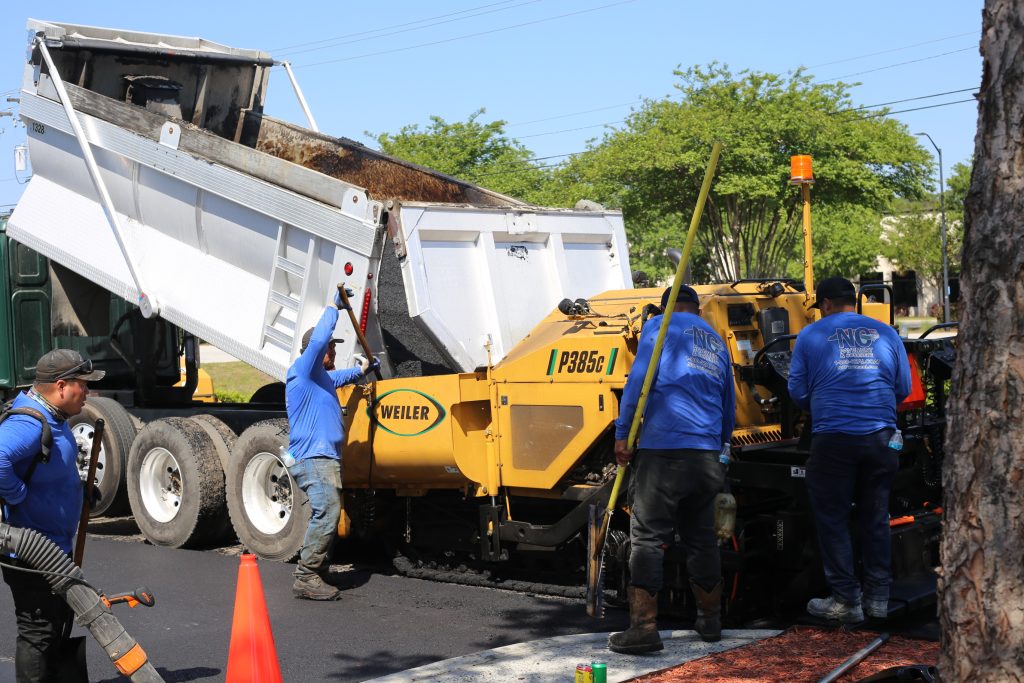
Homeowners associations today face increasing pressure to maintain attractive, safe, and durable infrastructure while managing tight budgets. Pavement might not be the most glamorous investment, but it’s one of the most visible and influential. In fact, commercial asphalt paving for HOA plays a significant role in shaping buyer perception, resident satisfaction, and long-term property value.
As paving contractors who regularly work with HOAs, our team at The Pavement Group sees how pavement conditions affect entire neighborhoods. A neglected parking lot or cracked roadway can lower the appeal of even the most beautiful homes. On the other hand, freshly paved surfaces instantly enhance a property’s look and functionality.
In this guide, we’ll break down exactly how commercial asphalt paving improves HOA property value, why it matters for long-term community planning, and what steps HOAs should take to maximize their investment.
1. Commercial Asphalt Paving Creates a Strong First Impression
The Pavement Group Service: HOA Asphalt Installation
Real estate professionals often say buyers decide how they feel about a property within the first few minutes of arrival.
Smooth pavement contributes significantly to that first impression. Freshly paved roads and parking areas communicate professionalism, safety, and strong property management.
For HOA communities, this matters because:
- Buyers notice infrastructure quality immediately
- Realtors highlight well-maintained communities
- Appraisers consider exterior conditions
Commercial asphalt paving ensures that residents and potential buyers enter a neighborhood that looks clean, organized, and well-maintained.
2. Better Pavement Increases Long-Term Property Value
The Pavement Group Service: Full Asphalt Reconstruction
Property value isn’t influenced by homes alone. Shared infrastructure also plays a major role. HOA communities rely on common areas, and pavement often represents one of the largest physical assets the association manages.
When roads and parking lots deteriorate, the cost of full reconstruction increases dramatically. By investing in professional commercial asphalt paving at the right time, HOAs protect long-term financial stability.
Well-maintained pavement can last 20–30 years with proper maintenance, which helps stabilize HOA budgets and avoid emergency repair costs.
3. Smooth Pavement Improves Resident Safety
The Pavement Group Service: Asphalt Resurfacing
Safety is one of the HOA board’s biggest responsibilities.
Cracks, potholes, and uneven pavement surfaces create risks such as:
- Vehicle damage
- Bicycle accidents
- Pedestrian trip hazards
- Water pooling that leads to ice formation
Commercial asphalt resurfacing restores smooth surfaces and corrects many of these problems before they escalate. A well-maintained pavement system helps communities reduce accident risks and maintain a safer environment for residents and visitors.
4. Professional Striping Improves Parking Efficiency
The Pavement Group Service: Parking Lot Striping
Another overlooked factor that affects HOA property value is parking organization.
Over time, parking lines fade due to weather exposure, traffic, and UV damage. When this happens, residents often park inconsistently, reducing available spaces and creating congestion.
Professional striping restores clear markings such as:
- Parking stalls
- Handicap spaces
- Fire lanes
- Directional arrows
- Visitor parking areas
Well-marked parking areas make a community look organized and functional while improving residents’ daily convenience.
5. Proper Drainage Protects Pavement and Property
The Pavement Group Service: Asphalt Grading and Drainage Solutions
Water is one of asphalt’s biggest enemies.
Poor drainage can cause:
- Premature pavement cracking
- Base layer erosion
- Ice hazards in winter
- Damage to nearby landscaping
During commercial asphalt paving projects, contractors evaluate grading and drainage to ensure water flows away from pavement surfaces.
Proper drainage helps extend pavement lifespan while protecting the surrounding property from costly damage.
6. Sealcoating Preserves Asphalt Investments
The Pavement Group Service: Asphalt Sealcoating
Sealcoating is one of the most cost-effective ways HOAs can maintain their pavement.
Over time, asphalt is exposed to:
- Sunlight
- Oxidation
- Vehicle fluids
- Heavy traffic
Sealcoating creates a protective barrier that slows deterioration and keeps pavement looking new. Most HOA communities benefit from sealcoating every 2–3 years as part of a long-term pavement maintenance plan.
7. Preventive Maintenance Saves HOA Budgets
The Pavement Group Service: Pavement Maintenance Programs
Many HOAs delay pavement maintenance to minimize short-term expenses. Unfortunately, waiting too long often leads to far more expensive repairs.
Preventive maintenance programs typically include:
- Crack sealing
- Sealcoating
- Surface patching
- Periodic inspections
By addressing small issues early, communities can extend pavement life and avoid large reconstruction projects.
Choosing the Right Commercial Asphalt Paving Partner
HOA paving projects require careful planning because they impact many residents at once.
When selecting a contractor, HOA boards should consider:
- Experience with HOA communities
- Project scheduling to minimize disruption
- Proper licensing and insurance
- Clear communication with residents
At The Pavement Group, our team works closely with HOA boards and property managers to plan projects efficiently and maintain safe access throughout the paving process.
Ready to Upgrade Your HOA Pavement?
Your community deserves pavement that looks professional, performs reliably, and lasts for years. From installation to maintenance planning, our team delivers durable pavement systems that support safer neighborhoods and stronger property values.
Contact The Pavement Group today to schedule a professional pavement assessment and discover how better asphalt can transform your community.
Frequently Asked Questions
1. How do HOA boards know when it’s the right time to schedule commercial asphalt paving for community roads?
Honestly, the pavement usually tells you before residents start complaining. When cracks connect, potholes appear, and water stays after rain, the surface is failing. That’s when commercial asphalt paving HOA projects become necessary. Waiting too long quickly raises repair costs. Most boards schedule professional inspections every few years to decide whether resurfacing or full paving makes more sense.
2. Does commercial asphalt paving for HOA communities affect home resale speed?
Yes, it absolutely can. Buyers notice the roads and parking areas the moment they enter the neighborhood. Smooth pavement instantly signals a well-managed community. Commercial asphalt paving HOA upgrades make the property look organized and cared for. That perception matters during home tours. When the neighborhood feels maintained, buyers often feel more confident moving forward with a purchase.
3. Can an HOA complete asphalt paving projects without disrupting residents too much?
Yes, but planning makes all the difference. Most commercial asphalt-paving HOA projects are done in phases rather than shutting down the entire community. Contractors usually pave one section at a time. Residents get advance notice about temporary parking changes. When the project schedule is clear, disruption stays minimal, and the community continues functioning normally.
4. Is commercial asphalt paving a smart long-term investment for HOAs?
For most communities, yes. Asphalt offers a strong balance between durability and cost. Commercial asphalt paving HOA projects typically cost less than concrete installation. Maintenance is also simpler over time. With proper sealcoating and crack repair, pavement can last decades. That makes asphalt a practical choice for boards trying to manage long-term infrastructure budgets responsibly.
5. What role do reserve funds play in large HOA paving projects?
Reserve funds are basically the HOA’s long-term maintenance savings account. Roads and parking areas eventually wear out, so paving should already be part of that plan. When commercial asphalt paving HOA work is scheduled through reserves, boards avoid sudden special assessments. That approach keeps homeowners’ finances predictable while ensuring infrastructure remains in good condition.
6. How does commercial asphalt paving help prevent future structural pavement damage?
Think of paving as resetting the surface before deeper problems start. Once cracks allow water inside, the base layer begins weakening. That’s when potholes multiply quickly. Commercial asphalt paving HOA projects restore the protective surface layer. By resealing the pavement structure, the community prevents water damage that could eventually require full reconstruction.
7. Why do some HOA roads deteriorate faster than others?
Traffic volume plays a huge role. Communities with delivery trucks, moving vans, and service vehicles see faster pavement wear. Drainage problems can also speed up deterioration. When water sits on asphalt, damage follows quickly. Commercial asphalt-paving HOA evaluations usually consider both factors. Fixing drainage and surface issues together often prevents repeated pavement failures.
8. Should HOAs schedule pavement inspections even if the roads look fine?
Yes, and many boards overlook this step. Small pavement issues often hide beneath the surface long before cracks appear. A professional inspection can spot early signs of stress or drainage problems. That information helps schedule commercial asphalt paving HOA maintenance at the right time. Catching problems early is almost always cheaper than emergency repairs.
9. Can upgraded pavement help HOA communities attract new residents?
Surprisingly, yes. Infrastructure influences how people feel about a neighborhood. Clean roads and organized parking make the entire community feel more livable. Commercial asphalt paving and HOA improvements immediately strengthen that first impression. When visitors feel comfortable driving through the property, the neighborhood naturally becomes more appealing to potential buyers.
10. What planning mistakes should HOA boards avoid before starting a paving project?
One common mistake is rushing the decision without a pavement assessment. Another is ignoring drainage or base layer issues before paving. Commercial asphalt paving HOA projects work best when the entire pavement system is evaluated first. Clear communication with residents also matters. When expectations are explained early, the project usually runs much more smoothly.