A water main breaks under a parking lot at 2 a.m. By morning, residents are driving over a section of pavement that could collapse under the next car. Property managers can’t always tell which pavement problems can wait for the next scheduled maintenance visit and which ones need someone on site within hours. Getting that call wrong either wastes money reacting to something that wasn’t urgent or, worse, leaves a genuine hazard sitting long enough to cause an injury, a blocked fire lane, or a real liability claim. This article breaks down what actually qualifies as an emergency, why apartment communities run on a different clock than a retail lot, and what a proper emergency response looks like from the first call to the permanent fix.
Quick answers:
- A pavement problem is a true emergency when it’s an active hazard: a hole large enough to damage a vehicle or injure someone, an exposed utility, a blocked fire lane, or an accessible route that’s suddenly impassable.
- Storms, water main breaks, and utility trench settling cause most sudden pavement failures at apartment communities, not gradual wear.
- According to the National Fire Protection Association, fire lane access must remain clear at all times, which makes a blocked fire lane an emergency even when the pavement damage itself appears minor.
- A proper emergency response has two phases: an immediate, temporary fix that removes the hazard, and a scheduled, permanent repair once conditions allow.
- Documenting the hazard, the response time, and the fix matters for insurance and liability, not just for getting the hole filled.
What Actually Counts as a Parking Lot Emergency
Not every pothole is an emergency, and treating every one like a five-alarm fire burns budget fast. A true emergency is a hazard that exists right now. It could reasonably cause injury, vehicle damage, or blocked access before normal business hours resume. That includes:
- A hole deep or wide enough to damage a tire, wheel, or undercarriage
- A sinkhole or void that could collapse further under the next vehicle’s weight
- Exposed utility lines, pipes, or vaults following a cave-in
- A blocked or impassable fire lane
- A curb ramp or accessible route that’s suddenly unsafe or impassable
- Standing water deep enough to hide a hole or flood a building entrance
- Damage from a vehicle accident, fallen tree, or storm that leaves debris or an unstable surface
What Causes Sudden Pavement Failure at Apartment Communities
Gradual cracking gives an owner time to plan. Sudden failure doesn’t. The most common triggers include heavy storms, broken water mains or utility lines beneath the lot, and settling in trenches left uncompacted after utility work. According to the National Weather Service, a heavy rain event can saturate an already-compromised base within hours, turning a hairline crack that looked stable last week into a collapsed section overnight. A moving truck or trash truck rolling over a hidden void is often what finally exposes damage that had been building underground for weeks.
Why Apartment Communities Are on a Different Clock Than Commercial Lots
A retail parking lot empties out overnight. An apartment parking lot doesn’t. Residents are walking to their cars in the dark. Kids are playing near the curb after school, and deliveries keep coming regardless of the hour. A hazard that sits unaddressed overnight isn’t a minor inconvenience until morning. It’s exposure for eight or more hours with nobody watching.
Emergency vehicle access raises the stakes further. According to the NFPA, fire lanes have to remain clear for emergency vehicle access at all times, not just during business hours. A blocked fire lane at 3 a.m. is exactly as much of a problem as one blocked at 3 p.m. It’s the kind of issue that needs a same-night response, not a work order for next week.
The Liability Clock Starts the Moment You Know
When a property manager or on-site staff member knows or reasonably should know about a hazard, they must act immediately. They cannot wait until the next scheduled maintenance visit. The Insurance Information Institute states that premises liability and slip-and-fall claims rank among the most frequent commercial liability claims filed. How quickly someone addresses a known hazard often determines how those claims are evaluated. Photographing the hazard, logging its report time, and recording its repair time protects both the property and anyone who might otherwise suffer an injury.
Keeping an Accessible Route Open During Emergency Work
Emergency repairs don’t suspend accessibility requirements. According to the U.S. Access Board’s guidance on accessible routes, temporary conditions like construction or repair work still need to preserve an accessible path wherever feasible, or provide a clearly marked alternate route if the primary one has to close. Barricading a hazard without thinking through where residents using a wheelchair or mobility device are supposed to go instead just trades one hazard for another.
What an Emergency Response Actually Looks Like
A proper response moves through the same steps regardless of what caused the damage:
- Secure the area immediately. Cones, barricades, or caution tape go up before anything else, especially around an exposed utility or an unstable void.
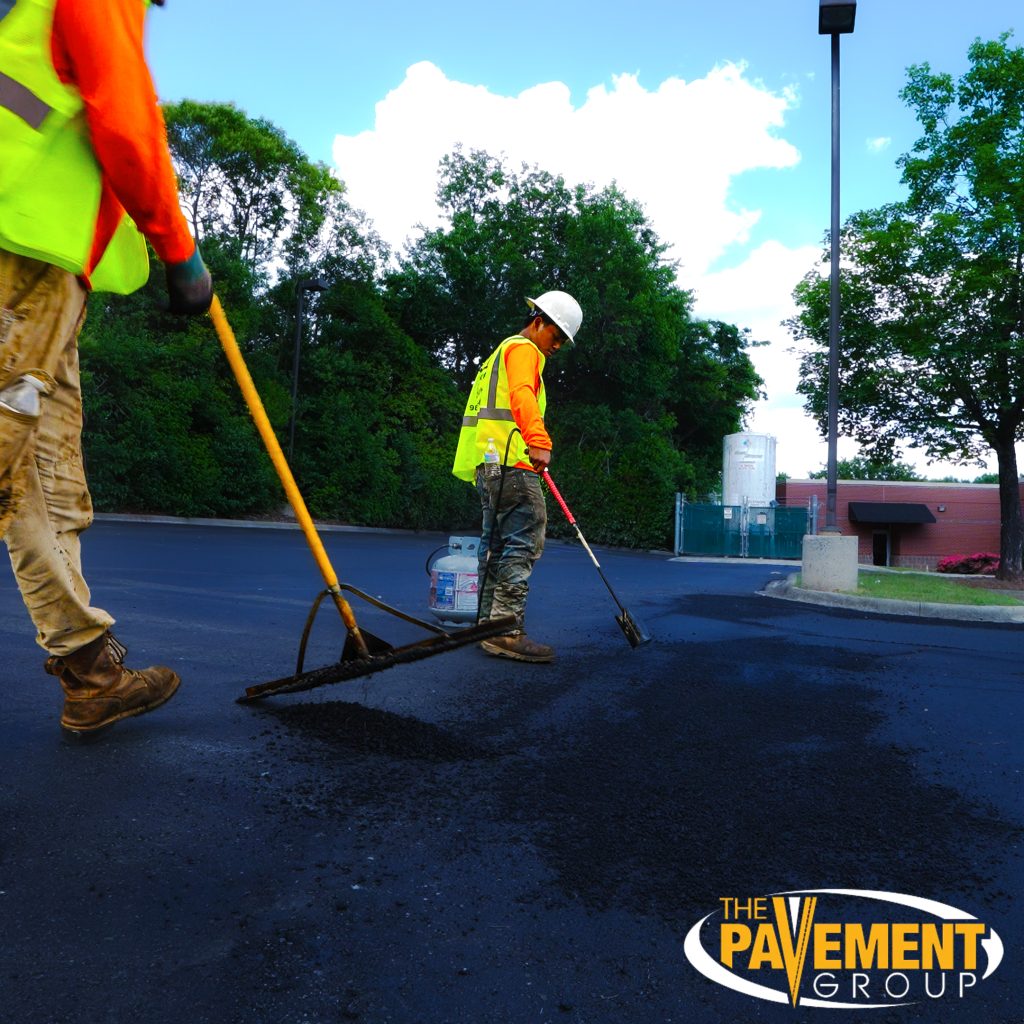
- Apply a temporary fix. Cold patch, a steel plate over an exposed utility, or sandbags for active flooding remove the immediate hazard the same day it’s reported.
- Notify residents. Signage at the site and a resident notice, sent by text, email, or as a posted flyer, keep people from walking or driving into a hazard that isn’t obvious in the dark.
- Document everything. Photos, a timestamp, and a short incident report matter for insurance and for showing the response time if a claim ever comes up later.
- Schedule the permanent repair. Once the immediate danger is gone, the real fix, whether that’s a full-depth patch or a utility repair, gets scheduled for when conditions and access allow it.
Temporary Fix vs. Permanent Fix: They’re Not the Same Repair
The cause of a cold patch or a steel plate is meant to remove the hazard, not solve the reason it appeared. Property managers who treat the temporary fix as finished often see the same failure reopen within weeks, because the underlying cause, whether that’s a failed base, a drainage problem, or a utility repair that was never properly compacted, is still sitting there. The permanent repair is the one that actually addresses what caused the emergency in the first place.
What to Have in Place Before You Need It
The properties that handle emergencies well almost always set this up before anything happens, not during the crisis itself:
- A contractor on retainer with a clear response-time commitment, not a general “we’ll get to it” promise
- A 24/7 contact number that on-site staff can call directly, not a general office line that rolls to voicemail after hours
- A simple way for staff and residents to report a hazard the moment they see it
- A habit of photographing and logging any hazard from the first report, not just after a claim comes in
Emergency vs. Routine: A Quick Reference
| Situation | Emergency (respond within hours) | Routine (schedule normally) |
|---|---|---|
| Pothole size | Large enough to damage a vehicle or hide a drop | Small, shallow, clearly visible |
| Fire lane | Blocked or impassable | Clear and unaffected |
| Utility exposure | Exposed pipe, wire, or vault | None |
| Accessible route | Impassable with no alternate route provided | Unaffected, or an alternate route exists |
| Likely cause | Sinkhole, storm damage, water main break | Normal wear, fading paint, minor surface cracking |
| Time of day | Any time, including overnight | Business hours, non-urgent |
Sudden sinkholes, severe potholes, or collapsed storm drains create immediate safety hazards and liability risks for your residents. When critical surface damage threatens property access, fast turnaround is essential. Reach out to our emergency dispatch team today to stabilize your lot quickly and protect your multi-family community.
Frequently Asked Questions
What qualifies as an emergency parking lot repair at an apartment community?
An emergency is a hazard that exists right now and could reasonably cause injury, vehicle damage, or blocked access before the next business day. That includes a hole large enough to damage a vehicle, an exposed utility line, a blocked fire lane, or an accessible route that’s suddenly impassable. Anything short of an active hazard, like faded striping or a small surface crack, can typically wait for a scheduled repair instead.
How fast should a property manager respond to a parking lot hazard?
As soon as it’s reported, the area should be secured with cones or barricades, and a temporary fix should follow within hours, not days. According to the Insurance Information Institute, how quickly a known hazard gets addressed is often a central factor in how a premises liability claim is evaluated later, so a fast initial response matters even before the permanent repair is scheduled. Waiting until the next routine maintenance visit is appropriate for cosmetic issues, not for an active safety hazard.
What’s the difference between a temporary and a permanent emergency repair?
A temporary fix, like a cold patch or a steel plate over an exposed utility, exists to remove the immediate danger the same day it’s discovered. A permanent repair addresses whatever actually caused the failure, whether that’s a failed base, a drainage problem, or utility work that settled unevenly. Treating the temporary fix as the final solution is one of the most common reasons the same hazard reopens within weeks.
Does a blocked fire lane count as an emergency even if the pavement damage looks minor?
Yes. According to the National Fire Protection Association, fire lanes have to remain clear for emergency vehicle access at all times, regardless of how severe the underlying pavement damage looks. A cracked or uneven fire lane that’s still passable is a scheduling issue, but one that’s actually blocked or impassable needs a same-day response because it directly affects how fast emergency responders can reach the property.
Do I still need to provide an accessible route during emergency repair work?
In most cases, yes. According to the U.S. Access Board’s guidance on accessible routes: temporary conditions like construction or emergency repair still need to preserve an accessible path wherever feasible or provide a clearly marked alternate route if the usual one has to close. Barricading a hazard without planning where residents using a wheelchair or mobility device should go instead just creates a second problem in place of the first.
What causes sudden potholes or sinkholes after a storm?
Heavy rain saturates a base that’s already been weakened by an existing crack, a nearby utility trench, or years of water slowly working its way underneath the surface. According to the National Weather Service, a single heavy rain event can push that kind of hidden weakness past its breaking point within hours, which is why a pothole or sinkhole can seem to appear overnight even though the underlying problem had been developing for weeks or months.
Who is liable if a resident’s car is damaged by a pothole?
Liability depends on the specific facts, including whether the property knew or should have known about the hazard and how quickly it was addressed after it was reported, so this is a question for the property’s insurer or legal counsel rather than a general rule. What property managers can control is the response: documenting when a hazard was reported, securing it promptly, and fixing it as fast as conditions allow, all of which directly affect how that kind of claim gets evaluated. That documentation habit matters regardless of how any individual claim turns out.
Should property managers have an emergency repair contractor on retainer?
It’s one of the most effective things a property can set up before a crisis instead of during one. A contractor with a defined response-time commitment removes the scramble of calling around for availability while a hazard sits exposed, and having a 24/7 contact number that staff can reach directly, rather than a general office line, cuts hours off the response time. Properties that set this up in advance consistently handle emergencies with less disruption and lower cost than properties trying to arrange it for the first time mid-crisis.
See also: Why Should Apartment Owners Replace Instead of Repair Their Parking Lots, Common Apartment Parking Lot Problems and How Professional Repairs Solve Them
About the Author
The Pavement Group specializes in asphalt engineering, pavement maintenance solutions, and data-driven asset management for commercial, retail, and multi-family residential properties. Utilizing advanced structural pavement evaluations and capital planning transparency, The Pavement Group works directly with property managers to extend pavement lifecycles, eliminate liability risks, and optimize long-term infrastructure investments.