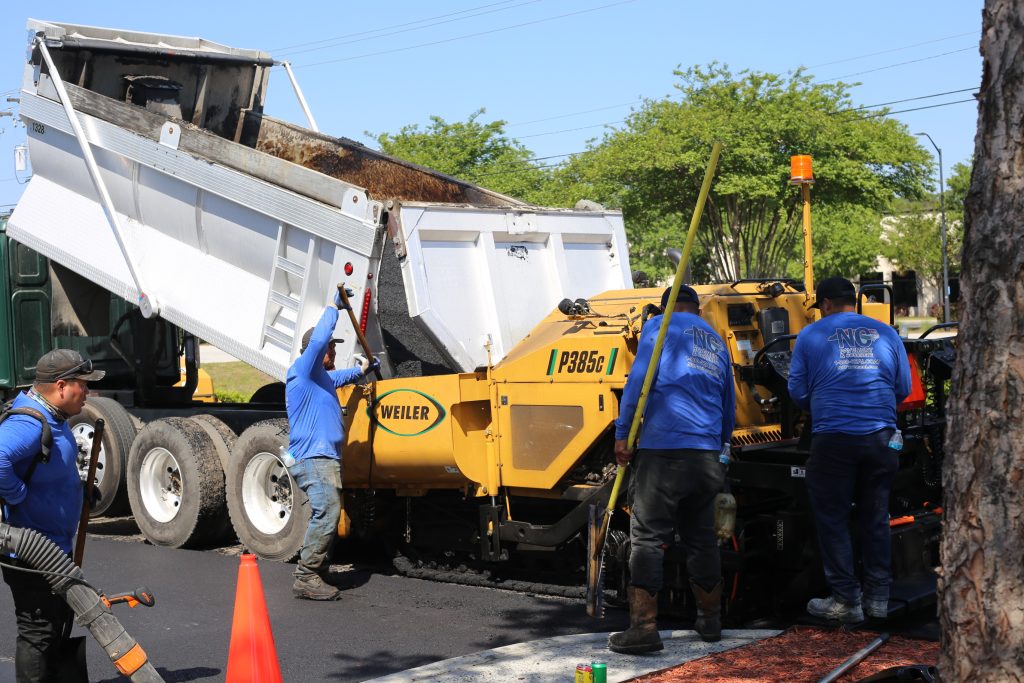
When you think about industrial pavements, like the ones used in warehouses, distribution centers, shipping yards, and manufacturing plants, the first thing that comes to mind is their strength. After all, these surfaces endure punishing loads, constant traffic, and exposure to the elements every single day.
But here’s something many facility owners overlook: even the strongest pavement fails quickly if the drainage system behind it is poorly designed. If water gets trapped, creeps underneath the surface, or pools in the wrong areas, it can cause cracks, rutting, base layer decay, and costly structural failures.
In this guide, we’ll walk through what makes drainage design so essential, the specific considerations for heavy-duty industrial pavements, and how The Pavement Group helps businesses protect their biggest assets with long-lasting infrastructure.
Why Drainage Design Matters More for Industrial Pavements
Industrial pavements aren’t like typical commercial parking lots. They carry heavier equipment, support continuous operations, and face more aggressive water exposure from washdowns, rainfall, and even chemical spills.
Here’s why drainage design must be a top priority:
- Water is pavement’s #1 enemy. It seeps into cracks, weakens subgrades, and accelerates the freeze-thaw cycle.
- Pooled water increases surface stress. Trucks and forklifts splash and roll over it, causing friction and premature wear.
- Moisture shortens pavement lifespan significantly. A poorly drained pavement can deteriorate in half the expected time.
- Repairs cost more in industrial settings. Downtime impacts productivity, logistics, and revenue.
A well-designed drainage system solves all of this by keeping water moving, away from the pavement, and out of the structural layers.
Key Considerations in Drainage Design for Heavy-Duty Industrial Pavements
Designing a drainage system for industrial pavements isn’t a one-size-fits-all job. It requires engineering expertise, site evaluation, soil testing, and an understanding of how the facility operates daily.
Below are the most important considerations.
1. Surface Drainage Planning
Surface drainage is your pavement’s first line of defense. It ensures that water immediately flows away instead of pooling.
Engineers focus on:
- Proper slope design (usually 1–2%)
- Smooth transitions between pavement levels
- Grading that directs water to collection points
- Avoiding areas where trucks and forklifts naturally push water back uphill
Getting this wrong creates water traps. One of the biggest causes of early pavement failure.
2. Subsurface Drainage Design
Surface drainage fixes what you see, but subsurface drainage protects what you don’t see.
If water seeps into the base or subgrade layers, it can soften the soil, reduce load-bearing capacity, and lead to structural failures.
Subsurface drainage includes:
- Perforated drainage pipes
- Drainage blankets
- Underdrains beneath heavy-load zones
- Moisture barriers or vapor membranes
For heavy-duty industrial pavements, subsurface drainage is just as important as the pavement thickness itself.
3. Soil and Subgrade Evaluation
Every pavement structure is only as strong as what lies beneath it.
Soil testing identifies:
- The natural drainage characteristics of the site
- Whether soil stabilization is needed
- How much moisture the subgrade can hold before weakening
Clay-heavy soils require more drainage support, while sandy soils drain faster but may need compaction reinforcement.
4. Load and Traffic Considerations
Industrial pavements carry unique types of loads:
- Forklifts with small but heavy wheels
- Container-lifting equipment
- Fully loaded semis
- Repetitive wheel paths
These loads stress pavement differently, which affects how drainage should be designed.
For example:
Areas with repetitive forklift traffic need more aggressive drainage to prevent rutting from water-softened subgrades.
5. Pavement Material Selection
Drainage design and material choice must work together.
For industrial pavements, materials like:
- High-performance concrete
- Heavy-duty asphalt mixes
- Stabilized base materials
are selected based on how they interact with moisture. The wrong combination leads to cracking, heaving, or premature deterioration.
6. Integration of Drainage Structures
A complete industrial drainage system may include:
- Catch basins
- Trench drains
- Inlets
- Culverts
- Swales
- Stormwater chambers
These must be strategically placed to ensure water never lingers near the pavement edges or structural layers.
How The Pavement Group Enhances Pavement Longevity
At The Pavement Group, we take pavement longevity seriously, because your operations depend on it.
Here’s how we approach drainage-focused pavement design:
- We assess every industrial site with high-resolution inspections and engineering reviews.
- Our team designs a custom drainage plan that fits your facility’s traffic patterns and load demands.
- We integrate both surface and subsurface drainage into the pavement structure.
- We help maintain the drainage system over time so your investment keeps performing.
Our goal is simple: pavement that lasts longer, performs better, and saves you money in the long run.
Ready to Build Pavements That Outlast the Competition? Let’s Talk!
If you want your industrial pavement to stand strong for decades, drainage design isn’t optional; it’s essential. Contact The Pavement Group today. We combine engineering expertise with real-world experience to create pavement solutions that outperform and outlast.
Frequently Asked Questions
1. Why is drainage design important for industrial pavement longevity?
Drainage design is important because water is one of the main causes of pavement deterioration, especially in industrial environments. When water sits or seeps into pavement layers, it weakens the base and accelerates cracking. Good drainage prevents structural damage and helps pavements last much longer. Industrial facilities benefit greatly from proper drainage because heavy loads make moisture-related issues even more severe.
2. How does poor drainage affect heavy-duty industrial pavements?
Poor drainage causes water to pool or infiltrate the pavement, which reduces the strength of the subgrade. This leads to rutting, potholes, and surface cracking in areas that experience high traffic or heavy loads. Over time, the pavement deteriorates faster than expected and requires costly repairs. Proper drainage reduces stress on the pavement and minimizes long-term maintenance.
3. What types of drainage systems are used for industrial pavements?
Industrial pavements typically use surface drainage systems like slopes, gutters, and inlets to move water quickly. Subsurface drainage systems, such as underdrains and perforated pipes, help remove moisture that enters deeper layers. Trench drains are also common in industrial zones where water flow is high. The system used depends on site conditions, soil type, and load requirements.
4. How does soil type impact drainage design?
Soil type determines how fast water drains and how strong the subgrade will be when wet. Clay soils absorb water and weaken significantly, requiring more aggressive drainage solutions. Sandy soils drain faster but may need stabilization to support heavy loads. Understanding soil characteristics ensures the drainage design supports pavement longevity.
5. What role does pavement slope play in drainage?
Pavement slope directs water away from the surface so it can flow into a drainage structure. Without the right slope, water can pool and cause long-term damage. Engineers typically design slight slopes that allow water to move naturally without affecting vehicle operations. Proper sloping is essential for preventing premature pavement failure.
6. When should underdrains be installed in industrial pavements?
Underdrains should be installed when soil retains water or when heavy traffic demands extra protection for the subgrade. They are especially useful in areas where moisture is likely to accumulate beneath the surface. Underdrains help keep the base layers dry, which preserves pavement strength. They are a common feature in high-load industrial environments.
7. How does heavy equipment traffic impact drainage needs?
Heavy equipment creates concentrated loads that intensify pavement stress when water is present. Moisture in the subgrade reduces load-bearing capacity, making it easier for heavy wheels to cause damage. Proper drainage ensures excess water is removed so the pavement can support heavy operations. Facilities with forklifts, semis, or cranes require more robust drainage planning.
8. How can drainage help reduce pavement maintenance costs?
Good drainage prevents water-related damage, which is one of the most expensive pavement issues to fix. When water moves away efficiently, the pavement structure stays stronger for longer. This reduces the frequency of repairs and extends pavement lifespan. Long-term maintenance budgets are significantly lower with effective drainage.
9. What signs indicate drainage problems in industrial pavements?
Common signs include pooling water, soft spots, cracking, and rutting. Wet or muddy areas along pavement edges also suggest subsurface drainage issues. Over time, frequent repairs in the same areas indicate underlying moisture problems. Addressing these signs early helps prevent major structural damage.
10. How often should an industrial pavement drainage system be inspected?
Drainage systems should be inspected at least once a year, especially before and after heavy rainy seasons. Regular inspections help identify blockages, damaged drains, or erosion that affects water flow. Industrial facilities with heavy traffic may need more frequent checks. Consistent inspection ensures the drainage system performs as designed to protect the pavement.