Hospitals are high-stress environments where patients, visitors, staff, delivery vehicles, and emergency responders all share the same space. As a paving contractor, we’ve seen how poor parking lot design can create confusion, delays, and even dangerous situations. That’s why safety-focused planning matters just as much as durability.
At The Pavement Group, we work with healthcare facilities to design and maintain parking lots that are easy to navigate, clearly marked, and built with safety in mind. Hospital parking lots are not “one-size-fits-all” projects. They require careful attention to layout, traffic flow, striping visibility, and signage placement to reduce risk and improve the on-site experience for everyone.
Why Hospital Parking Lot Safety Deserves Special Attention
Hospitals operate 24/7, which means parking lots are in constant use. You’re dealing with pedestrians who may be injured or elderly, drivers who are distracted or emotional, and emergency vehicles that need clear access at all times. A poorly designed lot doesn’t just cause frustration; it can slow response times and increase the chance of accidents.
Designing safer hospital parking lots helps:
- Reduce vehicle-pedestrian conflicts
- Improve accessibility compliance
- Keep emergency routes clear
- Lower liability risks
- Create a calmer experience for visitors
1. Smart Layout Design That Supports Safe Traffic Flow
The foundation of a safe hospital parking lot starts with the layout. Traffic patterns should feel intuitive, even for first-time visitors who may already be stressed.
Key layout considerations include:
- Clearly defined entry and exit points
- One-way traffic lanes where possible
- Separate zones for staff, visitors, and emergency vehicles
- Wide drive lanes to accommodate ambulances and delivery trucks
At The Pavement Group, layout design is a core service because correcting traffic flow issues after paving is far more expensive than planning it right from the start.
2. High-Visibility Striping That Guides Drivers and Pedestrians
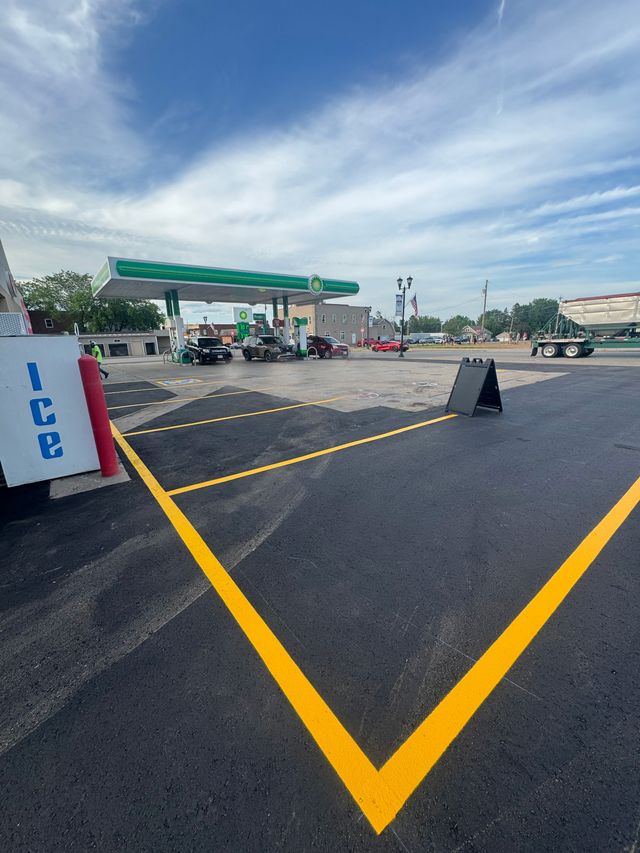
Striping is one of the most effective safety tools in a hospital parking lot, yet it’s often underestimated. Faded or confusing lines create hesitation, sudden stops, and risky maneuvers.
Best practices for hospital striping include:
- Bright, reflective paint for night visibility
- Clearly marked crosswalks near entrances
- ADA-compliant parking and access aisles
- Fire lanes and no-parking zones clearly outlined
Consistent restriping is part of maintaining safety, not just appearance.
3. Crosswalk Placement That Prioritizes Patient Safety
Hospital pedestrians move differently from shoppers or office workers. Many are using mobility aids, moving slowly, or distracted by medical concerns. Crosswalk placement should reflect that reality.
Effective crosswalk design includes:
- Direct paths from parking areas to entrances
- Raised or textured crosswalks where appropriate
- Strong contrast striping for visibility
- Advance warning markings for drivers
These features significantly reduce pedestrian incidents when implemented correctly.
4. Clear and Consistent Signage Throughout the Property
Signage plays a critical role in designing safer hospital parking lots. Drivers need to understand where to go without making sudden decisions or stopping unexpectedly.
Essential hospital signage includes:
- Speed limit signs
- Directional arrows and zone markers
- Emergency access signage
- Visitor and staff parking identifiers
Sign placement should be predictable and visible well before drivers need to act.
5. ADA Compliance That Goes Beyond Minimum Requirements
ADA compliance is legally required, but it’s also a matter of dignity and safety. Hospital parking lots should exceed minimum standards whenever possible.
Important ADA considerations:
- Proper slope and spacing of accessible stalls
- Clear access routes to entrances
- High-contrast markings and signage
- Regular maintenance to prevent surface damage
Designing with accessibility in mind benefits everyone, not just those with disabilities.
6. Lighting That Enhances Visibility and Comfort
Lighting is a major factor in parking lot safety, especially for hospitals operating overnight. Poor lighting increases the risk of accidents and personal safety concerns.
Effective lighting strategies include:
- Even coverage with minimal shadows
- Brighter lighting near entrances and crosswalks
- Energy-efficient LED fixtures
- Regular inspections to replace failed lights
Good lighting works hand in hand with striping and signage to create a safer environment.
7. Pavement Condition and Surface Maintenance
Cracked pavement, potholes, and uneven surfaces aren’t just eyesores. In a hospital setting, they can cause serious injuries.
Ongoing pavement maintenance should address:
- Trip hazards near walkways
- Drainage issues that cause pooling of water
- Surface wear in high-traffic areas
- Clear, smooth transitions at ramps and curbs
The Pavement Group provides repair and maintenance services specifically designed to keep hospital lots safe and functional.
8. Dedicated Emergency and Service Vehicle Zones
Emergency vehicles must move through hospital properties without delay. Clear designation of these areas is critical.
Best practices include:
- Bold striping for fire lanes
- No-parking zones clearly marked
- Dedicated ambulance access routes
- Physical barriers where necessary to prevent misuse
These measures protect both emergency responders and the public.
9. Wayfinding That Reduces Driver Stress
Hospitals are inherently stressful, and confusing parking lots add to that tension. Good wayfinding helps drivers reach their destination quickly and safely.
Effective wayfinding strategies:
- Color-coded zones
- Clear building identifiers
- Simple directional signage
- Logical progression from entry to parking to entrance
Reducing confusion reduces accidents.
10. Ongoing Evaluation and Updates
Hospital need to change over time. Expansion, new departments, or increased traffic can all impact parking lot safety.
Regular evaluations should include:
- Traffic pattern reviews
- Striping condition checks
- Signage updates
- ADA compliance audits
Designing safer hospital parking lots is an ongoing process, not a one-time project.
Your Partner in Designing a Safer Hospital Parking Experience!
Designing safer hospital parking lots takes experience, planning, and attention to detail. If your facility needs striping, signage, layout improvements, or pavement maintenance, The Pavement Group is ready to help.
We specialize in healthcare environments where safety isn’t optional. Contact us today to discuss how we can improve your hospital parking lot and create a safer experience for everyone who relies on it.
Frequently Asked Question
1. Why is hospital parking lot design different from other facilities?
Hospital parking lots are used by people who may be injured, stressed, or unfamiliar with the property. Drivers are often distracted, while pedestrians may move slowly or unpredictably. Because of that, the layout, markings, and signage need to be much clearer than in a typical retail or office lot. Safety and accessibility have to come first in every design decision.
2. How often should hospital parking lot striping be repainted?
In most cases, hospital parking lot striping should be refreshed every one to two years. These lots see constant traffic, which causes paint to fade faster than in other settings. Once lines start to disappear, drivers hesitate or park incorrectly, which creates safety issues. Keeping striping bright and visible helps traffic move smoothly and predictably.
3. What role does signage play in parking lot safety?
Signage helps drivers make decisions before they reach a problem area. When signs are clear and properly placed, people slow down, follow the correct routes, and avoid restricted zones. In hospital environments, good signage also reduces confusion for visitors who may already be under stress. The easier it is to understand where to go, the safer the lot becomes.
4. How does ADA compliance affect hospital parking lot design?
ADA compliance plays a much bigger role in hospital parking lots because accessibility is not optional here. Many visitors rely on wheelchairs, walkers, or assistance devices, so spacing and slopes must be correct. Clear markings and access routes help prevent injuries and frustration. A well-designed lot makes everyone feel accommodated, not singled out.
5. Can poor lighting really increase accident risk?
Yes, poor lighting increases risk more than most people realize. When drivers can’t clearly see pedestrians, curbs, or pavement markings, reaction times drop. Poor lighting also makes people feel unsafe, especially in the evening. Good lighting improves visibility and creates a sense of security across the entire property.
6. Why are crosswalks so important in hospital parking lots?
Crosswalks give pedestrians a predictable, safe place to walk, which is critical in hospital settings. Patients and visitors may not move quickly, and some may be distracted or in pain. Well-placed crosswalks alert drivers to slow down and stay alert. That shared awareness helps prevent accidents.
7. How does pavement condition impact safety?
Uneven pavement, cracks, and potholes create real hazards in hospital parking lots. A simple trip or fall can turn into a serious medical issue for vulnerable pedestrians. Poor pavement also affects vehicles, especially emergency units that need smooth access. Keeping surfaces in good condition directly improves safety.
8. What is wayfinding and why does it matter?
Wayfinding refers to how easily people can navigate a parking lot without feeling lost. Clear directions, labeled zones, and simple layouts reduce driver stress. When people aren’t confused, they make fewer sudden stops or risky turns. That leads to safer overall traffic flow.
9. How do emergency lanes improve hospital operations?
Emergency lanes ensure ambulances and response vehicles can move quickly without obstruction. When these lanes are clearly marked and enforced, they prevent dangerous delays. Drivers understand where not to park and why it matters. In critical situations, that clarity can make a real difference.
10. Should hospital parking lots be evaluated regularly?
Hospital parking lots should be reviewed regularly because conditions and usage change over time. Expansion, increased traffic, or new services can all affect safety. Regular evaluations help identify issues before they turn into hazards. It’s a practical way to stay proactive instead of reactive.