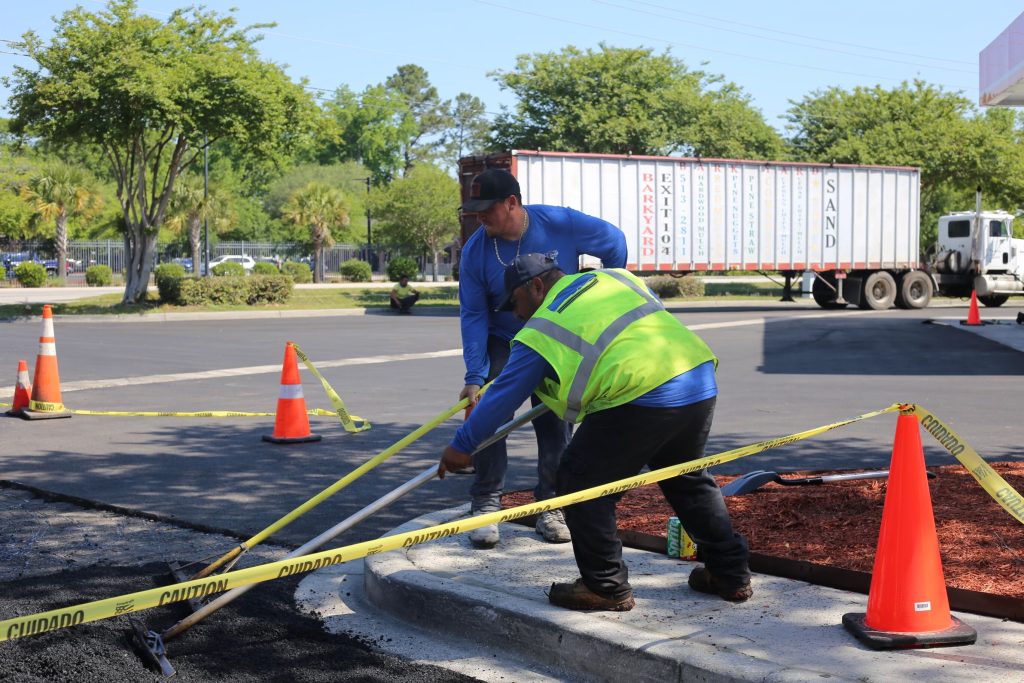
Healthcare paving is not the same as resurfacing a retail center or office complex. It demands planning, regulatory knowledge, and an understanding of how facilities operate around the clock. For healthcare administrators and property managers, pavement is not just a maintenance line item. It is part of risk management, accessibility, and daily operations. That is why choosing the right pavement contractor for healthcare facilities is a decision that deserves careful thought.
As a team that works with commercial and institutional properties, we have seen how the right approach can extend pavement life, reduce liability, and improve the overall experience for patients and staff.
Healthcare Facilities Have Unique Paving Demands
Hospitals and medical campuses operate continuously. There is no convenient downtime. Ambulances must have clear access at all hours. Patients with limited mobility rely on smooth, compliant pathways. Delivery vehicles bring critical supplies daily.
Because of this, paving work must be:
- Strategically phased
- Carefully scheduled
- Fully compliant with ADA requirements
- Built for heavy vehicle loads
In addition, healthcare environments require clean, controlled job sites. Dust and debris must be minimized. Pedestrian traffic must be clearly redirected. Communication with facility managers must be consistent and detailed.
A contractor who does not understand these realities can unintentionally create operational problems.
1. Evaluate Experience with Healthcare Environments
The Pavement Group Service: Commercial and Institutional Paving Expertise
Experience matters. Healthcare facilities have specific operational patterns that affect paving decisions. For example, emergency entrances endure concentrated heavy traffic, requiring reinforced structural design.
A qualified contractor should be able to demonstrate past work on hospitals, clinics, or large institutional campuses. They should understand how to coordinate with facility management teams and comply with site-specific protocols.
At The Pavement Group, we approach healthcare projects with planning as the foundation. We assess traffic patterns, access points, and operational priorities before any equipment arrives on-site.
2. Prioritize ADA Compliance
The Pavement Group Service: ADA-Compliant Striping and Access Solutions
Parking spaces, access aisles, curb ramps, and walkway slopes must meet federal and local Americans with Disabilities Act standards.
Improper grading or incorrect striping dimensions can expose a facility to compliance issues. More importantly, they can limit patients’ safe access.
A professional paving contractor should:
- Measure slope ratios precisely
- Install properly dimensioned accessible parking spaces
- Use durable, high-visibility striping
- Confirm signage placement
Attention to these details protects both the facility and the people it serves.
3. Assess Structural Integrity, Not Just Surface Appearance
The Pavement Group Service: Structural Asphalt and Concrete Installation
Cracks and potholes are visible signs of deterioration, but the real concern often lies beneath the surface. Sub-base failure, drainage issues, and repeated heavy loads can weaken pavement over time.
In healthcare environments, structural integrity is critical. Ambulances and supply trucks repeatedly stress certain zones. Without proper thickness and compaction, those areas will deteriorate quickly.
A responsible pavement contractor for healthcare facilities evaluates:
- Subgrade stability
- Drainage patterns
- Traffic load distribution
- Pavement thickness requirements
Superficial resurfacing that fails to address structural concerns results in short-term fixes and long-term costs.
4. Require Clear Project Planning and Communication
The Pavement Group Service: Phased Construction Planning
Healthcare operations cannot be interrupted without consequences. Therefore, paving projects must be phased carefully.
A comprehensive plan should include:
- Defined work zones
- Maintained emergency vehicle routes
- Clearly marked pedestrian detours
- Detailed scheduling timelines
Communication before, during, and after the project is essential. Facility managers should know exactly what to expect and when.
At The Pavement Group, we provide written proposals and transparent scheduling so administrators can plan accordingly.
5. Implement Preventive Maintenance Programs
The Pavement Group Service: Ongoing Maintenance and Asset Management
Preventive maintenance extends pavement life significantly. Crack sealing prevents water intrusion. Sealcoating protects asphalt from oxidation and UV damage. Fresh striping maintains visibility and order.
Healthcare facilities benefit from maintenance schedules rather than reactive repairs. A long-term plan reduces emergency disruptions and spreads costs more predictably.
A paving contractor should not only install pavement but also guide the facility through proper upkeep.
6. Verify Insurance, Safety Protocols, and Professional Standards
The Pavement Group Service: Fully Insured Commercial Operations
Healthcare campuses require contractors who operate safely and carry appropriate insurance coverage. OSHA compliance and documented safety procedures are essential.
Work zones must be clearly marked. Equipment must be managed carefully. Pedestrian safety cannot be compromised.
Request documentation. Review credentials. A reputable contractor will provide this information without hesitation.
7. Evaluate Material Quality and Longevity
The Pavement Group Service: High-Performance Asphalt and Concrete Solutions
Material selection directly impacts long-term performance. High-quality asphalt mix designs, reinforced concrete in heavy-load zones, and durable striping materials extend service life.
Inferior materials may reduce initial cost but increase maintenance frequency. Healthcare facilities typically benefit from durable solutions that minimize future disruption.
Long-term value should guide decision-making.
8. Consider Drainage and Environmental Conditions
The Pavement Group Service: Drainage Correction and Surface Design
Standing water accelerates pavement deterioration and creates slip hazards. Proper grading and drainage design are critical components of any healthcare paving project.
A pavement contractor for healthcare facilities should assess:
- Existing slope
- Water flow patterns
- Catch basin functionality
- Subsurface drainage
Addressing drainage during resurfacing prevents recurring damage and safety risks.
9. Look for Transparent Cost Structures
The Pavement Group Service: Detailed Written Estimates
Healthcare facilities often operate within strict budgets. Transparent cost breakdowns allow administrators to plan effectively.
Detailed estimates should outline:
- Scope of work
- Materials used
- Labor allocation
- Project timeline
Clarity reduces misunderstandings and ensures accountability.
10. Choose a Long-Term Partner
The Pavement Group Service: Strategic Commercial Partnerships
Pavement management is not a one-time project. It is an ongoing responsibility. The right contractor serves as a long-term partner, offering inspections, performance assessments, and maintenance recommendations.
Choosing the right pavement contractor for healthcare facilities ultimately comes down to trust, expertise, and reliability.
Build Safer Access for Every Patient
If your facility needs resurfacing, ADA upgrades, drainage correction, or a long-term maintenance plan, The Pavement Group is ready to assist.
Contact The Pavement Group today to schedule a comprehensive site evaluation and ensure your healthcare campus remains safe, compliant, and built to last.
Frequently Asked Questions
1. Why is ADA compliance such a big deal for medical campuses?
Because accessibility is not optional in healthcare. Patients may arrive with walkers, wheelchairs, or limited mobility. Slopes, ramps, and parking layouts must be exact. Small measurement errors create real access problems. Compliance also protects you from legal exposure. A contractor should measure everything carefully, not guess.
2. How do you keep paving work from disrupting hospital operations?
It starts with phasing. We divide the site into controlled sections. Emergency routes stay open at all times. We often work nights or weekends if needed. Clear signage guides drivers and pedestrians safely. Communication with facility management is constant throughout the project.
3. How often should hospital pavement be inspected?
At least once a year, sometimes more. High-traffic areas wear faster than you think. Small cracks become structural problems if ignored. Early repairs cost far less than full reconstruction. Regular inspections give you control over budgeting and timing.
4. What materials work best for hospital parking lots?
You need commercial-grade asphalt with proper thickness. Ambulance lanes may require reinforced concrete instead. The base layer is just as important as the surface. If the foundation fails, everything above it follows. Material choice should match traffic load and climate conditions.
5. Why is drainage so critical in healthcare paving?
Water is pavement’s biggest enemy. It seeps into cracks and weakens the base. In a hospital setting, standing water also creates slip hazards. Poor drainage shortens pavement life dramatically. Proper grading protects both safety and structural integrity.
6. Does preventive maintenance really make a difference?
Yes, and it saves money over time. Crack sealing stops water from entering the base. Sealcoating protects asphalt from oxidation. Fresh striping keeps traffic organized and safe. Maintenance keeps small issues from becoming capital projects.
7. How does constant ambulance traffic affect pavement?
Ambulances apply heavy loads in concentrated areas. Those zones are under repeated stress every day. Without a reinforced design, rutting and cracking develop quickly. Standard parking lot thickness may not be enough. Structural planning must reflect actual usage patterns.
8. What paperwork should a contractor provide before starting?
You should receive a detailed written proposal. It should outline the scope, materials, and timeline. Insurance certificates and licensing should be current. Safety plans should also be documented. Transparency up front prevents problems later.
9. When is resurfacing better than patching?
If cracks are widespread, patching becomes temporary. When the base layer weakens, surface repairs will not last. A professional evaluation can measure structural condition. Sometimes resurfacing saves money long term. It depends on the pavement’s overall health.
10. How long should healthcare pavement typically last?
With proper installation, asphalt can last 15 to 20 years. Concrete in heavy-load zones can last longer. Longevity depends on traffic, drainage, and maintenance. Neglected pavement fails much sooner. A lifecycle plan makes a noticeable difference.