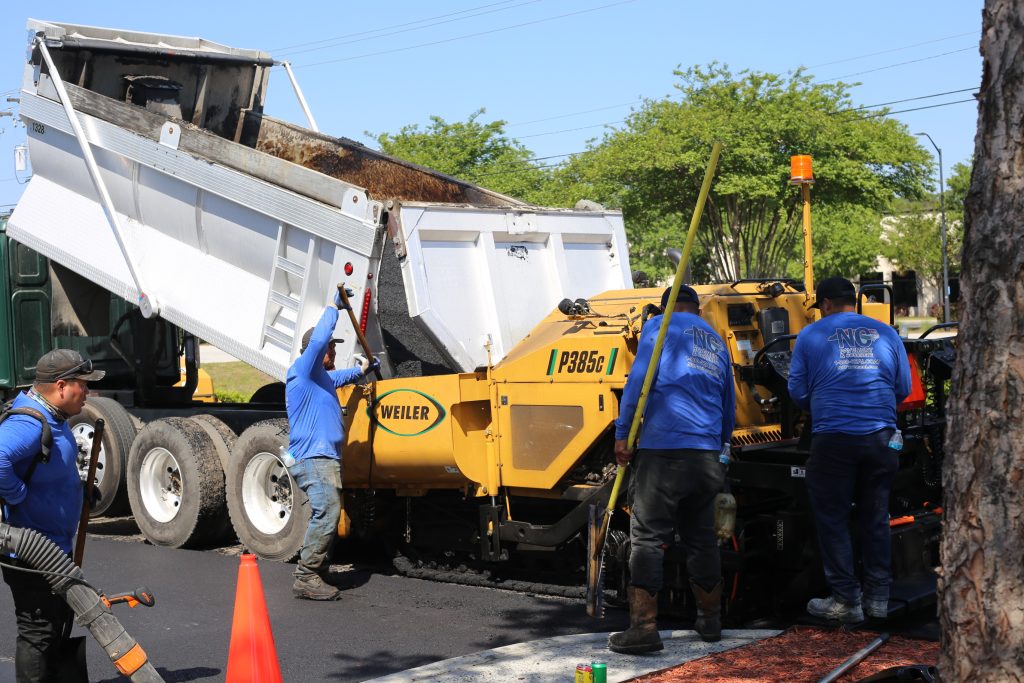
HOA boards often face a familiar problem. The pavement in the community is starting to look worn. This is where the conversation about asphalt paving vs resurfacing for HOAs usually begins.
Both options improve pavement, but they solve very different problems. One rebuilds the entire surface from the foundation. The other restores the top layer when the structure underneath is still strong.
For communities trying to manage budgets, safety, and long-term maintenance, choosing the right solution matters. A resurfacing project can extend pavement life for years. But if the base is failing, resurfacing only delays the inevitable.
As paving contractors working with community associations, our team at The Pavement Group helps HOAs evaluate pavement conditions and plan practical improvements. This guide explains how paving and resurfacing work, when each option makes sense, and how HOA boards can make confident decisions.
What Is Asphalt Paving?
Asphalt paving involves constructing a new pavement structure. This process involves removing the existing asphalt and installing new layers.
In most cases, contractors excavate damaged pavement, repair the base, and install fresh asphalt.
When Asphalt Paving Is Necessary
Full paving becomes the best option when structural problems exist. Surface repairs alone cannot fix these issues.
Common signs include:
- Extensive alligator cracking
- Multiple large potholes
- Sinking pavement sections
- Drainage problems
- Pavement older than 20–25 years
When these conditions appear across large areas, resurfacing will not last long.
The Pavement Group Service: Full Asphalt Paving
Our team at The Pavement Group provides complete asphalt paving services for HOA communities. The process typically includes:
- Pavement inspection and site evaluation
- Removal of existing asphalt
- Base repair and grading
- New asphalt installation
- Compaction and surface finishing
This approach creates a brand-new pavement surface designed to last decades.
What Is Asphalt Resurfacing?
Asphalt resurfacing is a restoration method. Instead of rebuilding the entire pavement, contractors install a new asphalt layer over the existing surface.
The process is also known as an asphalt overlay.
Before applying the overlay, crews repair cracks, patch potholes, and smooth uneven areas.
When Resurfacing Works Best
Resurfacing is ideal when the pavement structure is still solid, but the surface looks worn.
Typical situations include:
- Surface cracks
- Minor potholes
- Oxidized or faded asphalt
- Rough driving surfaces
- Pavement that is 10–15 years old
When the base layer remains strong, resurfacing can extend pavement life by another decade.
The Pavement Group Service: Asphalt Resurfacing
For HOA resurfacing projects, our team usually follows these steps:
- Surface cleaning and debris removal
- Crack filling and localized repairs
- Milling uneven areas
- Applying a new asphalt overlay
- Final compaction and striping
The result is a smoother surface that looks almost brand new.
Asphalt Paving vs Resurfacing for HOAs: Side-by-Side Comparison
HOA boards often ask for a simple way to compare the two options. The table below highlights the key differences.
| Feature | Asphalt Paving | Asphalt Resurfacing |
|---|---|---|
| Definition | Complete reconstruction of pavement from the base up | A new asphalt layer installed over existing pavement |
| Best For | Severe damage or structural pavement failure | Surface wear with a stable base |
| Cost | Higher initial investment | Lower upfront cost |
| Lifespan | 20–30 years with maintenance | 8–15 years depending on traffic |
| Project Time | Longer due to excavation and base work | Faster installation process |
| Structural Strength | Restores full pavement structure | Improves surface only |
| Appearance | Completely new pavement | Fresh, smooth surface |
| Maintenance Needs | Routine sealcoating and crack sealing | Similar maintenance required |
This comparison helps HOA boards evaluate whether short-term restoration or long-term reconstruction makes more sense.
Key Factors HOAs Should Consider
Choosing between asphalt paving vs resurfacing for HOAs involves several practical considerations.
Pavement Age
Older pavement is often prone to deeper structural issues. If the asphalt is more than two decades old, full paving may provide better value.
Traffic Volume
Communities with heavy vehicle traffic may require stronger pavement structures. Delivery trucks and service vehicles create significant stress on asphalt surfaces.
Budget Planning
Resurfacing costs less upfront. However, full paving typically lasts longer. HOA boards often evaluate both short-term budgets and long-term maintenance costs.
Drainage Conditions
Poor drainage accelerates pavement deterioration. Water infiltration weakens the base and leads to potholes. Contractors should always evaluate drainage before recommending resurfacing.
Why HOA Communities Work With Professional Paving Contractors
HOA boards sometimes receive several contractor bids with different pricing. The lowest price may seem appealing, but pavement quality depends on experience and proper installation methods.
Professional paving contractors provide:
- Accurate pavement evaluations
- Proper base preparation
- Quality asphalt materials
- Long-term maintenance planning
At The Pavement Group, our team focuses on helping HOA communities make informed pavement decisions. Every project begins with a detailed site assessment and practical recommendations.
Paving or Resurfacing? Contact Us for Expert Advice!
Our team at The Pavement Group works directly with HOA boards to inspect pavement conditions, recommend cost-effective solutions, and deliver durable asphalt surfaces.
Schedule a pavement consultation with The Pavement Group and discover whether resurfacing or full asphalt paving is the best investment for your community.
Frequently Asked Questions
1. How much does asphalt resurfacing usually cost for HOA properties?
The cost depends on several factors. Property size, pavement condition, and location all affect pricing. Generally, resurfacing costs much less than full paving. That makes it attractive for communities managing tight budgets. However, the surface must still have a stable base. Otherwise, the HOA may end up paying for repairs again sooner.
2. How do HOAs know when resurfacing is enough?
You usually look at the condition of the base beneath the pavement. If the surface has small cracks, fading, or minor potholes, resurfacing often works. The key is that the foundation must still be stable. When the pavement feels uneven or shows deep cracking, the base may be failing. In those situations, resurfacing only hides the problem temporarily.
3. How long does resurfaced asphalt last in HOA communities?
Most resurfaced asphalt lasts between eight and fifteen years. That range depends on traffic, weather exposure, and maintenance. Communities with regular sealcoating usually get longer-lasting surfaces. Heavy delivery traffic can shorten that lifespan. Proper drainage also matters more than many people realize. When water sits on pavement, deterioration happens much faster.
4. Is asphalt paving more expensive than resurfacing?
Yes, paving typically costs more upfront. The reason is simple. Contractors must remove old pavement, repair the base, and install new asphalt layers. That requires more labor, materials, and equipment. However, the result often lasts decades. Many HOA boards compare the upfront cost with the long-term durability before making a decision.
5. Can resurfacing fix potholes in HOA parking lots?
Yes, but only when potholes are caused by surface wear. Contractors usually patch those damaged areas before adding the new asphalt layer. That process smooths the surface and restores drivability. However, if potholes result from base failure, resurfacing alone will not solve the problem. The potholes may return quickly unless deeper structural repairs are completed.
6. How often should HOA asphalt pavement be replaced?
Most asphalt pavement lasts roughly 20 to 30 years when properly maintained. That timeline can change depending on traffic and climate. Parking lots with heavy vehicle use tend to wear faster. Regular sealcoating and crack repairs slow down the aging process. Without maintenance, asphalt may deteriorate much earlier than expected.
7. What maintenance helps extend HOA pavement life?
Simple maintenance can dramatically extend pavement life. Sealcoating protects asphalt from sunlight, rain, and vehicle fluids. Crack sealing prevents water from reaching the base. Cleaning debris also helps prevent surface damage. These small steps reduce long-term repair costs. Many communities save thousands by addressing minor pavement problems early.
8. How long does an asphalt resurfacing project take for HOAs?
Most resurfacing projects move surprisingly fast. Smaller HOA parking lots can sometimes be completed in just a few days. Larger communities may take about a week, depending on layout and traffic management. Contractors first repair cracks and damaged areas. Then they apply the asphalt overlay and compact it. Weather conditions can occasionally extend the schedule.
9. Why is drainage important for HOA asphalt pavement?
Drainage protects the entire pavement structure. When water pools on asphalt, it slowly weakens the material. Eventually, cracks and potholes begin forming. Water can also seep into the base, causing more serious structural damage. Good grading prevents these issues. That is why professional contractors always evaluate drainage before recommending repairs or resurfacing.
10. Should HOA boards schedule regular pavement inspections?
Yes, regular inspections help catch problems early. A professional can spot small cracks or drainage issues before they become expensive repairs. These inspections also help boards plan future budgets. Instead of reacting to sudden pavement failures, communities stay ahead of them. That approach keeps roads and parking areas safer for residents.