An asphalt parking lot can deteriorate surprisingly quickly when moisture, oxidation, traffic, and weather work on an unprotected surface. The Federal Highway Administration (FHWA) describes pavement preservation as a strategy to keep pavement in good condition and extend its service life before major deterioration occurs.
For an apartment community, however, the question is not simply whether sealcoating protects asphalt. Property managers have to consider whether the pavement is in suitable condition, whether the timing makes financial sense, and how the work will affect residents.
That makes the real question more specific:
Is sealcoating worth the investment for your particular apartment parking lot?
In many cases, the answer is yes—but only when sealcoating is used as part of a broader pavement preservation strategy. It is not a substitute for repairing structural failures, correcting drainage problems, or replacing severely deteriorated asphalt.
What Makes Sealcoating Worth the Investment?
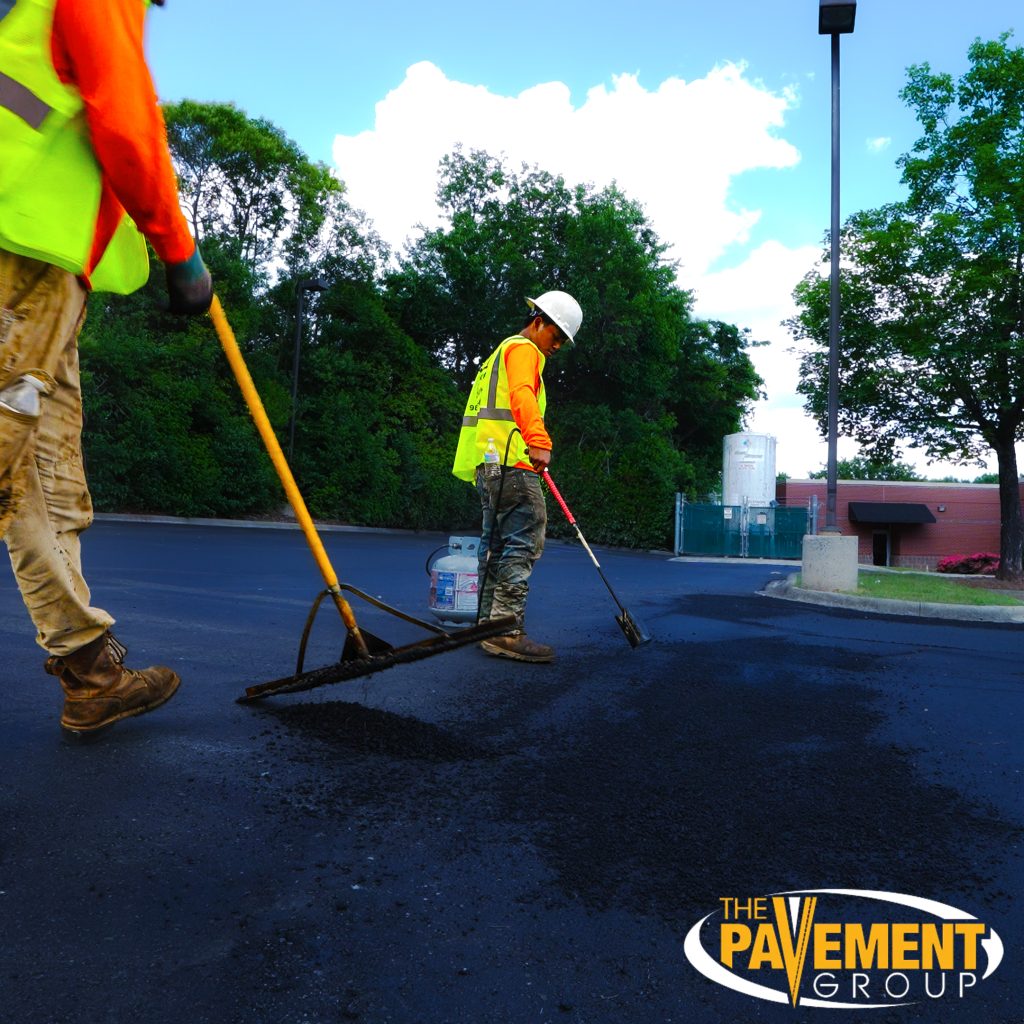
Sealcoating places a protective surface treatment over existing asphalt. The Asphalt Institute explains that sealing can renew older asphalt surfaces that have become dry and brittle, seal small surface cracks and voids, and help inhibit raveling. It also recommends sealing parking lots when these surface distresses begin appearing, rather than waiting until deterioration becomes severe.
For multifamily properties, that distinction matters.
An apartment parking lot experiences continuous vehicle movement. Residents enter and leave throughout the day, delivery drivers use designated areas, trash collection vehicles may cross the pavement, and visitors create additional traffic.
Instead of viewing sealcoating as an aesthetic upgrade, property owners should see it as surface-level asset preservation.
The value becomes clearer when you compare maintenance strategies
| Approach | Short-Term Cost | Long-Term Effect | Best Use |
| Ignore minor deterioration | Lowest | Deterioration continues | Rarely advisable |
| Patch problems only | Moderate | Addresses isolated failures | Localized damage |
| Sealcoat sound asphalt | Moderate | Protects and preserves surface | Structurally sound pavement |
| Sealcoat + crack sealing + repairs | Moderate | More comprehensive preservation | Aging but serviceable lots |
| Resurface | Higher | Renews deteriorated surface | Widespread surface deterioration |
| Full reconstruction | Highest | Rebuilds failed pavement | Structural failure |
The important takeaway is that sealcoating works best before the parking lot reaches the point where it needs major rehabilitation.
FHWA similarly distinguishes preventive maintenance from structural rehabilitation. Preservation treatments are intended to slow deterioration and extend pavement’s useful life rather than increase its structural capacity.
Sealcoating Can Protect an Apartment Complex’s Pavement Investment
Apartment parking lots represent a substantial capital asset. Replacing hundreds of parking spaces at once can create a major capital expense, and construction can also disrupt resident parking and property operations. Preventive maintenance gives property managers another option: maintain pavement while it still has useful structural life.
The FHWA notes that timely pavement preservation can postpone more expensive rehabilitation and reconstruction while reducing disruption associated with major projects.
That concept translates particularly well to multifamily properties.
For example, imagine an apartment community with:
- Several hundred parking spaces
- Multiple buildings sharing the same lot
- Designated ADA parking
- Fire lanes
- Visitor parking
- Dumpster access
- Resident parking assignments
- Frequent delivery traffic
Replacing the entire parking system after surface deterioration has progressed can create logistical problems far beyond the paving bill. A properly timed preservation program can help property managers spread pavement expenditures across the property’s lifecycle instead.
But Sealcoating Does Not Fix Everything
This is where many property managers can make an expensive mistake. Sealcoating is a surface treatment. It does not rebuild a failed pavement base or correct major structural deterioration.
The Asphalt Institute recommends maintaining adequate pavement slope to promote drainage and avoid ponding. It notes that parking lot surfaces should generally maintain sufficient slope for proper drainage because standing water can contribute to infiltration and pavement deterioration.
That means a parking lot with severe drainage problems shouldn’t be coated and considered fixed.
Before recommending sealcoating, a professional assessment should look for:
- Alligator cracking
- Deep potholes
- Severe rutting
- Base failures
- Significant depressions
- Drainage deficiencies
- Extensive pavement settlement
- Large areas of failed asphalt
- Oil contamination
- Widespread structural cracking
If these conditions are present, the appropriate solution may involve patching, milling and overlay, resurfacing, drainage improvements, or reconstruction. Sealcoating should preserve pavement that is worth preserving—not disguise pavement that needs reconstruction.
The Timing Matters More Than the Calendar
Property managers often ask whether they should sealcoat every two, three, or five years. No universal schedule works for every apartment parking lot.
The Asphalt Institute specifically notes that a new, well-designed parking lot generally does not require sealing immediately and may go approximately two to five years before sealing, depending on climate and construction quality. It also recommends sealing when surface deterioration such as dryness, brittleness, small cracks, or raveling begins to appear.
That means pavement condition should guide the decision.
A better approach is to ask:
Is the asphalt still structurally sound enough for a preservation treatment?
If yes, sealcoating may be a sensible investment.
If no, the property may need a different treatment first.
The Apartment Property Factor: Resident Disruption
Another cost doesn’t appear on a paving estimate: resident inconvenience. A retail parking lot may be able to close after business hours. An apartment community cannot simply tell residents to stop using their assigned parking for an extended period without a plan.
This makes project phasing especially important for multifamily properties. The Pavement Group’s multifamily guidance recommends zoning the parking area and coordinating resident parking redirects, ADA access, fire lanes, trash collection, and other operational requirements before work begins.
A well-planned apartment sealcoating project should consider:
- Parking zones — Divide the property into manageable work areas.
- Resident notification — Give residents advance notice of closures.
- Alternative parking — Identify where residents can park during each phase.
- ADA access — Maintain accessible parking and routes throughout the project.
- Emergency access — Keep required fire lanes and emergency routes available.
- Trash collection — Coordinate the work around dumpster service.
- Weather conditions — Schedule application when conditions support proper curing.
- Restriping — Complete pavement markings after the surface has adequately cured.
What Should Be Included in an Apartment Parking Lot Sealcoating Project?
A low bid can become expensive if it excludes essential preparation. Sealcoating shouldn’t mean simply spraying a dark coating over the entire property.
A comprehensive scope may include:
- Surface cleaning
- Power sweeping
- Oil-spot treatment
- Crack sealing
- Pothole or localized asphalt repairs
- Sealcoat application
- Appropriate curing time
- Pavement marking restoration
- ADA marking review
- Cleanup
- Final inspection
The exact scope should depend on pavement condition. The Pavement Group’s apartment parking lot guidance recommends treating preparation as part of the project rather than viewing sealcoating as a standalone application.
This distinction matters when comparing contractor proposals.
Do not compare sealcoating bids solely by price per square foot. Compare what each contractor is actually doing to prepare and protect the pavement.
Why Preservation Can Make Financial Sense
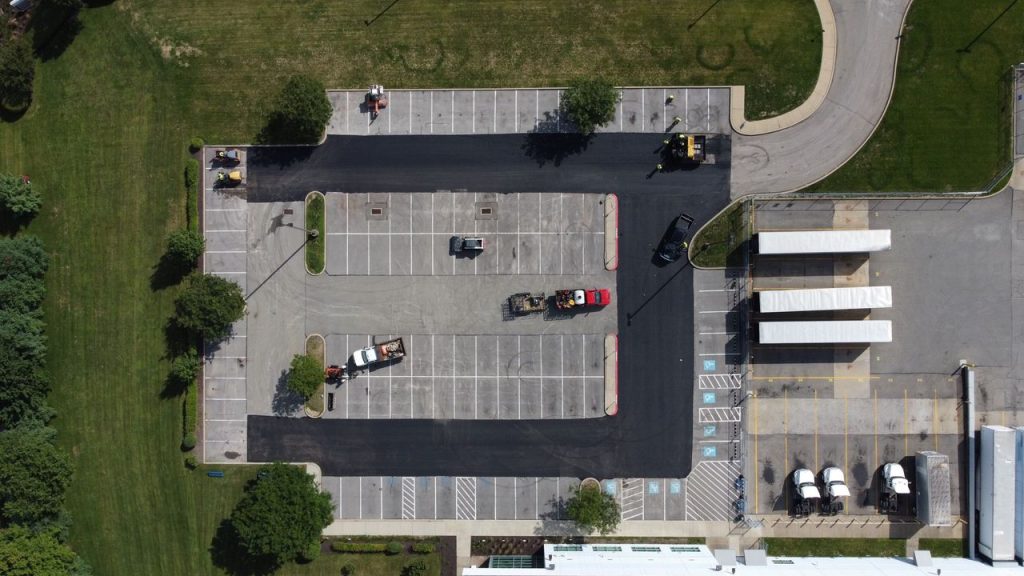
The Pavement Group recently documented a 403,000-square-foot asphalt restoration project for Orchard Hill Church in Pennsylvania. The project combined crack filling, sealcoating, and line striping, with the work phased around the facility’s operations. The reported result included a renewed appearance, improved functionality, and several additional years of pavement service life.
While a church parking lot is not identical to an apartment community, the preservation principle still applies: surface treatments can be part of a larger strategy to maintain an existing pavement asset instead of replacing it immediately.
The FHWA likewise emphasizes that preservation is most effective when treatments are applied while pavement remains in satisfactory condition, before serious deterioration takes hold.
How to Decide If Your Apartment Parking Lot Is Ready
Before approving a sealcoating project, property managers should answer these questions to decide whether the lot is truly ready:
If major areas are failing from the base upward, sealcoating alone will not solve the problem.
Are cracks still manageable, or do they indicate a larger issue?
Small surface cracks can be addressed as part of a preservation program, while extensive structural cracking may require more significant rehabilitation.
Is water draining properly?
Investigate standing water rather than simply covering it.
Is the asphalt showing oxidation or surface wear?
Dry, gray, brittle-looking asphalt may indicate a need for preservation.
Can the property accommodate phased closures?
A good treatment can still become a management headache if you don’t plan resident parking properly.
Does the project fit the property’s capital plan?
Sealcoating should fit into a broader pavement lifecycle strategy, not just something you do when the parking lot looks bad.
So, Is Sealcoating Worth It for an Apartment Parking Lot?
For a structurally sound apartment parking lot, sealcoating can be a worthwhile pavement-preservation investment. Its greatest value comes from timing. Applying a suitable preservation treatment before widespread deterioration can help protect the existing asphalt surface and delay more disruptive rehabilitation.
But sealcoating is not a magic fix.
If an apartment parking lot has extensive structural damage, drainage failures, deep potholes, or severe cracking, the property may need repairs or rehabilitation before a surface treatment makes sense. The smartest approach, then, is not to ask, “How much does sealcoating cost?”
Ask instead:
“What treatment will give this parking lot the best lifecycle value based on its current condition?”
That shift can help apartment owners and property managers make better decisions about maintenance budgets, resident disruption, and long-term pavement performance.
A Practical Apartment Parking Lot Decision Guide
| Parking Lot Condition | Recommended Direction |
| New, healthy asphalt | Monitor and plan future preservation |
| Slightly faded or oxidized | Consider sealcoating |
| Minor cracks and surface wear | Crack sealing + sealcoating |
| Localized potholes | Repair damaged areas before sealcoating |
| Drainage problems | Correct drainage before surface treatment |
| Extensive cracking/rutting | Professional pavement assessment |
| Widespread structural failure | Consider resurfacing or reconstruction |
For apartment owners and property managers, The Pavement Group can evaluate pavement condition and determine whether sealcoating, repairs, resurfacing, or another treatment makes the most sense for the property.
Maximize the Lifespan of Your Apartment Parking Lot with Professional Sealcoating
Sealcoating is one of the most cost-effective preventative maintenance strategies for multi-family properties, delivering a high return on investment by extending asphalt life by decades. Without a protective seal coat, exposure to UV rays, oil spills, rain, and heavy resident traffic breaks down the asphalt binder—leading to brittle pavement, cracking, and premature structural failure.
The Pavement Group applies commercial-grade sealants engineered to shield your asphalt, restore a rich slate-black finish, and dramatically reduce long-term repaving costs.
- Unbeatable Cost Savings: Prevent expensive full-depth asphalt repairs and replacements for a fraction of the cost per square foot.
- Instant Curb Appeal: Give your apartment complex a clean, well-maintained look that impresses prospective tenants and protects property value.
Frequently Asked Questions
Does sealcoating make an apartment parking lot safer for pedestrians?
Sealcoating primarily preserves pavement rather than serving as a standalone pedestrian-safety solution. Pedestrian safety also depends on pavement condition, lighting, crosswalk markings, accessible routes, traffic control, and proper maintenance. A property manager should therefore treat sealcoating as one component of a broader parking-lot safety program.
Can residents drive on a freshly sealcoated apartment parking lot?
Residents generally should not drive or park on freshly treated pavement until the coating has adequately cured. The exact restriction depends on the product, weather, temperature, humidity, and contractor specifications. Property managers should follow the sealcoat manufacturer’s curing requirements rather than allowing traffic based solely on a predetermined number of hours.
Can sealcoating be applied over concrete areas in an apartment parking lot?
Traditional asphalt sealcoating is designed for asphalt pavement, not ordinary concrete surfaces. If an apartment community has a mix of asphalt and concrete parking areas, evaluate each material separately and treat it with an appropriate system. Applying an asphalt coating indiscriminately across different pavement materials can create adhesion, appearance, and performance problems.
Does sealcoating affect apartment parking lot stormwater management?
Sealcoating itself does not correct a poorly designed drainage system. Drainage depends on elements such as pavement slope, inlets, catch basins, grading, and the surrounding stormwater system. If an apartment parking lot regularly develops standing water, investigate the drainage problem before approving surface preservation work.
Should apartment owners include sealcoating in their reserve studies?
Including pavement preservation in long-term capital planning can help owners anticipate maintenance expenditures rather than waiting for major deterioration. The appropriate reserve amount depends on the property’s pavement area, age, condition, traffic, climate, previous maintenance, and expected treatment cycle. A pavement condition assessment can provide better budgeting information than relying on a generic replacement timeline.
Can sealcoating interfere with apartment parking lot ADA markings?
Sealcoating can temporarily affect parking markings because striping generally needs to be applied after the pavement treatment has sufficiently cured. Property managers should coordinate ADA stalls, access aisles, routes, and other required markings during project planning. The work plan should also ensure accessible parking remains available while different sections of the property are closed.
See also: How Sealcoating Protects Apartment Parking Lots from UV Damage, Apartment Parking Lot Sealcoating: How Often, What to Demand, and How to Phase It Around Residents
About the Author
The Pavement Group specializes in asphalt engineering, pavement maintenance solutions, and data-driven asset management for commercial, retail, and multi-family residential properties. Utilizing advanced structural pavement evaluations and capital planning transparency, The Pavement Group works directly with property managers to extend pavement lifecycles, eliminate liability risks, and optimize long-term infrastructure investments.