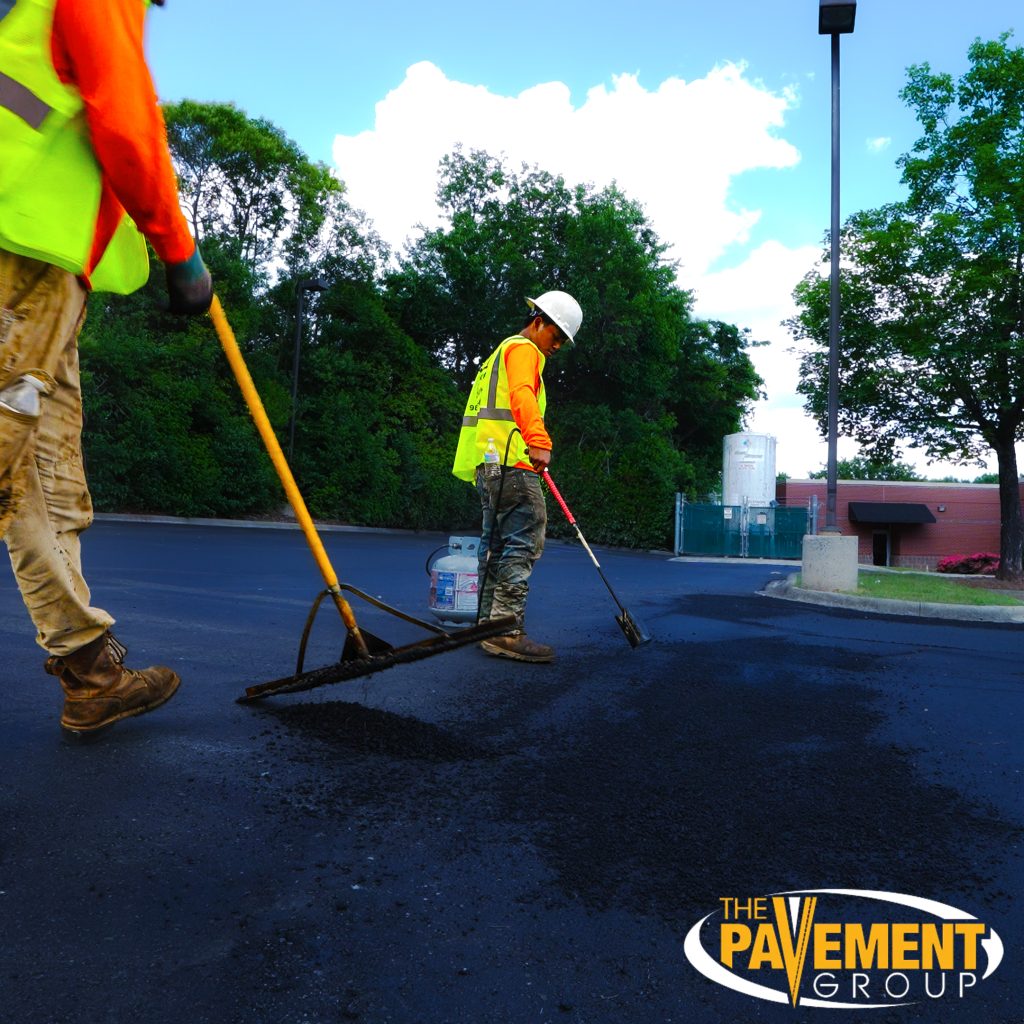
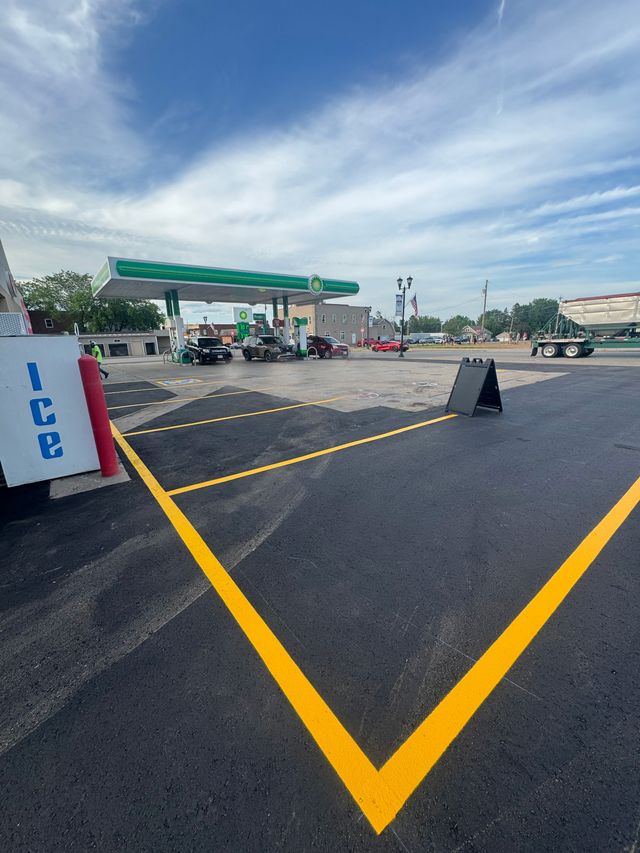
When any third-party inspector carries out a visit of an apartment complex for a lender or a buyer, they begin by looking outside rather than going in. ASTM International publishes guide E2018, the standard that most commercial lenders rely on for Property Condition Assessments. This guide classifies pavements as a separate category of site improvements. Pavements therefore stand apart from roofs, boilers, and building interiors, which typically receive greater attention from property owners. Each crack, pothole, or area where water is pooling that the inspector lists as an ‘Immediate Repair’ immediately becomes a sum of money that the lender holds back from your loan funds at closing. Unattended repairs valued at $4,000 can grow into a far larger cost reserve after six months. Additional expenses include contractor mobilization charges, engineering fees, and the lender’s standard contingency allowance.
We are the Pavement Group and have recently been walking through the parking areas of hundreds of apartment communities with property managers who are about to have their refinance closing in three weeks and have only now discovered that the condition of the pavement is the cause of the appraisal coming in weak or that the lender’s engineering report has a red flag on the first page. This guide doesn’t include the usual “seal your lot” suggestion since you have most likely already come across that advice; instead, it shows you what actually takes place during a transaction: it explains how the inspection process works, what inspectors and appraisers look for apart from potholes, which documents accelerate the due diligence process, and how far in advance you should begin.
Why the Parking Lot Gets Extra Scrutiny During a Sale or Refinance
Lenders typically order a PCA, sometimes called a Property Condition Report or PCR, from an independent engineering firm before approving a purchase or refinance loan for multifamily property. Major mortgage agencies such as Fannie Mae Multifamily and Freddie Mac Multifamily integrate these reports into their standard underwriting procedures. The engineer classifies every identified issue into distinct categories. These categories include Immediate Repair, which requires completion within 12 months. They also include Short-Term Repair and Replacement Reserve for long-term capital needs. Pavement almost always appears in one of these categories since it is visible, easy to photograph, and easy to price.
Do not regard this process as the same as the valuation carried out by your county assessor for the purpose of setting property taxes. Lenders use the appraisal prepared for a sale or refinance to set loan amounts. This report remains private and serves the lender’s specific needs. However, extensive visible deterioration may eventually prompt the county assessor to review the property’s assessed value. A significant decline in curb appeal can trigger this review independently. Furthermore, buyers often arrange for a Phase I Environmental Site Assessment in accordance with the ASTM E1527 standard, and petroleum staining on the asphalt close to dumpster pads or in old maintenance areas is one of the more common findings that can result in a more expensive Phase II investigation.
Understanding Your Parking Lot’s Pavement Condition Index (PCI) Score
When engineers check pavement as part of their work for a PCA, they usually refer to the Pavement Condition Index, a scale ranging from 0 to 100 that is defined by ASTM D6433 – the same rating system that many state Departments of Transportation use when deciding which roads need repair. If you have an idea of where your property’s pavement condition stands on this scale before any measurement is taken, you’ll have the necessary terminology to discuss the figure with an appraiser, a lender, or a buyer’s engineer rather than having to react to the number for the first time.
| PCI Score | Condition Rating | What It Usually Looks Like | Typical Fix |
| 86-100 | Good to Excellent | Light surface wear, faded striping only | Sweep and restripe |
| 71-85 | Satisfactory | Early hairline cracking, minor raveling | Crack sealing, seal coating |
| 56-70 | Fair | Alligator cracking, a few potholes | Patch repairs plus seal coat |
| 41-55 | Poor | Extensive cracking, standing water, multiple potholes | Mill and overlay in problem zones |
| 0-40 | Very Poor to Failed | Base failure, pavement breaking apart under weight | Full reconstruction |
The Site Walk: What Inspectors and Buyers Actually Look For
A pavement inspector on a PCA walk covers a lot more ground than potholes. We consistently see the same items flagged, in roughly this order of frequency:
- Alligator cracking and potholes concentrated in drive aisles and turning radii, where trucks and larger vehicles put the most stress on the surface
- Ponding water at low points, which signals a drainage or slope problem and can trigger a review under your municipal stormwater ordinance or a regional EPA stormwater discharge permit if the lot drains to a public system
- Faded or missing striping, especially in fire lanes, since your local fire marshal can cite a property for this independently of any pending sale
- Curb and gutter separation or heaving caused by nearby tree roots
- Catch basin and storm drain inlet grates clogged with sediment or debris
- Light pole bases with visible cracking, a trip hazard that liability carriers flag quickly
- Wheel stops that are missing, cracked, or no longer anchored to the pavement
- Inspect signposts for stop, fire lane, reserved, and ADA parking. Replace or repair any signs that appear faded, lean out of alignment, or lose required reflectivity.
- Deteriorated joints at dumpster pads, carport slabs, and other concrete-to-asphalt transitions
ADA Compliance Isn’t Optional at the Closing Table
Buyers’ attorneys and lenders check ADA compliance as a distinct line item during due diligence, because accessibility liability transfers to the new owner the moment the deed changes hands. Under the 2010 ADA Standards for Accessible Design, accessible parking spaces and their adjacent access aisles cannot exceed a 1:48 slope (roughly 2 percent) in any direction, which rules out spaces on a sloped or crowned section of pavement that might otherwise look fine to the eye.
The standards also set minimum counts based on your total space count:
| Total Parking Spaces | Minimum Accessible Spaces Required |
| 1-25 | 1 |
| 26-50 | 2 |
| 51-75 | 3 |
| 76-100 | 4 |
| 101-150 | 5 |
| 151-200 | 6 |
| 201-300 | 7 |
At least 1 in every 6 accessible spaces (or fraction thereof) must be van-accessible, built 132 inches wide, or paired with a 96-inch access aisle instead of the standard 60-inch aisle. These details are technical, and requirements do change over time. Confirm current standards directly with your local ADA coordinator or an accessibility specialist. Do not rely on outdated striping plans that have not been reviewed in years. Consult the US Access Board whenever questions arise.
Documentation That Speeds Up Due Diligence
A buyer’s engineer and a lender’s underwriter both move faster when you hand them a paper trail instead of making them assume the worst.
| Document | Why It Matters | Where to Find It |
| Maintenance log with dates and locations of past seal coating, crack sealing, and patching | Shows an active maintenance program, which can lower the assumed remaining-life estimate in the PCA | Your property management files or your paving contractor’s invoice history |
| Striping plan or as-built site survey | Confirms your ADA space count and layout match the plan on file with your local Department of Public Works | Municipal permitting office or original civil engineer |
| Warranty paperwork for prior seal coat, crack seal, or overlay work | Transfers value to the buyer and can shorten their own reserve calculations | Your contractor’s project closeout package |
| Stormwater permit or Notice of Intent records, if applicable | Confirms compliance with your state DOT or regional stormwater authority’s discharge permit | State environmental agency or regional stormwater authority |
| Prior geotechnical or soils report, if the property has any history of subsidence | Tells the buyer’s engineer whether past pavement failures were isolated or systemic | Original geotechnical firm or civil engineer of record |
A Realistic Timeline: Start Before You List, Not After You Get an Offer
Asphalt work runs on a seasonal and weather-driven clock that doesn’t bend for a closing date, so back-planning from your target date matters more than most property managers expect.
| Task | Lead Time Before Closing | Weather Window Needed |
| Crack sealing | 2 to 3 weeks | Dry surface, air temp above 40°F and rising |
| Pothole patching (hot mix) | 1 to 2 weeks | Above 40°F |
| Seal coating | 3 to 4 weeks, including 24-48 hour cure time before striping | Dry, above 50°F, no rain forecast for 24 hours after application |
| Restriping only | 1 week | Above 50°F for proper paint adhesion |
| Mill and overlay (partial lot) | 6 to 8 weeks, including engineering and permit review | Above 50°F, asphalt plants operating |
| Full reconstruction | 3 to 4 months, including geotechnical testing and cure time | Same seasonal window as overlay work |
Property managers in the Midwest, Northeast, or mountain regions should plan sale- or refinance-driven pavement work around their regional paving season, generally April through October, since most state DOTs suspend asphalt paving specifications below certain temperatures and asphalt plants shut down for the winter.
The Fastest Wins: Fix the Cheap Stuff First
The items that generate an outsized “Immediate Repair” flag relative to their actual fix cost are almost always the same:
- Crack sealing before winter freeze-thaw cycles turn hairline cracks into potholes
- Restriping faded ADA spaces, fire lanes, and directional arrows
- Replacing missing or cracked wheel stops
- Clearing sediment out of catch basins and storm drain inlets
- Patching isolated potholes before they spread into alligator cracking
We build our business around apartment communities that are heading into a sale or refinance, not just routine maintenance contracts. If your closing date is already on the calendar, the fastest thing we can do is walk the lot, give you a written condition summary, and tell you honestly what’s worth fixing now and what can reasonably wait. Call us before your lender’s inspector does.
Preparing Your Apartment Parking Lot for an Asset Sale or Refinance?
During commercial Property Condition Assessments (PCAs), inspectors and lenders scrutinize pavement liability, sub-grade instability, and curb appeal. Unaddressed asphalt failure can trigger costly escrow holdbacks, mandatory capital reserve requirements, or buyer price re-trades prior to closing. The Pavement Group delivers engineering-grade pavement audits, strategic scope optimization, and targeted curb-appeal upgrades to eliminate transaction friction and protect maximum property valuation. Contact our commercial paving strategists today to audit your asset before disposition or refinancing.
Frequently Asked Questions
Who typically pays for parking lot repairs found during due diligence, the buyer or the seller?
In most apartment transactions, whoever’s PCA or engineering report flags the pavement issue becomes the starting point for a negotiation, not an automatic bill for either party. Sellers may complete necessary repairs before closing. They may also offer a purchase-price credit matching the contractor’s bid. Alternatively, they may agree to an escrow holdback arrangement. This structure releases funds after closing upon satisfactory completion of the required work. Lenders on a refinance often prefer the holdback approach because it lets the loan close on schedule while still guaranteeing the repair happens, similar to how Freddie Mac structures Immediate Repair escrows on its multifamily loan programs. In our experience, sellers who arrive with their own contractor’s bid in hand keep far more control over both the price and the timeline than sellers who wait to react to the buyer’s number.
How exactly does pavement condition affect a property’s appraised value and the loan-to-value ratio a lender will approve?
Appraisers assign a portion of a property’s overall value to a “site improvements” category that includes the parking lot, and the appraiser applies a functional or physical depreciation deduction to that line for a lot in poor condition, the same way they’d discount an outdated HVAC system. Commercial appraisal standards published by the Appraisal Institute require appraisers to account for deferred maintenance items a typical buyer would need to cure shortly after purchase, and pavement is one of the easiest deferred maintenance items to price because contractors can provide a hard bid on the spot. Because lenders calculate loan-to-value (LTV) against that appraised value rather than your expected sale or refinance price, a soft appraisal on pavement condition reduces your maximum loan amount dollar for dollar, not just the sale price. On a $10 million refinance at 65% LTV, a $150,000 reduction in appraised value tied to parking lot condition alone can mean roughly $97,500 less in loan proceeds at closing.
Is asphalt repair or resurfacing considered a capital improvement or a deductible repair expense for tax purposes?
This depends on the scope of the work, and it’s ultimately a question for your CPA or tax advisor, since the IRS applies specific tangible property regulations to draw this line. The IRS generally treats routine crack sealing, pothole patching, and seal coating as ordinary repair and maintenance expenses you can deduct in the year you incur them, because that work keeps the pavement in its normal operating condition rather than improving it. A full mill and overlay or reconstruction usually requires you to capitalize and depreciate the cost over time instead, because it materially extends the pavement’s useful life, a distinction the IRS outlines in Publication 946 on depreciating property. Because a sale or refinance often pushes larger pavement work into a single tax year, loop in your accountant before you sign a contract, not after, so the transaction timing and the tax treatment actually line up.
How long does resurfacing or seal coating take, and will residents lose parking during construction?
A straightforward seal coat and restripe on a typical 150 to 200 space apartment community usually takes 2 to 4 working days from start to a fully cured, drivable surface, while a mill and overlay on the same size lot runs closer to 1 to 2 weeks depending on how many phases the work needs. We almost always phase apartment parking lots in sections, closing off a quarter or a third of the lot at a time with cones and signage, so residents keep access to a portion of their spaces throughout the project. Our team coordinates temporary overflow parking arrangements with property management in communities that have limited off-site parking. We also ensure the leasing office communicates the full phase schedule to residents well in advance. Scheduling the work on weekdays rather than over a weekend, and avoiding peak move-in periods, cuts down on resident complaints considerably.
Does a property manager need a local permit to restripe, seal coat, or repave a parking lot before closing?
This depends entirely on your local jurisdiction and the scope of the work, so it’s genuinely a “check with your city or county” answer rather than a universal one. Routine seal coating, crack sealing, and restriping on an existing footprint typically don’t require a permit because they don’t change the site’s grading, drainage, or layout, but work that alters accessible route locations, adds or removes drive aisles, or changes stormwater drainage patterns usually needs sign-off from your local Department of Public Works or building department. Fire lane striping is its own category in many municipalities: your local Fire Marshal, working from standards like the NFPA Fire Code, may require specific paint colors, lettering, and curb marking that differ from your county’s general ADA striping rules. Because permitting timelines vary widely between a small township and a larger city’s building department, call your local permitting office as soon as a sale or refinance date lands on your calendar, not after a contractor is already scheduled.
What happens if a lender’s inspector or a buyer’s engineer finds new pavement problems after the purchase agreement is already signed?
This happens more often than most property managers expect, because the buyer’s third-party engineering report or PCA is frequently ordered during the due diligence period, after the purchase agreement is already executed rather than before. Most purchase agreements include a due diligence contingency that lets the buyer request a price adjustment, a seller-funded escrow holdback, or, in rare cases involving structural pavement failure, walk away from the deal entirely. On the lending side, agencies like Fannie Mae and Freddie Mac typically require you to complete the identified repair within 12 months of closing and fund it through an escrow set up at closing, so the deal can still move forward on schedule even with a new finding. The best way to avoid getting surprised at this stage is to have your own contractor’s condition report in hand before the buyer’s engineer ever sets foot on the property, so you negotiate from your own numbers instead of theirs.
Should a property manager order an independent pavement inspection before listing, or wait for the buyer’s report?
Waiting for the buyer’s or lender’s report means you negotiate from a document you didn’t commission, written by an engineer whose job is to be thorough on behalf of whoever’s paying them, which is rarely the seller. An independent pre-listing inspection from your own paving contractor typically costs a few hundred dollars for a walk and a written condition summary, far less than the negotiating leverage it buys you when you hand a buyer your own recent report instead of waiting to react to theirs. It also buys you time to fix cheap, high-impact items like crack sealing and restriping before anyone else sees the lot in its current state, which changes the entire tone of the pavement conversation during due diligence. We generally recommend ordering this inspection 60 to 90 days before you plan to list the property or start refinance conversations, which lines up well with the lead times most repairs actually need.
See also: What Are the Most Common Asphalt Problems at Apartment Parking Lot Entrances?, Why Do Dumpster Areas Develop Asphalt Damage Faster Than Other Parts of an Apartment Lot?
About the Author
The Pavement Group specializes in asphalt engineering, pavement maintenance solutions, and data-driven asset management for commercial, retail, and multi-family residential properties. Utilizing advanced structural pavement evaluations and capital planning transparency, The Pavement Group works directly with property managers to extend pavement lifecycles, eliminate liability risks, and optimize long-term infrastructure investments.