Overview
- When failures keep happening, it usually means the repair addressed the symptom, not the cause.
- A study conducted in the field discovered that 70 percent of the winter throw-and-roll patches lasted for less than 14 months.
- The main reasons for repeated failures are the wear layers and the way the patches are bordered.
- Apartment complexes set up areas where things go wrong: dumpster zones, entrances, fire lanes, and areas where tenants move in.
- A repair plan that identifies the cause before carrying out the repair saves money over the property’s lifetime
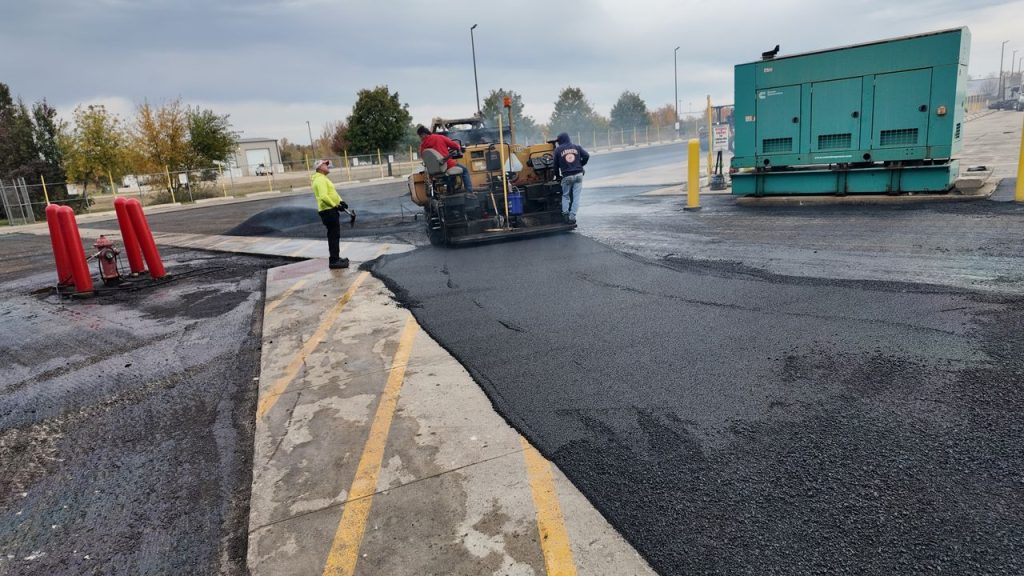
A field study in the Transportation Research Record showed that 70 percent of throw-and-roll winter patches lasted fewer than 14 months. Each spring, property managers come to the same conclusion. The same crew has to fill the pothole near the dumpster by Building C for the third time. The invoice comes through again, and residents keep avoiding the same dip. As a contractor that repairs apartment complexes across the country, we can assure you the patch seldom fails by chance. It fails because something underneath or around it works against it.
The Repair Fixed the Hole and Ignored the Cause
A pothole results from a gradual process in which water enters a crack, weakens the underlying material, and lets traffic work the stones free until the surface gives way. If a team fills the hole without first investigating why it appeared, the cause will remain active beneath the new filling. The repaired section then breaks down again along the same edge, typically within one or two seasons.
Start every repeat-failure call with one question: what is different about this exact spot? A spot that fails three times has a reason, and the reason almost always falls into one of four groups. Moisture sits in the area, the base has lost strength, traffic loads concentrate there, or the original repair never bonded to the surrounding asphalt. The table below shows where I find each cause on apartment properties.
| Repeat failure location | Most likely cause | Permanent correction |
| Dumpster enclosure approach | Trash truck axle loads on a thin section | Full-depth replacement with a thicker, reinforced section |
| Main entrance apron | Turning traffic and delivery trucks shearing the surface | Mill and replace the wearing course, repair the base |
| Low spot near a downspout | Water ponding on the surface | Regrade, redirect the discharge, then repave |
| Fire lane and loading zone | Heavy apparatus and moving vans on a light section | Strengthen the base and increase asphalt thickness |
| Curb line and drain inlets | Water collecting along the gutter pan | Seal the joint, restore drainage slope, patch the edge |
| Old utility trench | Settlement in poorly compacted backfill | Excavate, recompact, and patch beyond the trench edge |
Water Beats a Patch Every Time
More damage is done to a repaired area by standing water than by any vehicle. A forensic investigation Virginia Tech conducted on a failed section of pavement showed that the base was strong and the structure adequate. The surface failed since water remained on it for long periods. This conclusion matches what we observe in apartment complexes, where an excellent base still fails under a puddle that doesn’t drain.
How often this happens depends on the climate. In Pittsburgh, Cleveland, and Chicago, water in the seam freezes and expands every winter, lifting the slab from the original pavement. In Houston, Tampa, and New Orleans, daily rain keeps the deteriorating seam wet for months. Any repair that fails to take account of the water source in any of these areas will fail as planned.
Patch Edges and Compaction Decide How Long a Repair Lasts
The weakest part of a patch is its edge, and most failures occur there. The Asphalt Institute cautions that poorly constructed joints reduce pavement life because the gap lets moisture reach the subbase and strip away support. When examining old repairs. We look for this problem. If a fine crack follows the patch outline exactly, the bond failed on the first day.
Researchers have directly studied this issue. A study in Frontiers in Materials examined how the joint shape between a pothole patch and the adjacent pavement affects its service life. Teams that squared the edges, cleaned them, and fastened the vertical face gave the new asphalt something to grip. Those who dumped the material into a rounded, wet hole gave it nothing to hold.
The Transportation Research Record study also attributed the patch’s early failure to freezing conditions, along with inadequate compaction and curing. Compaction matters because loose material continues to densify under tire traffic. The patch sinks below the surrounding surface; a depression that holds water then repeats the cycle.
Quick Patches and Lasting Repairs Cost Different Amounts for Different Reasons
We are not against quick patching. According to the Long Term Pavement Performance project carried out by the Federal Highway Administration and summarized by Pavement Interactive, throw-and-roll patching worked just as well as semi-permanent patching for the materials tested, provided crews used good-quality material. This finding supports using quick patching for isolated emergencies; however, it does not justify applying the same patch every spring in the same location. The comparison below illustrates how I decide which method to use according to the situation.
| Method | Preparation | Best use | Weakness |
| Throw-and-roll | Little or none | Emergency fix for an isolated pothole | Fails quickly in wet or freezing conditions |
| Semi-permanent patch | Removes water and debris, squares the hole | Recurring small potholes on a sound base | Does not cure a weak base or bad drainage |
| Full-depth repair | Removes asphalt and failed base, replaces both | Repeat failures, alligator cracking, soft subgrade | Higher upfront cost |
The same journal study showed that temporary throw-and-roll patches were cheaper in the short run but lost effectiveness quickly, whereas semi-permanent patches proved more worthwhile in the long term. When a location has already failed twice, we apply this reasoning: a third temporary patch stops being a repair and becomes a recurring expense, which is why we tell owners to switch to the permanent solution.
How to Break the Cycle at Your Community
Go through your property following a heavy rain and take photographs of every puddle that is still there after one hour. On your site plan, indicate each repair that has failed and record how many times it has been patched. Give this map to your paving contractor before requesting a quote, since a contractor who knows the history can identify the cause rather than guess. For more information on putting together that quote, see our guide on parking lot repair estimates, and learn how to lower repair costs over the pavement’s lifetime.
The Pavement Group serves apartment complexes, property management companies, and homeowners’ associations nationwide. Before selecting a repair method, our teams investigate the cause of each recurring failure. Contact The Pavement Group right away, and we’ll help you fix the area for good.
Frequently Asked Questions
How long should a contractor warrant a repair that fails in the same location?
Warranty terms vary, but I suggest requesting a written warranty covering settlement, edge separation, and raveling for at least one full year. A one-year warranty matters because a patch must go through a full freeze-thaw or wet-dry cycle before you can see if it works. You should read the exclusions carefully, as a number of warranties exclude coverage when drainage problems or base failures are located outside the area that was repaired. Likewise, a contractor who wants to guarantee the work will put in writing the conditions that might reduce the repair’s lifespan.
How can a hidden underground leak cause the same spot to fail repeatedly?
Even if the surface looks dry, a leaking water main, irrigation lateral, or storm drain can soak the base from below and keep it soft. The tires then loosen the soft material, and each new patch sinks into the same wet area. Indications of this problem include a damp spot during dry periods, an area that stays green or stained, and a water bill that rises without reason. Therefore, we request that your maintenance crew perform a pressure test or camera inspection of the adjacent lines before we start paving, since paving over a line that is still leaking would ruin the repair.
When does coring or base testing make sense for a spot that keeps failing?
After the second failure at the same site, testing makes sense because it replaces guesswork with data. Workers take small cylindrical cores to determine asphalt thickness and check the bond between layers, and they can also use a dynamic cone penetrometer to assess base strength. In the Virginia Tech case study referred to above, coring and DCP testing showed that the base was sound and that water caused the failure. This finding saved the owner from replacing a strong base and clearly indicated that the drainage remedy was the solution. The cost of such testing is usually only a small part of that of another failed repair.
How long should residents stay off a completed repair?
Once the material has cooled and the team has completed compaction, which usually takes a few hours—depending on thickness and air temperature—drivers can generally go over a hot-mix patch. If the mix is cold or the weather is cooler, this period lengthens, and heavy vehicles like trash trucks and moving vans require more patience than passenger cars. I request that the crews coordinate the closure with your leasing office and post signs the day before the work so residents can relocate their vehicles. Using barricades and maintaining clear communication helps to protect the newly laid surface and prevents tire scuffing, which would cause new cracks on the first day.
Should we schedule repairs around move-in season?
Certainly, since the busiest period for traffic in an apartment complex occurs during the peak leasing months and a newly laid surface needs time to settle before that traffic begins, in many college towns and in the Sun Belt metropolitan areas move-ins tend to take place in August and the early fall, so whenever possible we arrange repair work for late spring or early summer. This timing also lets the hot mix asphalt cure in warm weather, strengthening the bond. If an emergency repair is necessary during move-in, we advise keeping the moving trucks away from the new patch for several days.
About the Author
The Pavement Group specializes in asphalt engineering, pavement maintenance solutions, and data-driven asset management for commercial, retail, and multi-family residential properties. Utilizing advanced structural pavement evaluations and capital planning transparency, The Pavement Group works directly with property managers to extend pavement lifecycles, eliminate liability risks, and optimize long-term infrastructure investments.