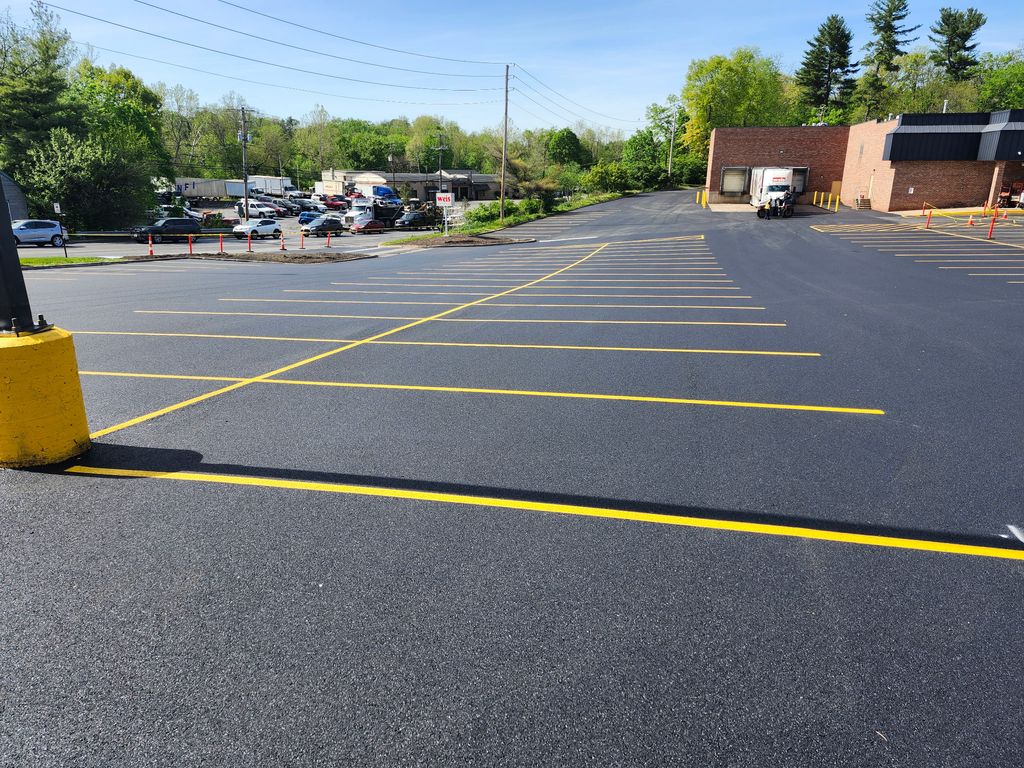
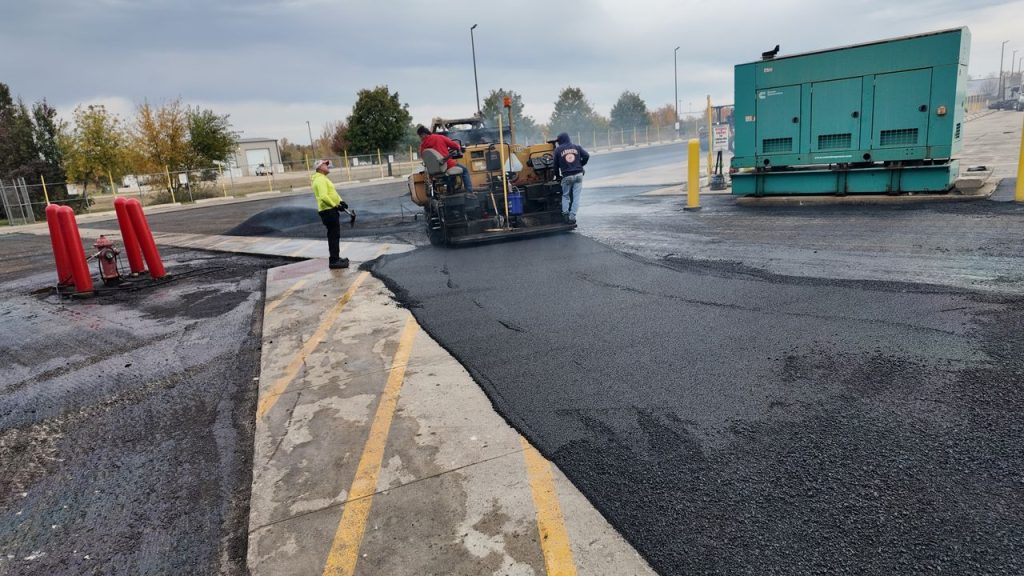
The American Society of Civil Engineers gave U.S. roads a D grade in its latest infrastructure report card. Much of this low score stems from the common practice of patching pavement only after damage appears instead of resurfacing on schedule. The Federal Highway Administration’s Pavements Program has long upheld a key pavement preservation principle. Every dollar spent on timely resurfacing saves roughly six to ten dollars in future reconstruction costs.
This figure is even more important for apartment communities since a cracked and patched parking area not only ends up costing more to repair later on. Prospective tenants increasingly tell property managers that parking areas shape their first impressions. The National Apartment Association has repeatedly highlighted curb appeal and overall property condition as key points that arise directly during leasing conversations.
On every site visit that we make for The Pavement Group, property managers ask us one version or another of the same question: Does this plot require a straight asphalt overlay or a mill-and-overlay? These two methods may sound similar, and people often use the terms interchangeably in casual speech. Yet they solve different problems. Choosing the wrong approach on an occupied apartment property can create challenges that public roads never encounter.
The Short Answer, At a Glance
| Factor | Asphalt Overlay | Mill-and-Overlay |
| What happens to the existing surface | New asphalt goes directly on top; the old material stays in place | The old surface layer gets ground off first, then new asphalt goes down |
| Typical added thickness | Raises the surface roughly 1.5 to 2 inches above where it sits today | Finished grade stays at or near the original elevation |
| Effect on existing cracking | Cracks in the old surface often “reflect” through the new layer within a few years | Removing the old layer eliminates most of the existing crack pattern |
| Effect on curbs, drains, and thresholds | Raises the surface above these fixed points, which is exactly where apartment properties run into trouble | Keeps drains, curb reveal, and thresholds at their original working height |
| Best suited for | Lots with only surface-level distress and a structurally sound base | Lots with moderate cracking, an aging surface layer, or existing elevation constraints near curbs and drains |
The rest of the article gives reasons for the fact that the final row is important much more in the case of an apartment property than it is in the case of a public street.
Why This Decision Plays Out Differently on an Apartment Property
A public road has the possibility of closing off a lane, putting up a detour, and allowing traffic to go around the works for a few days. An apartment parking lot, on the other hand, cannot carry out something similar. The residents live on the site and need to get to their flats, their allocated parking spaces, and their vehicles at all times during the construction. You must keep access routes clear for fire appliances throughout every stage of construction.
Regulations from the National Fire Protection Association require a sturdy, unobstructed path for fire trucks at all times. This rule applies long before you complete the project. When you also take into account the need for ADA-compliant accessible parking and the routes that the residents use every day, it becomes clear that an apartment resurfacing project has limitations that a separate commercial car park or a public street simply does not have.
What Asphalt Overlay Actually Does
An asphalt overlay involves placing a fresh layer of hot‑mix asphalt directly over existing pavement. First, crews apply a tack coat to bond the new material firmly to the old surface. Contractors usually apply this new layer to a thickness of 1.5 to 2 inches. It doesn’t come into contact with or repair any conditions that are occurring below the surface. This approach is suitable when the existing pavement has only minor surface damage. For example light raveling, faded striping, or a little hairline cracking when the base underneath is still structurally sound. It is not effective on a site that has alligator cracking, potholes, or soft, deteriorating areas. An overlay merely conceals that damage for a short period before the damage reappears through the new surface.
What Mill-and-Overlay Actually Does
The mill‑and‑overlay process starts with a milling machine. The machine grinds off the top 1 to 2 inches of existing asphalt before crews place any new material. This step removes the layer most likely to develop surface cracks. A milled surface therefore resists reflective cracking far better than a simple overlay. Milling also exposes the base and lower asphalt layers. Contractors can spot and fix local weak areas before they lay new pavement. A standard overlay does not allow this inspection. The milling machine removes material known as reclaimed asphalt pavement. The industry recycles this material at extremely high rates. The National Asphalt Pavement Association has long recognized asphalt as one of the most widely recycled materials in the nation.
The Elevation Problem Most Property Managers Never Hear About Until It Is Too Late
What distinguishes a decision about an apartment parking lot from one about resurfacing a highway is that a straight overlay increases the height of the surface without first removing any material, thus raising the final level above all the fixed points in the area, such as curbs, storm drains, and doorways. On an apartment site, such fixed points are numerous and widespread.
| Feature | Problem Created by an Unmilled Overlay | Why Mill-and-Overlay Avoids It |
| Existing curb and gutter | Curb reveal shrinks or disappears, weakening the physical barrier that keeps water and vehicles where they belong | Milling removes old material first, so the new surface returns to the original curb height |
| Storm drain grates and catch basins | Grates end up sitting below the new grade, creating a low spot that traps water and debris or requiring costly riser rings | Milling keeps the finished grade at the original elevation, so drainage structures stay flush |
| ADA curb ramps and accessible routes | The running slope or cross slope around the ramp can exceed the maximum allowed under ADA accessibility standards once the surrounding surface rises | Mill-and-overlay preserves the original ramp geometry because the base elevation does not change |
| Building and breezeway thresholds | New pavement can rise close to or above exterior door thresholds, creating both a trip hazard and a water intrusion risk | The finished grade stays the same, so thresholds keep their original clearance |
| Utility box lids and cleanouts | These get buried under new asphalt or left sitting proud above it unless every single structure gets individually raised, adding cost | Milling keeps them at their working elevation without extra adjustment work |
How a Contractor Decides Which Apartment Lots Need Which Method
- What is most important is the degree and pattern of the cracking already present. Cracking that is linear or transverse generally indicates a problem at the surface level. Alligator or fatigue cracking usually shows that the base has failed and that an overlay cannot remedy this.
- Core samples reveal the true condition of the pavement. Extract cores from several representative locations. These samples show both the thickness and the condition of the existing asphalt and base layers. This method proves far more reliable than visual inspection alone.
- The current clearance between the surface and the curbs or drains establishes a firm upper limit. If the surface is already nearly at the level of the curb or of the drain grating, an overlay is not really a viable option no matter how the cracking appears. There is no more room available for increasing the height.
- The length of time the ownership group intends to hold the property affects their decision. Those who plan to keep it longer usually prefer mill-and-overlay’s longer reset period, even though it means a higher initial cost, since it pushes the next major resurfacing further out.
- Budget and occupancy constraints influence timing and phasing as much as the method itself.
Phasing an Occupied Apartment Lot Without Losing Residents’ Goodwill
Work sequence carries equal weight with the method you select. Residents need parking access throughout the project. The property must also maintain full compliance with fire egress and ADA access requirements at every stage of construction.
- Instead, work in sections rather than closing the entire area at once, so some parking space is always available to residents.
- Before paving starts, you should arrange temporary overflow parking—either on an adjacent part of the property or by means of a nearby agreement—rather than trying to do it afterwards.
- Residents should receive written notice well in advance of each phase, as most communities have found that posting a notice at least a week beforehand, together with reminder signs near the date in question, greatly reduces the number of towing disputes.
- Maintain at least one marked fire lane and one clearly marked accessible route throughout every project phase. Do not provide these routes only at the start and finish.
- Coordinate your work with rubbish and recycling collection schedules. The phased closure could block the dumpster area residents use daily if you fail to account for those routes.
Select between an asphalt overlay and a mill‑and‑overlay by matching the method to actual subsurface conditions. You must also account for every fixed feature around an occupied apartment property. Public roads never face this set of constraints. Before suggesting an asphalt overlay, a mill-and-overlay, or a complete reconstruction, The Pavement Group evaluates apartment parking lots across the country and designs phasing plans based on your residents’ needs rather than asking them to accommodate our requirements. If you’re unsure which category your parking lot falls into, ask for a pavement evaluation, and we will visit the site with you to show you exactly what we observe.
Unsure Which Paving Method Your Apartment Complex Needs?
Choosing between a direct overlay and a full mill-and-overlay depends on your parking lot’s sub-base condition, drainage requirements, and curb heights. Selecting the wrong fix can lead to premature cracking or costly water pooling that disrupts tenants. The Pavement Group delivers comprehensive pavement evaluations, tailored resurfacing strategies, and long-lasting asphalt repairs that protect your investment and property value. Contact our commercial paving specialists today for an expert site assessment.
Frequently Asked Questions
By how much does a mill-and-overlay generally exceed the cost of a simple asphalt overlay?
Mill-and-overlay is generally more expensive per square foot than a simple overlay, with the extra cost coming from specific additional charges rather than a general markup. The cost increases because of the need to bring in the milling machine, the removal or recycling of the material that is milled away, and the extra manual work carried out near curbs, drains, and utility structures to bring the surface back to its original level—things that a simple overlay never has to do. Nevertheless, mill-and-overlay still costs considerably less than full-depth reconstruction, which means removing the pavement all the way down to the base or subgrade and then rebuilding the whole structure.
For an apartment car park, how long does each method usually last?
Many pavement engineers believe a well-executed asphalt overlay on a structurally sound base will add roughly 8 to 10 years to the road’s life before it needs attention again. Because it removes the fatigued surface layer rather than just paving over it, mill-and-overlay generally lasts longer, usually falling within the 10 to 15 year range and beginning the new surface with a better bonding layer below. However, the actual lifespan of any particular road is heavily influenced by traffic volume, the weight of trucks and delivery vehicles, the climate, and how consistently the property performs regular sealcoating and crack sealing afterward. Neither of those figures can be guaranteed, and a road that is ignored after being paved will fall short of either estimate, no matter what method is used.
After either method, does the parking lot need repainting or restriping?
Yes, both methods completely cover the existing pavement markings, so every parking stall line, fire lane marking, and accessible space symbol needs to be repainted once the new surface cures. This is also when many properties discover their striping needs updating to current standards, since older lots sometimes have accessible spaces or van-accessible signage that predates more recent ADA requirements. Restriping typically happens within a few days to a week after paving, once the asphalt has cured enough to hold paint properly, and rushing this step leads to lines that peel or smear under traffic. Budgeting for striping as part of the paving project, not as a separate afterthought, keeps the schedule and the final look consistent.
How is the milling depth determined for a specific apartment lot, and does it vary by project?
Milling depth typically ranges from about 1 inch for purely cosmetic resurfacing to 2 or 3 inches when the distress runs deeper into the pavement structure, and the exact number comes from the same core-sampling process used to decide whether overlay or mill-and-overlay is the right call in the first place. A contractor sets the milling depth to match the thickness of the new asphalt going back down, since that match keeps the finished grade at the original curb and drain elevation. Deeper milling on a larger lot also means more equipment passes and a longer on-site schedule, which affects how many phases a property manager needs to plan for on an occupied site. Because the right depth depends entirely on what the pavement actually looks like below the surface, it is not a number a contractor should quote before seeing core sample results.
What time of year is best to schedule an asphalt overlay or mill-and-overlay project?
Hot-mix asphalt needs a minimum ambient and surface temperature to compact properly, and industry guidance from groups like NAPA generally points to paving once temperatures are consistently above roughly 50°F and rising, which shapes the construction season very differently by region. In colder, freeze-thaw climates across the Midwest and Northeast, that typically limits paving to spring through fall. Meanwhile, Sun Belt properties across the Southwest and Southeast can often pave through most of the year, except during the most extreme summer heat, which can shorten the working window before the mix cools too fast to compact well. Rainfall matters as much as temperature, since asphalt cannot be placed on a wet surface and heavy regional rainy seasons, like those common along the Gulf Coast or the Pacific Northwest, can push schedules around even when temperatures are otherwise fine.
Will a mill-and-overlay fix drainage problems in the parking lot, or does it just replace the surface?
Mill-and-overlay resets the pavement surface to its original design elevation. Still, it doesn’t change the underlying slope or drainage design unless that work is specifically added to the scope. If the original lot was built with insufficient slope toward its drains, or if low spots developed from settlement over the years, a standard mill-and-overlay will faithfully recreate that same drainage problem on a fresh surface. Correcting drainage typically requires regrading sections of the base, adding drainage structures, or adjusting slope during milling and paving, all of which are separate line items from a standard resurfacing scope. This is why walking the property with a contractor before finalizing the scope of work matters: a property manager dealing with chronic ponding needs to ask whether drainage correction is included or needs to be added.
See also: How Long Does an Asphalt Parking Lot Last at an Apartment Complex?, Apartment Parking Lot Resurfacing: When to Choose Mill-and-Overlay Over Sealcoat for Your Multifamily Property
About the Author
The Pavement Group specializes in asphalt engineering, pavement maintenance solutions, and data-driven asset management for commercial, retail, and multi-family residential properties. Utilizing advanced structural pavement evaluations and capital planning transparency, The Pavement Group works directly with property managers to extend pavement lifecycles, eliminate liability risks, and optimize long-term infrastructure investments.