The Asphalt Institute states that properly built asphalt parking lots should last roughly 15 to 20 years. A large share of U.S. apartment buildings have now passed that age. So property managers no longer ask whether they need repaving. They now ask how long the work will actually take. That is a reasonable question, and the answer is more complex than it seems. Crews must plan every apartment complex repaving project around one key fact: residents continue to live on the site throughout the job.
There is no one solution that applies to all properties, but behind each repave there is a foreseeable procedure and identifiable factors which either extend or shorten it. The following is a full, step-by-step explanation, together with the actual factors that affect the timeline in an occupied apartment complex.
What “Repaving” Actually Means (It’s Not One Job)
The phrase covers three fairly different projects, and the method a contractor recommends after inspecting your lot has a direct effect on how long the work takes:
- The mill-and-overlay method involves only removing the top layer of worn asphalt and then repaving over the existing, still sound base. It is the quickest option in the case where the base below has not failed.
- Full-depth reclamation (FDR) involves pulverizing the existing asphalt and part of the base material on-site, mixing them together, and then using the mixture as a new base before laying down a new surface; it is an intermediate option since it does not require removing all the old material off-site.
- Complete removal and replacement – this involves digging down all the way to the ground level and then reconstructing both the base and the pavement structure from the beginning. This method takes the longest and involves the most steps. Contractors usually use it only when they find faulty drainage or widespread base failure.
The Stage-by-Stage Timeline
| Phase | What Happens | Typical Duration | What Makes It Vary |
| Assessment & bidding | Core sampling, pavement condition survey, contractor walkthroughs and proposals | 1–3 weeks | Property size, number of bids requested |
| Permitting (if required) | Municipal review for grading, stormwater, or right-of-way work | 1–4+ weeks | Jurisdiction — varies enormously by city |
| Milling / demolition | Removing the old asphalt surface or full pavement structure | 1–3 days per phase | Lot size, depth being removed |
| Base repair | Fixing failed base or subgrade sections uncovered during milling | 1–5 days | Extent of failure — often unknown until milling starts |
| Paving | Laying new asphalt courses | 1–3 days per phase | Lot size, number of phases used to preserve parking |
| Compaction & curing | Letting new asphalt cool and cure before traffic returns | 24–72 hours per phase | Weather, temperature, mix type |
| Striping & signage | Repainting lines, ADA markings, wayfinding | 1 day, plus cure time | Paint type, weather conditions |
Why Timelines Stretch on Occupied Apartment Properties
Contractors can usually close and resurface a vacant commercial lot in one continuous operation. They rarely get that convenience at an apartment complex. This constraint accounts for most of the extra time required.
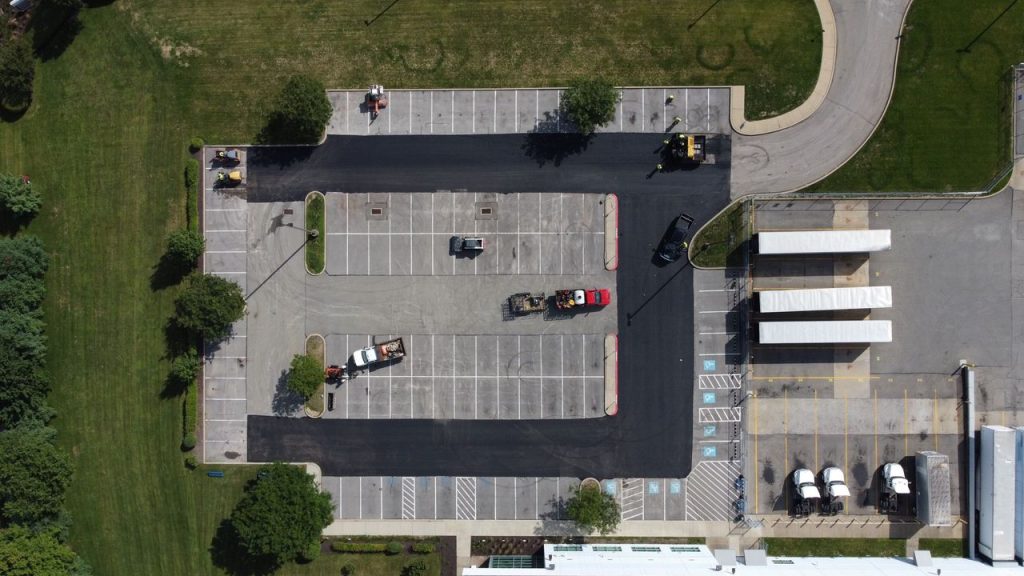
- Phasing to preserve parking — working in sections instead of closing the whole lot at once adds calendar days, but keeps residents from losing all their parking simultaneously
- Resident notice periods — most management companies build in a communication buffer (commonly 48–72 hours or more per phase) before work begins in a given area
- Coordinating around daily operations — trash pickup, moving days, and delivery schedules all have to route around active work zones
- Multiple buildings and lots — larger communities with several parking areas often need sequential rather than simultaneous work
- Unknown subsurface conditions — base failure or utility conflicts discovered mid-project routinely add days that couldn’t be scheduled for in advance
- Weather windows — asphalt needs adequate temperature and dry conditions to compact and cure properly, which narrows the usable calendar in some climates
What Actually Speeds a Project Up
- Scheduling during a shoulder season with stable weather and lower resident move-in/move-out volume
- Complete a pavement condition assessment long before serious damage appears. You define the full scope early so you do not uncover new details while work proceeds.
- Booking a contractor early, before their peak-season calendar fills
- Keeping the phasing plan as simple as the site allows — fewer, larger phases generally move faster than many small ones
- Confirming permitting requirements with your local public works department before bidding, so approvals aren’t a surprise bottleneck
Planning Ahead: A Property Manager’s Checklist
- Schedule a professional pavement condition assessment 6–12 months before you expect to need the work
- Request bids from at least two or three licensed, insured contractors to compare scope and timeline, not just price
- Start resident communication early, and repeat it closer to the work date
- Build a weather contingency of a few extra days into the schedule you communicate internally, even if the contractor’s proposal doesn’t show one
- Ask your contractor directly how they plan to phase the project to keep parking available, and get that phasing plan in writing
Local Factors That Affect Scheduling
- Right-of-way and stormwater permits — required for work that affects drainage or connects to municipal systems, and timelines vary by city
- Construction noise ordinances — many municipalities restrict heavy equipment use to specific daytime hours, which can rule out early-morning or overnight paving to minimize resident disruption
- HOA or architectural review requirements — some communities require board approval and a resident notice period before exterior work begins
- Regional climate windows — colder climates generally concentrate major paving work in spring through fall, while milder climates have more year-round flexibility
The public works or permitting office in your area will be able to say which of these apply before your contractor sets the final schedule.
The Bottom Line
No single number tells you exactly how long it takes to repave an apartment complex parking lot. The work, however, follows a predictable process. Properties that plan ahead around this method encounter far fewer surprises than those that react to events as they unfold. Before any equipment arrives on site, The Pavement Group builds a phased schedule. They design that plan around your property’s unique layout and your residents’ daily needs.
Plan Your Apartment Repaving Project with Minimal Tenant Distraction
Repaving a multi-family parking lot typically takes anywhere from 1 to 3 days depending on acreage, sub-base condition, and weather. However, proper planning and phased execution allow property managers to keep access open for residents throughout the entire paving process, eliminating total property shutdowns.
The Pavement Group creates tailored multi-phase repaving schedules engineered around resident traffic patterns to maximize efficiency and minimize property disruption.
- Phased Work Sequencing: Section-by-section paving plans that ensure tenants always have access to designated parking and clear drive aisles.
- Fast Turnaround & Swift Curing: High-efficiency equipment and commercial-grade mixes applied quickly so pavement reopens on strict timelines.
Frequently Asked Questions
What is the best time of year to plan a repaving job for an apartment car park?
The weather is the most apparent factor since hot-mix asphalt usually requires stable, dry conditions and temperatures well above freezing in order to compact and cure properly, which is why most contractors who follow the guidance of the Asphalt Institute carry out their main paving work during the warmer months. However, weather alone isn’t the only thing that matters when it comes to an occupied property; many property managers also aim to avoid the peak leasing period and the move season, which generally extends from May to September in most U.S. markets, because that’s when parking disruptions cause the most trouble for residents. As a result, the shoulder seasons—that is, late spring before the summer move rush or early fall after it—often represent the ideal time in many areas, as they strike a balance between favorable paving weather and reduced traffic caused by moves. Since both your particular region’s climate and the pattern of lease turnover are relevant here, it’s a good idea to discuss the timing directly with your contractor rather than simply saying “sometime in summer.”
How much earlier should property managers begin their planning, in addition to the time actually required for the work?
Even before the actual work begins—since the project timeline shown in the table above only includes the period of execution and not the time required to reach that point—paving contractors, particularly well-known ones, usually book two to three months or longer in advance during the peak season, which means that you might have to schedule the work for a less favorable time of year just beyond the next available slot. Beyond contractor availability, many communities require board or owner approval for this expenditure, and the work itself has a set timeline; materials or special items may also have their own lead times depending on the contractor’s supply chain. As a general rule, start planning three to six months before your desired window to allow time to obtain competitive bids, secure necessary approvals, and secure a good position on the contractor’s schedule.
Will residents lose all parking during the project, or will crews keep some access open throughout?
For the majority of apartment complexes, the answer is no—contractors generally schedule the work in such a way as to prevent a complete closure. A typical method is to keep between half and three-quarters of the parking area open at any one time, carrying out the other sections in stages so that residents always have a place to park, even if it’s not their normal spot. Contractors close an entire lot for short periods only in specific cases. They do this for very small lots where crews can finish milling and overlay in one fast stage. They also close the whole lot briefly during striping work that requires the entire surface to cure at once. If your property has limited capacity for overflow parking, it’s a good idea to ask your contractor about making arrangements for temporary off-site or street parking during the busiest stages of the project before work begins.
In reality, how many days in total does each method of repaving take when applied to an average-sized apartment complex?
As a very rough estimate—since all properties vary depending on their size and the type of work involved—a simple mill-and-overlay operation on a small to mid-size single-phase development generally takes about three to seven days in total, that figure including the time needed for curing and striping. Contractors usually spend longer on full‑depth reclamation. The process typically runs one to two weeks. Crews must pulverise and reprocess the existing material before they lay down the new surface. Full removal and replacement takes the longest by a significant amount, often lasting several weeks or more than a month on a larger site with multiple buildings, especially when taking into account the need to phase the work in order to keep the parking areas intact. These figures provide only rough estimates to help you plan early. You must rely on your contractor’s written proposal for the actual schedule numbers. They prepare those details after they complete a full site inspection.
What is the effect of a repave on curbs, landscaping, and irrigation lines, and does this effect take extra time?
Before crews start milling, they first locate and mark irrigation heads and shallow lines. They must protect or temporarily cap these items if they lie within any section they will regrade or repave. Workers repair or replace curbs wherever needed before they lay the final paving layer. This step ensures the new surface aligns neatly with the updated curb line. Crews may also need to protect landscaping next to work areas. In some cases, they lightly trim vegetation so equipment can move freely without causing damage. All these steps fall under normal work procedures. However when crews must cross multiple irrigation lines or replace many curb sections, the schedule usually extends a few days beyond what a simple asphalt project would require. Inspectors should note these factors during the site visit. You should not discover them halfway through the actual job.
If rain or extreme heat hits partway through the project, how much delay does that typically cause?
It depends on which phase the weather hits and how quickly conditions clear, but a short delay is common rather than catastrophic. Contractors can usually work through light rain while they mill or prepare the base. They cannot, however, lay new asphalt over wet material or a saturated foundation. So crews pause the paving step specifically. They do not always stop every other task on site. They wait until surfaces dry completely. A typical passing storm may therefore add one or two days to the timeline. Extreme heat less commonly halts work outright but can affect compaction timing and crew scheduling, sometimes shifting paving to earlier or later in the day. Checking NOAA’s weather forecasting resources during the planning phase can help identify a more weather-stable window, but building a small contingency of a few extra days into your internal expectations is the more reliable approach than assuming a fixed schedule will hold exactly as planned.
About the Author
The Pavement Group specializes in asphalt engineering, pavement maintenance solutions, and data-driven asset management for commercial, retail, and multi-family residential properties. Utilizing advanced structural pavement evaluations and capital planning transparency, The Pavement Group works directly with property managers to extend pavement lifecycles, eliminate liability risks, and optimize long-term infrastructure investments.