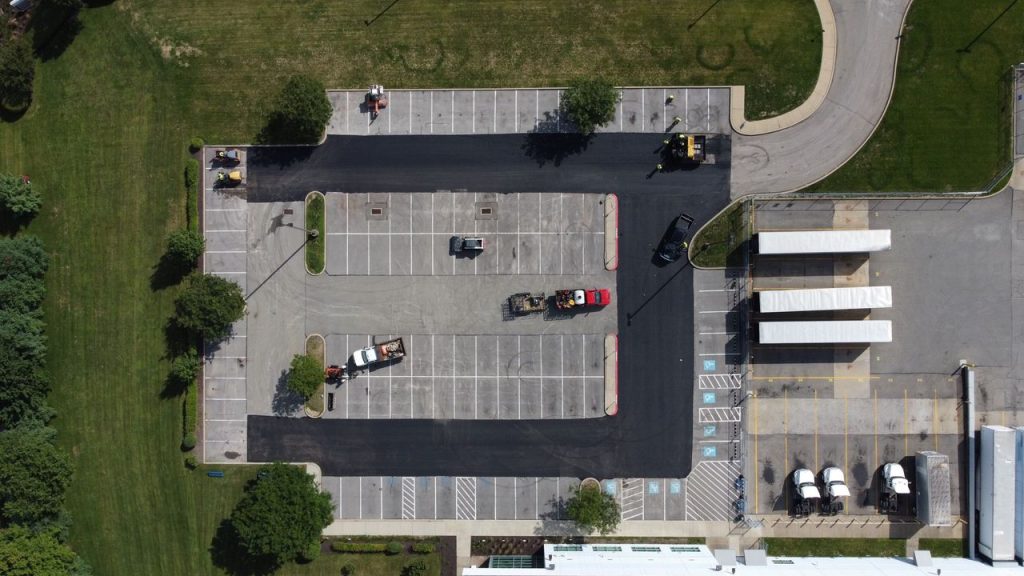
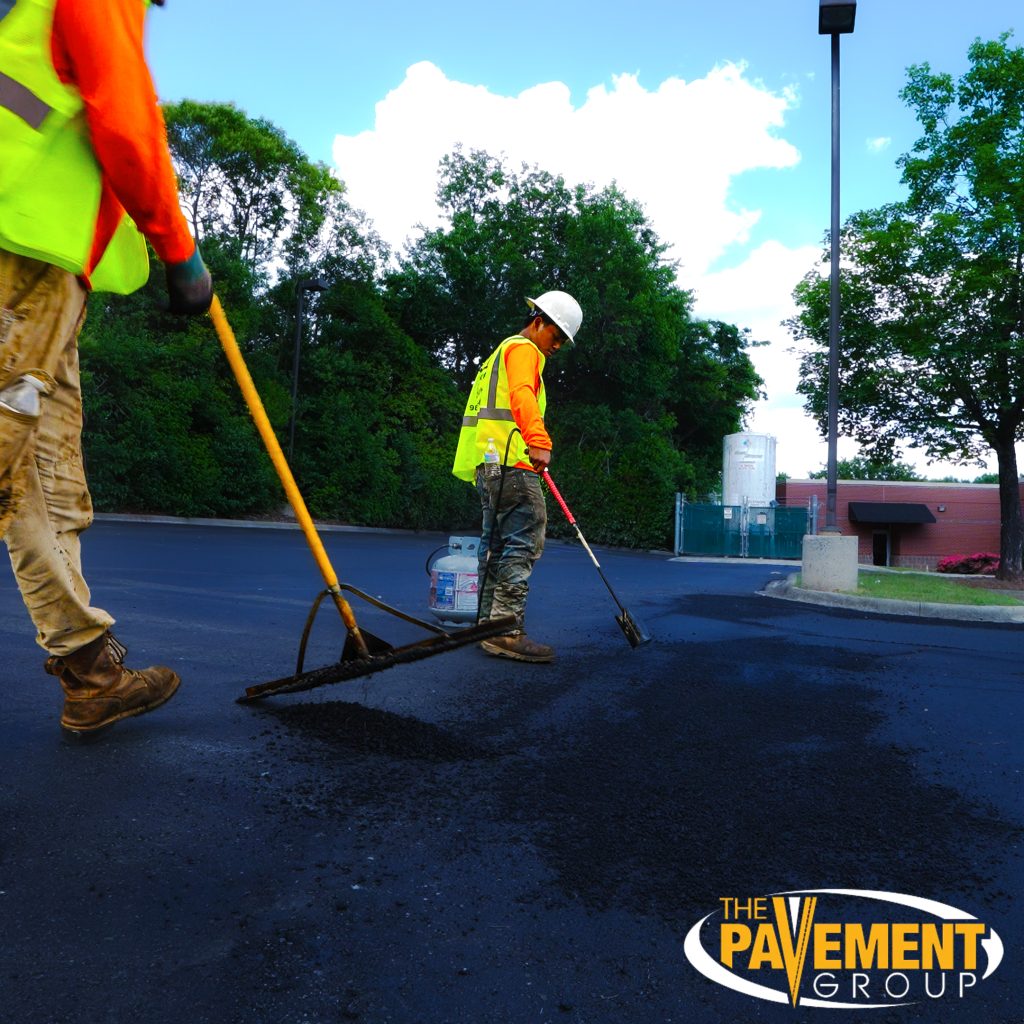
The National Apartment Association represents a large share of the professionally managed apartment housing industry in the country. Across that entire portfolio, parking lot pavement is one of the few building systems that doesn’t fail with an alarm, a leak, or an emergency maintenance call. It fails silently until someone happens to notice. Property managers already handle dozens of systems and vendors at once. They often check pavement less frequently than anything else. This happens because pavement issues do not demand immediate attention the way a broken water heater does. These five habits keep it from becoming the surprise line item that blows up next year’s budget.
Quick answers:
- Walking the lot on a set schedule and actually logging what you see catches small problems while they’re still cheap to fix.
- Timing a professional condition assessment to line up with the annual budgeting cycle keeps pavement funded instead of competing for leftover dollars.
- Bringing pavement into the capital reserve conversation with ownership proactively, rather than after a hazard shows up, changes how that conversation goes.
- A real intake process for resident-reported hazards, not an ad hoc one, closes the gap where problems sit unaddressed the longest.
- Treating your paving contractor as a long-term partner rather than a rotating list of bids protects warranty continuity and institutional knowledge about your specific property.
Tip 1: Walk the Lot on a Set Schedule, and Log What You See
A monthly walk-through takes fifteen minutes and catches problems while they’re still a work order, not a work order and a resident’s complaint. The habit that actually makes this useful isn’t the walk itself. It’s writing down what you saw, even briefly: a new crack near the dumpster pad, a fading stall line, and a low spot holding water after last week’s rain. That log becomes the thing you hand a contractor before their visit, instead of trying to remember three months of small observations.
Tip 2: Time a Professional Condition Assessment to Your Budgeting Calendar
Most property managers request a pavement assessment reactively, after something already looks bad, rather than proactively ahead of the annual budget cycle. Schedule the assessment one or two months before you finalize budgets. This way, you include pavement in that year’s figures backed by actual data, a recorded condition score, and a contractor’s recommendation. You will not treat it as a guess or an afterthought that only gets funded if money remains after you cover other priorities.
Tip 3: Put Pavement on Ownership’s Radar Before It’s an Emergency
It’s easy to let pavement stay invisible to ownership until a hazard forces the conversation. Bringing it up proactively, as part of the same reserve and capital planning conversation used for roofs or HVAC systems, changes the tone entirely. It becomes a planned line item with options instead of an emergency call explaining why the budget needs an unplanned increase. According to the Institute of Real Estate Management, this kind of proactive reserve planning for major building systems is standard practice, and pavement belongs in that same conversation rather than outside it.
Tip 4: Build a Real Intake Process for Resident-Reported Hazards
Residents often mention a pothole or a cracked curb to whoever they happen to see first: a leasing agent, a maintenance tech in passing, or a note left at the office. Without a real process, that report can sit for weeks without reaching anyone who can actually act on it. Use a simple, consistent system to log these reports, such as a shared form or a dedicated inbox you check every day. This approach stops hazards from going unaddressed for long periods. You will avoid delays that happen not because people do not care but because no one knows exactly what to do next.
Tip 5: Treat Your Paving Contractor as a Long-Term Partner
Rebidding every single project from scratch might feel like due diligence. It also means starting over each time with a contractor who doesn’t know your property’s history, past repairs, or where problems tend to recur. A consistent, ongoing relationship with one qualified contractor preserves that institutional knowledge and keeps warranty tracking simple. According to the National Asphalt Pavement Association, it tends to produce better long-term maintenance outcomes than a series of disconnected one-off jobs handled by whoever happened to win the lowest bid that year.
Want a second set of eyes on where your property actually stands before your next budget cycle? The Pavement Group can walk the lot with you and put real numbers behind what you’re already seeing.
Maximize Parking Lot Lifespan with Proactive Maintenance
Waiting for minor asphalt cracks to become major potholes drastically increases repair budgets and creates safety hazards for your tenants. Establishing a routine maintenance schedule—covering crack sealing, sealcoating, line striping, and drainage clearing—keeps your pavement durable and liability-free.
The Pavement Group delivers comprehensive pavement management plans designed to protect property values and prevent unexpected structural failures before they happen.
- Custom Maintenance Plans: Structured schedules tailored to your lot’s traffic volume, age, and environmental conditions.
- Budget-Friendly Planning: Address minor surface defects early to avoid costly full-depth pavement reconstruction later.
Frequently Asked Questions
How much time should a property manager realistically spend on parking lot oversight each month?
If your property shows no active issues, you only need a fifteen- to twenty-minute walk-through each month, plus time to record what you see. This routine helps you catch problems before they grow. You will need to set aside more time once you identify an issue and must define the work, get quotes, and arrange schedules with a contractor. The goal isn’t to spend hours on pavement specifically; it’s to make sure the small, regular check happens consistently rather than skipping months at a time when things seem fine.
Should a property manager or the maintenance/facilities team be the one walking the lot for inspections?
You can use either approach, but you should clearly assign this task to one specific person. Do not simply assume someone else will take care of it. On properties with a dedicated facilities or maintenance staff, that team often has the technical eye to catch subtler issues, while a property manager’s walk-through is more about consistency and making sure it actually happens on schedule. What matters most is that responsibility is explicit, since an inspection that’s everyone’s job informally tends to become no one’s job in practice.
What’s the difference between a property manager’s role and a facilities director’s role when it comes to pavement maintenance decisions?
A property manager typically leads budget discussions, manages vendor relationships, and keeps ownership informed. Where the role exists, a facilities director handles the technical assessment of exactly what work the site needs. If your property does not have a separate facilities director, the property manager takes on both roles. This is why you should rely on a qualified contractor for professional assessments. Their expertise fills the technical gaps that a property manager may not have the training to cover on their own.
How should a property manager handle a hazard discovered outside of business hours?
Whether a hazard needs an after-hours response depends on how immediate the danger is: an exposed utility line or a blocked fire lane needs same-night attention, while a developing crack noticed during an evening walk-through can typically wait until the next business day to get logged and scheduled. Having a contractor’s emergency contact saved in advance, rather than searching for one in the moment, is what actually determines how quickly a genuine after-hours hazard gets addressed.
Does a property manager need any special training or certification to make pavement maintenance decisions?
No formal certification is required to manage this responsibility well, though professional property management credentials, like those offered through organizations such as the Institute of Real Estate Management, often include broader asset management training that touches on capital planning for building systems generally, pavement included. What matters more day to day is relying on a qualified contractor for the technical assessment rather than trying to evaluate pavement condition without that expertise.
How should a property manager document maintenance decisions for a potential future audit or ownership change?
Keeping a simple record of condition assessments, the work performed, the date, and the cost creates a paper trail that matters more than most property managers expect until a property changes hands or an owner asks for a maintenance history. This kind of documentation supports due diligence during a sale or refinance and gives a new property manager or ownership group a clear picture of what’s already been done, rather than starting from zero. It’s a small habit that pays off almost entirely in situations that don’t happen often but matter a great deal when they do.
What KPIs or metrics should a property manager track related to pavement condition?
A documented condition score from a professional assessment, tracked year over year, gives a property manager an actual trend line instead of a subjective impression of whether the lot is holding up. Tracking the number and type of resident-reported pavement hazards over time can also reveal whether problems are increasing or being caught early enough to stay minor. Cost per year spent on pavement, compared against the property’s overall capital budget, is a third useful number for spotting whether spending is trending toward planned maintenance or reactive repair.
Should pavement maintenance responsibilities be written into a property management company’s management agreement with ownership?
It’s worth considering, particularly for properties where responsibility could otherwise be ambiguous between the management company and ownership group. Spelling out who initiates condition assessments, who approves budget for preventive work, and how capital reserve contributions get handled for pavement specifically removes room for the kind of miscommunication that often surfaces only after a costly repair becomes necessary. This is a detail worth raising directly with ownership or legal counsel when management agreements are being drafted or renewed, rather than assuming it’s already covered under general maintenance language.
See also: Apartment Parking Lot Maintenance Schedule: A 20-Year Plan for Multifamily Owners and Asset Managers, The Best Preventive Maintenance Schedule for Apartment Parking Lots
About the Author
The Pavement Group specializes in asphalt engineering, pavement maintenance solutions, and data-driven asset management for commercial, retail, and multi-family residential properties. Utilizing advanced structural pavement evaluations and capital planning transparency, The Pavement Group works directly with property managers to extend pavement lifecycles, eliminate liability risks, and optimize long-term infrastructure investments.