To extend the life of your parking lot and avoid costly repairs, it’s essential to tailor maintenance to both winter and summer conditions instead of relying on a one-size-fits-all approach. Winter and summer attack a parking lot in opposite ways. Winter drives water into cracks and freezes it there, prying the pavement apart from the inside. Summer bakes the surface with heat and UV until it dries out, stiffens, and cracks on its own. A maintenance plan built for only one season misses the damage the other season causes.
In this guide:
- Freeze-thaw cycles are a leading cause of winter pavement cracking because water expands as it freezes within existing cracks.
- Summer heat creates the temperature window that most seal-coating and crack-sealing products need to cure properly.
- The wrong de-icing product can damage pavement and concrete faster than the ice it’s meant to clear.
- Restriping needs a minimum surface temperature to cure, which rules out most of winter in colder climates.
- Treating winter and summer as two separate maintenance seasons, rather than a single annual checklist, catches damage sooner in both.
Why Winter & Summer Apartment Parking Lot Maintenance Need Different Care
Asphalt expands and contracts with temperature. That’s normal. The damage happens at the extremes, when water freezes inside a crack in January or when UV exposure dries out the binder in July.
According to the National Asphalt Pavement Association (NAPA), timing maintenance to the season, not just the calendar, is one of the biggest factors in how long a lot lasts.
A property that only budgets for one maintenance push a year, usually in summer, ends up doing reactive winter repairs instead of planned winter prevention.
Winter Parking Lot Maintenance: Protecting Pavement from Freeze-Thaw Damage
Winter maintenance is mostly about limiting damage, not fixing it. Full repairs usually wait for warmer weather.
De-Icing and Snow Removal Best Practices
Not all de-icing products are equal. Some chloride-based products can accelerate pavement deterioration and damage nearby landscaping and concrete if overused.
Plow blades set too low can gouge asphalt, especially around drain covers and expansion joints. Set plow height to clear the pavement surface, not just the snow.
Monitoring for Freeze-Thaw Cracking
Check the lot after every freeze-thaw cycle, not just once a month. Water that got into a crack during a thaw and refroze overnight can widen that crack significantly in a single cycle.
Log new or growing cracks as you find them. That log becomes the priority list for spring crack sealing.
Winter Pothole Patching: Cold-Patch vs. Waiting for Spring
Cold-patch asphalt is a temporary fix that works in freezing temperatures, unlike hot-mix asphalt, which generally needs warmer conditions to bond properly. Use a cold patch to keep a pothole from getting worse over winter, then schedule a permanent hot-mix repair once temperatures allow.
Summer Parking Lot Maintenance: Heat, UV, and High-Traffic Wear
Summer is when most permanent repairs and preventive work actually get done, because the temperature window supports them.
Seal Coating in Summer Heat
Seal coating needs sustained warm, dry conditions to cure correctly. Scheduling it too early or too late in the season risks a coating that doesn’t bond properly.
Crack Sealing Before Peak Heat
Crack sealing works best when scheduled before the hottest part of summer, while cracks are still of moderate width. Extreme heat can cause cracks to close temporarily, making them harder to seal thoroughly.
Restriping in Summer Conditions
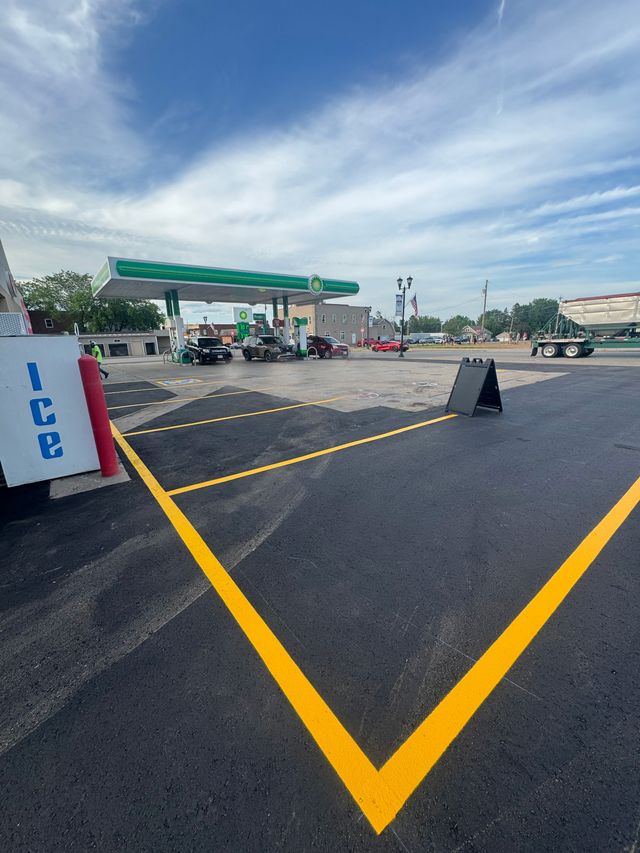
Striping paint needs warm, dry pavement to cure and adhere properly. Summer is usually the most reliable window for restriping in climates with real winters.
Winter & Summer Apartment Parking Lot Maintenance Task Comparison
| Task | Winter | Summer |
|---|---|---|
| Primary threat | Freeze-thaw cracking, ice | UV oxidation, heat softening |
| Snow and ice management | De-icing, plowing | Not applicable |
| Crack sealing | Limited, monitor and log only | Ideal window |
| Seal coating | Not recommended, won’t cure | Ideal window |
| Pothole repair | Cold-patch (temporary) | Hot-mix (permanent) |
| Restriping | Not recommended, won’t cure | Ideal window |
| Drainage checks | Critical during thaw cycles | Standard monitoring |
Climate determines how strict these boundaries are. A property in a mild climate has a wider maintenance window than one in a region with hard freezes and heavy snow.
Year-Round Tasks That Don’t Change by Season
Some tasks stay on the schedule regardless of the weather:
- Weekly visual walk-throughs for new damage
- Debris and litter removal from drive lanes and drains
- Lighting checks, especially as daylight hours shift
- Logging problem spots for the next seasonal maintenance window
These don’t cost much, and they’re what keep small issues from turning into a surprise repair bill once the weather allows real work. They completely affect winter & summer apartment parking lot maintenance.
Common Seasonal Maintenance Mistakes Property Managers Make
- Scheduling seal coating or restriping too early or too late in the season, before or after the temperature window that lets the product cure.
- Treating cold-patch as a permanent fix rather than a placeholder until a warm-weather repair.
- Over-applying de-icing salt can damage pavement and nearby concrete faster than a moderate buildup of ice would.
- Waiting until spring to log winter damage, instead of tracking it as it happens.
- Budgeting for one maintenance season instead of two, which pushes winter prevention into reactive spring repair.
How Climate and Region Affect Your Maintenance Schedule
A property in a region with hard freezes and heavy snow needs a stricter winter protocol and a shorter, more urgent summer repair window than a property in a milder climate.
Properties in hot, dry climates face the opposite balance: less freeze-thaw risk but more UV- and heat-driven wear, which can extend the “summer” maintenance season across more of the year. In regions with unpredictable weather and frequent swings between warm and cold, property managers need a flexible approach—be ready to switch between winter and summer maintenance tasks and monitor conditions closely to respond to sudden shifts.
Budgeting for Two Maintenance Seasons Instead of One
A single annual maintenance budget usually assumes one big summer push. Splitting the budget into a winter prevention line item (de-icing, plowing, and cold patch) and a summer repair line item (seal coating, crack sealing, and restriping) gives a more accurate picture of the actual annual cost. To save money, property managers can prioritize the most urgent repairs first and plan less critical work for later, preventing minor issues from turning into expensive emergencies. Another smart cost-saving move is to negotiate seasonal service contracts—locking in rates for snow removal, de-icing, or summer repairs often leads to better pricing than one-off jobs.
Build a small contingency into the winter budget specifically for freeze-thaw damage that appears sooner than expected. That damage is far more predictable to plan for than to react to.
From freezing winter moisture expanding cracks to scorching summer UV rays degrading your asphalt bind, seasonal shifts present constant challenges for multi-family assets. Secure a proactive, year-round maintenance plan to safeguard your community’s pavement investment. Speak with our team today.
Frequently Asked Questions
When is the best time of year to seal coat a parking lot?
Seal coating needs sustained warm, dry weather to cure correctly, which usually means late spring through summer in most climates. Scheduling it outside that window risks a coating that doesn’t bond properly to the pavement.
Can you patch potholes in winter?
Yes, with cold-patch asphalt, which works in freezing temperatures but is a temporary fix. A permanent hot-mix repair should be scheduled once temperatures support proper curing, usually in spring or summer.
What temperature does asphalt need to cure properly?
Cure temperature requirements vary by product, but most seal coating and striping materials need sustained warm, dry conditions. Check the manufacturer’s specification for the exact product being used.
Does de-icing salt damage asphalt parking lots?
Overuse of chloride-based de-icing products can accelerate pavement deterioration. Using the correct product and application rate for your climate limits that damage while still keeping the lot safe.
How often should a parking lot be inspected in winter vs. summer?
Winter inspections should occur after each freeze-thaw cycle, as damage can worsen quickly. Summer inspections can follow a more routine weekly or monthly schedule, since the pavement isn’t under the same rapid freeze-thaw stress.
Can you restripe a parking lot in cold weather?
Generally, no. Striping paint needs warm, dry pavement to cure and adhere properly, which rules out most of winter in colder climates. Restriping is usually scheduled for late spring through summer.
What causes parking lot cracks to get worse in winter?
Water enters existing cracks, then freezes and expands, widening them from the inside. Repeated freeze-thaw cycles over a winter can turn a hairline crack into a much larger one before spring repairs even begin.
Is summer the only time to do parking lot maintenance?
No, but it’s the main window for permanent repairs like seal coating, crack sealing, and restriping, since those need warm, dry conditions to cure. Winter maintenance focuses on prevention and temporary fixes rather than permanent repair work.
How does climate affect a parking lot’s maintenance schedule?
Colder climates require stricter winter de-icing and monitoring protocols, with a shorter, more urgent summer repair window. Hot, dry climates face less freeze-thaw risk but more UV-driven wear, which can extend the repair season throughout the year.
Should apartment property managers budget separately for winter and summer parking lot maintenance?
Yes. Winter costs (de-icing, plowing, and cold patching) and summer costs (seal coating, crack sealing, and restriping) behave differently and are easier to plan for as two line items rather than one annual estimate.
About the Author
The Pavement Group specializes in asphalt engineering, pavement maintenance solutions, and data-driven asset management for commercial, retail, and multi-family residential properties. Utilizing advanced structural pavement evaluations and capital planning transparency, The Pavement Group works directly with property managers to extend pavement lifecycles, eliminate liability risks, and optimize long-term infrastructure investments.