If you manage or serve on a homeowners association board, you already know how quickly maintenance costs can add up. What starts as a thin line across the asphalt often grows into a costly repair if ignored. That is why crack sealing for HOA pavement has become one of the most important preventative maintenance steps for community infrastructure.
At The Pavement Group, our team works closely with HOA property managers and community boards to protect pavement before damage spreads. Crack sealing is one of the most affordable and effective ways to extend the life of asphalt surfaces while reducing long-term maintenance budgets.
In this guide, we will walk through why it matters, how the process works, and why many associations schedule routine pavement maintenance each year.
Why HOA Pavement Cracks in the First Place
Even well-installed asphalt will eventually develop cracks. Pavement surfaces are constantly exposed to environmental stress and vehicle traffic.
Common causes include:
- Seasonal temperature changes
- UV exposure from sunlight
- Heavy vehicle loads
- Poor drainage around pavement edges
- Natural aging of asphalt materials
While these cracks may seem harmless at first, they create openings where water can enter the pavement structure.
The Hidden Damage Behind Small Cracks
Many HOA boards underestimate how much damage can occur beneath a small pavement crack.
Once water enters the asphalt, several problems can develop:
- The pavement base weakens
- Freeze-thaw cycles expand cracks
- Asphalt edges crumble
- Potholes begin forming
According to the Federal Highway Administration (FHWA), water infiltration is one of the leading causes of pavement failure in asphalt surfaces. Preventing water penetration is critical for long-term pavement durability.
What Is Crack Sealing and How Does It Work?
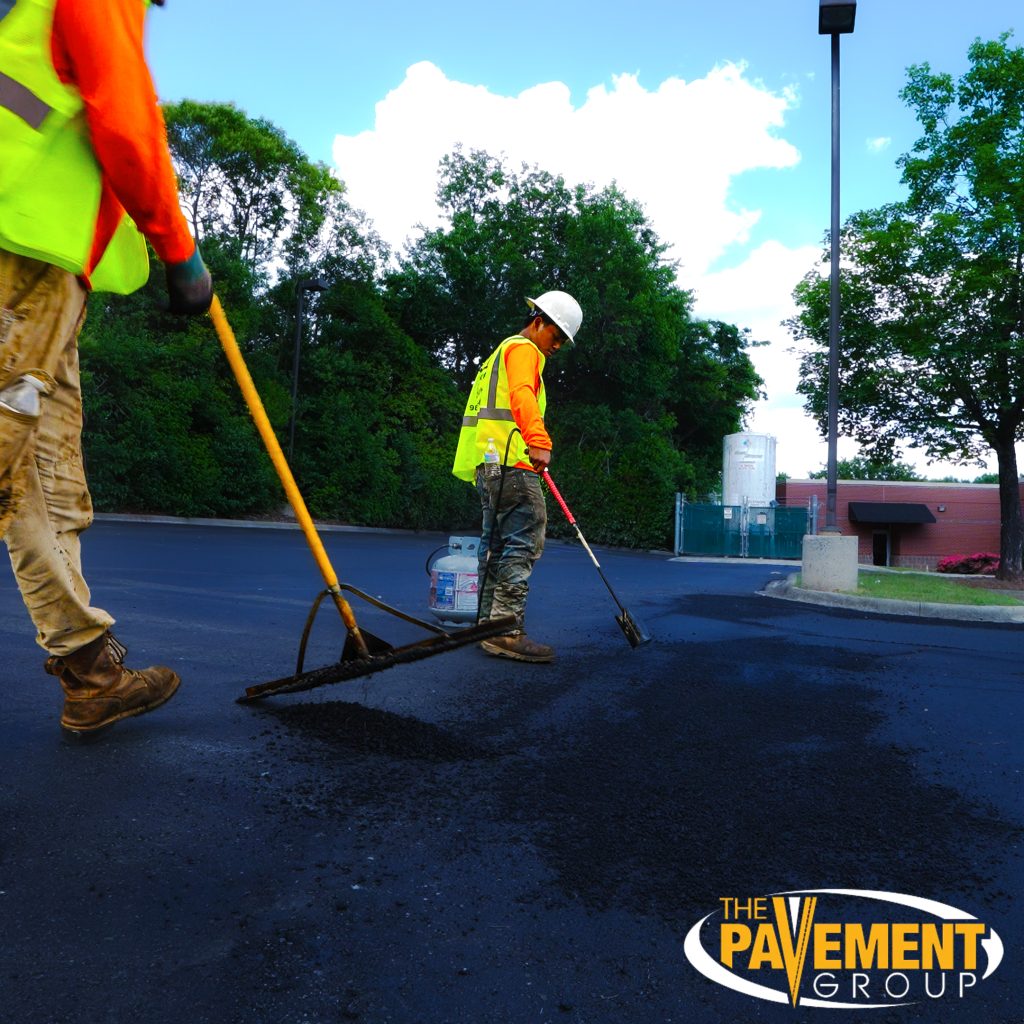
Crack sealing is a preventative pavement maintenance process that fills and seals asphalt cracks before they expand into larger structural issues.
The process typically includes several steps:
- Cleaning debris from the crack
- Heating rubberized sealant material
- Filling the crack with flexible sealant
- Allowing the sealant to cure and bond with the asphalt
The sealant remains flexible, allowing the pavement to expand and contract with temperature changes. This flexibility prevents the crack from reopening while also blocking water intrusion.
When performed correctly, crack sealing significantly slows the aging process of asphalt pavement.
The Pavement Group Services for HOA Communities
At The Pavement Group, our team specializes in pavement maintenance for residential communities and large-scale properties.
1. HOA Crack Sealing Services
We provide professional crack sealing for HOA pavement, addressing early-stage damage before it spreads across roads or parking areas.
Our crews use high-performance sealants designed for long-term durability and flexibility.
2. Pavement Inspection and Maintenance Planning
HOA boards often struggle to decide when maintenance should be scheduled.
Our team conducts detailed pavement inspections to identify:
- Early cracking
- Drainage issues
- Surface wear patterns
- Structural weaknesses
Based on these findings, we help associations develop cost-effective maintenance plans.
3. Asphalt Sealcoating
Sealcoating protects pavement surfaces from oxidation, sunlight, and moisture.
This protective layer helps extend the life of asphalt while improving the appearance of community roads and parking lots.
4. Parking Lot and Private Road Maintenance
HOA properties often include multiple paved surfaces that require regular upkeep.
Our crews maintain:
- Community parking areas
- HOA roads
- Drive lanes
- Visitor parking lots
Consistent maintenance reduces emergency repair costs later.
Why Crack Sealing Saves HOA Communities Money
The biggest advantage of crack sealing is cost prevention. Repairing small cracks costs far less than replacing damaged pavement sections later.
Consider the difference:
- Crack sealing: preventative maintenance
- Asphalt patching: moderate repair
- Full resurfacing: major expense
- Pavement reconstruction: highest cost
According to the National Asphalt Pavement Association (NAPA), preventative pavement maintenance can extend asphalt lifespan by up to 10 years when performed regularly.
Signs Your HOA Pavement Needs Crack Sealing
Many communities are unsure when to schedule crack sealing.
Watch for these early warning signs:
- Thin cracks are forming along pavement surfaces
- Spiderweb-style cracking patterns
- Cracks appearing near parking stalls or curbs
- Water is collecting in pavement gaps
These signs often indicate early pavement deterioration. Addressing them quickly prevents more extensive repairs later.
When Is the Best Time to Schedule Crack Sealing?
Timing plays a key role in pavement maintenance. Crack sealing is typically performed during warmer, drier weather, usually between spring and early fall.
During these seasons:
- Sealants bond better with asphalt
- The pavement is dry and clean
- Work can be completed efficiently
Many HOA communities schedule inspections in early spring so maintenance can be completed before summer heat intensifies asphalt damage.
Long-Term Pavement Planning for HOA Communities
Successful HOA pavement management requires planning rather than reactive repairs.
Many associations follow a maintenance schedule that includes:
- Annual pavement inspections
- Crack sealing every few years
- Sealcoating every 3–5 years
- Resurfacing when necessary
This strategy helps extend pavement life while maintaining safe, attractive roads and parking areas for residents.
Protect Your HOA Pavement Before Costs Grow
Schedule a pavement inspection with The Pavement Group today and stop small cracks from becoming major expenses.
Frequently Asked Questions
1. How can HOA boards tell if pavement cracks are turning into a bigger structural problem?
Look closely at how the crack behaves over time. If it keeps widening or spreading into nearby lines, something deeper may be happening. You might also notice the asphalt edges starting to crumble. That often means water has already reached the base layer. At that point, simple sealing might no longer be enough.
2. Do delivery trucks and garbage trucks accelerate cracking in HOA roads?
Yes, heavy vehicles make a big difference. HOA roads were usually designed for light residential traffic, not constant service trucks. When those heavier vehicles pass repeatedly, they place extra stress on the pavement surface. Over time, that pressure can widen existing cracks. Eventually, the asphalt begins to fatigue and break apart.
3. Why do some pavement cracks reopen even after they are sealed?
Sometimes the issue is movement underneath the asphalt. The sealant can stretch, but the pavement base may still shift slightly. When that movement continues, the crack may reappear along the same line. Weather changes also play a role. Large temperature swings can expand the pavement more than expected.
4. Should HOA communities seal cracks before planning major pavement projects?
In many cases, yes. Crack sealing can buy valuable time while boards finalize budgets or plan future resurfacing. It slows water intrusion and keeps the damage from spreading quickly. That breathing room helps communities schedule larger projects more strategically. Think of it as stabilizing the pavement until a long-term solution is ready.
5. Why do cracks often form near curbs and drainage areas?
Water tends to collect along curbs and low spots. When moisture repeatedly sits there, the asphalt begins to weaken along the edges. Over time, the pavement dries, shrinks, and eventually cracks. Drainage problems make this worse. If water has nowhere to go, cracks will likely appear faster in those areas.
6. How can HOA boards track pavement conditions year after year?
A simple pavement log works surprisingly well. Take photos of problem areas during inspections each year. Note the crack size, location, and date. Over time, those records reveal patterns in how the pavement is aging. That information helps boards make smarter maintenance decisions instead of reacting to sudden damage.
7. Do landscaping features around pavement contribute to cracking?
Yes, landscaping can quietly affect asphalt performance. Tree roots sometimes push upward beneath pavement edges. Irrigation systems may also oversaturate the soil nearby. That extra moisture weakens the base supporting the asphalt. When the ground shifts slightly, cracks can appear on the surface above it.
8. Why do new HOA communities still experience pavement cracks early?
New asphalt still goes through a curing and settling process. During the first few years, the pavement adjusts to traffic and seasonal temperature changes. Small cracks can appear as the material stabilizes. This does not always mean the installation was poor. Early maintenance simply helps preserve the pavement longer.
9. How do freeze-thaw cycles quietly damage pavement in colder regions?
Water slips into tiny openings during warmer daytime temperatures. When night arrives, that trapped water freezes and expands. The expansion pushes against the asphalt from inside the crack. After repeated attempts, the crack slowly widens. That hidden pressure is one of winter’s most damaging effects on pavement.
10. Why do some HOAs wait too long before addressing pavement cracks?
Often it comes down to visibility. Small cracks do not look urgent compared to potholes or major surface damage. Boards may focus on more obvious repairs first. However, pavement deterioration rarely stays small for long. Once cracks spread across larger areas, the repair costs increase much faster.