Nighttime and off-hours pavement work for hospitals is important. Unlike a retail center that closes at 9:00 PM or an office complex that empties on weekends, a healthcare campus is a living, breathing 24/7 operation. Every second counts, and every access point is a lifeline. Healthcare facilities are under more pressure than ever to maintain infrastructure without compromising patient safety or infection control standards. When the asphalt starts to crumble or ADA markings fade, you can’t simply shut down the ER entrance for a day of paving. This is where “off-hours” and nighttime work become the standard.
At The Pavement Group, we specialize in the invisible execution, performing high-impact repairs while the rest of the world (and most of your patient population) is asleep.
1. Precise Strategic Scheduling (The Pavement Group Service: Planning & Consultation)
The first thing you should expect is a deep dive into your facility’s internal clock. We don’t just show up when it’s dark. We analyze shift change data, ambulance peak times, and scheduled delivery windows.
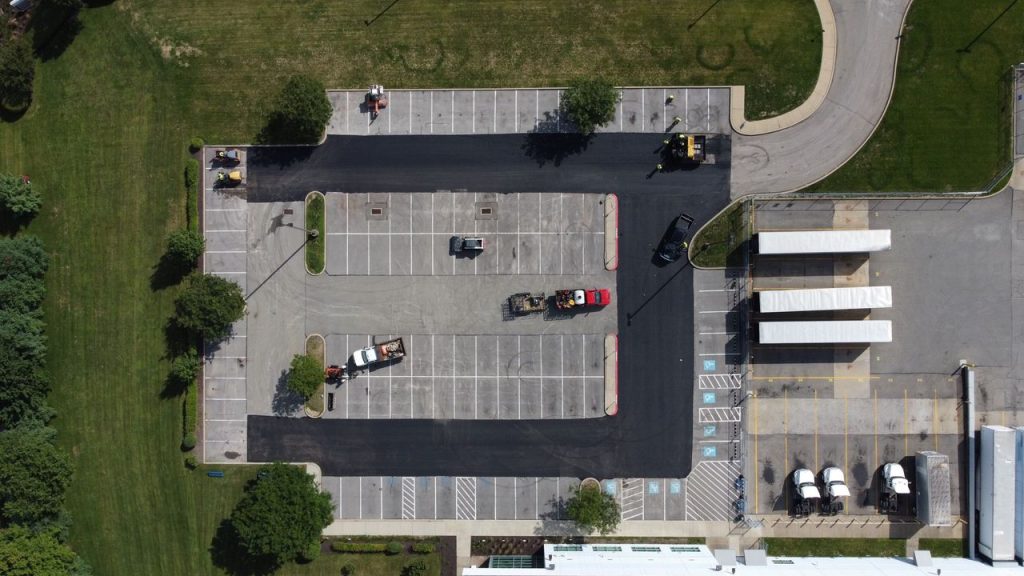
- Phased Mobilization: We break the project into small, surgical “bites” rather than one large closure.
- Emergency Access Buffers: We always maintain a “hot lane” for emergency vehicles that remains untouched until the previous phase is fully cured and drivable.
- Timing the Cure: Different materials have different “set times.” We schedule the final pour to ensure that by 6:00 AM, the surface is ready for the morning shift surge.
2. Advanced Lighting & Visibility Logistics (The Pavement Group Service: Safety Management)
Night work presents a unique challenge: visibility. You should expect your paving partner to bring their own sun. We utilize industrial-grade LED light towers and “balloon lights” that provide 360-degree illumination without the harsh glare that can blind oncoming drivers or disturb patients in nearby windows.
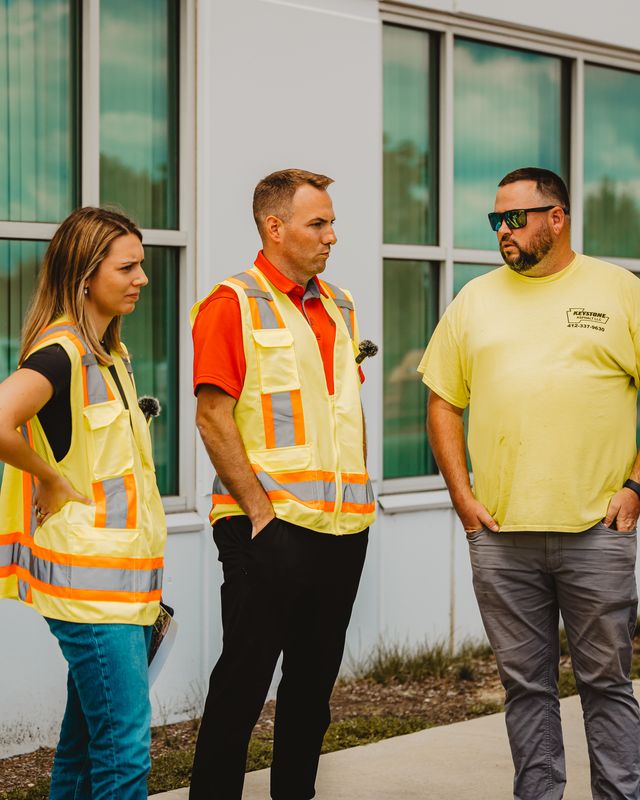
Our crews wear Class 3 high-visibility reflective gear, and we clearly mark “no-go” zones with illuminated cones and barricades. This ensures that even in the dead of night, there is zero confusion about where a visitor can park or where an ambulance needs to pivot.
3. Noise Mitigation & Patient Comfort (The Pavement Group Service: Specialized Healthcare Paving)
Noise is the primary concern for any hospital administrator. Not because it’s nighttime and off-hours pavement work for hospitals, we just have a jackhammer vibrating through a wall. When you work with The Pavement Group, we prioritize “silent” logistics.
- Low-Decibel Equipment: We use newer, well-maintained machinery that runs quieter than older, rattling alternatives.
- Strategic Routing: We plan the loudest activities (like milling or heavy hauling) during the early evening hours, saving the quieter tasks (like striping or hand-patching) for the “quiet hours” of 2:00 AM to 5:00 AM.
- Vibration Monitoring: In sensitive areas near imaging suites or surgical theaters, we can implement vibration sensors to ensure our work never interferes with delicate medical equipment.
4. Dust Control & Infection Prevention (The Pavement Group Service: Asphalt Milling & Sweeping)
In a hospital setting, dust is a biohazard. Construction dust can carry spores and particulates that compromise sterile environments. Expect a heavy emphasis on “wet” methods. We use water-integrated milling machines and vacuum sweepers that capture dust at the source before it becomes airborne and enters the hospital’s HVAC intake systems.
We also ensure that all transition points between the work zone and the hospital entrance are kept meticulously clean to prevent “tracking” debris into the building.
5. ADA Compliance & Precision Striping (The Pavement Group Service: Line Striping & Marking)
Nighttime is the ideal window for the most detailed part of the job: ADA-compliant striping. Because there is no traffic, the paint has enough time to bond and dry without being damaged by a stray tire.
You should expect our team to verify every measurement against the latest 2026 ADA standards. We ensure that your accessible stalls, van-loading zones, and crosswalks are not only visible but also perfectly aligned with federal regulations. This reduces your liability and ensures that patients with mobility challenges have a seamless path from their car to your door.
6. Real-Time Communication & Accountability (The Pavement Group Service: Project Management)
Working off-hours shouldn’t mean you’re in the dark about progress. We use digital project tracking that lets facility managers see real-time updates on their smartphones.
If a phase is completed early or a specific lot is reopened ahead of schedule, you’ll know instantly. This transparency allows your security and valet teams to redirect traffic with total confidence. We eliminate the chaos when it comes to nighttime and off-hours pavement work for hospitals.
7. Rapid Mobilization & Cleanup (The Pavement Group Service: Site Clearing)
The “expectation” for a nighttime project is that the site looks like we were never there by dawn. We call this “The Ghost Exit.” Before the first sunray hits the pavement, our team performs a final sweep.
We remove all debris, pull back the barricades, and ensure that all signage is repositioned for daytime use. Our goal is for your morning staff to arrive at a beautiful, freshly maintained lot without ever having seen a single orange cone.
Ready to Plan Your Next “Invisible” Pavement Upgrade?
Click here to schedule a 15-minute Hospital Site Assessment with The Pavement Group. We’ll walk your campus, identify high-risk areas, and build a phased nighttime schedule that keeps your facility running at 100% while we do the heavy lifting. Let’s make us handle nighttime and off-hours pavement work for hospitals.
Frequently Asked Questions
1. Why do hospitals choose nighttime for pavement repairs?
Hospitals operate 24/7 and cannot afford major daytime traffic jams at critical entrances. Consequently, working at night allows crews to repair high-traffic zones while patient volume is at its lowest. This timing ensures that ambulances and emergency vehicles have unobstructed access during peak daylight hours. Ultimately, nighttime work preserves the continuity of life-saving medical services for the entire community.
2. How is noise managed during overnight hospital paving?
Crews utilize specialized, low-decibel machinery and silencers to keep sound levels within strict healthcare limits. Generally, the loudest activities, such as asphalt milling, are scheduled for early evening, before patients are deeply asleep. Transitional words indicate that quieter tasks, such as line striping, are reserved for late-night hours. This strategic approach prevents loud vibrations from disturbing sensitive recovery wards or surgical theaters.
3. What safety measures protect hospital staff during night work?
The Pavement Group sets up industrial LED light towers to ensure maximum visibility for everyone on-site. Furthermore, all workers wear high-visibility reflective gear to stay noticeable to moving vehicles and equipment operators. Clear signage and illuminated barricades are also deployed to guide staff safely around the active construction zones. These layers of protection help prevent accidents in the low-light conditions of a parking lot.
4. How do you prevent construction dust from entering the hospital?
We implement “wet” milling and vacuum sweeping methods to capture dust at the source before it travels. Additionally, air vents near the work zone are often sealed to protect the facility’s internal air quality. Keeping dust levels low is vital because airborne particulates can compromise sterile environments, such as operating rooms. Therefore, meticulous cleanup occurs before dawn to ensure no debris is tracked inside by morning visitors.
5. Will emergency room access stay open during the project?
Our project managers create “hot lanes” that remain open for ambulances throughout every phase of the paving process. Specifically, we never block a primary emergency entrance without having a fully cured, drivable alternative ready for use. This coordination is planned with hospital security and local emergency responders to avoid any delays. Maintaining life-safety access is always the highest priority during our healthcare paving projects.
6. How does nighttime paving impact ADA parking and compliance?
Working during off-hours provides the perfect window to restripe accessible stalls without interfering with patient arrivals. Because there is no traffic, the paint has the necessary time to cure for a more durable finish. We verify that every ramp and crosswalk meets the latest 2026 ADA standards for slope and visibility. Consequently, your facility will remain fully compliant and accessible to patients with mobility challenges by morning.
7. What happens if an emergency delivery arrives during work?
We maintain real-time communication with hospital dispatch to pause equipment if an unscheduled delivery needs access. In most cases, our phased mobilization allows us to clear a path for essential supply trucks quickly. Our team is trained to remain flexible and adapt to the unpredictable nature of hospital needs. This ensures that critical supplies, such as oxygen or blood, can always reach the loading dock.
8. Is the quality of asphalt different when laid at night?
The quality of the asphalt remains high because we adjust the mix temperature for cooler nighttime air. Nighttime and off-hours pavement work for hospitals often prevents asphalt from cooling too quickly during haulingin heavy traffic. Our team uses precision lighting to ensure the surface is smooth and free of any roller marks. Therefore, the finished product is just as durable and aesthetically pleasing as daytime work.
9. How long does the pavement need to cure before morning traffic?
Modern asphalt mixes used by The Pavement Group are designed to be drivable within just a few hours. We schedule the final pour to ensure the surface is completely set before the 6:00 AM shift change. Additionally, high-traffic entrances are prioritized so they are the first areas to reopen as the sun rises. This careful timing allows for a seamless transition back to normal hospital operations every morning.
10. How can I stay updated on the project’s progress?
Facility managers receive digital updates and photos via our project-tracking software throughout the night. This transparency allows you to confirm that specific lots are reopened and ready for use before you arrive. If a delay occurs due to weather, you are notified instantly so traffic can be redirected. Having this data at your fingertips ensures there are no surprises when the daytime staff start their shifts.