Healthcare facilities operate within a controlled system of movement. Ambulances require unobstructed entry points. Patients with limited mobility depend on smooth, level walkways. Staff shifts change with precise timing. Even small disruptions in parking flow can ripple through the entire campus. That is why minimizing disruptions during pavement repairs at healthcare facilities requires more than basic paving experience. It demands logistical planning, safety analysis, and an understanding of how infrastructure directly affects patient care.
At The Pavement Group, we approach healthcare paving projects with that responsibility in mind. Our work does not begin with asphalt. It begins with understanding how the property functions hour by hour.
In this guide, we will walk through how professional planning, phased execution, and coordinated communication enable the completion of necessary pavement repairs without compromising access, safety, or thepatient experience.
1. Conducting a Comprehensive Site Assessment
Before any equipment arrives, we perform a detailed site evaluation. Our group examines traffic patterns during peak hours. We identify emergency access lanes. We assess drainage flow and ADA compliance.
This planning phase allows us to create a repair strategy tailored to the facility’s operational schedule. Every healthcare campus operates differently. A thorough assessment is the foundation of minimizing disruptions during pavement repairs at healthcare facilities.
2. Coordinating with Facility Administrators
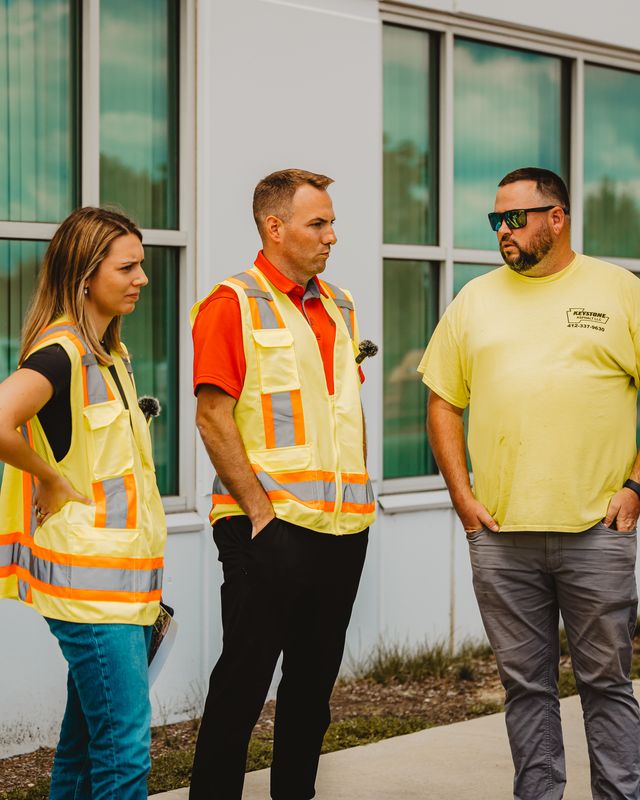
Communication prevents confusion. We meet with administrators, maintenance teams, and safety officers to discuss scheduling windows. We review ambulance routes and patient drop-off areas.
Together, we determine which zones can be temporarily closed and which must remain open. This collaboration ensures that paving work supports the facility rather than interfering with it.
3. Phased Repair Scheduling
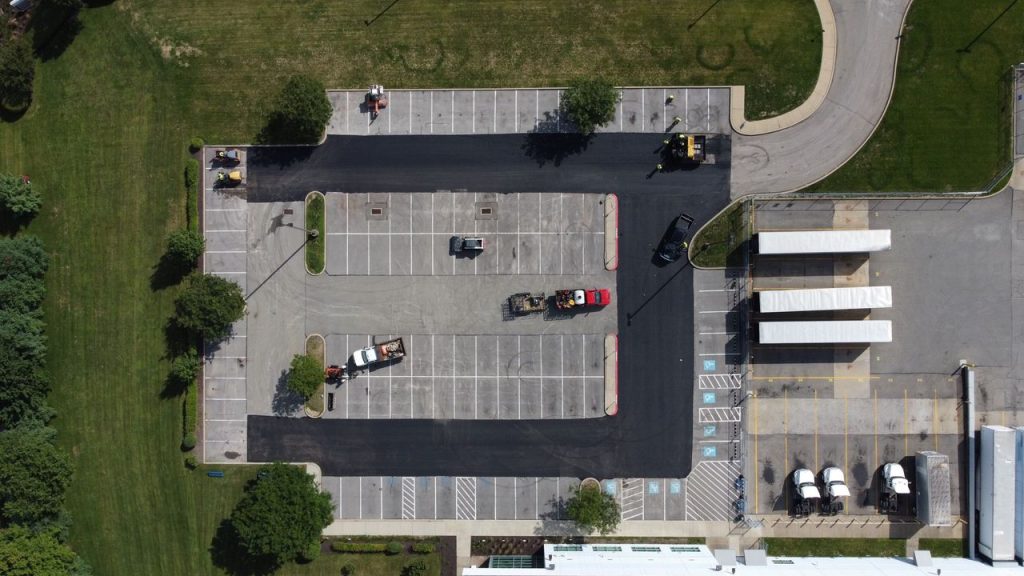
Large healthcare campuses require phased repairs. Instead of closing an entire parking lot, we divide the project into sections. One area is repaired while others remain operational.
Phased scheduling reduces traffic congestion and maintains continuous access. Night work or weekend scheduling may also be considered, depending on facility needs.
4. Temporary Traffic Control and Signage
Clear signage is critical. Temporary striping, barricades, and directional signs guide patients and visitors safely. Staff parking adjustments are communicated in advance.
Ambulance routes are protected and clearly marked at all times. Well-designed traffic control prevents confusion and reduces liability risks during construction.
5. Low-Noise and Dust-Control Strategies
Hospitals require quieter environments. We use modern equipment designed to reduce excessive noise when possible. Water trucks and dust suppression techniques minimize airborne particles.
Sensitive areas near ventilation intakes are carefully monitored. These measures protect indoor air quality and support patient comfort.
6. Rapid-Set Materials and Efficient Workflows
Time is critical in healthcare paving. We often use rapid-set asphalt and concrete mixes that cure quickly. This allows sections to reopen faster without compromising durability.
Efficient crew coordination also reduces downtime. Speed must never sacrifice safety, but strategic material selection can significantly reduce disruption windows.
7. ADA Compliance and Accessibility Protection
Healthcare facilities must maintain strict ADA standards. During repairs, accessible pathways are clearly marked and protected. Temporary ramps may be installed if needed.
We ensure that mobility-impaired patients can move safely between entrances and parking areas. Compliance is not optional. It is essential.
8. Final Inspection and Reopening Protocol
Before reopening any repaired section, we conduct a detailed inspection. We verify surface smoothness, proper compaction, and correct striping alignment. Drainage flow is confirmed.
Clear reopening communication ensures staff and visitors understand updated traffic patterns. This structured process completes the project responsibly.
The Pavement Group Services for Healthcare Facilities
- Asphalt repair and resurfacing
- Pothole patching and crack sealing
- Parking lot striping and ADA markings
- Drainage correction and grading
- Full-depth reconstruction
- Preventative maintenance planning
Healthcare paving requires experience, coordination, and technical precision. Our team approaches every project with those priorities in mind.
Let’s Plan It Right the First Time
Pavement repairs at healthcare facilities are not a standard commercial job. It requires precision scheduling, patient-focused planning, and clear communication. If your facility is preparing for repairs, let’s develop a strategy to keep operations running smoothly.
Contact The Pavement Group today to develop a custom paving plan that prioritizes safety, access, and efficiency.
Because in healthcare environments, every detail matters.
Frequently Asked QuestIons
1. Why is phased paving important for healthcare facilities?
Phased paving keeps the campus functional while work progresses. Instead of blocking an entire lot, crews repair one section at a time. This approach keeps entrances accessible and traffic moving steadily. It also prevents confusion for patients who may already feel overwhelmed. By carefully controlling the sequence, facilities maintain safety, reduce stress, and avoid bottlenecks during critical hours.
2. How are emergency vehicle routes protected during repairs?
Emergency routes are identified before any paving begins. Contractors coordinate directly with administrators to confirm primary and secondary access lanes. These paths stay open, clearly marked, and unobstructed throughout the project. Crews monitor conditions daily to ensure compliance. Protecting ambulance access is nonnegotiable, because response time can directly impact patient outcomes.
3. What materials reduce downtime during hospital paving projects?
Rapid-set asphalt and high-performance concrete significantly reduce reopening times. These materials cure faster without sacrificing strength or durability. However, material choice depends on traffic load and climate conditions. Contractors evaluate the site carefully before selecting products. Faster curing means sections reopen sooner, which keeps hospital operations flowing smoothly.
4. How do paving contractors maintain ADA compliance during repairs?
ADA compliance remains a priority throughout the project. Contractors establish temporary accessible routes when permanent ones are under repair. Clear signage guides patients using wheelchairs, walkers, or mobility aids. Temporary ramps may be installed if needed. Before reopening any section, accessibility is reviewed to ensure standards are fully met.
5. How is noise controlled during healthcare paving projects?
Noise control starts with scheduling and equipment selection. Contractors may work during lower-traffic periods to minimize disruption. Modern machinery produces less mechanical noise than older equipment. Communication with administrators helps identify sensitive areas of patient care. By thoughtfully adjusting operations, crews minimize disturbances without slowing progress.
6. How is dust managed during pavement repairs at hospitals?
Dust management begins with water suppression techniques. Crews dampen surfaces during milling and demolition to reduce airborne particles. Work zones are cleaned regularly to prevent debris from spreading. Contractors also avoid unnecessarily exposing areas near air intake systems. Controlling dust protects both outdoor safety and indoor air quality.
7. What role does communication play in minimizing disruptions?
Communication is the backbone of a smooth paving project. Contractors meet regularly with facility managers to review progress and upcoming phases. Staff receive advance notice about temporary closures. Visitors are guided by clear, updated signage. When everyone understands the plan, confusion decreases, and operations continue efficiently.
8. How long do pavement repairs typically take at healthcare facilities?
The timeline depends on the size and scope of the repair. Small patching projects may take a single day. Greater resurfacing efforts often require phased scheduling over several days. Planning determines speed more than labor size. When logistics are organized properly, projects move efficiently without compromising safety.
9. Why is preventative pavement maintenance important for hospitals?
Preventive maintenance reduces emergency repairs and unexpected closures. Crack sealing and sealcoating significantly extend pavement lifespan. Regular inspections identify small hazards before they grow larger. This proactive approach lowers liability risks and long-term costs. Most importantly, it protects patient and staff safety year-round.
10. What should facility managers do before starting a pavement repair project?
Facility managers should start by reviewing peak traffic times and emergency access needs. Gathering internal input from maintenance and safety teams helps clarify priorities. Next, they should schedule repairs strategically around patient volume. Clear internal communication prepares staff for temporary adjustments. Early planning creates a smoother, safer paving process from the start.