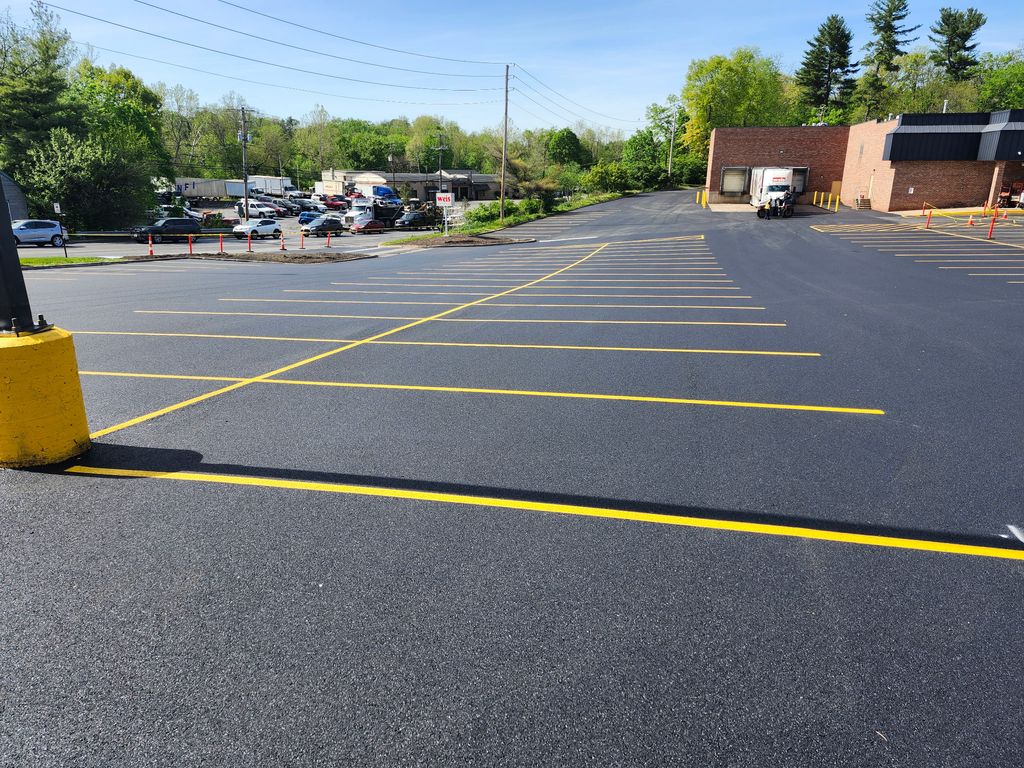
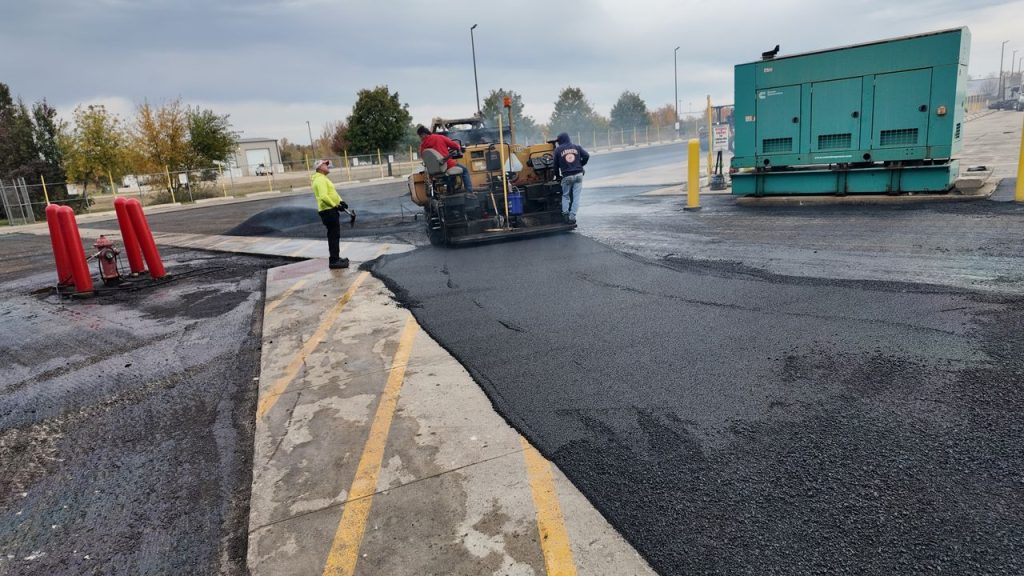
Commercial asphalt paving is a multi-step process designed to create durable, high-performance surfaces for businesses, parking lots, and roadways. Here’s a straightforward breakdown of how it works:
1. Site Evaluation & Preparation
Before any paving begins, the site is assessed for drainage, soil stability, and existing pavement conditions. If necessary, old asphalt is removed, and the ground is graded to ensure proper water runoff and a stable base.
2. Subgrade Stabilization
A strong foundation is critical for long-lasting asphalt. The subgrade is compacted, and in some cases, a layer of aggregate base is added to enhance strength and stability.
3. Applying the Asphalt Layers
Asphalt is installed in multiple layers to maximize durability. This includes:
- Base Layer – A thick, load-bearing layer that supports the surface.
- Binder Layer – A strong, adhesive layer that connects the base to the top layer.
- Surface Layer – The final smooth, durable layer that withstands traffic and weather.
4. Compaction & Finishing
Once the asphalt is laid, heavy rollers compact the surface to eliminate air pockets and create a smooth finish. Line striping, signage, and other markings are added as needed.
5. Curing & Maintenance
Asphalt needs time to cure fully, though it can be used within 24–48 hours. Regular maintenance, including sealcoating and crack repair, extends its lifespan and performance.
Commercial asphalt paving is a structured process that ensures long-term durability and functionality. Proper installation and routine maintenance help businesses maximize their investment in high-quality paved surfaces. Need expert commercial paving? Contact Us today for a consultation.