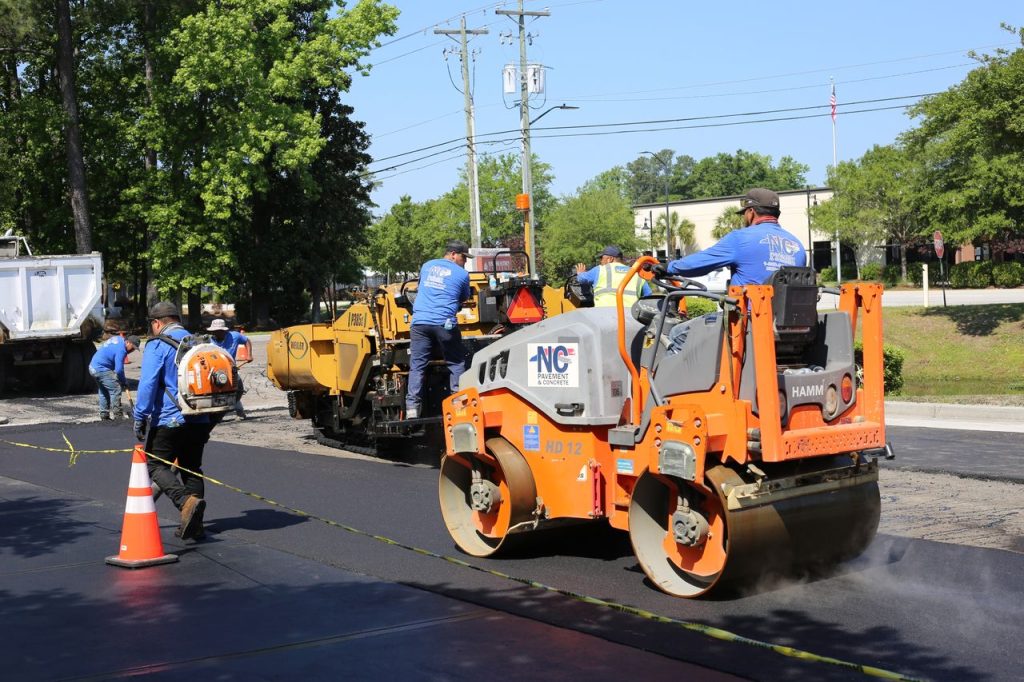
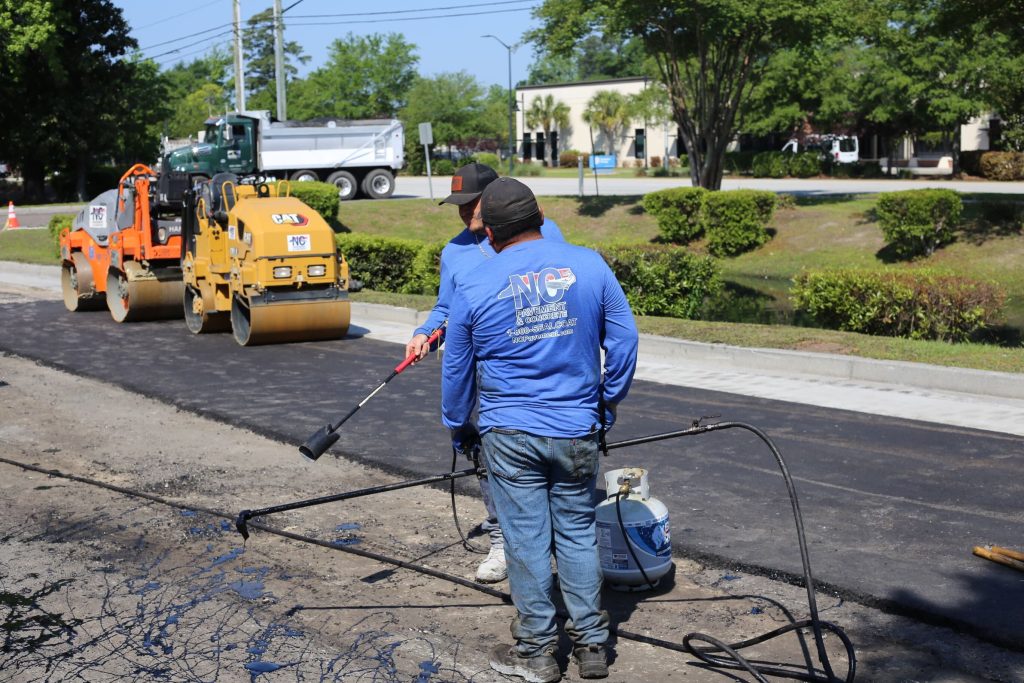
A NCAT/MnROAD study found that crack routing and sealing lasted 7.7+ years in good pavement, 4.6 in fair and just 1.1 in poor. That gap is all the information an apartment owner needs as to when to act. The narrow strip between two parking spaces may seem insignificant. It’s a zone of constant action with cracks, seepage, door swings, and runoff. We do this work for apartment communities all over the country, from the freeze-thaw lots of Pittsburgh and Boston right through to the heat-softened lots of Phoenix and Atlanta. We see owners save a lot of money by getting on with it when the damage is still minor.
Overview
- Cracks between the stalls tend to follow the paving seams and the stall lines, so they open up early and keep opening up.
- Oil and fuel drips soften the asphalt binder at the front of each space, resulting in loose, crumbling patches.
- A repair will only last if the crack is clean and dry and the method used is appropriate for the depth of the damage.
- Cold patch is all right for a bit of a superficial fix, but if you’ve got dissolved or broken asphalt, you need a cutout and a proper patch.
- Fresh striping should be done at the end of the job as it will lock in a clean, consistent stall width.
Why Damage Concentrates Between Parking Spaces
The area between the stalls gets a different kind of treatment than the drive aisle. The paving crews lay the asphalt in lanes. The joint where two lanes meet is often right along a stall line. The joint is weaker than the surrounding asphalt, so water tracks to it first. The painted stripes then cover it up until it’s wide enough to catch a heel or a wheel.
Vehicles add to the problem in that every car is parked in the same place for days. Its engine and transmission will drip in pretty much the same place each time. The door swings, the shopping carts, and the tight turning of the vehicles all put a load on the same narrow area. The water that runs down the stall row will follow the path of least resistance: the lines between the spaces. It pools in that strip, it softens the base, and it accelerates the cracking.
Reading the Damage Before You Repair It
We never start with the sealant. We start by working out what kind of damage the stall seam is in fact showing, as each one requires a different remedy. The table below shows how we categorize the most common types of damage we encounter on apartment sites.
| Damage Type | Where It Appears | Repair We Use | What We Avoid |
| Hairline to narrow crack | Along stall lines and paving joints | Clean, rout where appropriate, and seal | Painting over the crack |
| Widening crack with edge breakup | Between stalls near drains | Rout, clean, seal, and patch the edges | Surface-only filler |
| Oil-softened spot | Front third of the stall | Prime if firm, cut and patch if crumbling | Cold patch over dissolved binder |
| Alligator cracking | Heavily loaded stalls and turn paths | Cut out and rebuild with hot mix | Repeated crack filling |
| Settled or depressed strip | Over utility trenches or poor base | Remove, rebuild the base, and repave | Thin overlay on a weak base |
This stage stops the most common error we make: surface repair on a problem that originated below the surface.
Preparing the Crack and the Surface
Prep determines whether a repair will last one winter or five. Industry guidance states that a large proportion of crack treatment failures are due to dirty or wet crack channels. The FHWA checklist confirms this and states that sealing won’t commence if moisture is on the crack surface or within the crack. On an apartment site, that means we have to plan around irrigation overspray, dew, and drainage from the adjacent buildings.
Crack width also informs our approach. FHWA research on crack sealing and filling suggests sealing cracks between 5 and 19mm (i.e., one-quarter inch to three-quarters of an inch). Narrower hairlines will typically remain as monitored cracks until they open, whereas the wider ones will require patching rather than just sealant. For those that do qualify, routing creates clean, consistent edges and field guidance notes that routing prior to sealing will improve adhesion and can double the life of the sealant. We route the seams between stalls whenever asphalt conditions make it worthwhile, since that’s where seams will re-open first.
Repairing Oil-Softened Stall Zones
Oil and fuel don’t just stain asphalt; they actually dissolve the binder that holds the stone together. Industry contractors will tell you that once that binder is gone and the stone is loose, a cold patch will never work, and those areas will need a saw cut and a proper patch. Firm spots are a different proposition. If nothing gives way to a probe, we simply clean the area, apply an oil spot primer, and let it dry before applying any sealer.
We have a very simple rule in the field. If the surface holds together, we prime it. If it comes apart under the screwdriver or the heel of a boot, we cut it out. That test takes less than a minute per spot and prevents the expensive mistake of priming over damage that will keep spreading underneath.
Matching the Repair to the Depth of Damage
Shallow surface distress between stalls is easily addressed with crack sealing and priming. Deeper failures require structure. Where alligatoring or soft spots are present, we would saw-cut the failed section to clean, square edges, remove the deteriorated asphalt, check the base, and rebuild with hot mix in lifts. Square edges are important because they give the new patch a vertical face to bond against and prevent water from getting around the perimeter.
In colder markets (Boston and Minneapolis), we can do infrared repair, which blends the patch with the surrounding asphalt so there are no seams for water to get in through. We’ll use the appropriate method depending on the depth of the damage, the weather window, and how many stalls we need to keep open for the residents. Every repair is also subject to a reality check against the rest of the lot. Patching three stalls on pavement that’s failing all over the place is a complete waste of budget.
Restoring the Stall Lines
Striping is last, and it’s more important than most people realize. Fresh lines show residents exactly where they are meant to park, which stops vehicles from straddling the repaired seam. We lay out the stall pattern before painting so every stall returns to the same width. Every accessible stall maintains its required dimensions. Painting over an unrepaired crack just masks the problem for a season. The crack will reopen straight through the new line.
Building a Repair Plan Around Your Residents
Repairs between parking spaces are rarely isolated. Shared amenities create similar stress areas. Our guide on the pavement around the mail kiosks is a good example of how we handle the concentrated foot and vehicle traffic around resident services. If an owner wants every repair, every drainage fix, and every stripe refresh done as part of one job, we’d point you to a single HOA maintenance plan that sequences the work for one mobilization.
The decision is simple, really. A small seam repair this season is far cheaper than a patch next year or a full reconstruction later. We’re the Pavement Group, and we serve apartment communities, HOAs, and commercial properties across the country. We’ll walk your lot, mark every damaged seam, and give you a clear picture of the scope in order of priority. Get in touch today to arrange a site review before the next freeze or the next big rain comes and turns a tiny crack into a failed stall.
Frequently Asked Questions
What temperature and weather conditions work best for repairing cracks between stalls?
Crack sealing requires a dry surface and moderate temperatures. Cold or wet conditions will compromise the bond between the sealant and the asphalt. The public specifications are very clear, and the Iowa DOT spec requires both the air and pavement surface temperatures to be above 40°F during the crack-sealing operation. In practice, we tend to use spring and fall repair windows in the northern markets. That’s when cracks are in a fairly neutral position between their maximum winter opening and their minimum summer closure. In hot markets (e.g., Phoenix), we’ll schedule work early in the day. Crews and materials stay within a workable temperature range. We always check the forecast for the 24 hours after the repair. Rain too soon will obviously ruin an otherwise clean job.
How do we keep residents parking during repairs?
We do the work in phases by row or section so most spaces remain available at any one time. Before mobilizing, we will meet with the property manager to confirm which stalls are closed each day, how long each repair will take before traffic can resume, and where residents can park in the interim. We would also recommend issuing written notice at least several days in advance and having a clear point of contact for any queries. Towing rules and notice requirements will, of course, vary from city to city and from lease to lease. We advise owners to check with their legal representative or management company on the local requirements. Good communication in this respect will go a long way toward minimizing complaints and will also help crews complete the work on time.
Do accessible parking stalls need special handling during pavement repair?
Yes, accessible stalls and their access aisles need extra care, as repairs can alter the slope, surface smoothness, and marking dimensions. We ensure the finished surface is flush and level so wheelchair users and others with mobility needs can cross it safely. After the repair, we restore the stall mags and the access aisle to the required dimensions. We recommend that owners check with a qualified accessibility consultant to confirm current accessibility requirements, as these can vary by jurisdiction. Not doing so could create a safety issue for residents and a compliance issue for the owner.
Should wheel stops and bollards be replaced when we repair the pavement?
We inspect every wheel stop and bollard in the repair area, as cracked or loose hardware can damage the new patch. A moved wheel stop can push a vehicle into the seam we’ve just patched, and an unsecured one can crack the asphalt around its fasteners. Where we find hardware that’s damaged or poorly anchored, we’ll recommend replacing it with properly fastened units once the repair has cured. We also check the spacing, as a wheel stop set too far back will allow the vehicle’s bumpers to overhang the walkway or the next stall. Resetting the hardware protects the repair and improves how residents use the space.
Can property staff fix stall seams with hardware store crack filler?
Retail crack filler will only temporarily stop a hairline crack from propagating and is unlikely to be of any lasting benefit on a seam that’s going to be subjected to traffic and water every day. Most consumer products skip the essential steps: cleaning the channel, drying it, and shaping it so the sealant can flex without peeling. Property people will often go in and fill the crack that needs filling, which wastes both product and labor. We’d recommend that the property staff do the visual inspections, take the photos, and do the basic debris clearance, with the contractor then doing the sealing and patching. That’s how to keep costs predictable and protect any warranty on the finished work.
About the Author
The Pavement Group specializes in asphalt engineering, pavement maintenance solutions, and data-driven asset management for commercial, retail, and multi-family residential properties. Utilizing advanced structural pavement evaluations and capital planning transparency, The Pavement Group works directly with property managers to extend pavement lifecycles, eliminate liability risks, and optimize long-term infrastructure investments.